
What Is Land Thinning and Why It Matters

April 18, 2026

A lot of Central Texas properties do not have a tree problem. They have a crowding problem. When cedar, mesquite, brush, and volunteer growth start competing for the same sunlight, water, and space, the land gets harder to use, harder to maintain, and in many cases, more vulnerable to fire. That is usually what people mean when they ask, what is land thinning?

Land thinning is the selective removal of trees, brush, and undergrowth to improve the health, safety, function, and appearance of a property. The key word is selective. This is not the same thing as clear-cutting or bulldozing everything flat. Good thinning keeps the best trees, opens up the land, reduces fuel loads, and creates a cleaner, more balanced landscape.

What is land thinning, really?

At its core, land thinning is a decision-making process before it is a cutting process. The goal is to remove what is overcrowded, unhealthy, poorly placed, or hazardous so the remaining trees and vegetation can perform better. On a residential lot, that might mean opening up the yard, improving sightlines, and reducing limbs hanging over a roof. On a ranch or larger acreage, it often means reclaiming usable ground, improving access, and lowering wildfire risk.

This matters a lot in Central Texas, where properties can go from beautiful and wooded to overgrown and combustible faster than most owners expect. Cedar in particular grows aggressively, creates ladder fuels, and can choke out more desirable native species if left unmanaged. A property can still look green and natural after thinning, but it will function a whole lot better.

Land thinning is not the same as land clearing

People often use these terms interchangeably, but they are not the same job.

Land clearing is a more extensive removal of vegetation, often done to prepare for construction, roads, fencing, drainage work, or major land-use changes. The goal is usually to create open ground.

Land thinning is more surgical. The goal is to improve the existing landscape rather than erase it. You are choosing what stays and what goes. That difference matters because the equipment, planning, cost, environmental impact, and final result can be very different.

If you love the character of your property but hate the fact that it feels crowded, risky, or unusable, thinning is usually the better conversation to have.

Why landowners choose thinning

Most property owners do not wake up one morning suddenly excited about vegetation management. They call when something starts affecting daily life. Maybe the driveway is closing in. Maybe the kids cannot use part of the yard. Maybe deer trails disappear into a wall of cedar. Maybe a summer drought makes the whole place feel like a match waiting on a spark.

One of the biggest reasons for thinning is wildfire mitigation. Dense brush and low limbs create continuous fuel, which means fire can travel faster and climb higher. Thinning breaks up that fuel path. It creates spacing between plants, reduces surface fuels, and limits the chance of flames moving from grass and brush into tree canopies.

Another big reason is tree health. When too many trees grow too close together, they compete for water and nutrients. In dry regions, that stress adds up quickly. Instead of having a stand of strong, healthy trees, you end up with a cluster of mediocre ones all struggling at once. Strategic thinning gives the better trees a real shot.

Then there is usability. A property should work for the people who own it. Thinning can create room for trails, fencing lines, better visibility, grazing access, equipment movement, and cleaner edges around homes, barns, and outbuildings. It can also improve curb appeal in a very real, visible way. Not manicured. Just sharper, safer, and more intentional.

What gets removed during land thinning

That depends on the property, the owner's goals, and the condition of the vegetation. There is no honest one-size-fits-all answer.

In many cases, crews target invasive or overly aggressive species, dead trees, suppressed trees with poor structure, heavy brush, low-hanging limbs, and growth that crowds buildings, fence lines, roads, or healthier canopy trees. Sometimes the problem is density across the entire property. Other times it is a few specific choke points that make the land feel closed in.

A good thinning plan also considers what should remain. Mature hardwoods, well-structured native trees, shade patterns, erosion concerns, drainage flow, and wildlife use all matter. That is why disciplined planning beats random cutting every time. Remove too little and the problem stays. Remove too much and the property can look stripped out, stressed, or exposed.

What is land thinning supposed to look like when it's done right?

The best thinning jobs do not look hacked up. They look like the property finally got room to breathe.

You should notice cleaner spacing between trunks, better visibility through wooded areas, healthier dominant trees, and a more usable layout. If wildfire reduction was part of the goal, you should also see fewer ladder fuels, less brush congestion, and better separation between vegetation zones.

What you should not see is random stumps everywhere, torn bark from careless equipment work, or a property that suddenly feels barren. Thinning is supposed to improve the land's structure, not strip away its identity.

That is one reason experienced crews matter. It takes judgment to know which trees contribute value and which ones are dragging the whole stand down.

The trade-offs that property owners should understand

Land thinning is almost always beneficial when it is planned well, but there are trade-offs.

For one, the property may look more open than you are used to right after the work is done. Some owners love that immediately. Others need a little time to adjust because they had become accustomed to visual density, even when that density was causing problems.

There can also be short-term disturbance from equipment and debris handling. Any legitimate crew should explain how access, cleanup, hauling, and site protection will be managed before work begins.

And yes, wildlife patterns can shift. Thinning often improves habitat quality over time by increasing plant diversity and reducing overcrowding, but in the short run, animals may move differently through the property while the landscape resets.

The point is not to avoid thinning because there are variables. The point is to work with professionals who account for them instead of pretending every project is simple.

When a property is overdue for thinning

Some signs are easy to spot. Trees are touching or competing heavily. You cannot walk parts of the land without fighting through brush. Limbs hang low enough to create fuel ladders. Dead material is building up under the canopy. Views disappear. Access gets harder every season.

Other signs are more subtle. Healthy trees start looking stressed. Grass stops getting enough light in useful areas. Moisture competition gets worse during dry periods. The property still has trees, but not enough balance.

If you have ever looked across your land and thought, this place feels choked out, that instinct is probably worth listening to.

How professional land thinning is planned

A proper thinning job starts with a walkthrough, not a chainsaw. The crew should evaluate density, species mix, slope, access, structures, drainage, wildfire exposure, and your actual goals for the property. That last part gets overlooked more than it should.

Some owners want defensible space around a home. Some want cleaner views and easier maintenance. Some want to preserve mature oaks while removing cedar pressure. Some want all of the above. The right plan lines up with those priorities rather than forcing a generic solution.

That is where a precision-driven company has a real advantage. Professional thinning is part forestry judgment, part arboriculture, part logistics. It is not about cutting the most. It is about improving the most.

Is land thinning worth it?

If your land is overgrown, fire-prone, difficult to use, or crowded enough that your better trees are losing the battle, yes, it often is. The value shows up in safety, property function, tree health, appearance, and long-term manageability.

It can also prevent larger costs later. A neglected property tends to become more expensive over time, not less. Emergency removals, storm damage, fire exposure, pest pressure, and deferred maintenance all have a way of showing up at the worst possible moment.

For many landowners, thinning is the project that makes everything else easier. Fence work gets simpler. Mowing improves. Views come back. Trees perform better. The property feels cared for again.

At Dynamo Dusty's Tree Service, we have seen that shift happen over and over. A place that once felt cluttered, risky, or ignored starts looking intentional, protected, and ready for the next season.

If you are asking what is land thinning, the simplest answer is this: it is how you help your land breathe, defend itself, and work better for the people who depend on it.

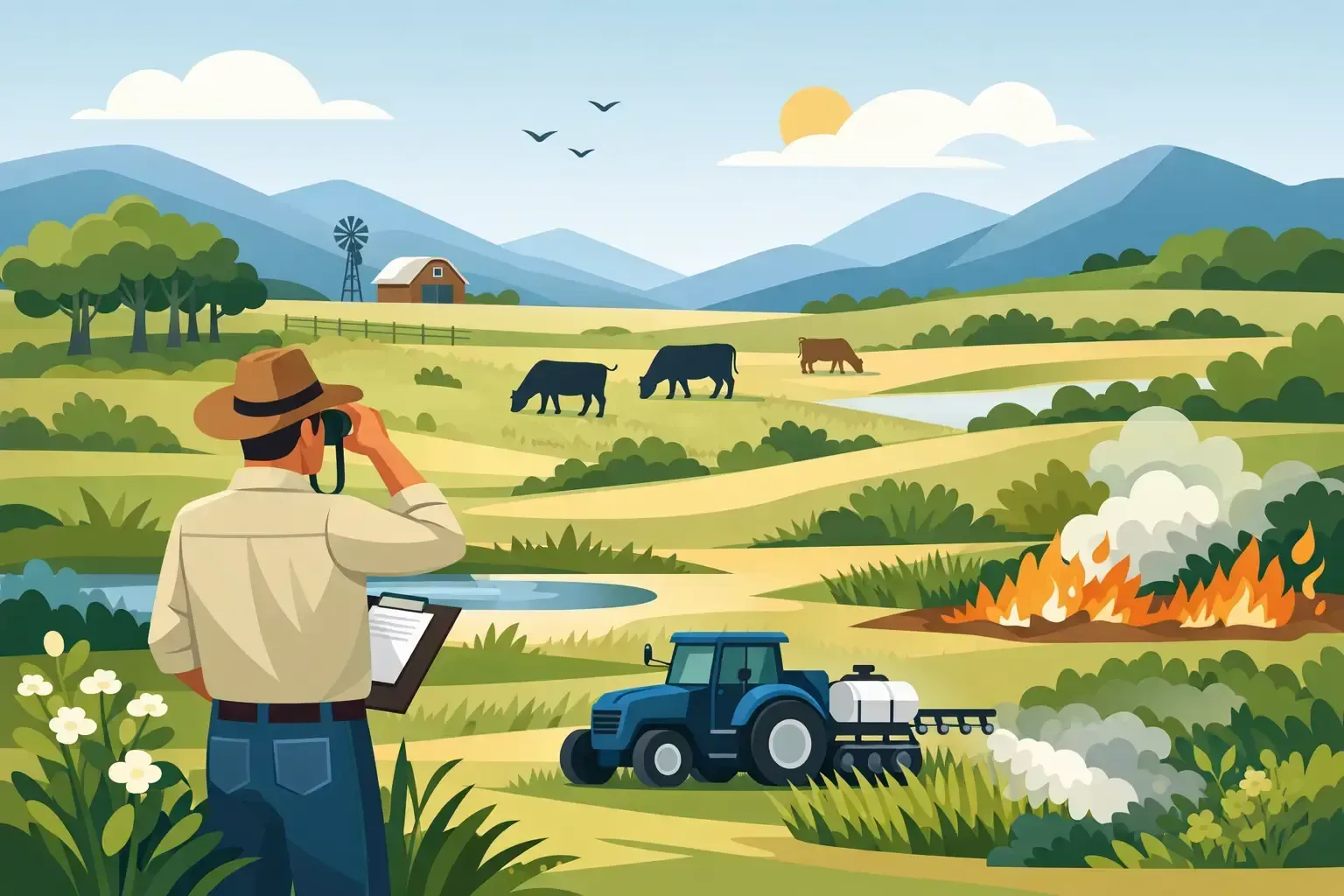
Farmer in field watching a blue tractor spray crops, with cows, barn, hills, and smoke in the background
September 1, 2026
A ranch can look green and still be headed in the wrong direction. Dense brush can hide stressed oaks, crowd out usable pasture, choke access roads, and crea...
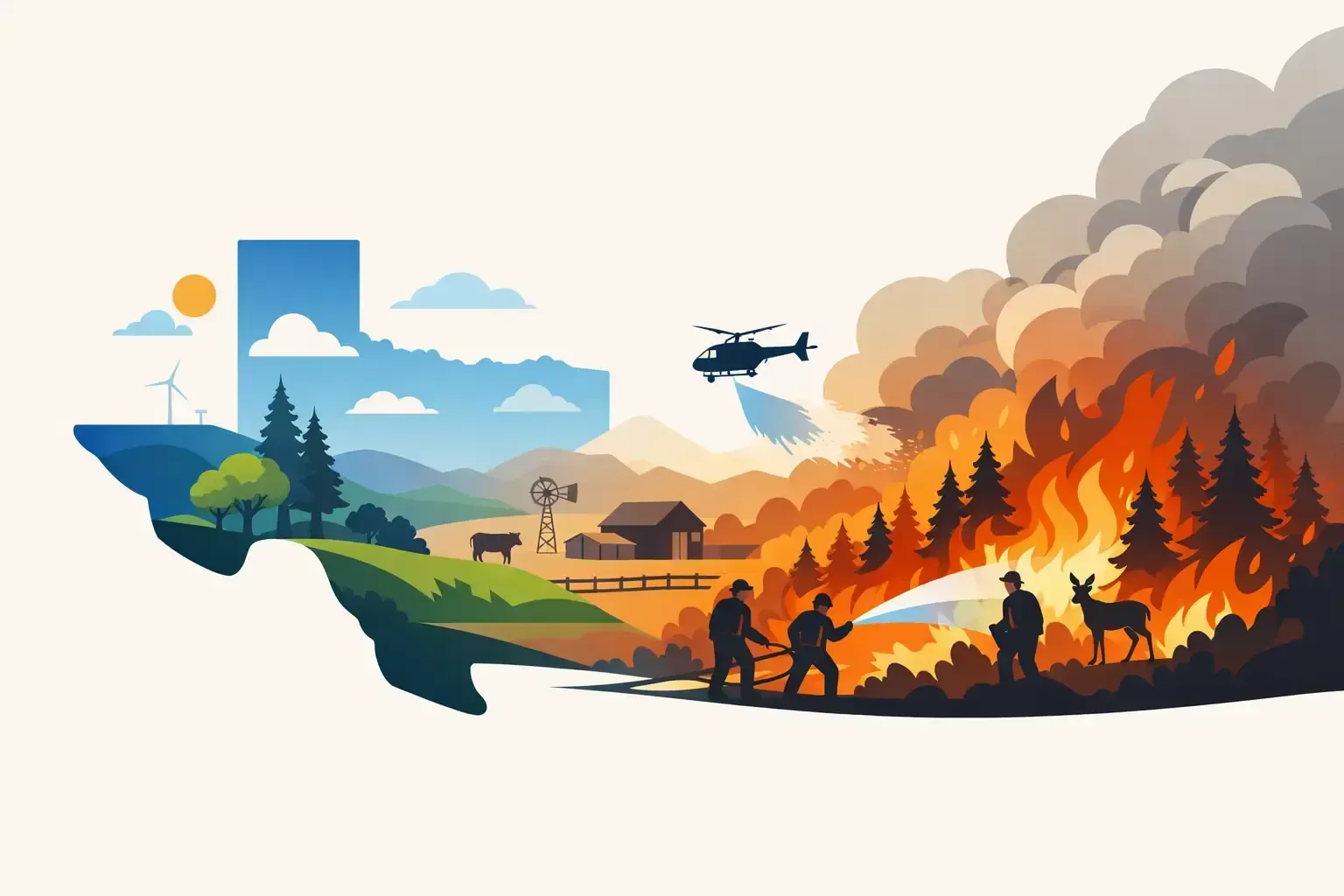
Wildfire burning in a forest with firefighters, helicopter, and smoke over a split rural landscape
August 30, 2026
A hot, windy afternoon can turn a forgotten brush pile, a crowded cedar stand, or low limbs near a structure into more than a property-maintenance issue. Tex...
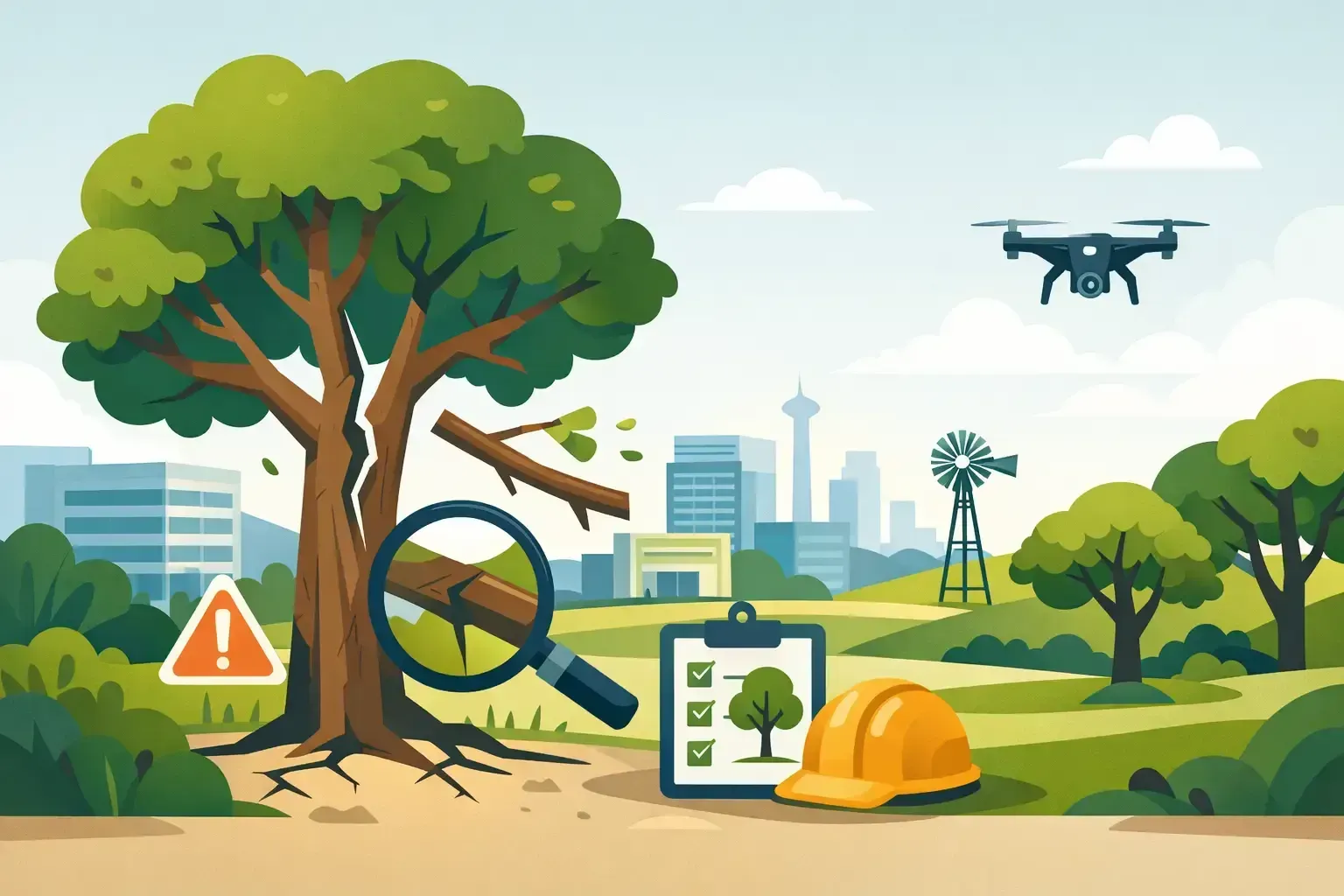
Environmental inspection scene with drone, tree, magnifying glass, recycle bin, and hard hat in a city park
August 28, 2026
A shaded entry drive can become a liability fast when a heavy limb hangs over customer parking, a dead cedar leans toward a fence, or brush builds up around ...
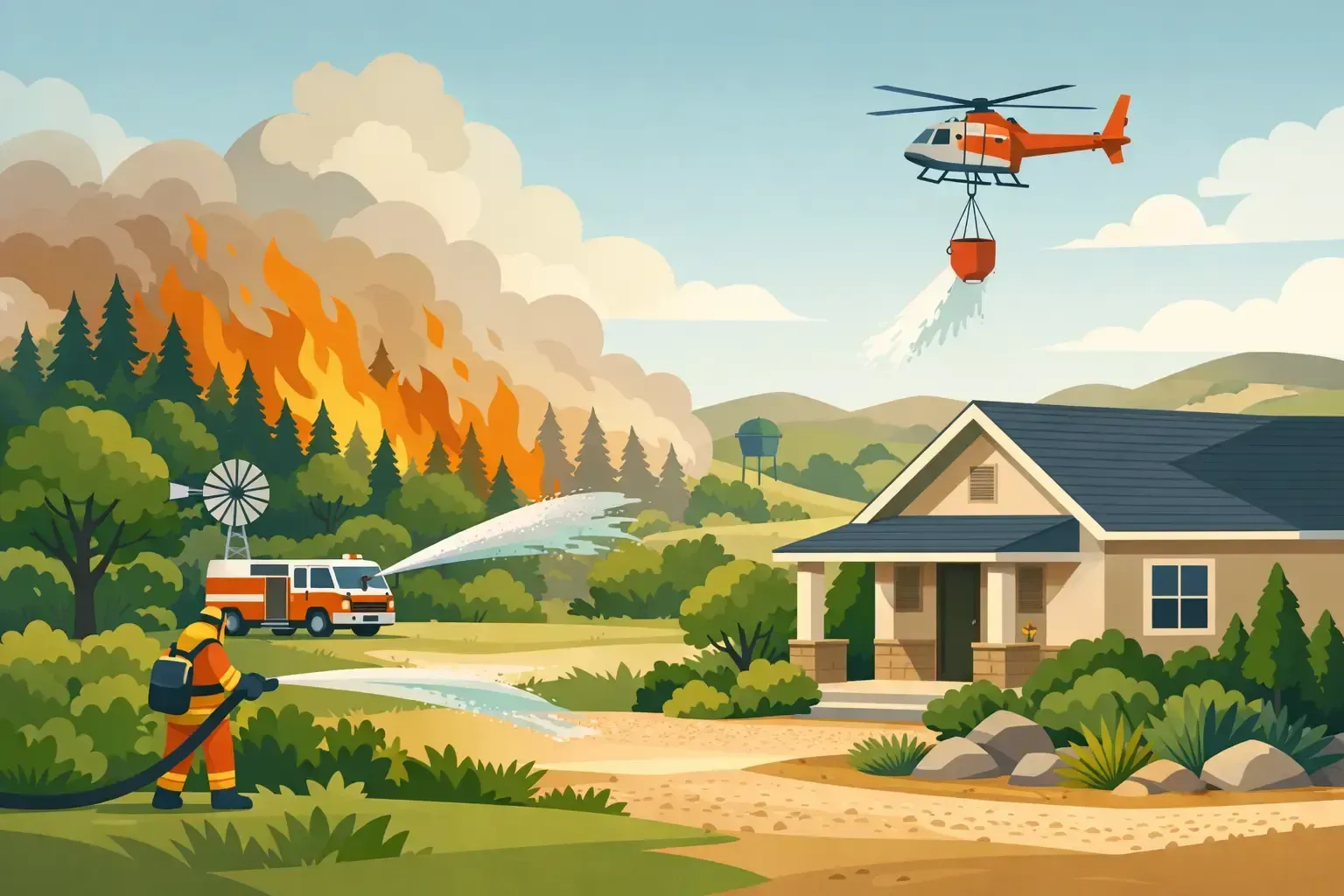
Wildfire response with firefighters, water tanker, helicopter, and smoke near homes in a rural neighborhood
August 26, 2026
A Central Texas wildfire mitigation guide has to start with a hard truth: a beautiful Hill Country property can carry fire faster than most owners expect. Ce...
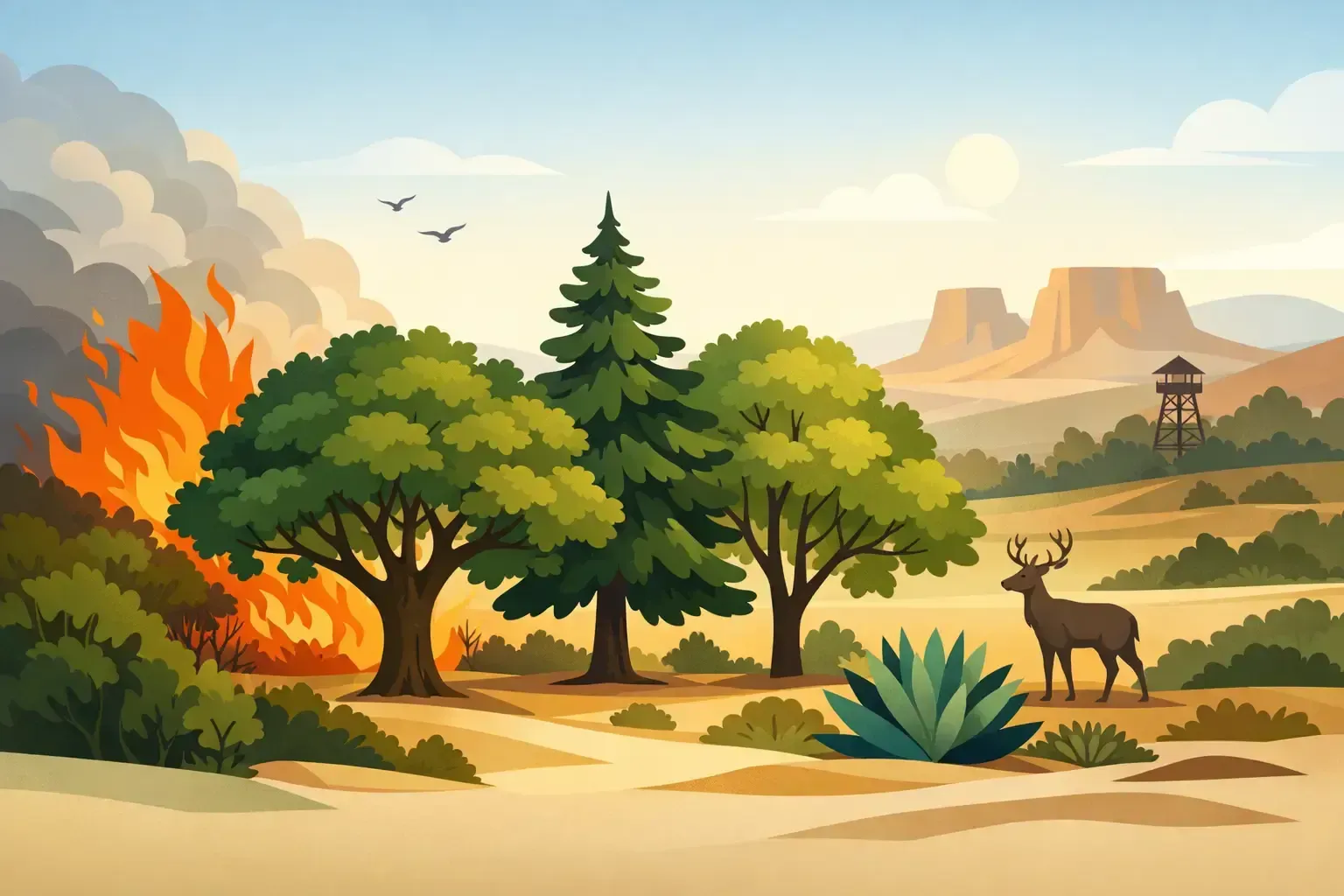
Savanna wildfire with trees, deer, and smoky hills under a bright sky
August 24, 2026
A beautiful shade tree should not become a fuse leading to your home. For Central Texas property owners, choosing the best trees for wildfire resistance mean...
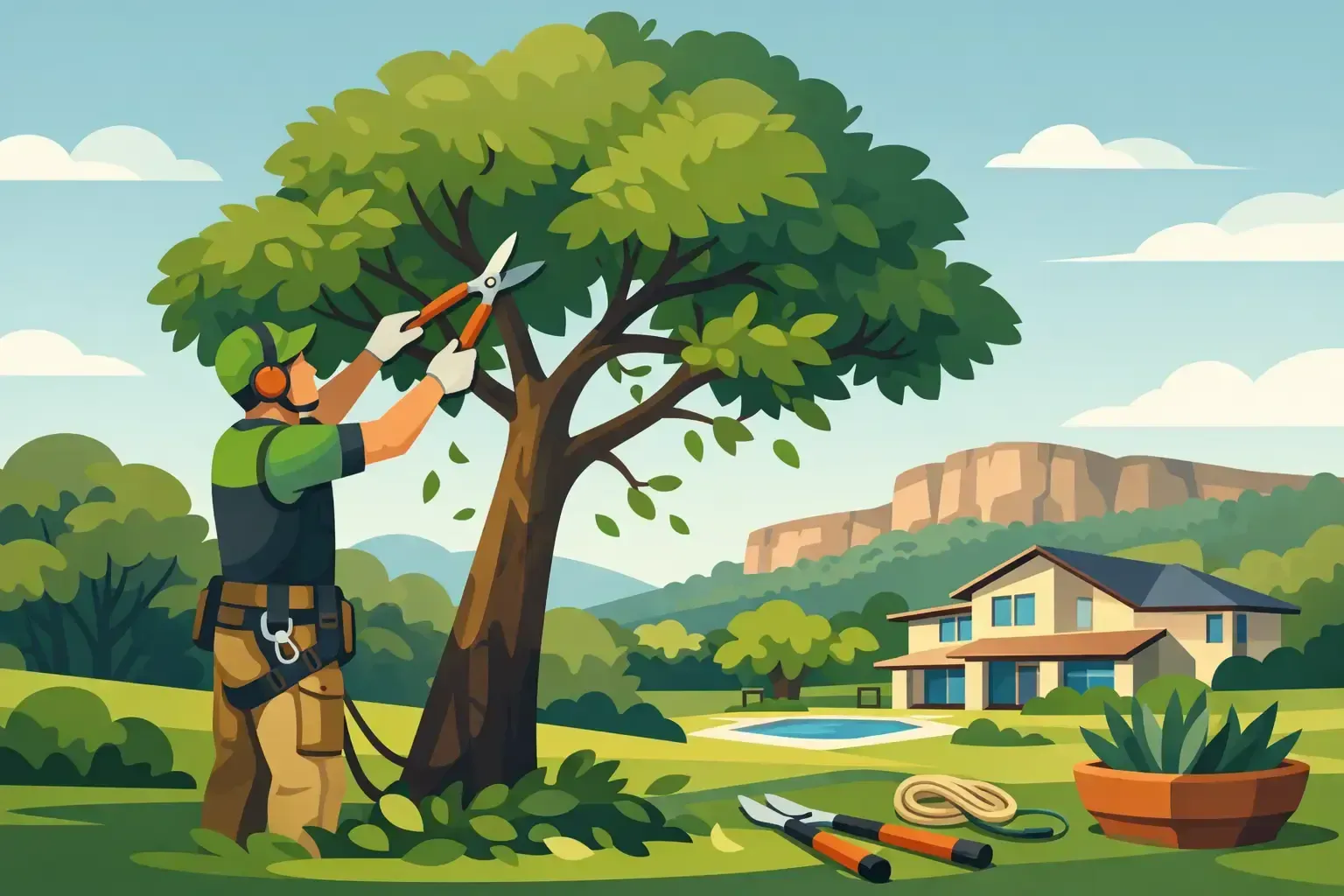
Worker pruning a tree in a sunny yard beside a house, with tools on the grass.
August 22, 2026
A mature live oak shading a Bee Cave driveway can look indestructible right up until a heavy limb hangs over the roof, a cedar elm starts crowding the servic...
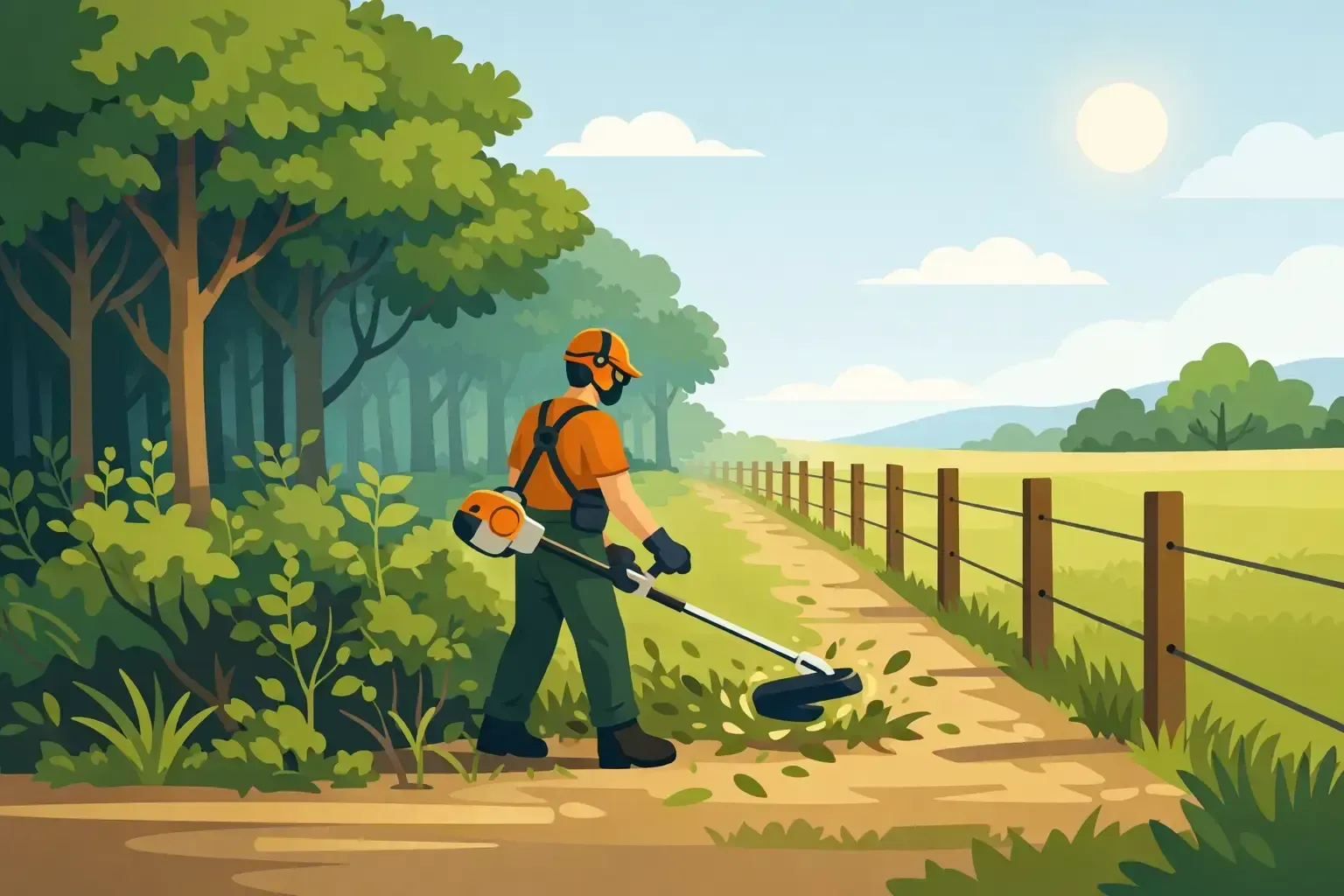
Person using a string trimmer beside a fenced field on a sunny day
August 20, 2026
A fence line can disappear fast in Central Texas. One wet spring, a few missed mowing cycles, and suddenly cedar, huisache, vines, fallen limbs, and thorny b...
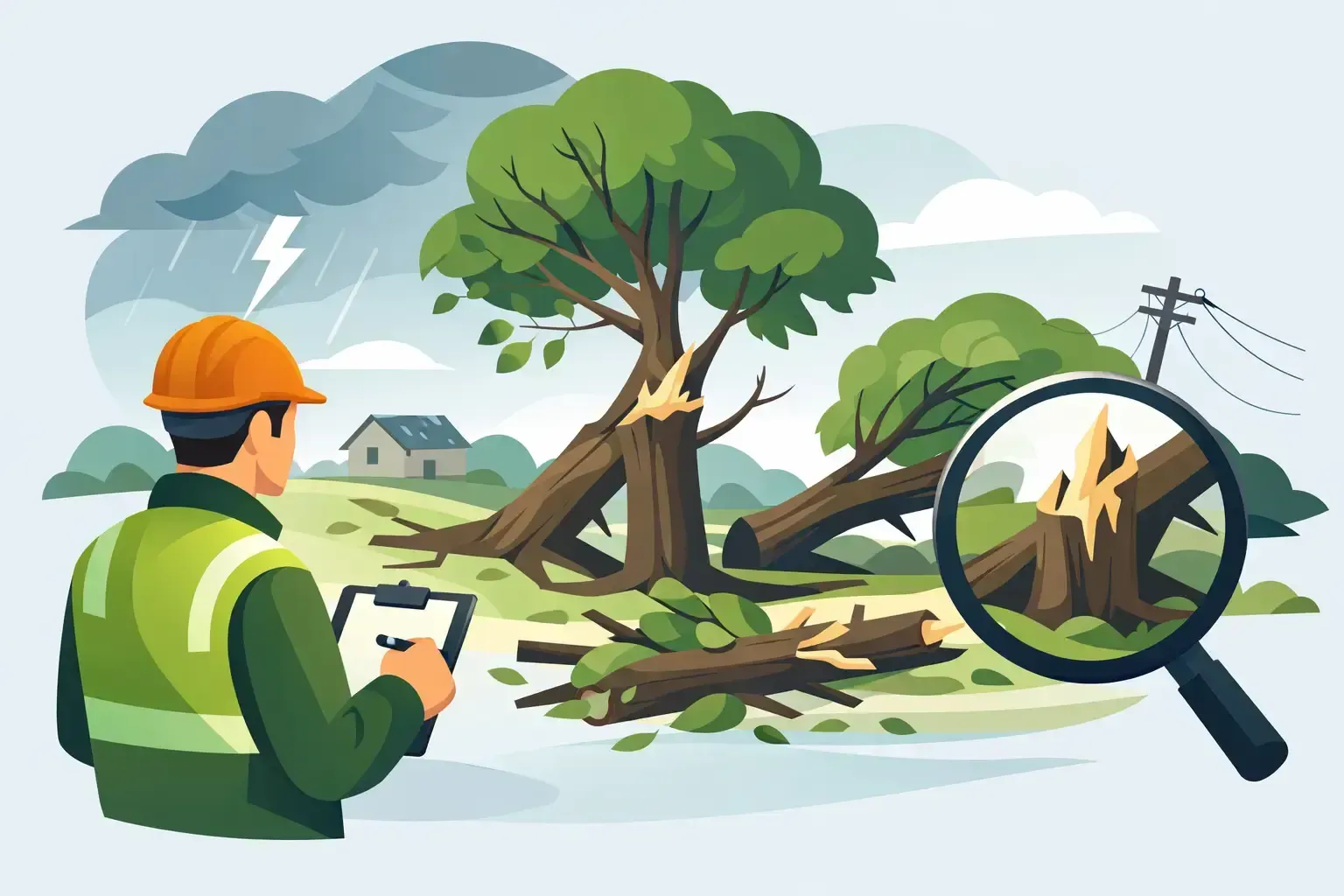
Worker inspecting storm-damaged tree with fallen branches and a magnifying glass in a windy yard
August 18, 2026
A hard Central Texas storm can turn a healthy-looking canopy into a real property hazard in a single night. This guide to storm damaged tree assessment helps...
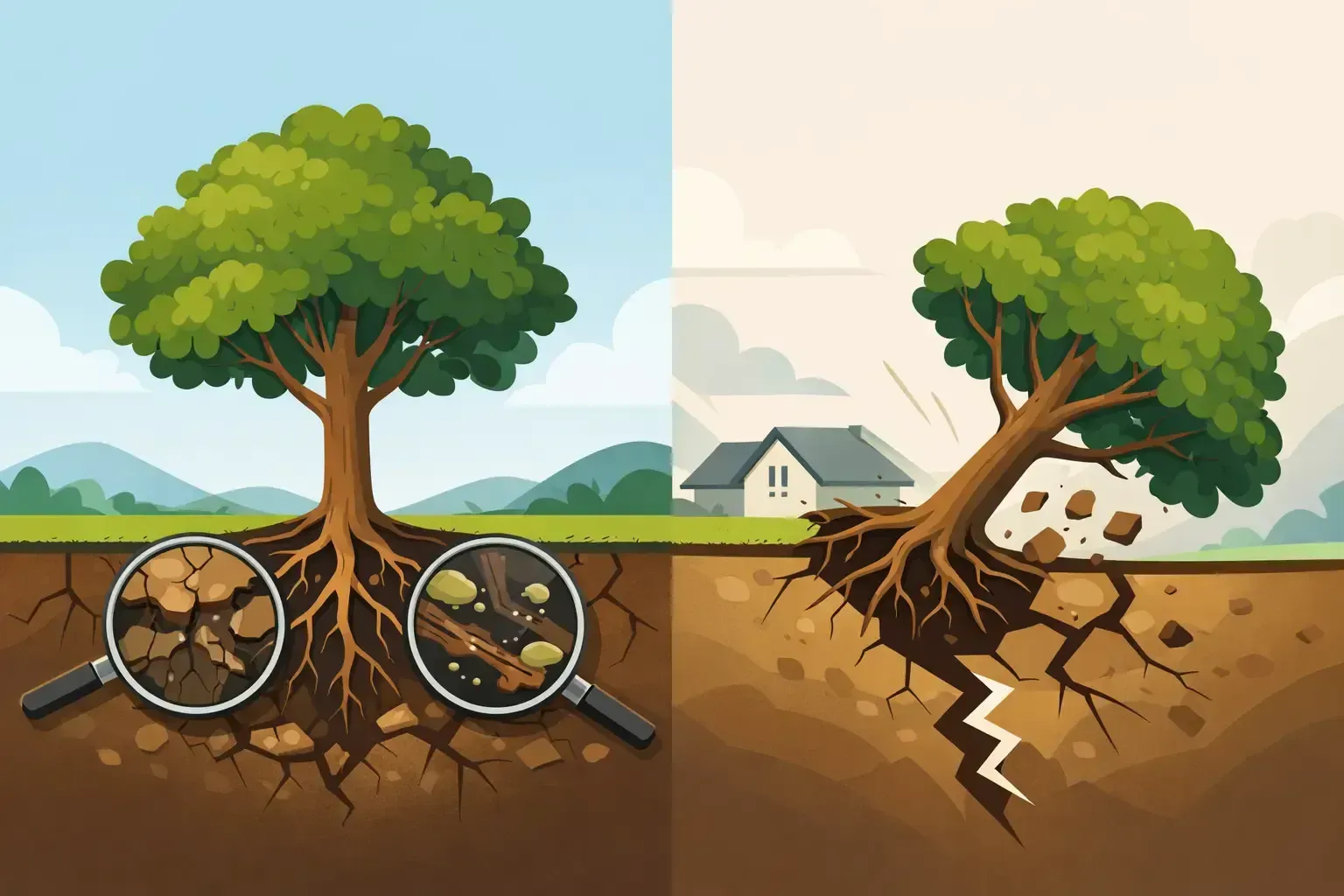
Healthy and damaged trees showing root health and drought soil cracking on a farm landscape
August 16, 2026
A live oak can look perfectly fine above ground while its support system is under serious stress below it. That is what makes root problems so frustrating fo...
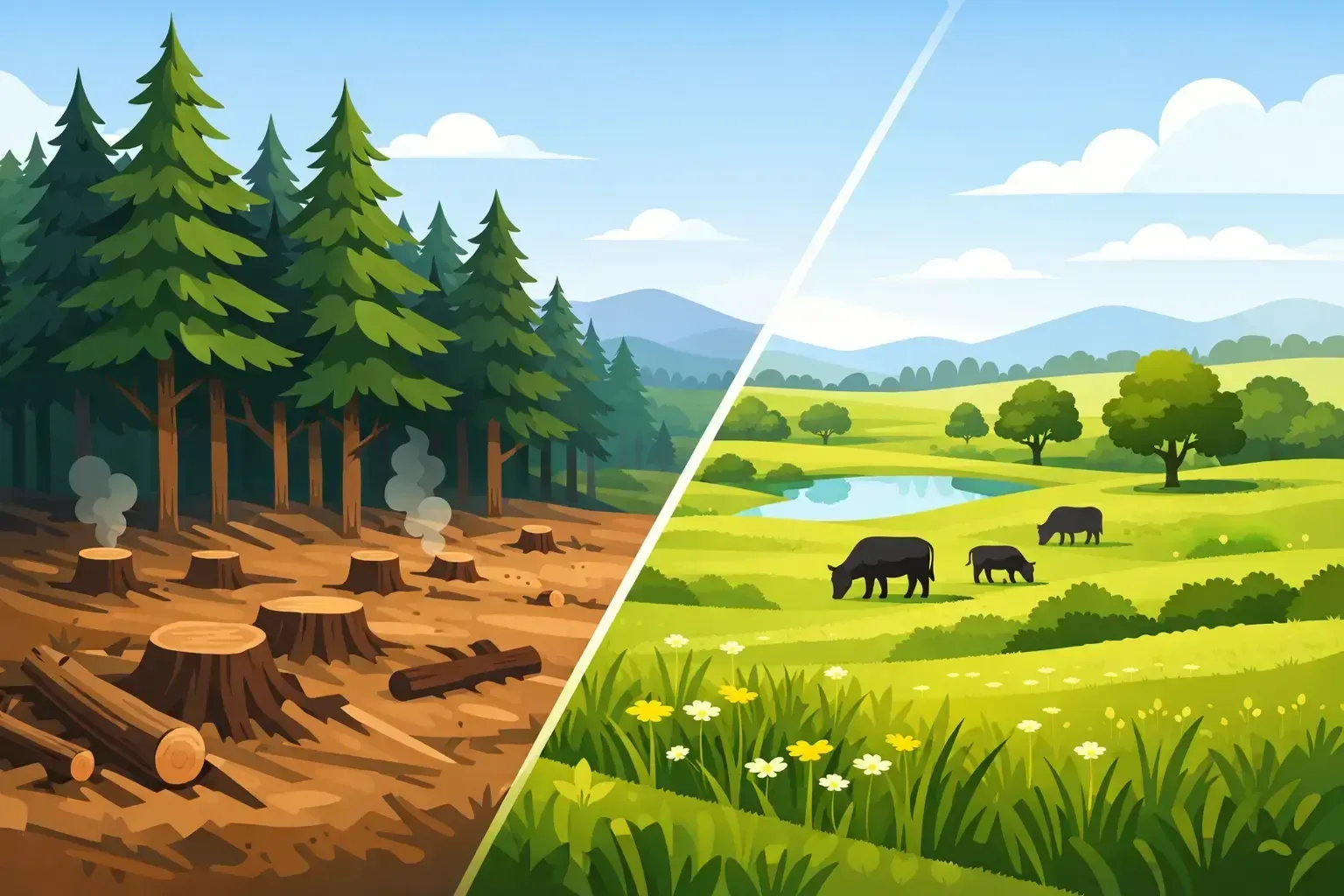
Split view of deforestation and healthy green pasture with cows under a bright sky
August 14, 2026
A cedar-choked pasture can make a property feel smaller every year. Water disappears into dense juniper cover, native grasses lose sunlight, fence lines vani...
Farmer in field watching a blue tractor spray crops, with cows, barn, hills, and smoke in the background
September 1, 2026
A ranch can look green and still be headed in the wrong direction. Dense brush can hide stressed oaks, crowd out usable pasture, choke access roads, and crea...
Wildfire burning in a forest with firefighters, helicopter, and smoke over a split rural landscape
August 30, 2026
A hot, windy afternoon can turn a forgotten brush pile, a crowded cedar stand, or low limbs near a structure into more than a property-maintenance issue. Tex...
Environmental inspection scene with drone, tree, magnifying glass, recycle bin, and hard hat in a city park
August 28, 2026
A shaded entry drive can become a liability fast when a heavy limb hangs over customer parking, a dead cedar leans toward a fence, or brush builds up around ...
Wildfire response with firefighters, water tanker, helicopter, and smoke near homes in a rural neighborhood
August 26, 2026
A Central Texas wildfire mitigation guide has to start with a hard truth: a beautiful Hill Country property can carry fire faster than most owners expect. Ce...
Savanna wildfire with trees, deer, and smoky hills under a bright sky
August 24, 2026
A beautiful shade tree should not become a fuse leading to your home. For Central Texas property owners, choosing the best trees for wildfire resistance mean...
Worker pruning a tree in a sunny yard beside a house, with tools on the grass.
August 22, 2026
A mature live oak shading a Bee Cave driveway can look indestructible right up until a heavy limb hangs over the roof, a cedar elm starts crowding the servic...