

Large-Scale Storm Response and Tree Removal for Central Texas Properties
When a major storm affects a community, HOA, MUD, or managed property, the aftermath is rarely a single-tree problem. Dynamo Dusty's Tree Service provides coordinated, large-scale storm response and tree removal for multi-property situations across Dripping Springs, Wimberley, Driftwood, Hays County, and the surrounding Texas Hill Country. Led by an ISA Certified Arborist, our team assesses conditions across the property, prioritizes hazards, and sequences work with clear communication for managers, boards, residents, and other stakeholders.
Planned, Coordinated Recovery
Storm Damage Tree Removal at Community and Property Scale
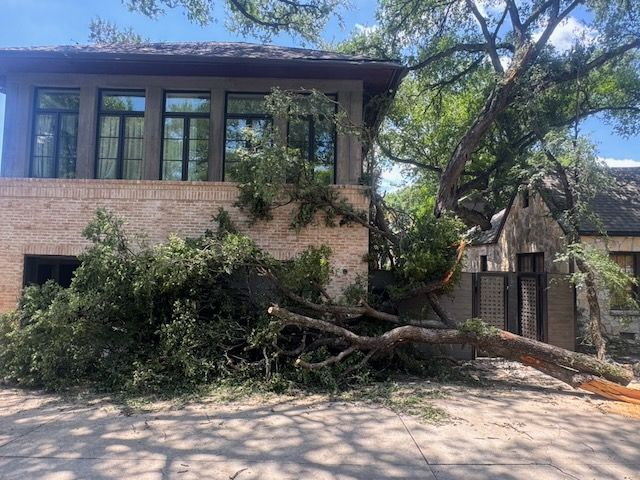
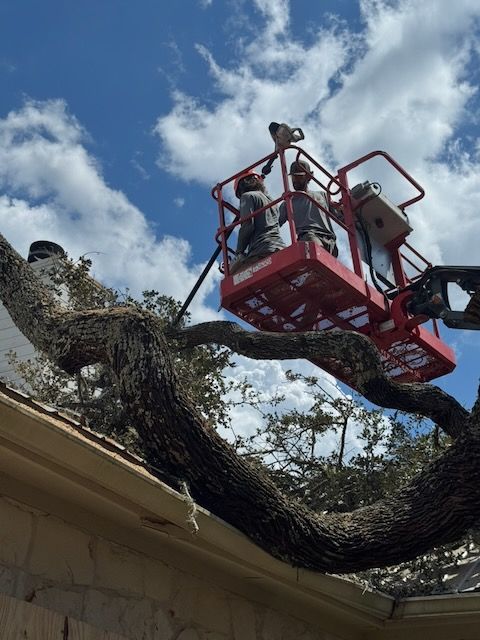
Single-property emergency calls and community-wide storm recovery are different challenges. Large-scale storm response involves multiple affected sites, competing priorities, access and logistics, and stakeholders who need clear communication throughout the process. Dynamo Dusty's approaches this work with a documented assessment, a prioritized scope, and a phased plan that can account for roads, common areas, trails, residences, and other shared spaces. Our ISA Certified Arborist-led team prioritizes damaged or hazardous trees based on condition, access, and immediate risk so the sequence of work is driven by the needs of the property as a whole.
Who We Work With
HOAs, MUDs, Property Managers, and Large Landowners
Our large-scale storm response work is built around the audiences that face the most complex post-storm situations. HOA and MUD boards may need priorities, budgets, and clear communication for residents and stakeholders. Property managers may need coordinated access across multiple sites, hazard prioritization along roads and common areas, and phased execution that keeps the broader recovery organized. Large managed properties may also need debris handling and selective preservation of mature trees across different areas. We adapt the scope, phasing, and communication to the property and the situation.
Arboricultural Judgment When It Matters Most
Preservation-First Thinking, Even After a Storm
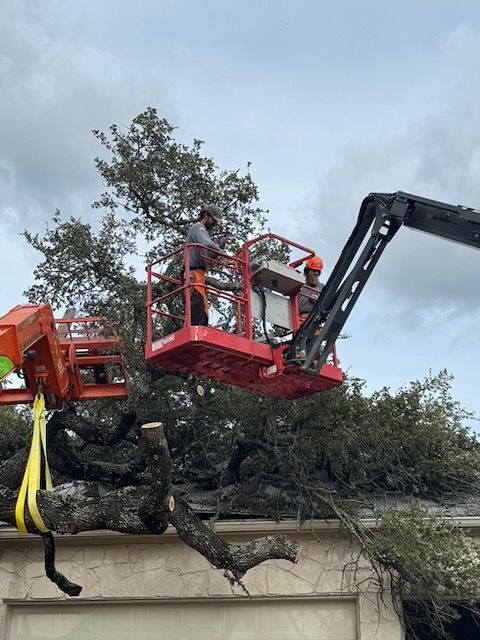
Storm damage does not automatically mean a tree must come down. Mature and valuable trees can retain long-term value for a property, so affected trees should be considered in context before removal is recommended. Our ISA Certified Arborist-led process looks at tree condition, root and canopy impacts, surrounding hazards, and the broader property needs. When pruning or monitoring is practical, we can recommend that path. When removal is the responsible choice, we explain why and include it in the recovery scope. That preservation-minded judgment helps storm response address immediate hazards without turning every damaged tree into an automatic removal.
Common Questions
What Property Managers and HOA Boards Ask About Storm Response
What is the difference between emergency tree service and large-scale storm response?
Emergency tree service typically addresses a single urgent hazard on one property, such as a tree on a roof or blocking a driveway, and the priority is fast, safe resolution. Large-scale storm response is a different kind of work. It involves multiple affected sites, competing priorities across roads, common areas, and individual residences, and stakeholders who need documentation and phased plans. Dynamo Dusty's approaches community and large-property storm recovery as a managed project, with a formal assessment, a prioritized scope, and structured communication throughout, rather than a series of disconnected urgent calls.
How do you decide which trees or areas get addressed first after a major storm?
Our ISA Certified Arborist leads the post-storm assessment and evaluates each situation for immediate risk to people, structures, roads, and utilities. Trees that pose an active hazard to occupied buildings, primary access roads, or critical infrastructure are addressed first. From there, work moves through common areas, secondary access points, and individual sites in a sequence that reflects actual risk levels rather than the order calls came in. This structured approach helps HOA boards, MUD managers, and property managers explain priorities to residents and governing bodies, with clear documentation to back it up.
Can storm response work be phased across multiple budget cycles for an HOA or MUD?
Yes. Not every post-storm tree situation is an immediate life-safety emergency, and some communities face more affected trees than a single budget cycle can absorb. After the initial assessment, we can separate work into priority tiers: immediate hazards, near-term risk reduction, and longer-term canopy management or cleanup. This gives HOA boards and MUD managers a defensible framework for allocating funds across cycles while ensuring the most critical work happens first. Detailed written scopes for each phase support the board approval and resident communication process.
Will you try to save damaged trees, or does storm response mean removing everything?
Storm damage does not automatically mean a tree should come down. Our ISA Certified Arborist evaluates affected trees based on structural condition, root condition, canopy loss, overall health, and the surrounding site before making a recommendation. Mature live oaks, heritage trees, and established canopy have real long-term value, and we take that seriously. When corrective pruning, monitoring, or other appropriate care gives a tree a reasonable future, we favor preservation. Removal is recommended when the damage or ongoing risk makes retention impractical.
How do you manage communication across a large property or community during storm recovery?
We provide detailed written proposals and scopes before work begins so boards, managers, and landowners know exactly what is planned, in what sequence, and at what cost. During active work, we coordinate site access, communicate any changes to the plan, and flag conditions discovered during the work that were not visible in the initial assessment. For HOA and MUD clients, we understand that resident communication and board documentation are part of the job, and we structure our reporting to support that process rather than leave it entirely to the client.
Is post-storm cleanup included, or is that billed separately?
Debris handling and cleanup are addressed in the scope for storm response work so clients know what is included before work begins. Dynamo Dusty's emphasizes careful cleanup and the finished condition of the property, but the exact cleanup, processing, and disposal scope depends on the project and should be defined in the proposal.
Which parts of Central Texas does Dynamo Dusty's serve for storm response work?
Our primary service area for large-scale storm response includes Dripping Springs, Driftwood, Wimberley, and Hays County, along with surrounding Texas Hill Country communities. Buda, Kyle, Johnson City, Woodcreek, and Southwest Austin are secondary markets we serve on a fit-dependent basis. If you are unsure whether your property falls within our operating area, reach out directly at 737-248-0108 or sales@dynamodustytree.com and we can confirm availability for your location.
What Our Clients Say







