
Complex Tree Removal and Hazard Mitigation in the Texas Hill Country
Some tree removals are straightforward. Others involve tight access, heavy limbs over structures, proximity to utilities, or constrained work zones that require careful planning. Dynamo Dusty's Tree Service handles complex tree removal and hazard mitigation across Dripping Springs, Wimberley, Driftwood, and surrounding Hays County communities. Our ISA Certified Arborist-led team assesses the full picture before work begins so the method fits the site, the risk is managed deliberately, and surrounding property is protected throughout the project.
Planned. Precise. Professional.
What Makes a Tree Removal Complex
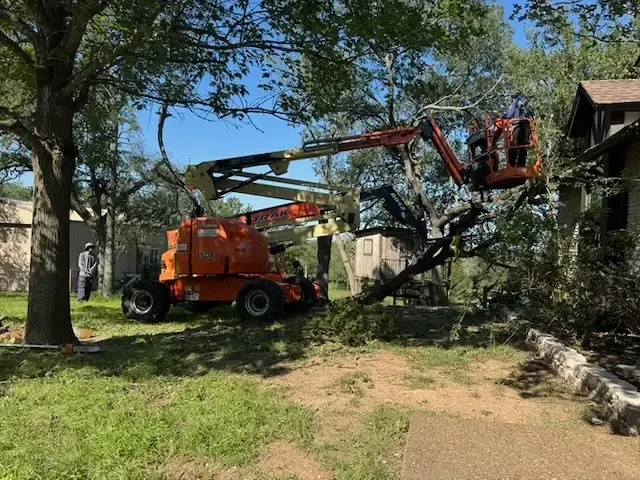
Not every hazard tree is a candidate for a straightforward fell-and-haul. A removal becomes complex when one or more of the following factors are in play: the tree leans toward a structure, fence, or utility line; access for equipment is limited by terrain, gates, or neighboring features; the tree is large, dead, or structurally compromised in ways that make it unpredictable; or multiple trees in close proximity need to come down in a specific sequence to protect what stays. Our hazard tree assessment process starts with a thorough site evaluation. We look at the tree's structure, the condition of the wood, the weight distribution, the surrounding obstacles, and the soil conditions underfoot. From there, we build a removal plan that identifies the right equipment, the right rigging approach, and the right sequence of cuts. That level of planning is what separates a well-executed complex removal from one that causes collateral damage or puts a crew at unnecessary risk.
ISA Certified Arborist Leadership
Engineering-Based Planning for Dangerous Tree Removal
Dusty Drake holds a B.S. in Mechanical Engineering, an MBA, and ISA Certified Arborist credentials (TX-359957A), along with ISA Texas Oak Wilt and Texas Wildfire Risk Reduction qualifications. That combination matters when complex tree removal requires careful access planning, equipment selection, rigging, sequencing, and property protection before field work begins. Hill Country properties can range from tight residential lots to larger ranch and estate settings, each with different access, structures, retained trees, and site constraints. We account for those variables during planning so the field crew has a defined method for the work rather than improvising around avoidable problems.
Protecting What Stays
Tree Risk Mitigation Beyond the Cut
Removing a hazard tree is only part of the job. How the work is done affects the surrounding trees, turf, hardscape, and structures. Our complex removal planning may include controlled rigging, equipment-access planning, ground or property protection, and thorough cleanup once the work is complete. We also consider what happens to the trees that stay. Root zones can be affected by heavy equipment and soil compaction, so those risks are considered during the assessment and scope where relevant. The goal is a finished site that reflects the care put into the planning, not just the removal itself. For residential clients, property managers, and HOA communities across the Hill Country, that finish quality matters. A well-planned removal should address the hazard while protecting the surrounding property and retained trees as much as practical.
Common Questions
Complex Tree Removal and Hazard Mitigation: What You Need to Know
How do you decide whether a tree needs to be removed or can be treated and kept?
Our ISA Certified Arborist evaluates the tree's structure, the condition of the wood, and any signs of disease or decay, along with how the tree relates to nearby structures and people. If a tree can be retained safely through pruning, monitoring, or other appropriate care, we will recommend that path. Removal becomes the responsible choice when the structural risk is too significant to manage in place, when decline or damage is too advanced, or when the tree's location makes failure likely to cause serious damage. We explain our reasoning in plain terms so you can make an informed decision.
What does a hazard tree assessment actually involve?
A hazard tree assessment is a systematic evaluation of the tree and its surroundings. We look at the trunk, major limbs, and root zone for signs of structural weakness, disease, decay, or damage. We also consider the tree's lean, its proximity to structures and utilities, the soil conditions, and any history of disturbance in the area. The assessment results in a clear finding: the tree's current risk level, the factors driving that risk, and the options available to address it. For complex situations, we develop a detailed scope and proposal before any work begins.
What rigging and equipment do you use for removals near structures or utilities?
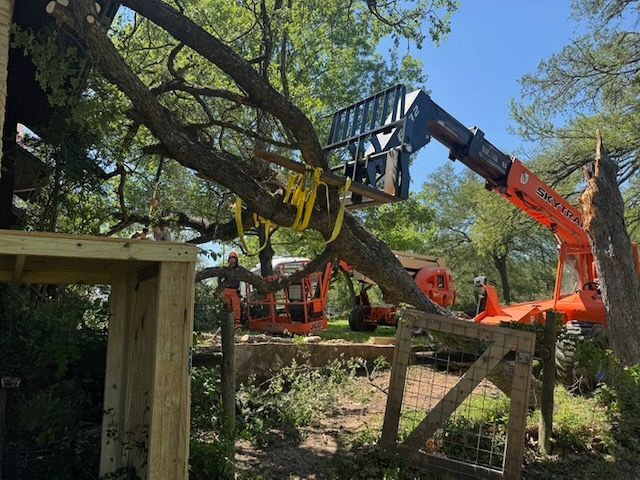
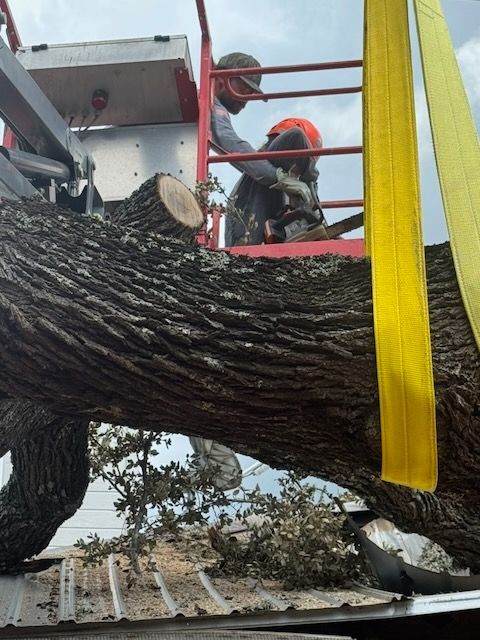
We select rigging and equipment based on the site assessment. For trees near structures, controlled rigging allows sections to be lowered in a planned sequence. Cranes or aerial lifts may be appropriate depending on access, tree size, and position. The equipment plan is included in the removal scope, with the aim of protecting surrounding structures and landscaping.
Can a complex removal be done without damaging the surrounding landscape or retained trees?
Complex removals can often be planned to reduce impacts on the surrounding landscape and retained trees. We identify root zones and sensitive areas during the assessment and build property protection and access routes into the work plan. Rigging controls where wood lands, and crew movement on the site is managed to limit compaction and surface damage. We also flag risks to retained trees and address them in the scope when practical. Careful cleanup and the finished condition of the property are part of how we plan the work.
What is the difference between a planned complex removal and emergency tree service?
Complex tree removal is planned work. The tree has been assessed, the risk is understood, and the removal is scheduled with a full scope, equipment plan, and crew coordination in place. Emergency tree service responds to an active, immediate hazard, often after a storm or sudden failure, where speed and safety are the first priorities and full planning time may not be available. Both require skill and experience, but the approach differs significantly. If a tree is concerning but not an active emergency, a planned assessment gives the team time to define the appropriate approach before work begins.
Do you work with property managers and HOA communities, not just individual homeowners?
Yes. A significant part of our work involves property managers, HOA communities, and MUDs across Hays County and the Texas Hill Country. Complex removals in those settings often involve multiple trees, coordinated access across common areas, and communication with boards or residents. We are comfortable working within those structures, developing phased scopes when budget cycles require it, and providing the documentation that management teams and boards typically need. Residential homeowners in Dripping Springs, Wimberley, Driftwood, and surrounding communities are equally welcome to reach out.
What should I expect during a complimentary property walkthrough?
A member of our team will walk the relevant areas of your property with you, look at the trees you are concerned about, and evaluate any others that may warrant attention. We will explain what we observe in plain language, including any factors that affect risk or influence the removal approach. If work is recommended, we follow up with a detailed written proposal that outlines the scope, the method, and the cost. The walkthrough is the right starting point whether you have one tree in question or a larger property-wide situation to sort through.
What Our Clients Say