
Wildfire Risk Mitigation and Defensible Space for Texas Hill Country Properties
Wildfire exposure is a real consideration for many Texas Hill Country properties, especially where ground fuels, ladder fuels, dense understory, and connected canopy create pathways for fire. Dynamo Dusty's Tree Service provides wildfire risk mitigation and community fuel management guided by an ISA Certified Arborist who holds the ISA Texas Wildfire Risk Reduction qualification. We assess fuels, canopy structure, access, and site conditions together, then develop a scope that reduces risk while preserving desirable trees and the character of the property where practical.
What We Do
Fuel Reduction and Defensible Space Creation Built Around Your Property
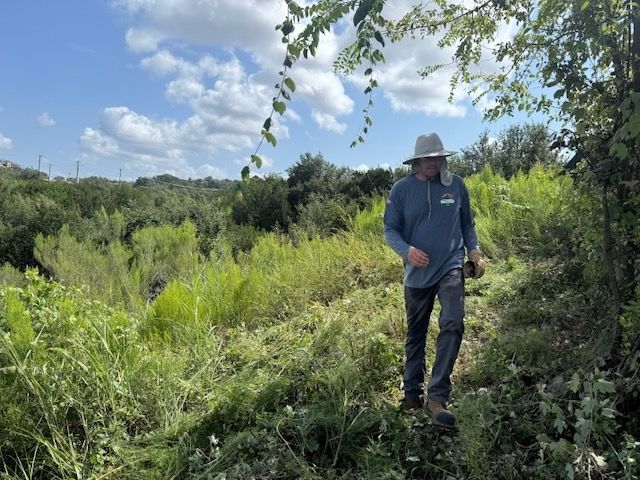
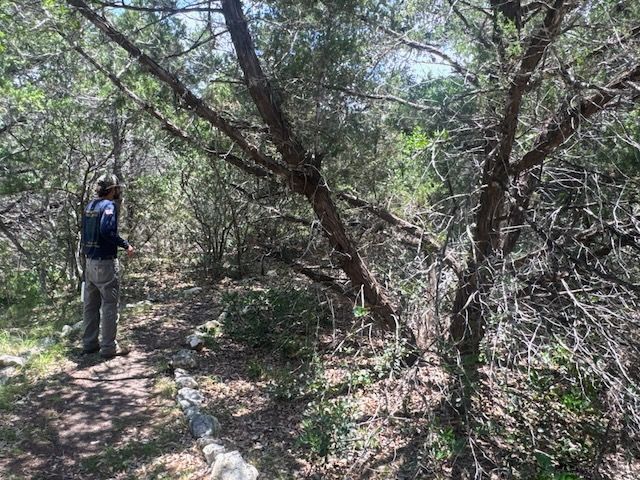
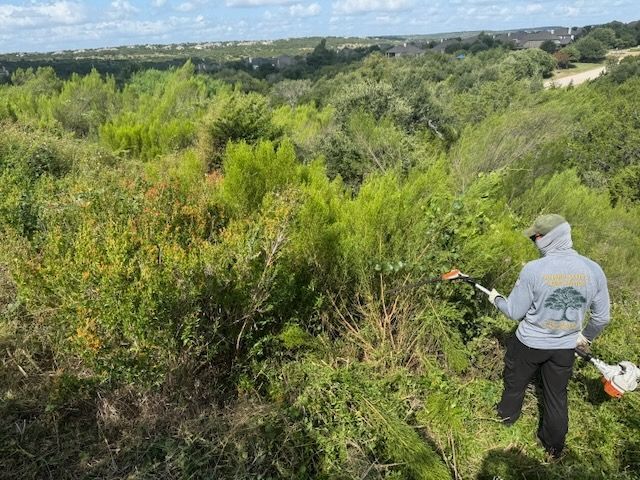
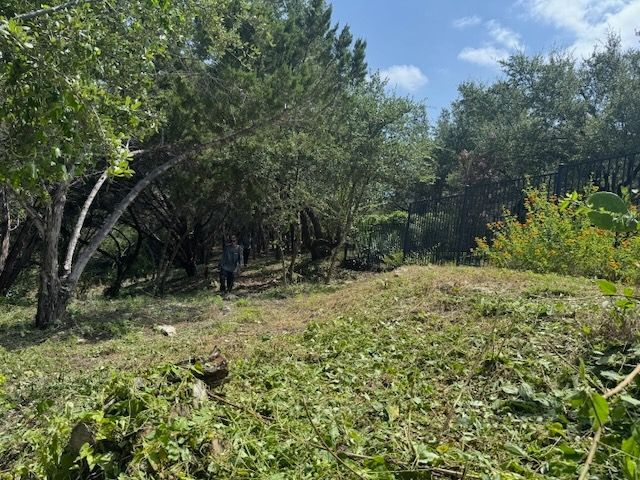
Effective wildfire risk reduction starts with understanding how fuels are arranged across a specific property. Ground fuels, ladder fuels, understory vegetation, cedar, canopy conditions, and access all play a role, and each Hill Country property presents a different combination of those factors. Our process begins with a whole-property assessment before the scope is written. From there, a fuel-management plan may include selective thinning, cedar and understory management, removal of dead or hazardous material, canopy separation, shaded fuel breaks, and work around access or evacuation corridors. Where mature or valuable trees can be preserved, we plan around them. Where condition, risk, or fuel-management needs make removal the responsible choice, we explain why. ISA-qualified planning guides the work, with equipment selected for the site and attention to property protection, retained trees, and cleanup throughout the project.
Our Qualifications
ISA-Qualified Texas Wildfire Risk Reduction Leadership
Dynamo Dusty's is led by Dusty Drake, an ISA Certified Arborist (TX-359957A) who holds both the ISA Texas Wildfire Risk Reduction Qualified credential (TXWRRQ-262) and the ISA Texas Oak Wilt Qualified credential (TOWQ-725). Those qualifications support preservation-minded fuel management, canopy decisions, and oak-wilt-conscious planning for Central Texas properties. Dusty also holds a BSME and MBA and brings an engineering-based approach to planning: access, equipment, sequencing, and scope are considered before field work begins. For larger ranch, estate, HOA, or MUD properties, that planning discipline can support phased wildfire-risk projects with clear priorities, documented scopes, and communication for boards, residents, or landowners. Veteran-owned and team-operated, Dynamo Dusty's is built to organize complex work across properties of different sizes.
Who We Serve
Residential, Ranch, HOA, and Large-Property Wildfire Preparedness
Wildfire risk reduction looks different depending on the property. A homeowner may need fuel reduction and defensible conditions around structures while preserving mature trees and landscape character. A large landowner may need selective thinning, cedar or understory management, access improvements, or shaded fuel breaks across acreage. An HOA or MUD may need a phased plan for common areas, trails, open space, access routes, and recurring fuel maintenance. We work across those property types with scopes built around the site, the risk, and the property goals. For property managers and community associations, detailed proposals and priorities can support stakeholder communication and budget planning. For residential clients, we explain what is being recommended and why. Wildfire mitigation is not a one-size-fits-all clearing program, and it does not eliminate fire risk.
Common Questions
Wildfire Risk Mitigation: What Property Owners Ask
Does wildfire mitigation work mean I have to remove all my trees?
No. The goal of defensible space creation is to reduce the fuels and conditions that allow fire to move quickly toward structures, not to clear a property entirely. In most cases, that means removing dead wood, thinning dense cedar and brush, raising lower limbs to interrupt ladder fuels, and increasing spacing between tree canopies. Mature live oaks and other valuable trees are preserved wherever practical. Our ISA Certified Arborist assesses each tree individually and explains the reasoning behind any removal recommendation so you understand what is being done and why.What is the difference between ground fuels, ladder fuels, and canopy fuels?
Ground fuels are the dry grasses, leaf litter, brush, and low vegetation that ignite first and carry fire across the surface. Ladder fuels are the shrubs, low branches, and mid-story vegetation that allow a ground fire to climb up into the tree canopy. Canopy fuels are the connected upper branches that let fire spread from tree to tree at height. A thorough fuel-reduction plan addresses all three layers. Removing only one layer while leaving the others intact limits the effectiveness of the work, which is why a whole-property assessment before scoping matters.Can an HOA or MUD phase wildfire mitigation work across multiple budget cycles?
Yes. For community associations and large properties, we develop phased scopes that prioritize the highest-risk zones first, then address secondary areas in subsequent seasons or budget periods. Each phase comes with a defined scope, clear pricing, and documentation that supports board approval and resident communication. This approach lets an HOA or MUD manage a meaningful fire risk tree management program without requiring the full investment up front. We have experience working with property managers and community boards on exactly this kind of multi-phase planning.How does oak wilt risk factor into wildfire mitigation pruning and clearing?
Oak wilt is a serious concern in Central Texas, and pruning or wounding oaks at the wrong time or without proper wound treatment can introduce the fungus. Our team lead holds the ISA Texas Oak Wilt Qualified credential, which means oak wilt considerations are built into how we plan and time any work that involves pruning, clearing near oaks, or removing infected material. We do not treat oak wilt risk as a separate concern from fire risk management; both are evaluated together during the property assessment and reflected in the recommended scope and timing.Does reducing wildfire fuels guarantee my property will not burn?
No. Fuel reduction and defensible-space work can reduce hazardous fuels and improve defensible conditions, but they do not eliminate wildfire risk. Wildfire behavior depends on many factors beyond any single property. Dynamo Dusty's focuses on practical risk reduction through thoughtful fuel management, preservation of desirable trees where possible, and recurring maintenance when appropriate.What happens during the complimentary property walkthrough?
We walk the site with you and evaluate existing fuel loads, tree spacing, canopy conditions, proximity of vegetation to structures, and any access considerations. We identify the highest-priority zones and note trees that should be preserved alongside those that present meaningful risk or fuel concerns. After the walkthrough, we prepare a detailed proposal with a defined scope and recommended sequencing. You can schedule one by calling 737-248-0108 or submitting a request through the site.Which areas of Central Texas does Dynamo Dusty's serve for wildfire mitigation work?
Our primary service area covers Dripping Springs, Driftwood, Wimberley, and Hays County, along with surrounding Texas Hill Country communities. Buda, Kyle, Johnson City, Woodcreek, and Southwest Austin may be served depending on project fit and location. If you are unsure whether your property falls within our working area, the best step is to reach out directly. We are happy to discuss your situation and let you know whether we can help.
What Our Clients Say