
About Dynamo Dusty’s Tree Service
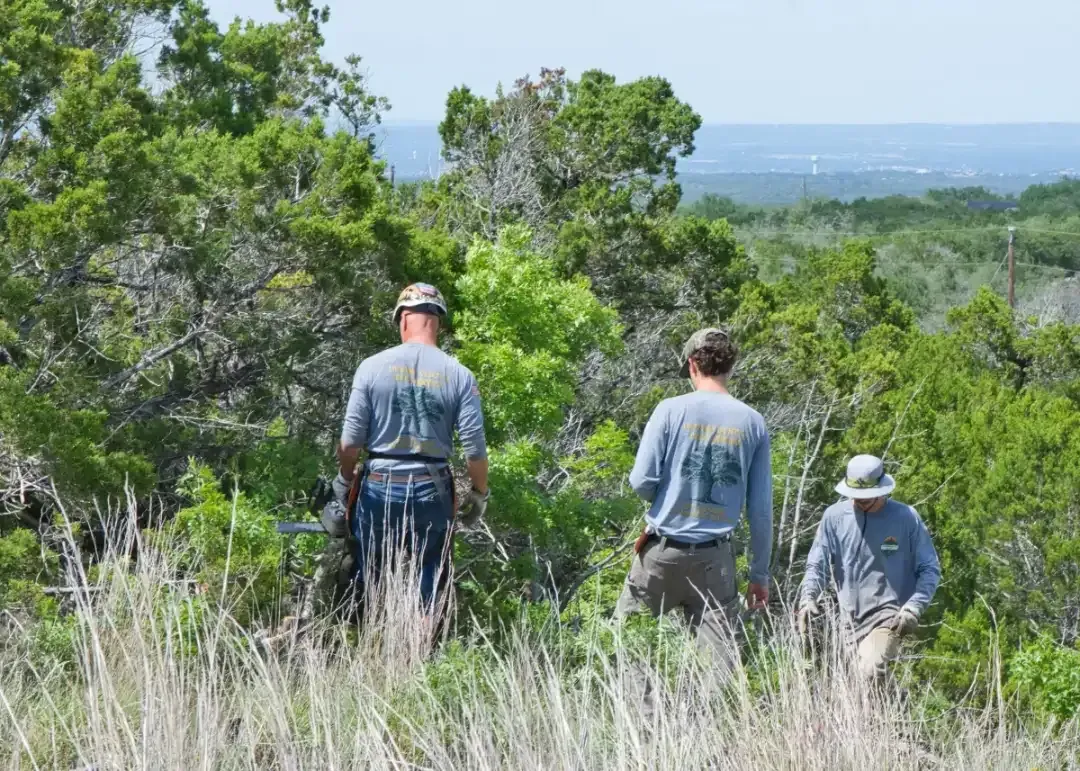
Dynamo Dusty’s is a veteran-owned, ISA Certified Arborist-led tree care and land stewardship company serving Dripping Springs and the Texas Hill Country. Our team brings arboricultural expertise, engineering-based planning, and a preservation-minded approach to properties ranging from homes and estates to commercial sites and managed communities.
Our Foundation
BUILT ON TECHNICAL EXPERTISE, SERVICE, AND STEWARDSHIP
Dynamo Dusty’s began with founder Dusty Drake’s background in engineering, military leadership, and arboriculture, but it has grown into a team built to handle much more than routine tree work. Today, leadership, operations, sales, arboricultural expertise, and field crews work together to plan and execute projects across the Texas Hill Country.
That technical foundation still shapes how we work: understand the property, build a clear plan, communicate the scope, protect what matters, and carry out the work with care. Just as important is the culture behind it. Veteran ownership, mentorship, accountability, and professional development continue to guide how the team serves clients and grows together.
recommended by hunt vfd
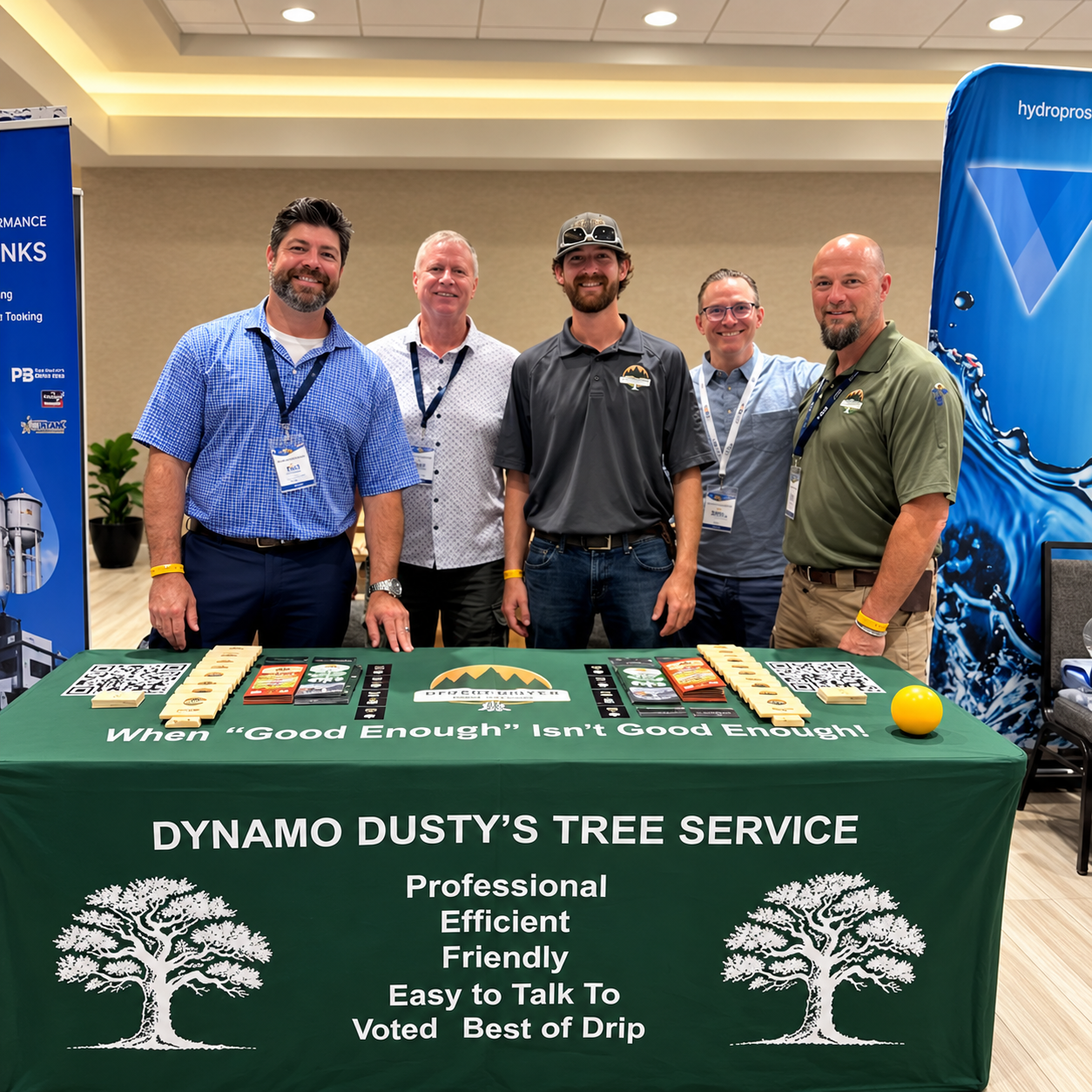
We are honored to earn the trust of our local responders and proud to be recommended by the Hunt Volunteer Fire Department. Protecting our community starts on the ground, and we take that responsibility seriously on every project we undertake. By maintaining rigorous safety standards, creating effective defensible space, and ensuring critical access routes remain clear, we help reduce wildfire risk across the Hill Country.
Who We Serve
TREE & LAND CARE FOR PROPERTIES OF EVERY SCALE
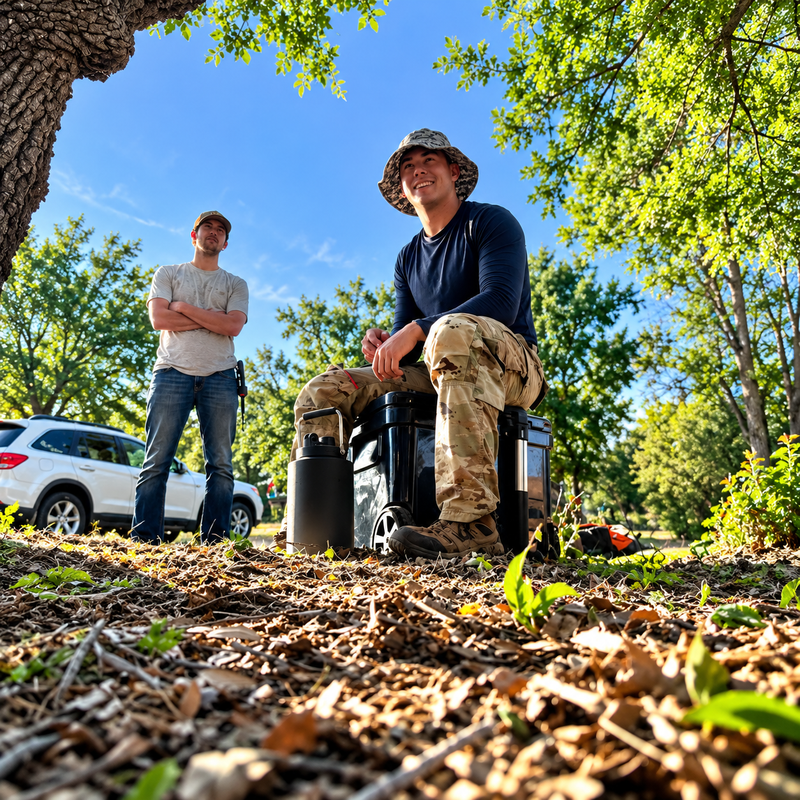
Dynamo Dusty’s works with homeowners, ranch and estate owners, builders, commercial properties, HOAs, MUDs, and property managers across the Texas Hill Country. Our team is especially well suited for larger properties, complex projects, and phased work that requires clear planning, communication, and coordination.
Whether the goal is preserving mature trees, preparing a site, managing wildfire risk, improving acreage, or caring for shared community spaces, we approach the property as a whole and recommend work based on its condition, use, risks, and long-term goals.
Common Questions
What People Ask Before Working With Us
What credentials does the leadership at Dynamo Dusty's Tree Service hold?
Dynamo Dusty's is led by Dusty Drake, who holds a BSME and an MBA alongside three ISA credentials: ISA Certified Arborist TX-359957A, ISA Texas Wildfire Risk Reduction Qualified TXWRRQ-262, and ISA Texas Oak Wilt Qualified TOWQ-725. These qualifications mean that arboricultural decisions on your property are guided by someone with formal training in tree science, regional wildfire risk, and one of Central Texas's most serious tree diseases.What does veteran ownership mean for how the company is run day to day?
Veteran ownership shapes Dynamo Dusty's approach to accountability, planning, communication, and team development. Dusty Drake's military leadership background informs how projects are managed and how the team works together. Qualifying residential customers can also receive a 10% veteran discount.Which communities and property types does Dynamo Dusty's work with?
The core service area covers Dripping Springs, Driftwood, Wimberley, and Hays County, with secondary coverage extending to Buda, Kyle, Johnson City, Woodcreek, Southwest Austin, and Austin for the right projects. The company works with a wide range of property types, including HOA and MUD communities, managed residential properties, commercial sites, ranches, estates, large acreage, and individual homeowners. Projects range from single-property tree assessments to phased, multi-property land management programs.How does an engineering background affect the way tree and land projects are planned?
Dusty Drake's mechanical engineering background informs how the team plans complex tree and land work. Before recommending a scope, the team considers access, equipment, rigging, work sequence, and property protection. The written proposal explains the recommended approach and what the work involves.Can Dynamo Dusty's handle large or phased projects for HOAs and property managers?
Yes. Dynamo Dusty's works with HOA boards, MUD districts, and property managers on tree and land projects across common areas and multiple properties. The team can organize priorities, phased work across budget cycles, and written documentation for boards and stakeholders.What happens during a complimentary property walkthrough, and what comes after?
A walkthrough is a site visit where the team assesses your trees, canopy structure, soil and site conditions, safety concerns, wildfire exposure, and your goals for the property. The assessment considers the whole property rather than a single symptom in isolation. After the walkthrough, you receive a detailed scope and proposal that explains what work is recommended, why it is recommended, and how it will be carried out. The process is designed to give you a clear picture before any commitment is made.Does the company lean toward preserving trees or recommending removal?
The company takes a preservation-first approach. Mature, heritage, and otherwise valuable trees are protected whenever it is practical and safe to do so. Removal is recommended when a tree poses a genuine risk, is in significant decline, or when site conditions make retention impractical, but it is never the default recommendation. The ISA Certified Arborist-led assessment process is designed to weigh long-term tree health, structural condition, site context, and property goals together before any recommendation is made.How does Dynamo Dusty's approach oak wilt and wildfire risk in the Hill Country?
Both are treated as regional realities that require specific expertise. Dusty Drake holds the ISA Texas Oak Wilt Qualified credential, meaning pruning timing, wound management, and clearing decisions are made with oak wilt transmission in mind. On the wildfire side, the ISA Texas Wildfire Risk Reduction Qualified credential guides fuel management recommendations, including ground fuels, ladder fuels, and canopy separation. The goal is to reduce risk and improve defensible conditions without eliminating the landscape character that makes Hill Country properties worth protecting.