
Tree Health and Arbor Care Services in the Texas Hill Country
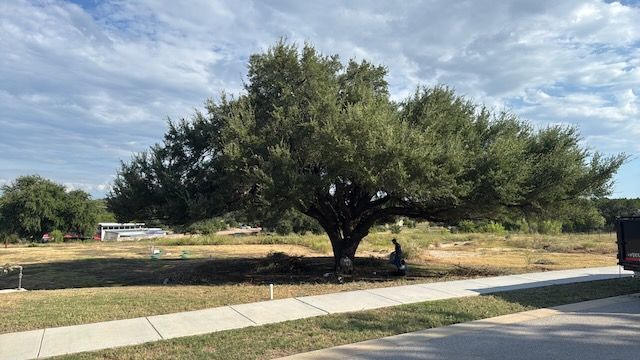
Healthy trees don't happen by accident, especially in Central Texas, where oak wilt, soil compaction, root damage, and changing site conditions can affect even mature trees. Dynamo Dusty's Tree Service brings ISA Certified Arborist-led arboricultural health management to properties across Dripping Springs, Driftwood, Wimberley, Hays County, and the surrounding Hill Country. Whether you're managing a single heritage oak or overseeing tree care across a community or large property, our team assesses the whole picture before recommending treatment, monitoring, or other intervention.
Why Tree Health Matters
What's Happening Below the Surface
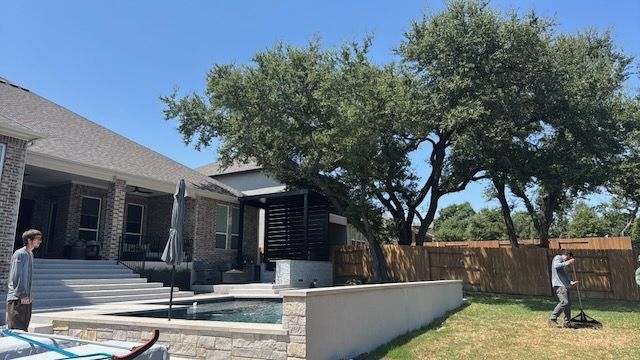
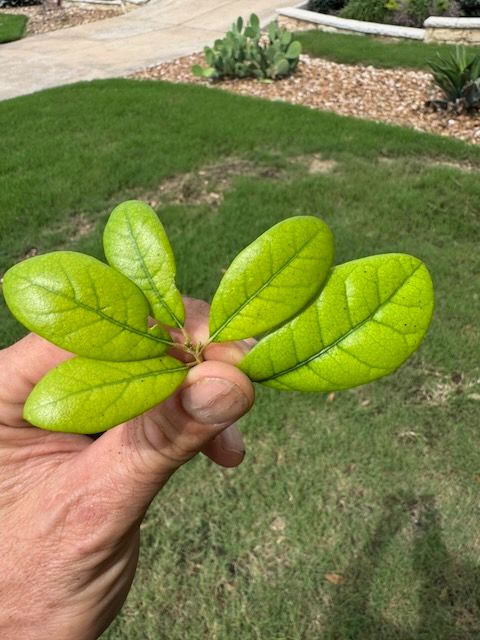
Some tree health problems begin below ground or within the canopy before they are obvious. Construction-related root damage, soil compaction, drainage and site conditions, and structural concerns can all affect long-term tree health. Certified arborist tree health evaluations look at the full picture: canopy condition, branch structure, roots and root zone, soil, and surrounding site conditions. That broader view helps us understand what may be affecting the tree before recommending next steps.
Our Approach
Assessment First, Recommendations Second
Dynamo Dusty's doesn't prescribe treatments before understanding the tree, the site, and the property goals. Our ISA Certified Arborist, Dusty Drake, holds qualifications in Texas Oak Wilt and Texas Wildfire Risk Reduction in addition to his core arboricultural credentials. That combination matters in Hill Country settings where regional tree-health risks need to be considered alongside the condition of the property. After a walkthrough, we put together a clear scope that explains what we found, why it matters, and what options are available. Soil and root-zone care, pruning guidance, monitoring, and treatment options are recommended when the individual tree and property actually support them, not as a standard package for every job.
Serving Larger Properties and Communities
Arboricultural Health Management at Scale
Property managers, HOAs, MUDs, and large landowners often need more than a one-time visit. Ongoing arboricultural health management across common areas, trails, roads, and open space requires a consistent approach, clear documentation, and the ability to prioritize work across budget cycles. Dynamo Dusty's is built for that kind of relationship. We can develop phased care plans that address higher-priority needs first, document findings to support board or budget planning, and discuss recurring monitoring or maintenance where it makes sense. The same engineering-based planning and preservation-first judgment that guides our single-property work applies at community and estate scale.
Common Questions
Arbor Care and Tree Health: What People Ask
How do I know if my tree is sick or just stressed from drought?
Drought stress and disease can look similar at first, with symptoms like thinning canopy, early leaf drop, or discolored foliage. The key difference is usually in the pattern and progression. Drought stress tends to affect the whole tree more evenly and often improves after rain or supplemental watering. Disease, like oak wilt or hypoxylon canker, typically follows a more specific pattern and continues to worsen regardless of moisture. A certified arborist evaluation looks at the canopy, bark, root zone, and site conditions together to distinguish between the two and recommend a path forward based on what's actually happening.When is it safe to prune live oaks in Central Texas without risking oak wilt?
The general guidance from Texas A&M and the Texas Oak Wilt program is to avoid pruning live oaks from February through June, when the sap-feeding beetles that spread oak wilt are most active. July through January is considered lower risk, though wound treatment with a latex-based paint is still recommended any time of year as a precaution. Risk also varies by location, season, and local beetle pressure. Our arborist holds the ISA Texas Oak Wilt Qualified credential and can help you plan pruning timing and wound care practices that make sense for your specific property and the trees you're working with.Can construction near a tree damage its health even if the trunk is untouched?
Yes, and this is one of the more common and underappreciated causes of long-term tree decline. Tree roots extend well beyond the drip line, often two to three times the canopy radius, and they occupy the same upper soil layers where construction activity happens. Grading, trenching, compaction from equipment, and changes to drainage can all damage the root system in ways that don't show up in the canopy for one to three years or longer. By the time symptoms appear, the injury is already done. If construction is planned near valuable trees, a pre-construction assessment and protection plan can significantly improve the odds of keeping those trees healthy.What does a tree nutrition and care program typically include?
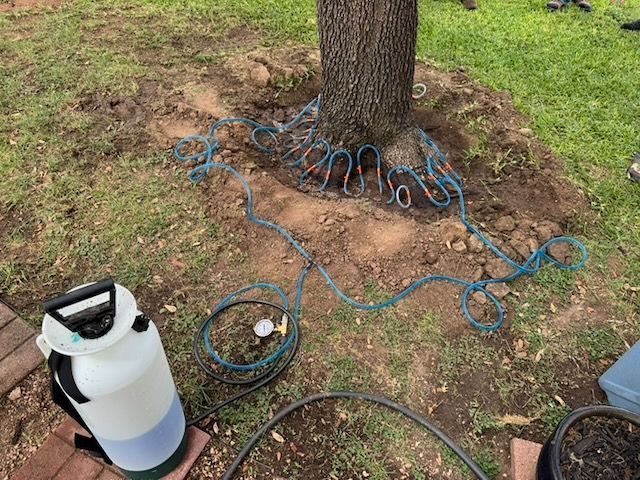
Tree care programs vary based on what the tree actually needs, which is why an assessment comes first. Depending on the tree and site, recommendations may include soil and root-zone improvement, mulching, structural or restorative pruning, monitoring, or other diagnostics and treatments when appropriate. The goal is to address the condition of the tree and property rather than apply a standard package to every job.What is the difference between structural pruning and ordinary trimming?
Ordinary trimming usually means removing branches for appearance, clearance, or size reduction without a specific plan for how the tree will grow afterward. Structural pruning is a longer-term practice focused on how the tree is built: identifying and correcting competing leaders, weakly attached branches, or imbalanced weight distribution while the tree is still young enough to respond well. Done correctly over time, it reduces the likelihood of branch failure and improves the tree's ability to support its own weight as it matures. For established trees, the approach shifts toward maintaining structure and removing defects rather than reshaping, since large cuts on mature trees carry their own risks.Can a tree with oak wilt be saved, or does it always need to be removed?
It depends on the tree, its condition, and how far the problem has progressed. Oak wilt can affect tree-care decisions differently across a property, so the right next step may involve monitoring, treatment where appropriate, preservation planning, or removal when that becomes the responsible choice. Dynamo Dusty's Texas Oak Wilt Qualified arborist can evaluate the situation and explain the options for the affected tree and surrounding oaks.How does Dynamo Dusty's approach tree health management for HOAs and property managers?
We understand that HOAs, MUDs, and property managers are often working within budget cycles, board approval processes, and multiple competing priorities. Our approach starts with a thorough assessment of the property's trees, followed by a prioritized scope that separates urgent safety concerns from longer-term care needs. That structure makes it easier to plan work in phases, present recommendations to a board or ownership group, and schedule follow-up visits to monitor progress. We provide documentation that supports the reporting and record-keeping those organizations typically need, and we're comfortable working around resident schedules, common area access requirements, and other coordination details.Which areas of Central Texas does Dynamo Dusty's serve for tree health and arbor care?
Our primary service area covers Dripping Springs, Driftwood, Wimberley, and Hays County, along with the broader Texas Hill Country. We also serve Buda, Kyle, Johnson City, Woodcreek, and Southwest Austin on a fit-dependent basis. If you're unsure whether your property falls within our service area, the best step is to reach out directly. We're happy to discuss your location and the scope of work to determine whether it's a good fit. You can contact us at 737-248-0108 or sales@dynamodustytree.com.
What Our Clients Say