

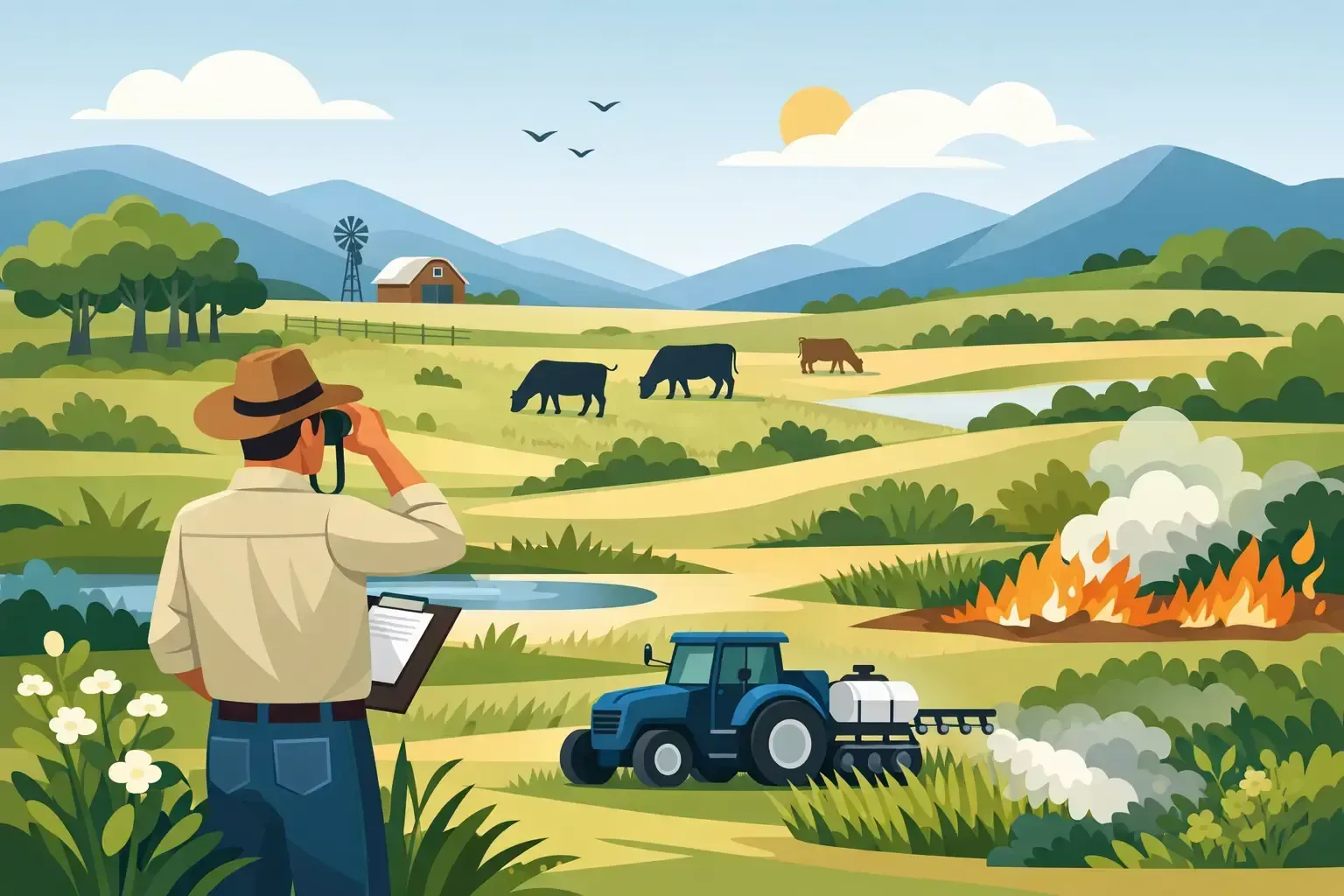
Ranch Land Clearing Services That Pay Off

April 18, 2026

A ranch does not get easier to manage when cedar, mesquite, brush, and deadfall start taking over. It gets hotter, tighter, riskier, and more expensive. Good ranch land clearing services are not about making land look stripped bare. They are about making acreage safer, more usable, and easier to work without creating a new set of problems six months later.

That distinction matters in Central Texas, where landowners are often balancing access, grazing, wildlife goals, drainage, fence lines, aesthetics, and wildfire exposure on the same property. Clear too little and the headaches stay put. Clear too aggressively and you can stress healthy trees, disturb soils, and lose the character that made the place worth owning in the first place.

What ranch land clearing services should actually accomplish

The best clearing work starts with a simple question: what do you need the land to do? A hunting property has different priorities than a homesite expansion. A cattle operation needs something different than a recreational ranch with heavy oak cover. Clearing without that plan is where money gets burned.

On a well-run project, the goal is usually some combination of better access, reduced fire load, improved sight lines, stronger pasture performance, and safer movement for equipment, livestock, and people. That may mean opening roads and trails, reclaiming overgrown acreage, thinning crowded tree stands, removing dead or declining trees, and cutting back ladder fuels that can carry fire from the ground into the canopy.

It can also mean preserving the right trees. Mature oaks, well-spaced native hardwoods, and healthy specimen trees often add more long-term value than a wide-open clearing job. Precision matters. A disciplined crew should know the difference between productive thinning and careless removal.

Not every property needs full clearing

This is where a lot of landowners get stuck. They know the place is overgrown, but they do not want it bulldozed into a blank field. Fair concern.

In many cases, selective clearing is the smarter move. Instead of removing everything in an area, selective work targets problem brush, weak trees, invasive growth, and congestion while keeping the stronger structure of the landscape intact. The result is cleaner, healthier, more functional land that still feels like Texas land, not a scraped lot.

That approach often works especially well on ranches with mixed goals. Maybe you want a cleaner understory around the house, access lanes to tanks or fence lines, and better wildfire defensible space, but you also want shade, privacy, and habitat. Those goals can live together if the project is planned with some judgment.

Wildfire risk is one of the biggest reasons to clear wisely

Around the Hill Country and surrounding areas, wildfire is not a theoretical issue. Dense brush, drought stress, cedar buildup, dead limbs, and unmanaged understory can turn a manageable property into a dangerous one fast.

That does not mean every ranch needs to look scalped. It means fuel loads need to be managed intelligently. Fire risk mitigation on rural land usually involves reducing brush density, removing dead material, spacing vegetation to slow fire spread, and creating safer zones around structures, roads, gates, barns, and operational areas.

A good crew will look at how fire could move across the property, not just where the brush is thickest. Slope, wind exposure, canopy density, and access routes all matter. So does cleanup. Cutting vegetation and leaving heavy debris where it falls can undercut the whole point of the project.

What gets cleared and what should stay

Every ranch has its own mix, but most clearing projects deal with some familiar offenders. Cedar is a major one because it crowds out other growth, pulls moisture, and contributes to heavy fuel loading. Mesquite can also become a management problem depending on density and location. Brushy understory, volunteer saplings, storm-damaged trees, and dead standing timber all tend to rise to the top of the list.

What should stay depends on the land plan. Healthy heritage trees, shade trees near structures or livestock areas, erosion-controlling root systems, and well-placed native species often deserve protection. In some areas, preserving strategic cover for wildlife also matters.

This is why ranch land clearing services should never feel like guesswork. It is not just cut versus keep. It is cut, keep, thin, prune, access, protect, and clean up in the right order.

The real difference between cheap clearing and professional clearing

Anybody can show up with equipment and start knocking vegetation down. That does not make it good land management.

Professional clearing has a plan, a scope, and a standard for what the property should look like when the crew leaves. Boundaries are clear. Trees to preserve are identified. Access routes are protected. Soil disturbance is considered. Debris handling is part of the job, not an afterthought.

Cheap clearing often misses those details. You may get torn-up ground, damaged oaks, ragged edges, piles left behind, and a property that looks hit rather than improved. That kind of work can cost less on day one and more for years after.

A better contractor will walk the ranch with you, ask what matters most, explain trade-offs clearly, and give transparent pricing tied to the actual work. That level of communication should not be a luxury. It should be standard.

Timing matters more than people think

Landowners often ask when they should schedule clearing. The answer is, it depends on the goal.

If wildfire reduction is the priority, earlier planning is better than waiting for peak heat and dry conditions. If access and visibility are the issue, almost any season can work, but wet conditions may affect equipment movement and soil impact. If tree health is part of the conversation, species and stress conditions should factor into timing too.

There is also the practical side. Ranch projects are easier to manage when they are not happening in the middle of an emergency. If you already know a road is overgrown, a fence line is disappearing, or brush is stacking up around structures, that is the right time to act. Not after storm season drops extra fuel on top of it.

What to expect during a well-run project

A strong project usually begins with a walkthrough and a real conversation, not a vague quote scribbled from the truck window. The contractor should understand how you use the property, where your priorities are, and what success looks like when the work is done.

From there, execution should feel organized. Crews should know the scope. Equipment should match the terrain and goals. Communication should stay consistent if conditions on the ground change. On rural land, surprises happen. Hidden rock, soft ground, storm damage, and unexpected density are common. Good operators adjust without losing the plot.

Cleanup is part of the result. Depending on the project, that can mean hauling, stacking, chipping, mulching, or processing debris in a way that makes sense for the property. The point is to leave the land more functional than before, not just newly disturbed.

Ranch improvement is rarely just about appearances

Yes, cleared land looks better. Fence lines show again. Oaks stand out. Roads feel open. The property breathes a little. But the value runs deeper than curb appeal.

Thoughtful clearing can improve movement across the ranch, reduce wear on vehicles and equipment, help with drainage observation, support grazing use, and make ongoing maintenance far easier. It can also reduce the chance that one bad storm or one spark turns into a much bigger problem.

That is why many landowners end up treating clearing as a foundational service, not a one-time cosmetic fix. Once the land is reclaimed and organized, everything else gets easier to maintain.

Choosing a crew you can trust on your land

Ranch owners know that letting a contractor onto acreage is a trust decision. You are not just hiring labor. You are handing over gates, roads, trees, structures, and years of investment.

So look for more than horsepower. Look for judgment, communication, and consistency. Ask how they decide what stays and what goes. Ask how they handle wildfire mitigation, debris, and site protection. Ask whether the crew is treating this like precision work or just a fast tear-out.

That is where a company like Dynamo Dusty's Tree Service stands apart. The work is approached with a disciplined, veteran-led mindset and an arborist-informed standard, which is exactly what larger ranch properties need when the job has real stakes.

If your ranch is getting harder to move through, harder to maintain, or harder to defend from fire, the answer is usually not more waiting. Smart clearing done with precision can give your land room to work again, and that is the kind of improvement you feel every time you drive through the gate.

Farmer in field watching a blue tractor spray crops, with cows, barn, hills, and smoke in the background
September 1, 2026
A ranch can look green and still be headed in the wrong direction. Dense brush can hide stressed oaks, crowd out usable pasture, choke access roads, and crea...

Wildfire burning in a forest with firefighters, helicopter, and smoke over a split rural landscape
August 30, 2026
A hot, windy afternoon can turn a forgotten brush pile, a crowded cedar stand, or low limbs near a structure into more than a property-maintenance issue. Tex...
Environmental inspection scene with drone, tree, magnifying glass, recycle bin, and hard hat in a city park
August 28, 2026
A shaded entry drive can become a liability fast when a heavy limb hangs over customer parking, a dead cedar leans toward a fence, or brush builds up around ...
Wildfire response with firefighters, water tanker, helicopter, and smoke near homes in a rural neighborhood
August 26, 2026
A Central Texas wildfire mitigation guide has to start with a hard truth: a beautiful Hill Country property can carry fire faster than most owners expect. Ce...
Savanna wildfire with trees, deer, and smoky hills under a bright sky
August 24, 2026
A beautiful shade tree should not become a fuse leading to your home. For Central Texas property owners, choosing the best trees for wildfire resistance mean...
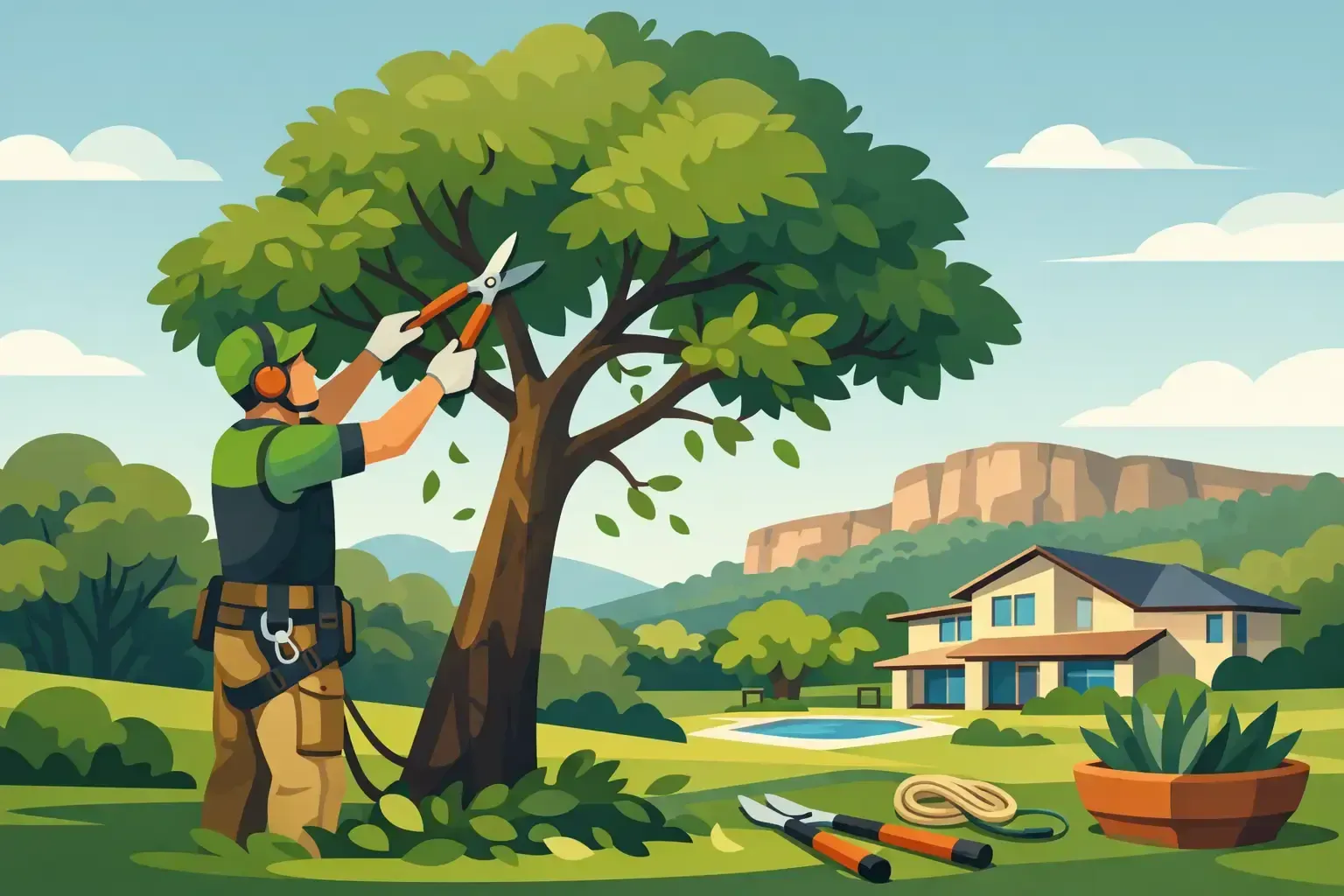
Worker pruning a tree in a sunny yard beside a house, with tools on the grass.
August 22, 2026
A mature live oak shading a Bee Cave driveway can look indestructible right up until a heavy limb hangs over the roof, a cedar elm starts crowding the servic...
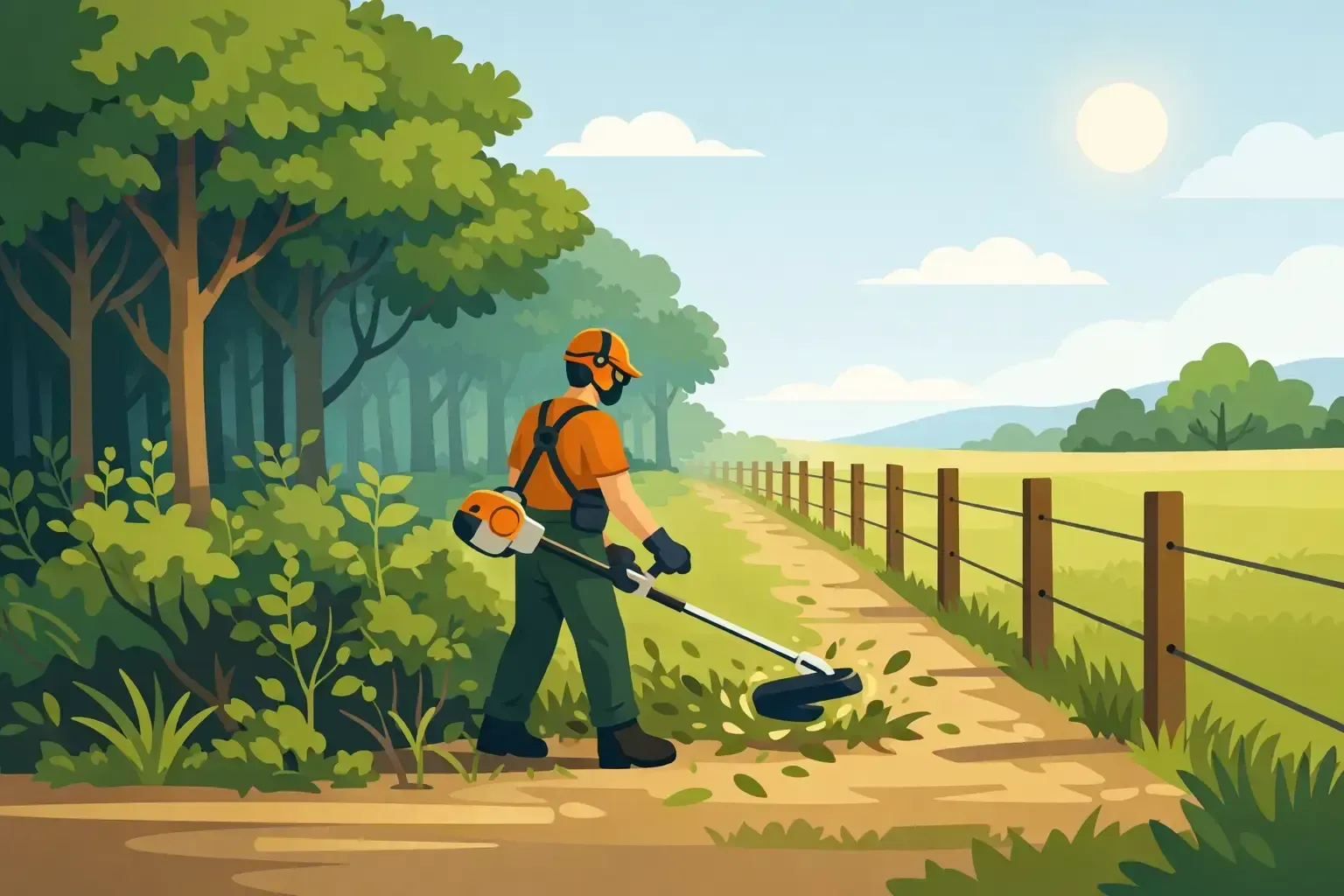
Person using a string trimmer beside a fenced field on a sunny day
August 20, 2026
A fence line can disappear fast in Central Texas. One wet spring, a few missed mowing cycles, and suddenly cedar, huisache, vines, fallen limbs, and thorny b...
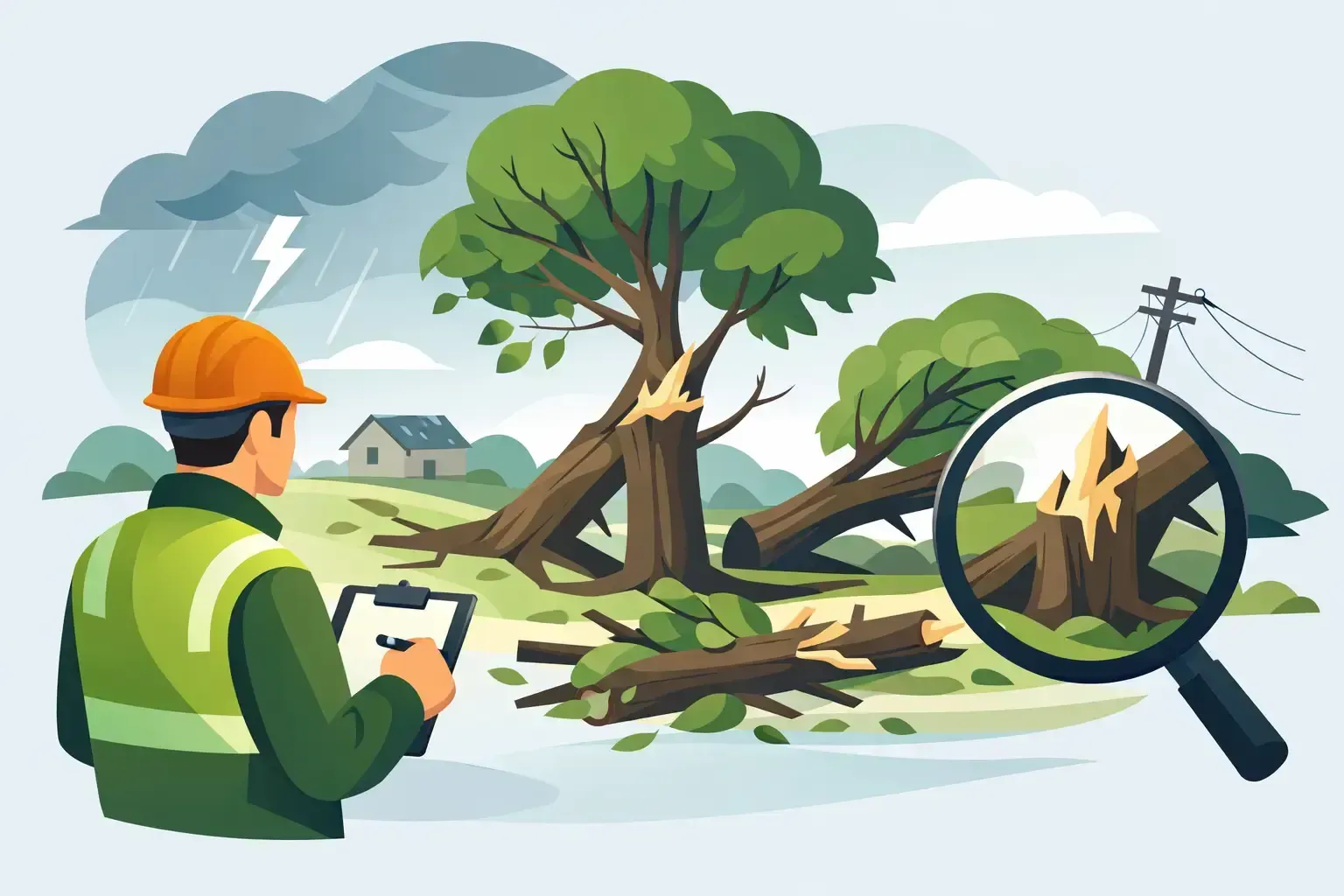
Worker inspecting storm-damaged tree with fallen branches and a magnifying glass in a windy yard
August 18, 2026
A hard Central Texas storm can turn a healthy-looking canopy into a real property hazard in a single night. This guide to storm damaged tree assessment helps...
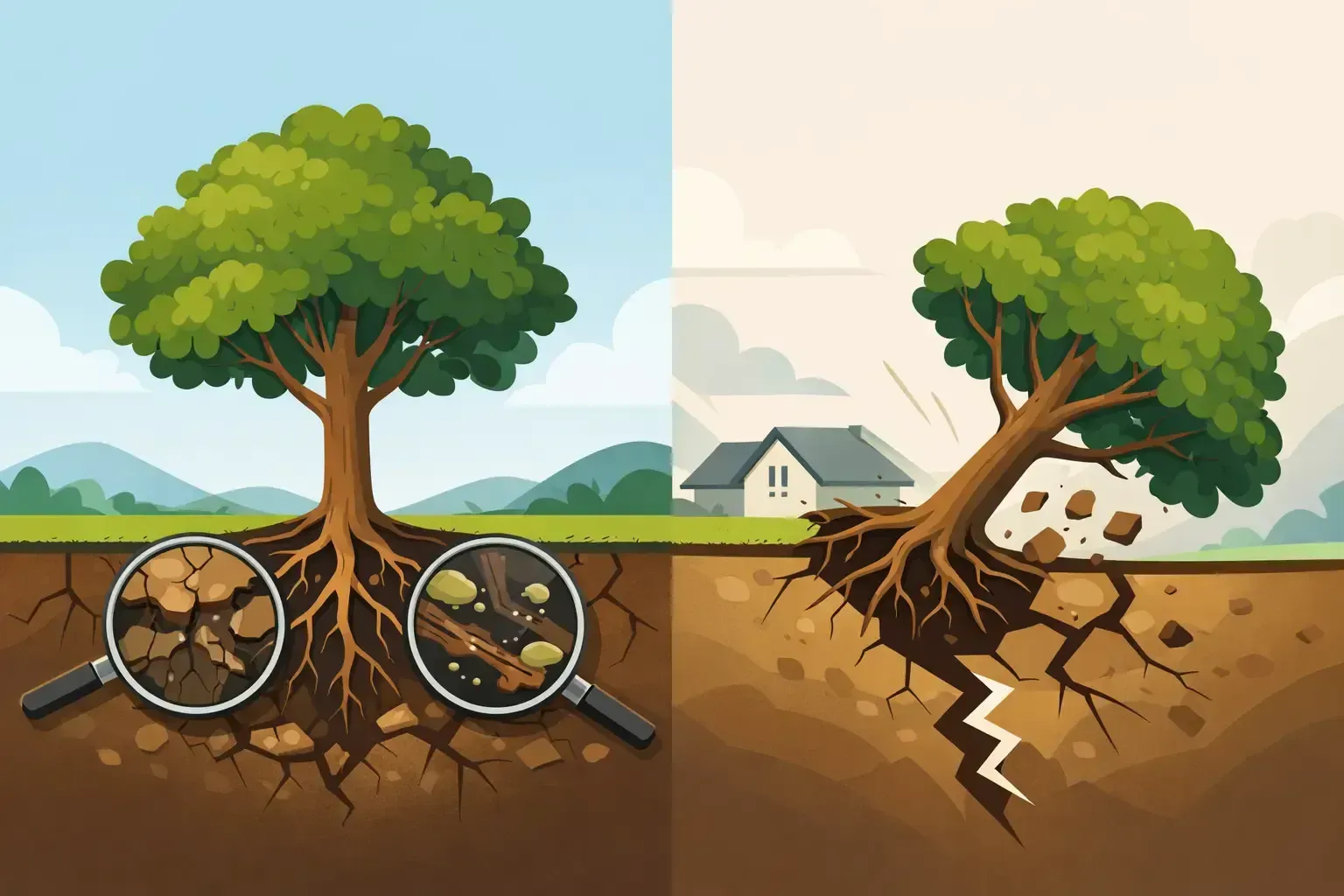
Healthy and damaged trees showing root health and drought soil cracking on a farm landscape
August 16, 2026
A live oak can look perfectly fine above ground while its support system is under serious stress below it. That is what makes root problems so frustrating fo...
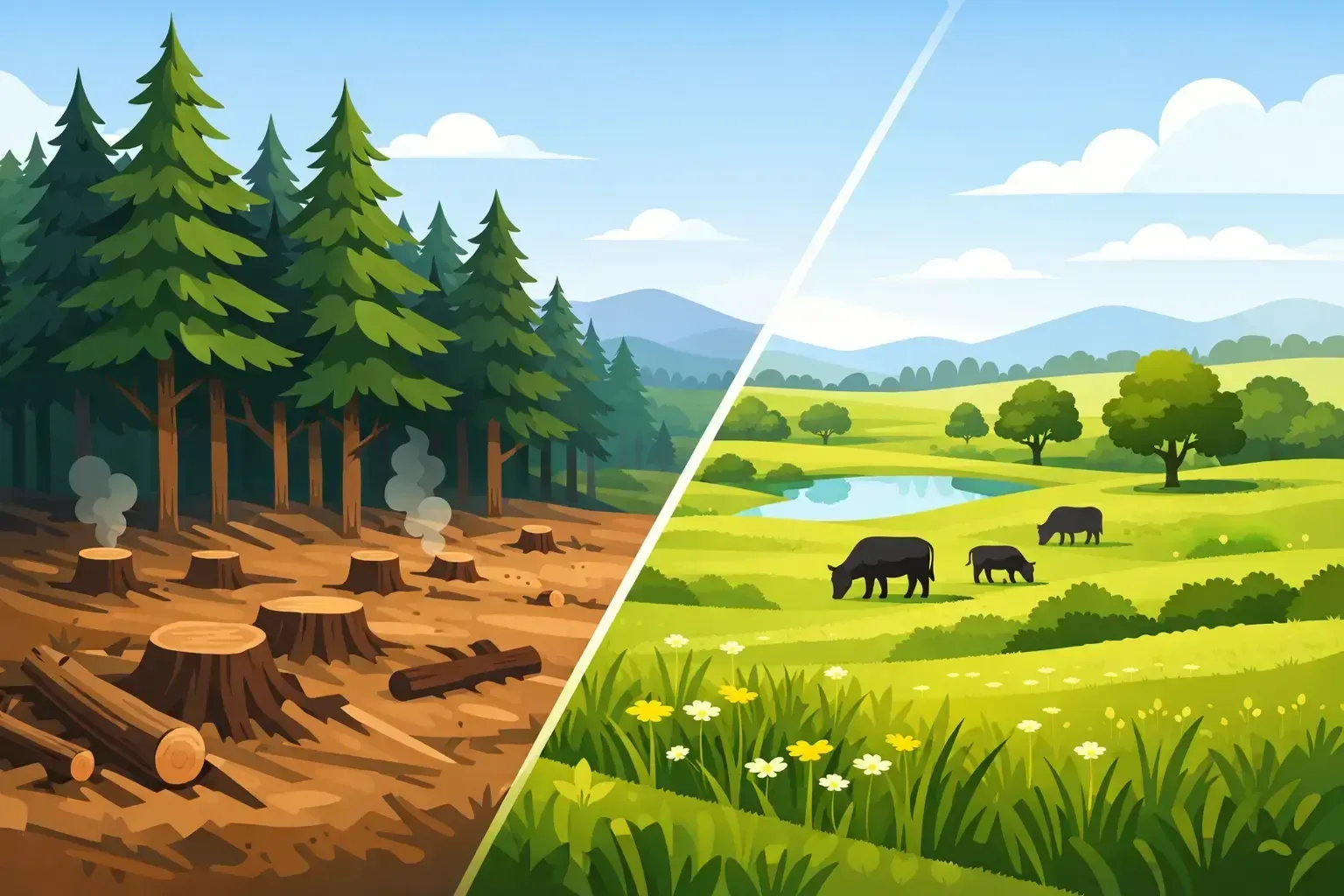
Split view of deforestation and healthy green pasture with cows under a bright sky
August 14, 2026
A cedar-choked pasture can make a property feel smaller every year. Water disappears into dense juniper cover, native grasses lose sunlight, fence lines vani...
Farmer in field watching a blue tractor spray crops, with cows, barn, hills, and smoke in the background
September 1, 2026
A ranch can look green and still be headed in the wrong direction. Dense brush can hide stressed oaks, crowd out usable pasture, choke access roads, and crea...
Wildfire burning in a forest with firefighters, helicopter, and smoke over a split rural landscape
August 30, 2026
A hot, windy afternoon can turn a forgotten brush pile, a crowded cedar stand, or low limbs near a structure into more than a property-maintenance issue. Tex...
Environmental inspection scene with drone, tree, magnifying glass, recycle bin, and hard hat in a city park
August 28, 2026
A shaded entry drive can become a liability fast when a heavy limb hangs over customer parking, a dead cedar leans toward a fence, or brush builds up around ...
Wildfire response with firefighters, water tanker, helicopter, and smoke near homes in a rural neighborhood
August 26, 2026
A Central Texas wildfire mitigation guide has to start with a hard truth: a beautiful Hill Country property can carry fire faster than most owners expect. Ce...
Savanna wildfire with trees, deer, and smoky hills under a bright sky
August 24, 2026
A beautiful shade tree should not become a fuse leading to your home. For Central Texas property owners, choosing the best trees for wildfire resistance mean...
Worker pruning a tree in a sunny yard beside a house, with tools on the grass.
August 22, 2026
A mature live oak shading a Bee Cave driveway can look indestructible right up until a heavy limb hangs over the roof, a cedar elm starts crowding the servic...