
7 Benefits of Cedar Thinning in Central Texas

April 19, 2026

If you own land in Central Texas, you already know cedar does not ask permission. Give it a little time, and suddenly a usable pasture feels crowded, oak trees start fighting for light, and the view you paid for is hiding behind a green wall. That is why the benefits of cedar thinning are not just cosmetic. Done right, it changes how your property functions, how safe it is, and how much work it takes to keep it in shape.

Cedar thinning is not the same thing as clear-cutting. Good thinning is selective. It removes the trees and brush that are creating competition, fuel load, access problems, and visual clutter while keeping the property stable, attractive, and suited to your goals. On a homesite, that may mean protecting mature oaks and improving defensible space. On acreage, it may mean opening travel lanes, reclaiming grazing ground, or making the land easier to manage.

The biggest benefits of cedar thinning start with fire risk

In this part of Texas, wildfire is not a theoretical problem. Dense cedar stands create ladder fuels, hold dry material, and can turn a small ignition source into a fast-moving fire. One of the clearest benefits of cedar thinning is reducing that fuel load before fire season puts your property to the test.

When cedar is packed too tightly, flames can move from ground vegetation into low branches and then across the canopy. Selective thinning breaks up that continuity. It creates spacing between trees, lowers the chance of fire spreading rapidly, and gives firefighters a better shot at defending structures, driveways, and access points.

That said, thinning is not a magic shield. The results depend on slope, wind, nearby vegetation, maintenance, and how close vegetation is to buildings. Still, for landowners who want a serious wildfire mitigation strategy, thinning is one of the smartest places to start.

Healthier oaks and stronger native trees

A lot of property owners call for cedar work because something feels off, even if they cannot name it right away. Their live oaks look stressed. Their lot feels darker. The landscape seems crowded, but not in a good way. In many cases, cedar overgrowth is stealing moisture, light, and room from the trees you actually want to keep.

Cedar is aggressive. It competes hard for resources, especially on properties where it has been left unmanaged for years. Thinning reduces that competition and gives preferred trees, including oaks and other native species, a better chance to develop healthy canopies and root systems.

This matters for both appearance and longevity. A healthy mature oak adds more shade, more value, and more character to a property than a thicket of volunteer cedar ever will. The goal is not to remove every cedar on every site. Sometimes cedar has a place for screening, erosion control, or privacy. AND cedars can look great when they are trimmed up - removing splayed or broken branches, and or raising their canopies. The key is deciding where it belongs and where it is choking out better outcomes.

Better use of your land

One of the most overlooked benefits of cedar thinning is simple usability. Land should work for you. If you cannot walk it easily, drive through it, mow around it, inspect fences, or access key areas without fighting brush, the property is running you instead of the other way around.

Selective thinning can open up space for trails, equipment access, fence line maintenance, grazing, recreation, or future improvements. For homeowners, it may make the backyard feel bigger and more intentional. For ranch owners and larger landholders, it can turn sections of the property from dead space into useful ground again.

There is a balance here. Remove too little and the property still feels choked in. Remove too much and it can look harsh, exposed, or stripped of character. That is why planning matters. The best results come from thinning with a purpose, not just cutting until the brush pile gets big.

Improved views, curb appeal, and property value

You do not need a real estate lecture to know what looks better: a property with healthy specimen trees, clean sight lines, and space to appreciate the terrain, or one swallowed by random cedar growth. Thinning often delivers one of the fastest visual upgrades a property owner can make.

It can frame the house better, expose natural features, improve the look of driveways and entrances, and bring back views that have slowly disappeared. On larger tracts, it helps buyers and guests understand the shape and potential of the land. On residential lots, it creates a cared-for appearance without making the landscape look overworked.

Property value is always market-dependent, and no tree project comes with a guaranteed dollar-for-dollar return. But well-managed land tends to show better, function better, and create stronger first impressions. That matters whether you are staying put for twenty years or thinking about resale.

Less pressure from pests and problem conditions

Overgrown cedar does more than crowd a property. It also creates dense, shaded conditions where airflow is poor and maintenance gets harder. That can contribute to hidden debris buildup, make inspections tougher, and give unwanted critters more places to travel and hide.

Thinning improves visibility and airflow. It makes it easier to monitor tree health, spot storm damage early, and keep up with the land before small issues become expensive ones. If you have ever discovered a damaged fence line, a drainage issue, or a dead tree way later than you should have because the area was too overgrown to see clearly, you already understand the value.

This is especially helpful on properties managed by HOAs, MUDs, commercial owners, and absentee landowners. The cleaner and more accessible the site, the easier it is to maintain a high standard without constant surprises.

Easier storm cleanup and recovery

Central Texas weather has a mean streak. High winds, drought stress, heavy rain, and ice events can all expose weaknesses in unmanaged tree stands. Dense cedar growth can tangle together, trap debris, and make post-storm access slower and more hazardous.

Thinning does not stop storms, but it can make the aftermath far more manageable. With better spacing and cleaner access, crews can inspect damage faster, remove hazards more safely, and restore function with less delay. For property owners, that means less downtime, fewer access headaches, and a cleaner path back to normal.

This is one of those benefits people do not fully appreciate until after the first ugly weather event. Preventive work rarely gets applause on a sunny day, but it earns its keep when conditions turn bad.

A property that is simpler to maintain year after year

A thick cedar stand usually means recurring frustration. More debris. More hidden problem areas. More time spent working around brush instead of actually improving the property. One of the long-term benefits of cedar thinning is that it puts maintenance back on a manageable track.

Once the overgrowth is addressed, routine work becomes more efficient. It is easier to mow, inspect, prune, monitor drainage, maintain roads or driveways, and stay ahead of future encroachment. You can also make better decisions about follow-up care because you can finally see what is happening across the site.

The catch is that cedar likes to come back. Thinning is often the major reset, not the final chapter. Some properties need periodic touch-up work to hold the line, especially after wet seasons. That is not a reason to avoid the project. It is simply a reason to approach it with a management mindset instead of a one-and-done mindset.

Why selective thinning beats reckless clearing

Not all cedar removal is good cedar removal. There is a huge difference between disciplined thinning and a crew showing up with chainsaws and no real plan. Reckless clearing can damage root zones, expose soil, ruin natural screening, and leave a property looking scalped.

The right approach starts with goals. Are you trying to reduce wildfire risk around a structure, improve oak health, reclaim pasture, open a view, or create better access? Usually it is some combination. From there, tree selection, spacing, cleanup, and protection of desirable trees all matter.

That is where experienced crews separate themselves from basic cut-and-go operations. Precision counts. Communication counts. Clean execution counts. On a cedar thinning project, visible results should come with a clear reason behind them.

For many Central Texas landowners, cedar is one of those problems that creeps up slowly and then all at once. What starts as a little overgrowth becomes a fire concern, a tree health issue, a view problem, and a maintenance headache rolled into one. The good news is that smart thinning can reverse that trend and give the property some breathing room again.

If your land feels darker, tighter, riskier, or harder to manage than it should, that is usually your property telling you it is time for a reset. A well-thinned landscape does not just look better. It works better, and you feel the difference every time you drive through the gate.

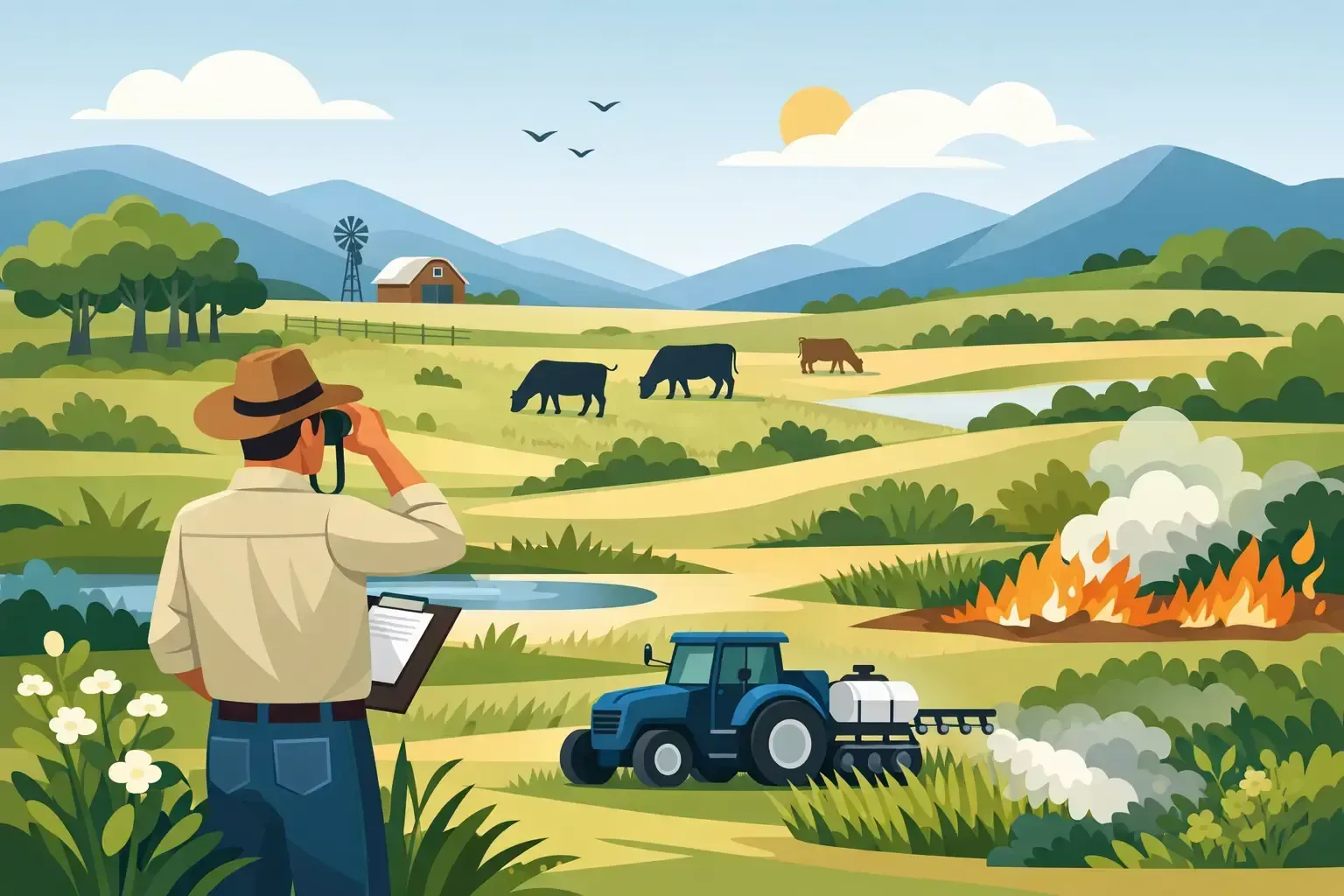
Farmer in field watching a blue tractor spray crops, with cows, barn, hills, and smoke in the background
September 1, 2026
A ranch can look green and still be headed in the wrong direction. Dense brush can hide stressed oaks, crowd out usable pasture, choke access roads, and crea...

Wildfire burning in a forest with firefighters, helicopter, and smoke over a split rural landscape
August 30, 2026
A hot, windy afternoon can turn a forgotten brush pile, a crowded cedar stand, or low limbs near a structure into more than a property-maintenance issue. Tex...
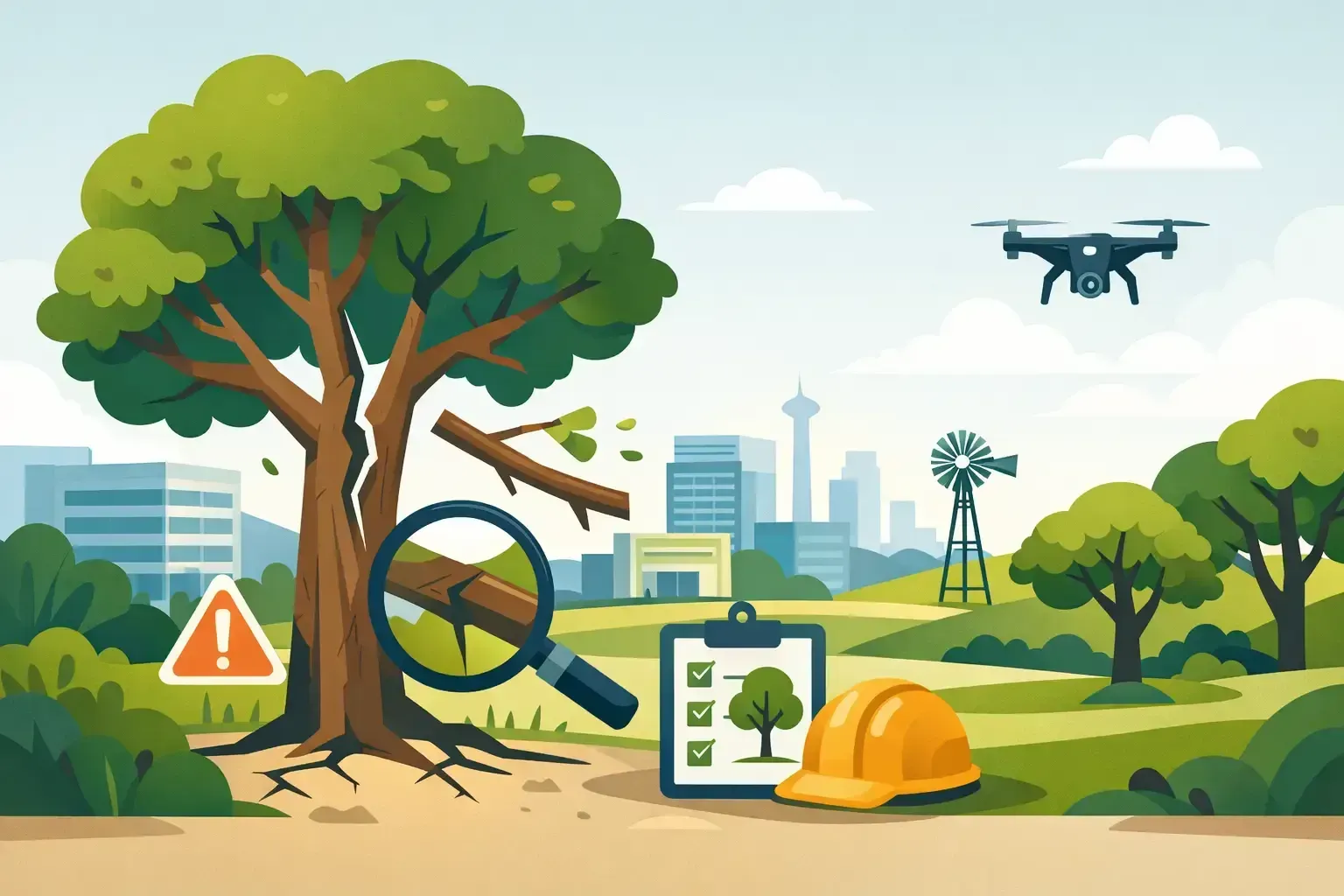
Environmental inspection scene with drone, tree, magnifying glass, recycle bin, and hard hat in a city park
August 28, 2026
A shaded entry drive can become a liability fast when a heavy limb hangs over customer parking, a dead cedar leans toward a fence, or brush builds up around ...

Wildfire response with firefighters, water tanker, helicopter, and smoke near homes in a rural neighborhood
August 26, 2026
A Central Texas wildfire mitigation guide has to start with a hard truth: a beautiful Hill Country property can carry fire faster than most owners expect. Ce...
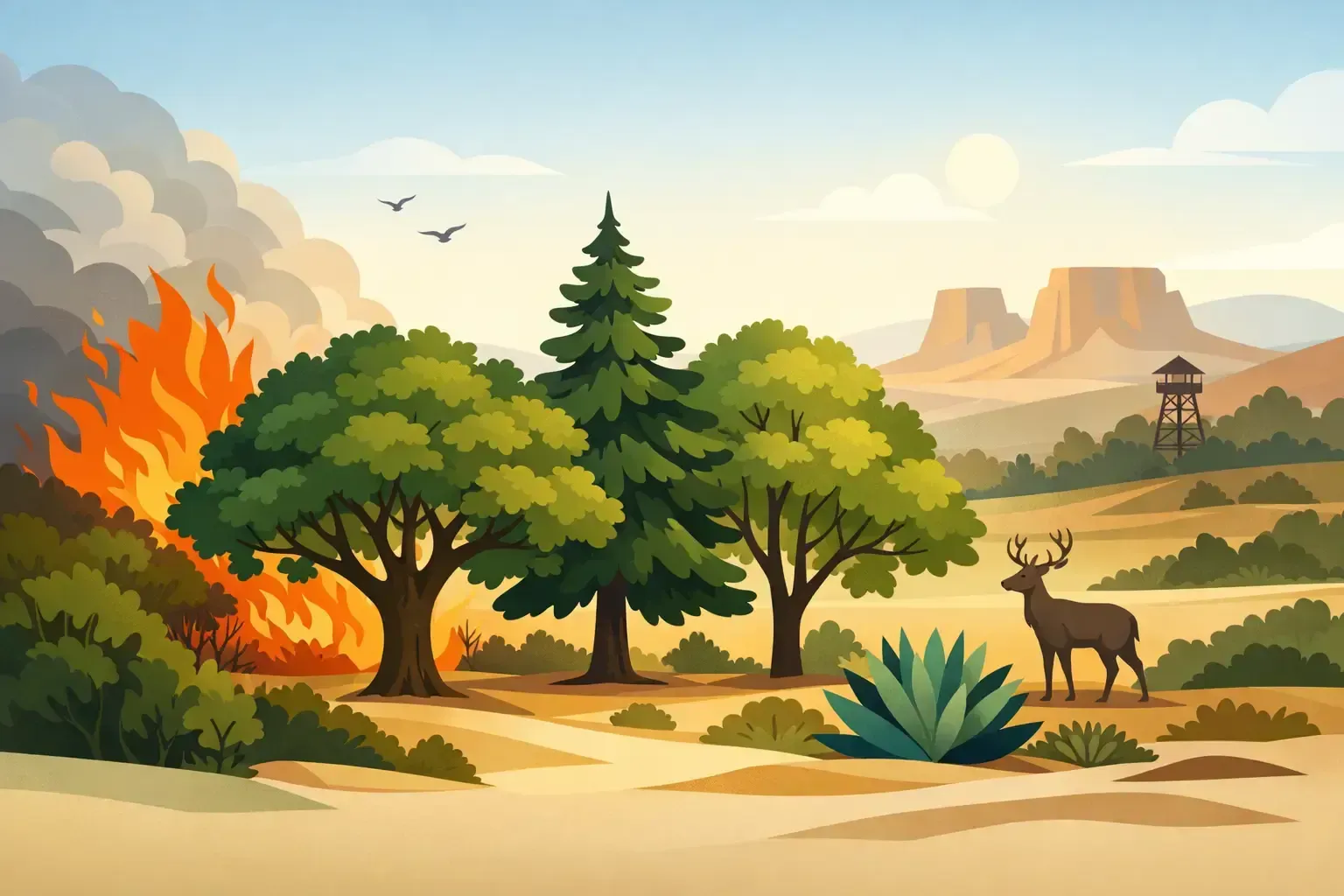
Savanna wildfire with trees, deer, and smoky hills under a bright sky
August 24, 2026
A beautiful shade tree should not become a fuse leading to your home. For Central Texas property owners, choosing the best trees for wildfire resistance mean...
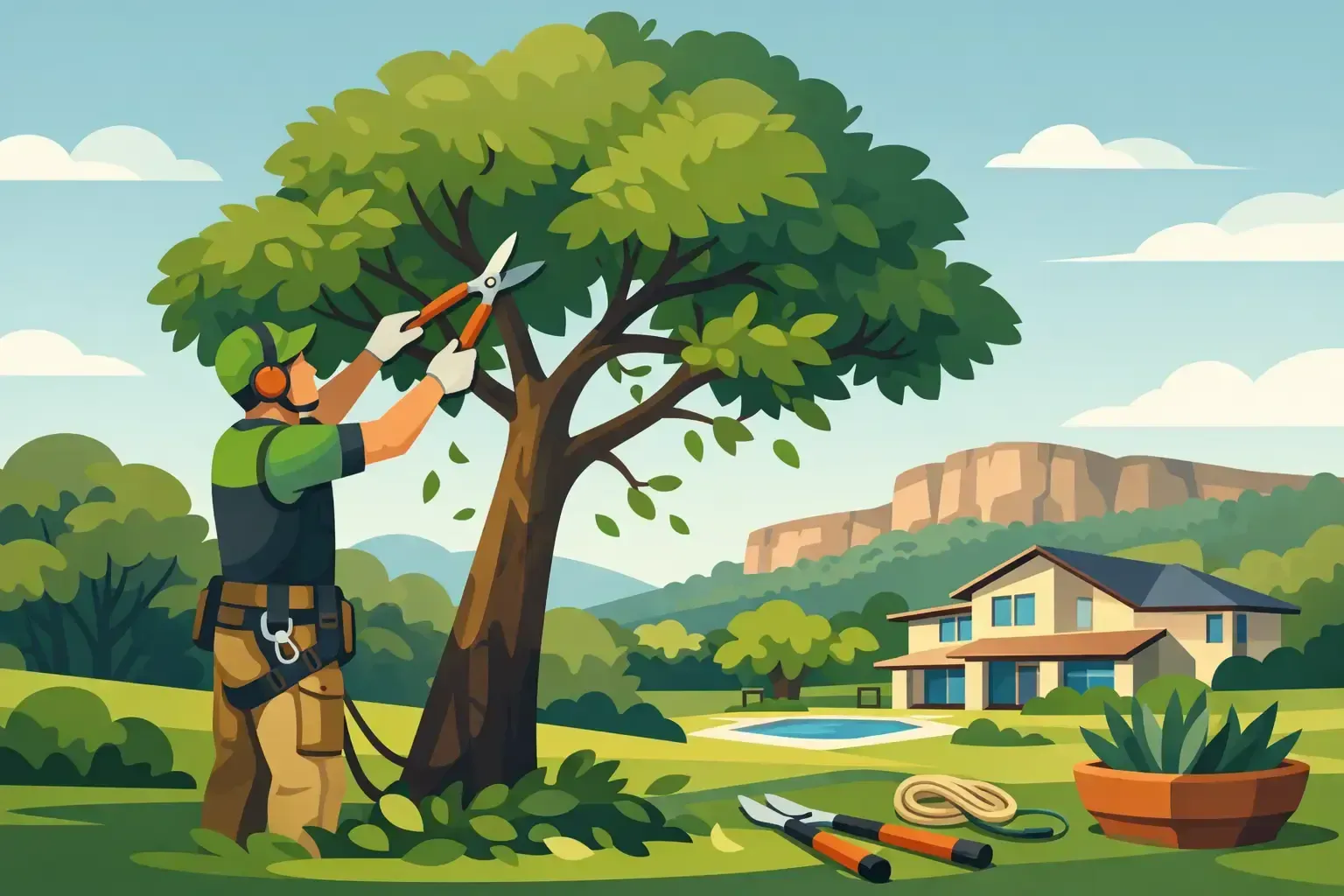
Worker pruning a tree in a sunny yard beside a house, with tools on the grass.
August 22, 2026
A mature live oak shading a Bee Cave driveway can look indestructible right up until a heavy limb hangs over the roof, a cedar elm starts crowding the servic...
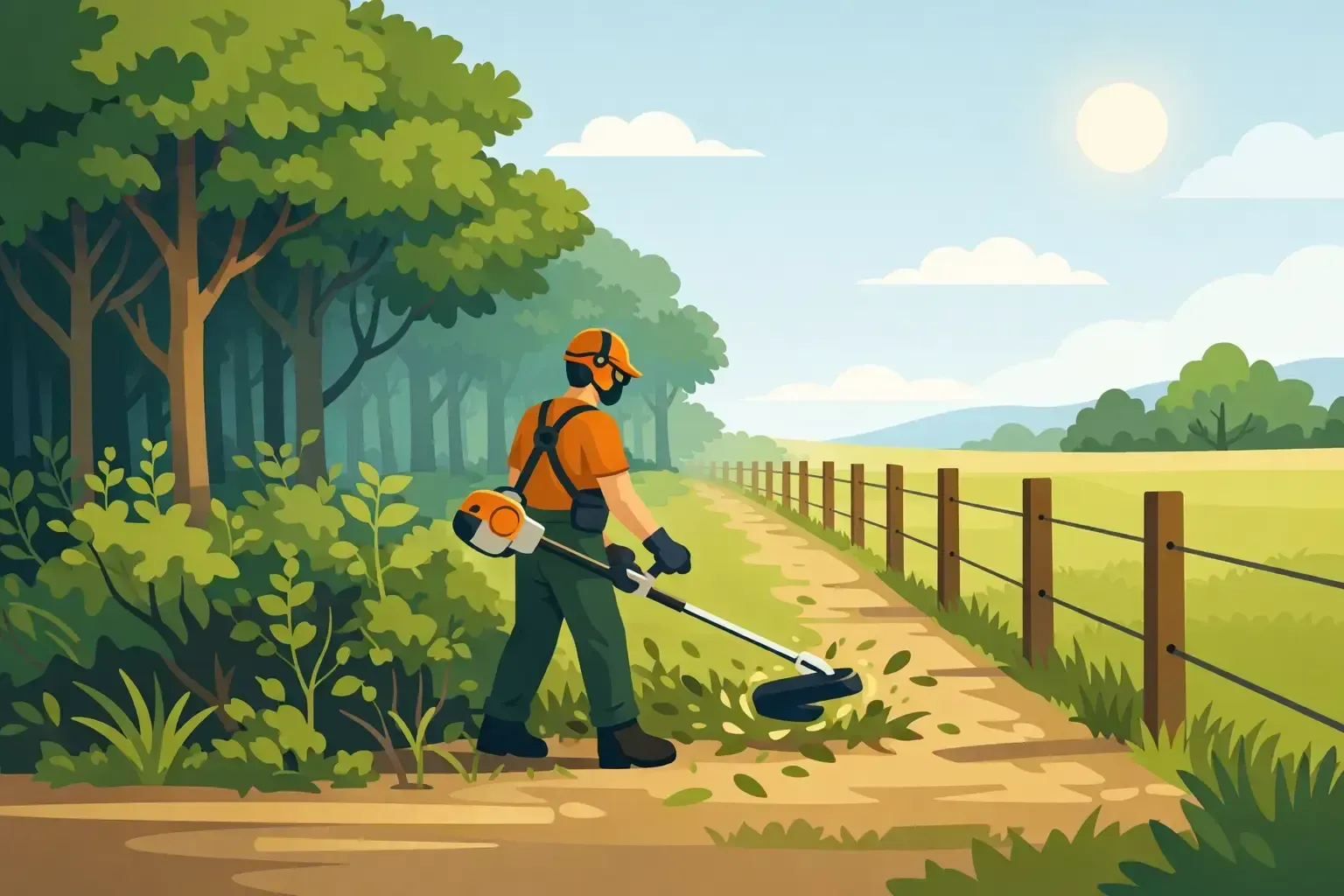
Person using a string trimmer beside a fenced field on a sunny day
August 20, 2026
A fence line can disappear fast in Central Texas. One wet spring, a few missed mowing cycles, and suddenly cedar, huisache, vines, fallen limbs, and thorny b...
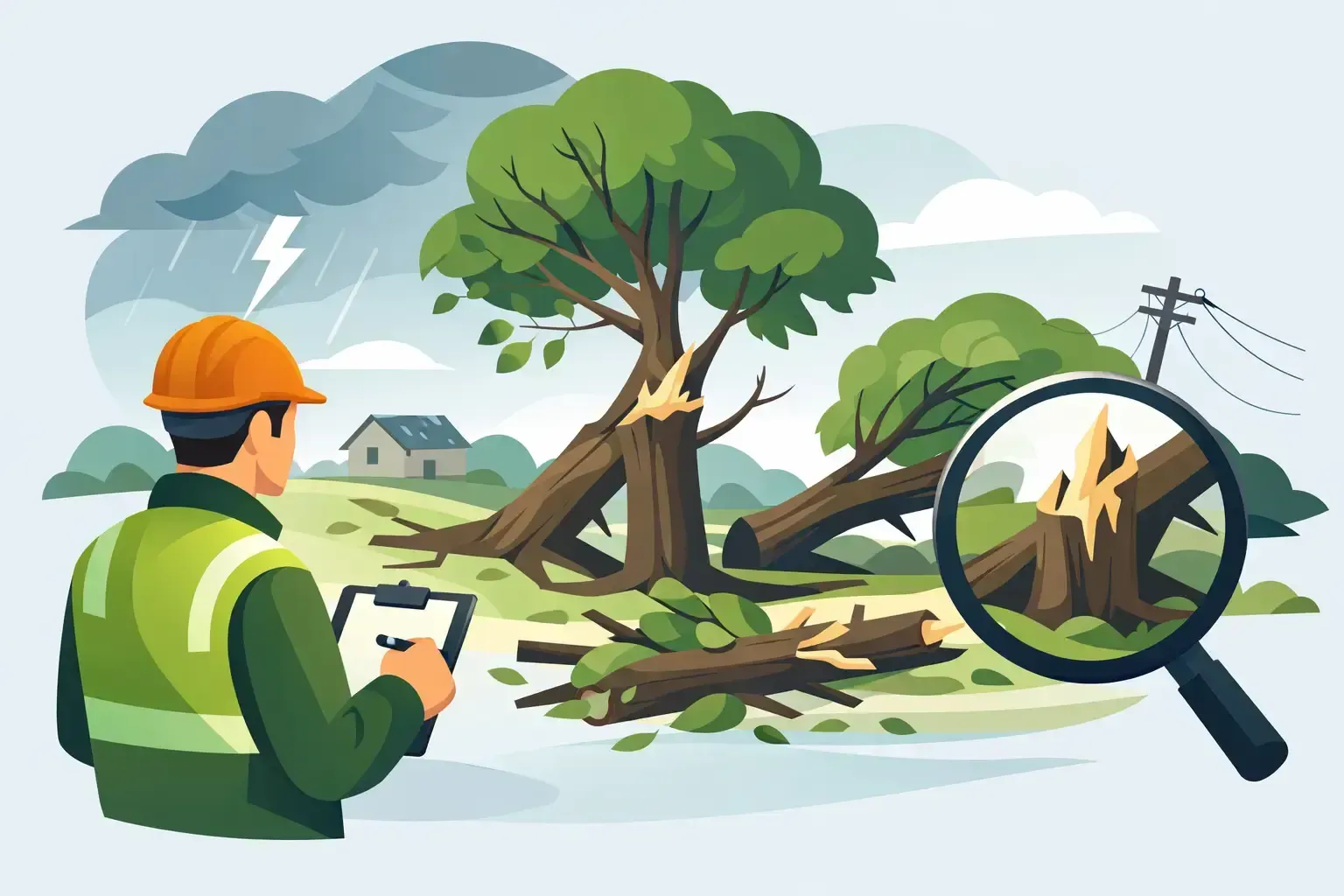
Worker inspecting storm-damaged tree with fallen branches and a magnifying glass in a windy yard
August 18, 2026
A hard Central Texas storm can turn a healthy-looking canopy into a real property hazard in a single night. This guide to storm damaged tree assessment helps...
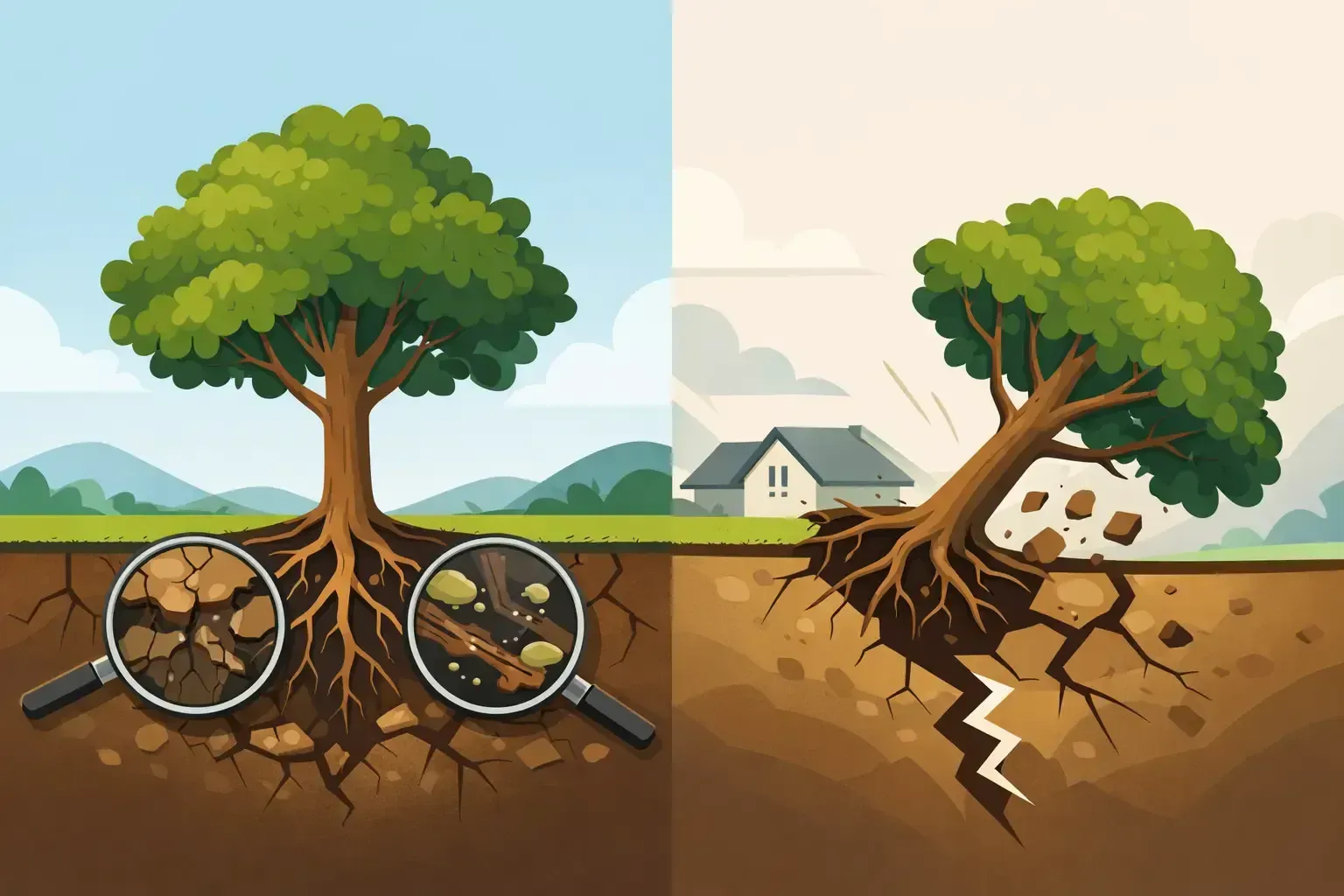
Healthy and damaged trees showing root health and drought soil cracking on a farm landscape
August 16, 2026
A live oak can look perfectly fine above ground while its support system is under serious stress below it. That is what makes root problems so frustrating fo...
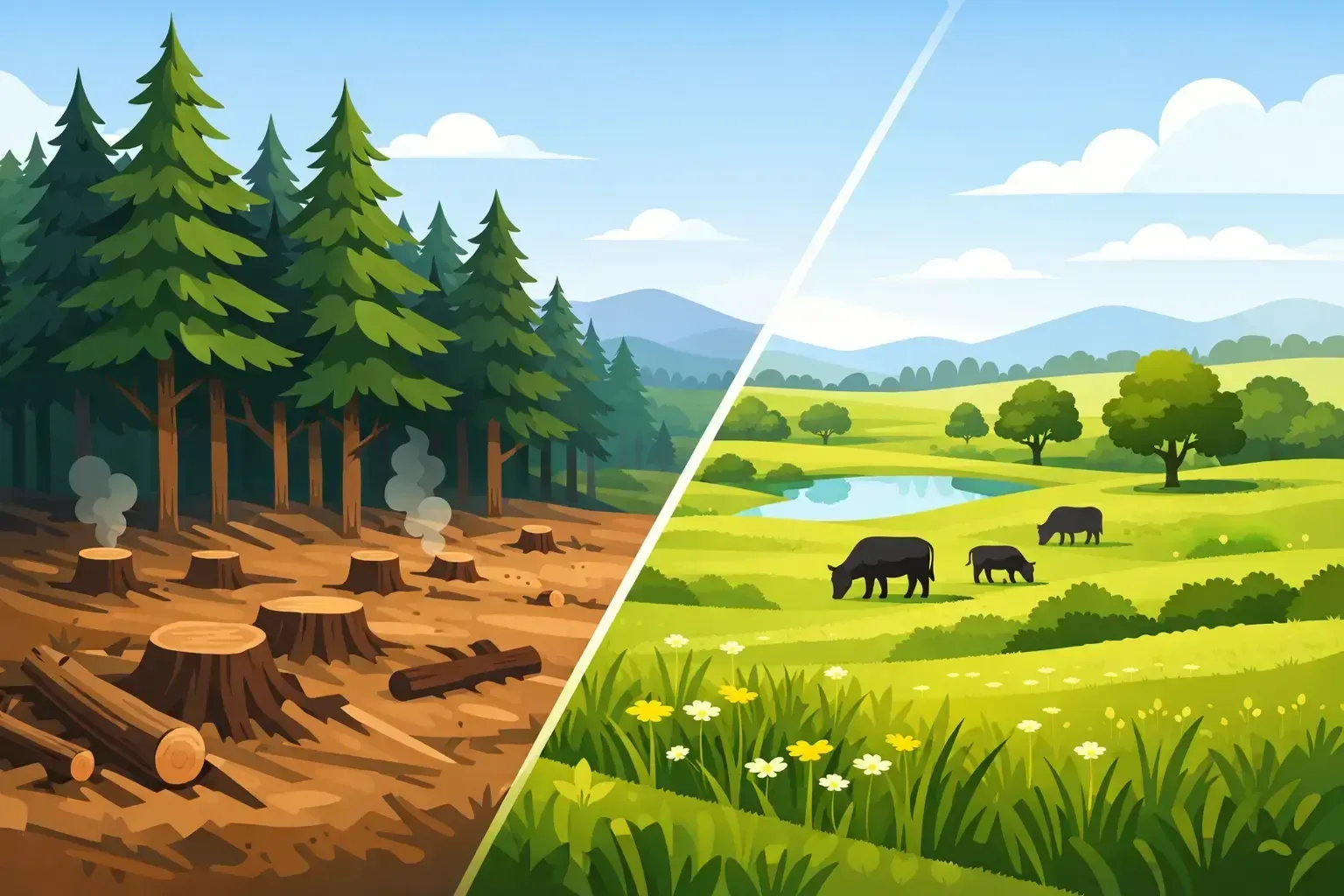
Split view of deforestation and healthy green pasture with cows under a bright sky
August 14, 2026
A cedar-choked pasture can make a property feel smaller every year. Water disappears into dense juniper cover, native grasses lose sunlight, fence lines vani...
Farmer in field watching a blue tractor spray crops, with cows, barn, hills, and smoke in the background
September 1, 2026
A ranch can look green and still be headed in the wrong direction. Dense brush can hide stressed oaks, crowd out usable pasture, choke access roads, and crea...
Wildfire burning in a forest with firefighters, helicopter, and smoke over a split rural landscape
August 30, 2026
A hot, windy afternoon can turn a forgotten brush pile, a crowded cedar stand, or low limbs near a structure into more than a property-maintenance issue. Tex...
Environmental inspection scene with drone, tree, magnifying glass, recycle bin, and hard hat in a city park
August 28, 2026
A shaded entry drive can become a liability fast when a heavy limb hangs over customer parking, a dead cedar leans toward a fence, or brush builds up around ...
Wildfire response with firefighters, water tanker, helicopter, and smoke near homes in a rural neighborhood
August 26, 2026
A Central Texas wildfire mitigation guide has to start with a hard truth: a beautiful Hill Country property can carry fire faster than most owners expect. Ce...
Savanna wildfire with trees, deer, and smoky hills under a bright sky
August 24, 2026
A beautiful shade tree should not become a fuse leading to your home. For Central Texas property owners, choosing the best trees for wildfire resistance mean...
Worker pruning a tree in a sunny yard beside a house, with tools on the grass.
August 22, 2026
A mature live oak shading a Bee Cave driveway can look indestructible right up until a heavy limb hangs over the roof, a cedar elm starts crowding the servic...