


Central Texas Wildfire Mitigation Guide for Homes

August 26, 2026

A Central Texas wildfire mitigation guide has to start with a hard truth: a beautiful Hill Country property can carry fire faster than most owners expect. Cedar breaks, dry grass, leaf litter, woodpiles, and low limbs can turn one wind-driven ember into a problem at the house, barn, fence line, or neighboring lot. The good news is that smart mitigation does not mean stripping a property bare. It means giving fire less fuel, fewer pathways, and less opportunity to reach what matters.

For homeowners and landowners around Dripping Springs, Driftwood, Wimberley, Austin, and the surrounding Hill Country, the goal is not to eliminate every tree or every native plant. The goal is to make intentional decisions about vegetation, access, maintenance, and the space surrounding structures. That takes more than a chainsaw and a weekend. It takes a plan.

Central Texas Wildfire Mitigation Guide: Start at the Structure

Wildfire mitigation works from the house outward. The most dangerous fire threat is often not a wall of flame moving through the trees. It is embers. Embers can travel ahead of a fire, settle in dry leaves, enter vents, collect beneath decks, and ignite small fuels next to the building.

Start with the first five feet around your home, garage, guest house, workshop, pump house, or other important structure. This is the zone where attention pays off fastest. Keep it clean, open, and free of easily ignited material. Remove dry leaves and needles from roofs, gutters, patio corners, and around outdoor equipment. Move firewood, lumber, cardboard, patio cushions, and fuel containers away from the building.

Landscaping close to the home should be maintained with fire behavior in mind. Green, irrigated, well-spaced plants are generally a better choice than dense, dry shrubs packed against siding. Gravel or stone can be useful near foundations, but it is not a substitute for clearing debris. Leaves can still gather on rock beds, especially after a Central Texas windstorm.

Pay attention to decks, porches, and fences. These areas collect debris and create places where embers can hide. A fence attached directly to a home can also provide a fuel path toward the structure. That does not mean every wood fence must go. It means the connection point, nearby vegetation, and debris load deserve a close look.

Create Defensible Space Without Wrecking the Property

Defensible space is not a magic ring measured the same way on every property. The right treatment depends on slope, vegetation type, prevailing wind, terrain, building materials, and the amount of nearby unmanaged land. A flat, lightly wooded lot in town needs a different strategy than a cedar-heavy ranch with draws, steep ground, and several outbuildings.

The principle is simple: separate fuels vertically and horizontally so fire has a harder time moving from grass to brush, brush to low limbs, and low limbs into tree canopies. On many Central Texas properties, that means reducing dense cedar, removing dead woody material, pruning lower limbs where appropriate, and thinning overcrowded groups of trees.

Thinning is not the same as clear-cutting. Mature live oaks, healthy native shade trees, and well-spaced specimen trees can remain valuable assets for beauty, comfort, habitat, and property value. The mistake is allowing every tree, shrub, vine, and volunteer cedar to grow into one continuous fuel bed. When vegetation touches or overlaps from the ground to the canopy, fire has a ladder.

A disciplined plan preserves the best trees while reducing the material that creates rapid fire spread. It also considers future growth. A property can look clean on the day work is completed and still become overgrown again if brush management is not maintained season after season.

Treat Cedar and Brush as a Fuel Management Issue

Ashe juniper, commonly called cedar, is part of the Central Texas landscape. It also tends to grow densely, hold dry material, and create continuous cover when unmanaged. In the wrong location, especially near structures or along access routes, dense cedar can be a major fire concern.

The answer is rarely "remove every cedar." On large acreage, total removal may be unnecessary, expensive, or harmful to erosion control and habitat goals. In other areas, particularly near homes, barns, driveways, and perimeter lines, targeted removal can make a dramatic difference.

Brush piles deserve equal attention. A pile created during trimming or land clearing is not neutral just because it is off to the side. If it stays on site, it becomes concentrated fuel. Chipping, hauling, approved disposal, or properly managed processing should be part of the project plan from the beginning.

Maintain Trees for Fire Resistance and Health

Healthy trees are not automatically fire-safe trees, but poor tree condition adds risk. Dead limbs, storm-damaged branches, hanging broken wood, and overcrowded canopies can contribute to fire intensity and create hazards during high winds.

Proper pruning focuses on tree health, structure, clearance, and fuel separation. It does not mean topping trees or removing large amounts of live canopy without a reason. Aggressive cuts can stress trees, invite decay, and trigger weak regrowth. That is a poor trade for a property owner trying to improve long-term safety.

An ISA Certified Arborist can help distinguish between a limb that should be removed, a tree that needs monitoring, and a healthy tree worth protecting. That judgment matters with heritage oaks and high-value landscape trees. Wildfire mitigation should strengthen the property, not leave it looking scalped and vulnerable to heat, erosion, and future tree failure.

Make Access Easy for You and Emergency Crews

A long Hill Country driveway can be a major advantage or a serious bottleneck. During an emergency, access needs to be clear, visible, and passable. Overgrown limbs, narrow gates, low clearance, sharp turns, unstable crossings, and brush crowding the drive can delay response and limit options.

Keep driveway edges maintained and make sure addresses are visible from the road. Gates should be easy to operate and wide enough for the equipment that may need to enter. If your property has multiple structures, consider whether emergency personnel can identify them quickly, especially at night or in heavy smoke.

For ranches, HOAs, MUDs, and commercial properties, access planning also includes internal roads, shared greenbelts, utility corridors, drainage areas, and perimeter vegetation. A single neglected common area can undermine the work completed on individual lots.

Build a Maintenance Rhythm, Not a One-Time Cleanup

Wildfire mitigation is a living maintenance program. Central Texas weather does not hold still. Spring growth can create new fuel. Summer heat dries grasses. Storms drop limbs. Oak leaves and cedar litter collect where they should not. A clean property in March may need attention again before late summer.

A practical rhythm includes seasonal debris removal, regular mowing or grass management where appropriate, inspection after major wind events, and periodic review of brush density near structures. Larger properties may benefit from phased thinning and land management work over several seasons rather than one oversized project.

This approach helps control cost and lets owners make thoughtful decisions. It also prevents the common pattern of waiting until vegetation is fully overgrown, then needing emergency-level work under pressure. Early maintenance is usually cleaner, safer, and more selective.

Know When Professional Assessment Matters

A homeowner can handle basic cleanup, but some properties need a wider lens. That is especially true when you have steep terrain, dense cedar, mature oaks, multiple structures, power-line concerns, storm damage, or acreage bordering unmanaged land.

Dynamo Dusty's Tree Service brings ISA Certified Arborist expertise and the ISA Wildfire Risk Reduction Qualification to these decisions. That means looking at the whole fuel picture, not just removing the most obvious limbs. The best result is a property that still feels like Central Texas, only more usable, more intentional, and better prepared.

A safer property is built one clear decision at a time. Start closest to the structures, deal with the fuel that is already there, protect the trees worth keeping, and keep the work moving before the next hot, dry stretch gives small problems a chance to become expensive ones.

Farmer in field watching a blue tractor spray crops, with cows, barn, hills, and smoke in the background
September 1, 2026
A ranch can look green and still be headed in the wrong direction. Dense brush can hide stressed oaks, crowd out usable pasture, choke access roads, and crea...

Wildfire burning in a forest with firefighters, helicopter, and smoke over a split rural landscape
August 30, 2026
A hot, windy afternoon can turn a forgotten brush pile, a crowded cedar stand, or low limbs near a structure into more than a property-maintenance issue. Tex...

Environmental inspection scene with drone, tree, magnifying glass, recycle bin, and hard hat in a city park
August 28, 2026
A shaded entry drive can become a liability fast when a heavy limb hangs over customer parking, a dead cedar leans toward a fence, or brush builds up around ...

Savanna wildfire with trees, deer, and smoky hills under a bright sky
August 24, 2026
A beautiful shade tree should not become a fuse leading to your home. For Central Texas property owners, choosing the best trees for wildfire resistance mean...
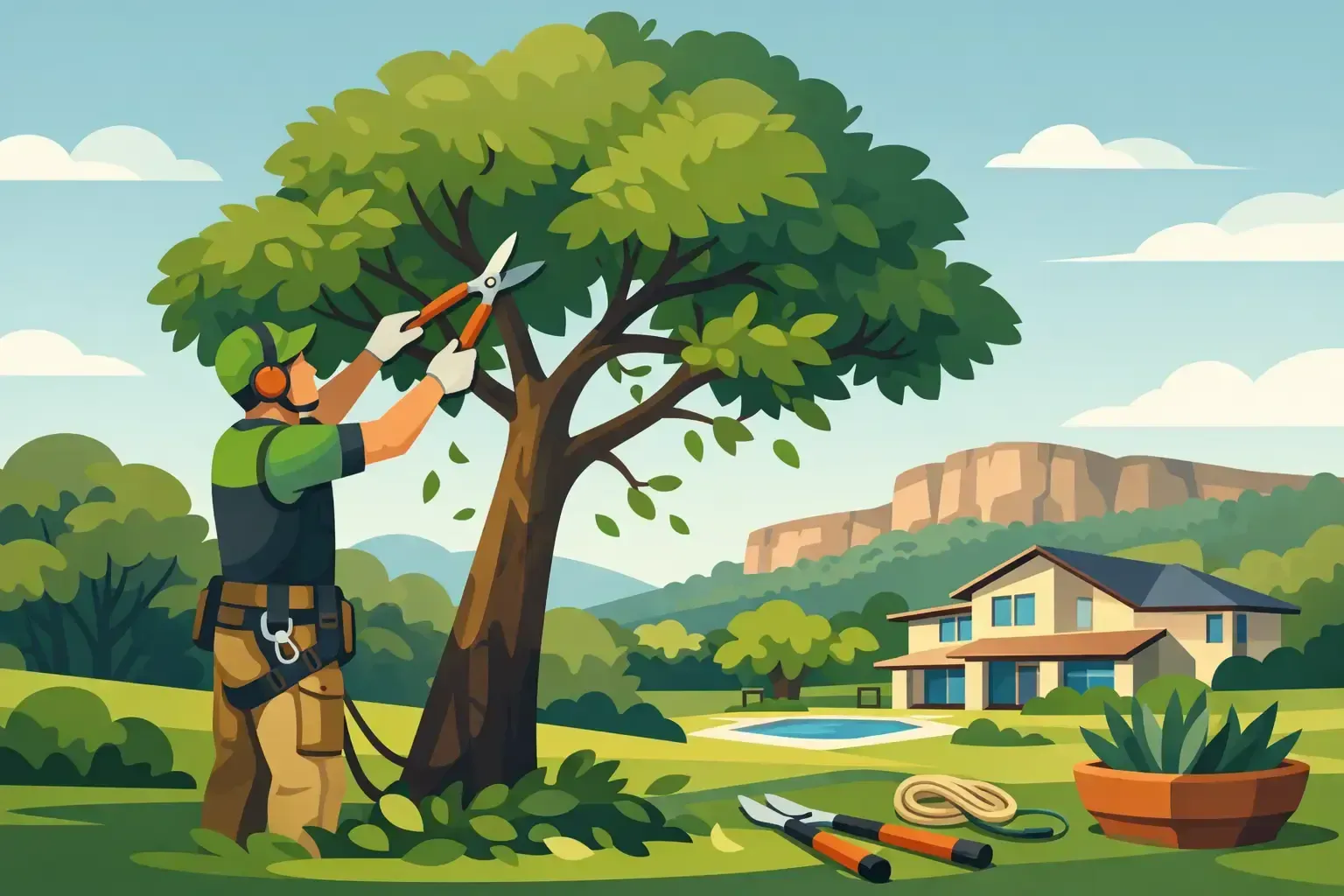
Worker pruning a tree in a sunny yard beside a house, with tools on the grass.
August 22, 2026
A mature live oak shading a Bee Cave driveway can look indestructible right up until a heavy limb hangs over the roof, a cedar elm starts crowding the servic...
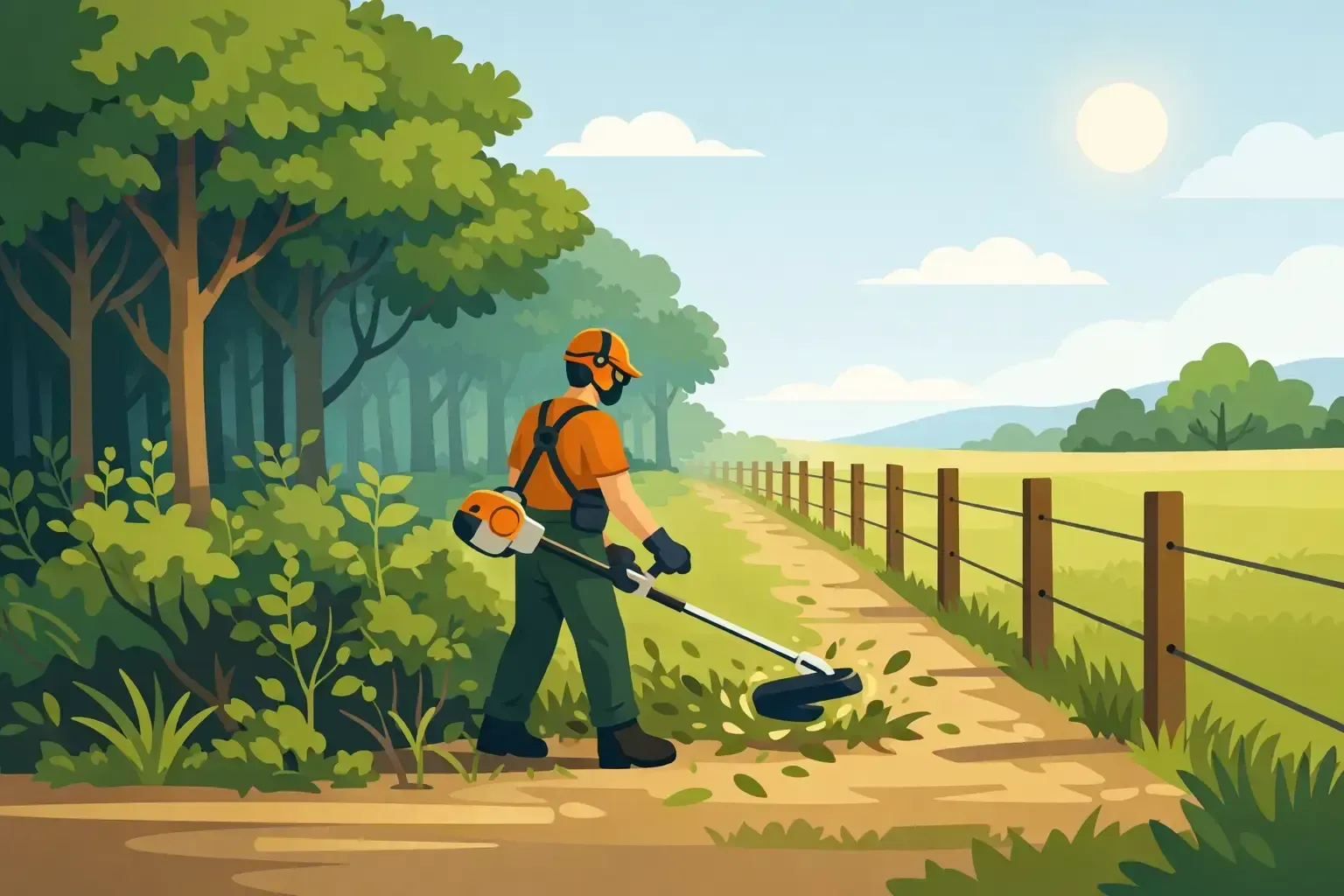
Person using a string trimmer beside a fenced field on a sunny day
August 20, 2026
A fence line can disappear fast in Central Texas. One wet spring, a few missed mowing cycles, and suddenly cedar, huisache, vines, fallen limbs, and thorny b...

Worker inspecting storm-damaged tree with fallen branches and a magnifying glass in a windy yard
August 18, 2026
A hard Central Texas storm can turn a healthy-looking canopy into a real property hazard in a single night. This guide to storm damaged tree assessment helps...

Healthy and damaged trees showing root health and drought soil cracking on a farm landscape
August 16, 2026
A live oak can look perfectly fine above ground while its support system is under serious stress below it. That is what makes root problems so frustrating fo...

Split view of deforestation and healthy green pasture with cows under a bright sky
August 14, 2026
A cedar-choked pasture can make a property feel smaller every year. Water disappears into dense juniper cover, native grasses lose sunlight, fence lines vani...

Split scene of tree trimming and lawn care in a sunny suburban yard, with workers using a saw and planting shrubs
August 12, 2026
A sagging oak limb over the driveway is not a landscaping project. Neither is a cedar thicket pressing against your fence line, a storm-damaged tree near the...
Farmer in field watching a blue tractor spray crops, with cows, barn, hills, and smoke in the background
September 1, 2026
A ranch can look green and still be headed in the wrong direction. Dense brush can hide stressed oaks, crowd out usable pasture, choke access roads, and crea...
Wildfire burning in a forest with firefighters, helicopter, and smoke over a split rural landscape
August 30, 2026
A hot, windy afternoon can turn a forgotten brush pile, a crowded cedar stand, or low limbs near a structure into more than a property-maintenance issue. Tex...
Environmental inspection scene with drone, tree, magnifying glass, recycle bin, and hard hat in a city park
August 28, 2026
A shaded entry drive can become a liability fast when a heavy limb hangs over customer parking, a dead cedar leans toward a fence, or brush builds up around ...
Savanna wildfire with trees, deer, and smoky hills under a bright sky
August 24, 2026
A beautiful shade tree should not become a fuse leading to your home. For Central Texas property owners, choosing the best trees for wildfire resistance mean...
Worker pruning a tree in a sunny yard beside a house, with tools on the grass.
August 22, 2026
A mature live oak shading a Bee Cave driveway can look indestructible right up until a heavy limb hangs over the roof, a cedar elm starts crowding the servic...
Person using a string trimmer beside a fenced field on a sunny day
August 20, 2026
A fence line can disappear fast in Central Texas. One wet spring, a few missed mowing cycles, and suddenly cedar, huisache, vines, fallen limbs, and thorny b...