


A Guide to Storm-Damaged Tree Assessment

August 18, 2026

A hard Central Texas storm can turn a healthy-looking canopy into a real property hazard in a single night. This guide to storm damaged tree assessment helps you separate the branches that can wait from the trees that need immediate professional attention. The goal is not to diagnose every crack from the ground. It is to protect people, structures, vehicles, livestock, and the long-term health of the trees worth saving.

Start With Safety, Not Cleanup

Before picking up a saw, rake, or rope, pause and look up. Storm damage changes the forces inside a tree. A limb that appears to be resting safely may be under tension. A trunk split can widen without warning. A tree leaning toward a house may have roots lifting below ground, even if its canopy still looks mostly intact.

Keep people, pets, and equipment out from beneath hanging limbs and damaged canopies. Do not park beneath affected trees, and do not let children treat downed branches like a backyard obstacle course. If a limb is touching a power line, or a tree is leaning into electrical equipment, stay well clear and contact the utility provider. That is not a homeowner repair.

The same rule applies to large broken limbs, trees on structures, and anything blocking a roadway or emergency access point. Emergency work is about controlling risk first. The debris pile can wait.

What to Look for After Wind, Rain, or Ice

A careful ground-level walkaround tells you a lot. Start far enough back to see the full tree silhouette, then move closer only if the area is clear. Take photos before anything is moved. They help with insurance documentation, give a tree professional a clear starting point, and create a useful record if damage worsens later.

Broken, Hanging, and Partially Attached Limbs

The obvious branch on the ground is often the least concerning part of the picture. Focus on limbs that are still attached but broken, twisted, or hung up in the canopy. These are commonly called hangers, and they can fall later when wind returns or the wood dries and shifts.

Look for fresh, pale wood exposed at the break, torn bark running down the limb, or branches suspended above driveways, patios, gates, play areas, and fences. Small twigs and light debris may be reasonable to collect once the area is safe. Large limbs and overhead material call for trained equipment, experienced judgment, and a controlled work plan.

Cracks and Splits in Major Limbs or Trunks

A crack does not automatically mean a tree must come down. Some mature live oaks, cedar elms, and other Central Texas trees carry old scars for years. What matters is the location, depth, direction, and movement of the defect.

Fresh splits where two major stems meet deserve prompt attention, especially when the stems are separating or one side is over a target such as a roof, road, or neighbor's property. Vertical cracks in a trunk, bark that is pulling apart, or a newly opened seam can indicate a structural failure in progress. Do not try to pull a split section back into place with a vehicle, chain, or ratchet strap. That can turn a manageable hazard into an uncontrolled failure.

Leaning Trees and Root Problems

A lean that existed for years is different from a lean that appeared after a storm. Check the soil around the base for freshly raised roots, cracking earth, or a mound forming on one side of the tree. These signs can mean the root plate has shifted.

Saturated soil changes the equation. After several days of rain, even a tree with an intact trunk may lose its grip in shallow, compacted, or eroded ground. Pay close attention to trees near retaining walls, creek banks, driveways, septic areas, and recently disturbed construction zones. Root damage often stays hidden until wind and wet soil expose it.

Canopy Loss and Uneven Weight

When a storm removes a major limb, the remaining canopy can become badly unbalanced. This is especially relevant for large shade trees that have lost weight on one side or have long limbs extending over a home. The tree may not fail immediately, but its risk profile has changed.

Avoid the urge to cut random branches from the opposite side to make the tree look balanced again. Proper structural pruning considers the size of the wound, the remaining branch attachments, the tree species, and how much live canopy can safely be removed. A rushed cut can create bigger wounds, sun exposure on formerly shaded limbs, and more future weak points.

A Practical Triage System for Storm-Damaged Trees

Not every damaged tree needs the same response. Think in three categories: immediate hazards, prompt assessment, and monitor-and-maintain.

Immediate hazards include a tree or limb on a structure, a fresh lean toward a high-use area, major trunk splitting, broken overhead limbs, or root lifting. Secure the area and arrange emergency service. This is not a good time for guesswork or bargain hunting.

Prompt assessment fits trees with large torn limbs, damaged branch unions, visible cracks, substantial canopy loss, or a new lean that is not directly over a target. These trees should be evaluated soon, ideally before the next wind event. An ISA Certified Arborist can determine whether selective pruning, cabling or bracing in limited cases, risk reduction, or removal is the most responsible option.

Monitor-and-maintain applies to minor twig loss, small deadwood, and superficial damage where the tree remains structurally stable. Photograph the affected area, note the date, and watch for new cracks, dropping bark, leaf wilt, fungal growth, or additional dieback over the next several months. A storm can reveal a preexisting issue that was not visible before.

Do Not Make the Damage Worse

Storm cleanup has a way of creating secondary damage. Flush cuts, excessive topping, wound paint, and removing too much green canopy can weaken a tree that had a reasonable chance of recovery. Trees do not need cosmetic surgery. They need thoughtful pruning cuts that preserve the branch collar and reduce future failure points.

Be careful with heavy equipment around the root zone as well. Driving repeatedly over wet soil compacts it and reduces oxygen availability to roots. On ranches and larger lots, that can become a long-term health issue long after the storm debris has disappeared. Establish access routes before equipment enters, particularly around valuable oaks and specimen trees.

Also resist stacking debris against trunks. Mulch volcanoes, brush piles, and wet debris held against bark invite moisture problems and pest activity. Keep the base of the tree visible and clear enough to inspect.

Document Damage for Insurance and Decision-Making

Photos should show the whole tree, the damaged area, nearby structures, and the ground around the base. Take pictures from more than one angle, especially if a limb landed on a fence, roof, vehicle, or outbuilding. Save notes about the storm date, observed changes, and any steps taken to protect the site.

For commercial properties, HOAs, MUDs, and ranch owners, documentation also supports a more organized response. A property-wide assessment can prioritize entrance roads, common areas, utility corridors, tenant parking, fence lines, and public-facing trees. The fastest cleanup is not always the safest cleanup. A disciplined sequence prevents crews from overlooking the next likely point of failure.

Why Central Texas Trees Need Local Judgment

Central Texas weather can deliver high wind, drought stress, saturated soil, hail, and heat in the same season. That combination matters. A tree weakened by prolonged drought may shed limbs after a heavy rain because new moisture adds weight to an already stressed canopy. Shallow or compromised roots can struggle when saturated soil meets strong wind.

Species matter, too. Live oaks, cedar elms, pecans, and Ashe junipers each respond differently to storms, pruning, and site conditions. A good assessment looks beyond the broken branch. It considers the tree's species, age, health, past pruning, soil conditions, target exposure, and the property's long-term goals.

For properties near brushy terrain, storm cleanup is also a wildfire-preparedness opportunity. Downed limbs, broken brush, and low-hanging branches can add fuel continuity around homes, barns, and access routes. Removing storm debris strategically can improve both immediate safety and future defensible space without stripping a property of its character.

When to Bring in a Certified Arborist

Call for a professional assessment when damage involves large wood, structural cracks, root movement, overhead hazards, buildings, utility areas, or valuable mature trees. Certified expertise is particularly valuable when removal is not the obvious answer. Saving the right tree safely can protect shade, property value, and the landscape you have spent years building.

Dynamo Dusty's Tree Service approaches storm response with the same precision used for planned tree care: assess the forces, establish a safe work zone, communicate clearly, and execute the right solution without unnecessary damage to the property. That approach matters when the weather has already created enough chaos.

Once the urgent work is handled, give your trees time and attention. A calm follow-up inspection after the debris is gone can reveal what the storm exposed, what the tree can recover from, and where smart maintenance now can prevent the next emergency.

Farmer in field watching a blue tractor spray crops, with cows, barn, hills, and smoke in the background
September 1, 2026
A ranch can look green and still be headed in the wrong direction. Dense brush can hide stressed oaks, crowd out usable pasture, choke access roads, and crea...

Wildfire burning in a forest with firefighters, helicopter, and smoke over a split rural landscape
August 30, 2026
A hot, windy afternoon can turn a forgotten brush pile, a crowded cedar stand, or low limbs near a structure into more than a property-maintenance issue. Tex...

Environmental inspection scene with drone, tree, magnifying glass, recycle bin, and hard hat in a city park
August 28, 2026
A shaded entry drive can become a liability fast when a heavy limb hangs over customer parking, a dead cedar leans toward a fence, or brush builds up around ...
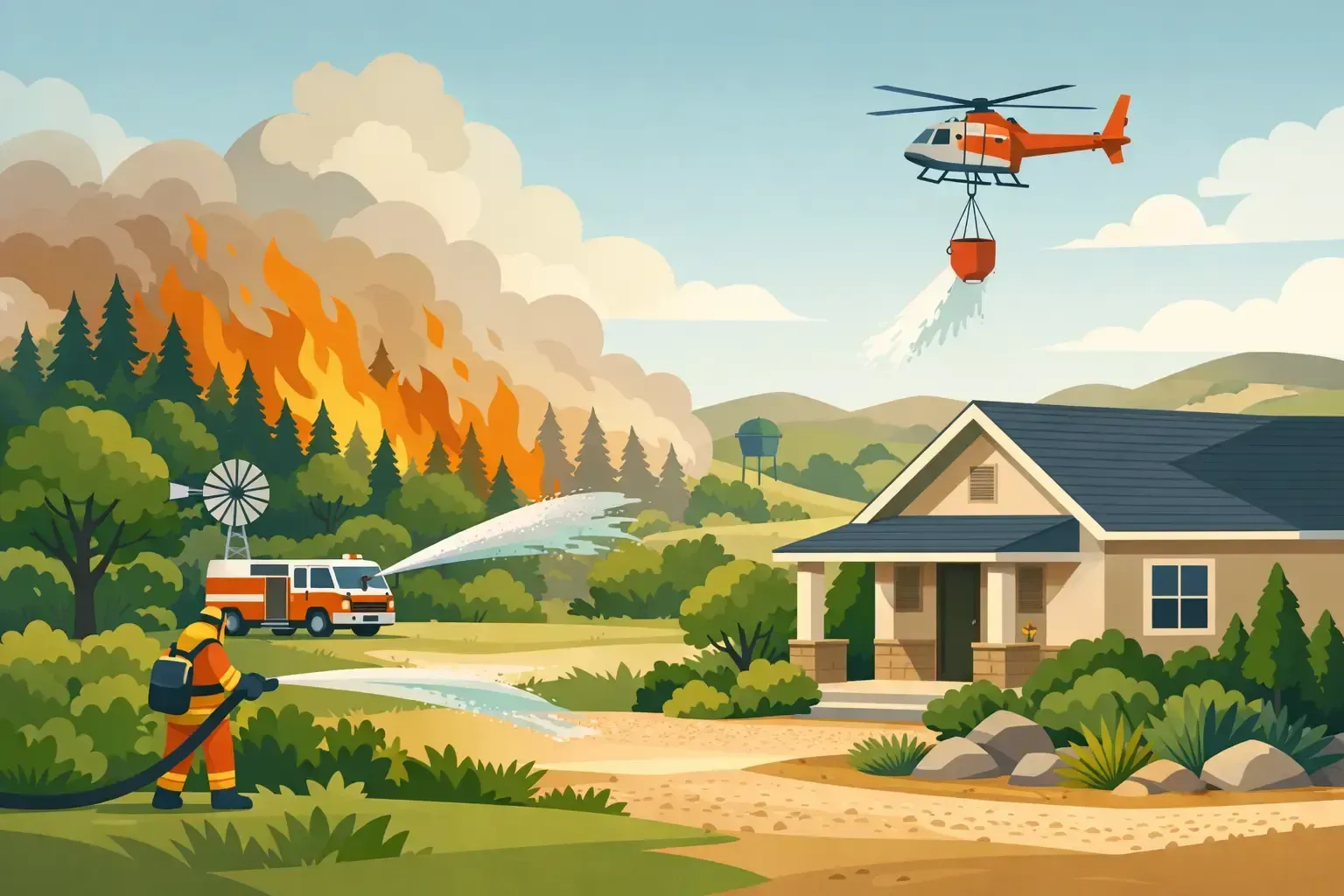
Wildfire response with firefighters, water tanker, helicopter, and smoke near homes in a rural neighborhood
August 26, 2026
A Central Texas wildfire mitigation guide has to start with a hard truth: a beautiful Hill Country property can carry fire faster than most owners expect. Ce...
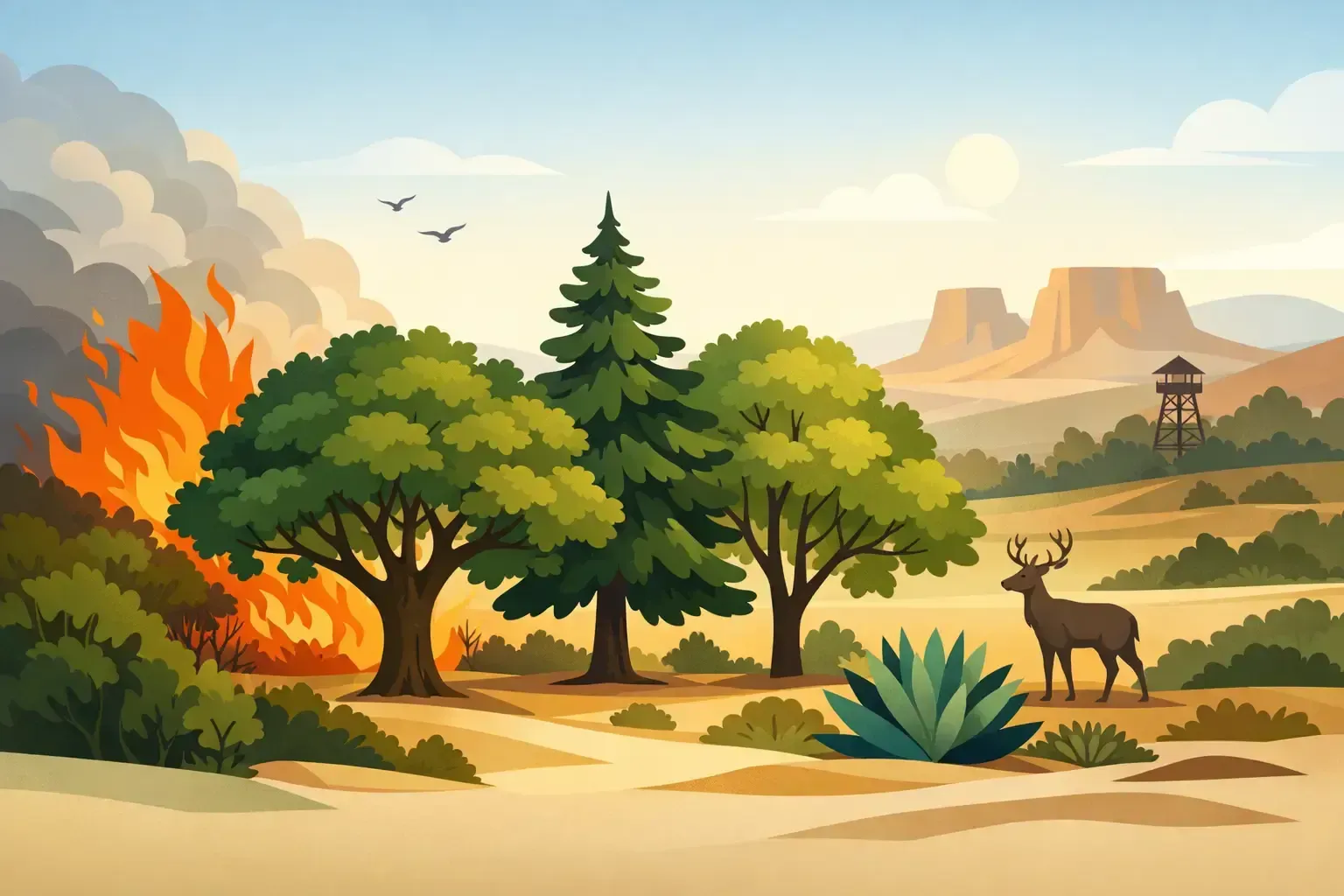
Savanna wildfire with trees, deer, and smoky hills under a bright sky
August 24, 2026
A beautiful shade tree should not become a fuse leading to your home. For Central Texas property owners, choosing the best trees for wildfire resistance mean...

Worker pruning a tree in a sunny yard beside a house, with tools on the grass.
August 22, 2026
A mature live oak shading a Bee Cave driveway can look indestructible right up until a heavy limb hangs over the roof, a cedar elm starts crowding the servic...
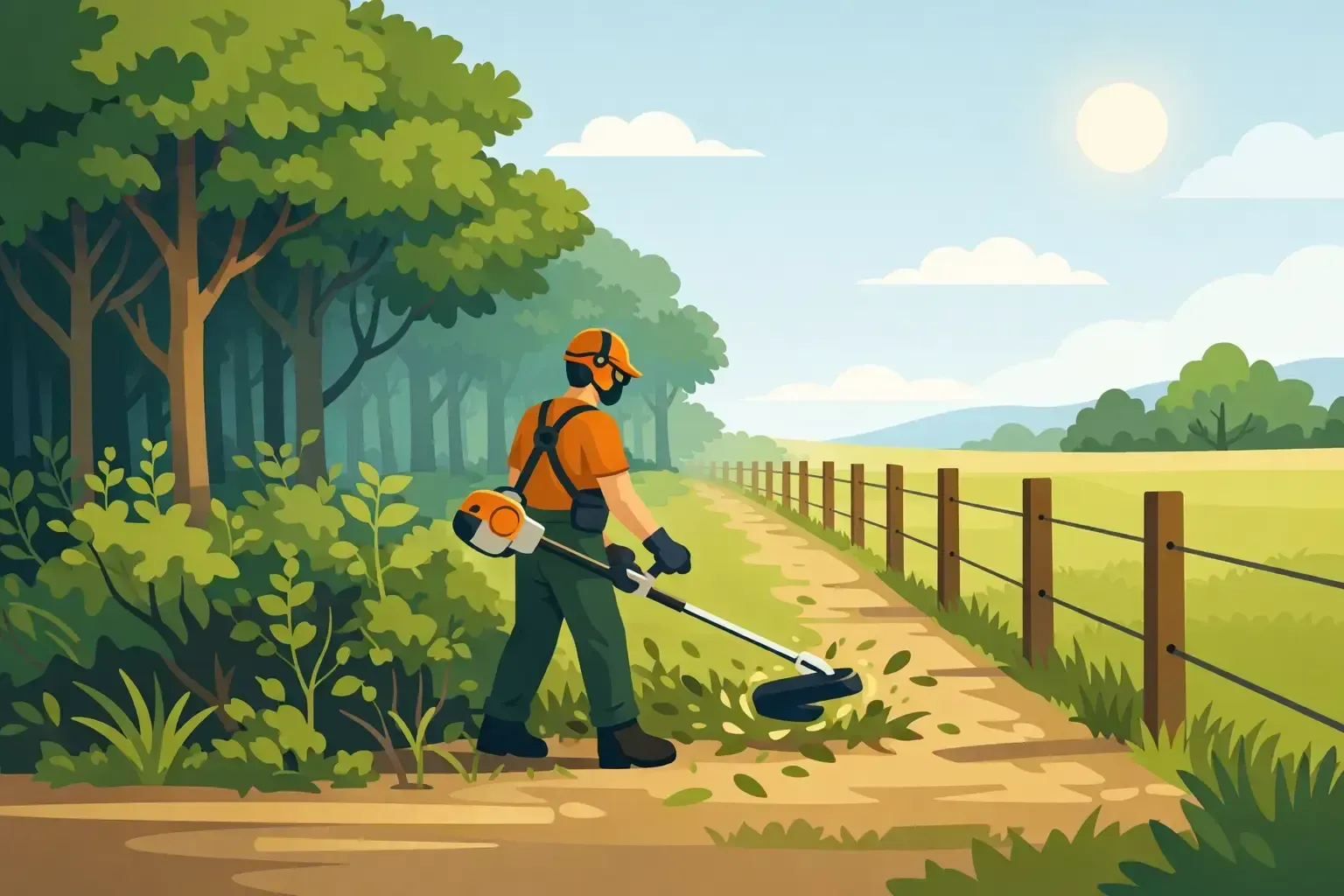
Person using a string trimmer beside a fenced field on a sunny day
August 20, 2026
A fence line can disappear fast in Central Texas. One wet spring, a few missed mowing cycles, and suddenly cedar, huisache, vines, fallen limbs, and thorny b...
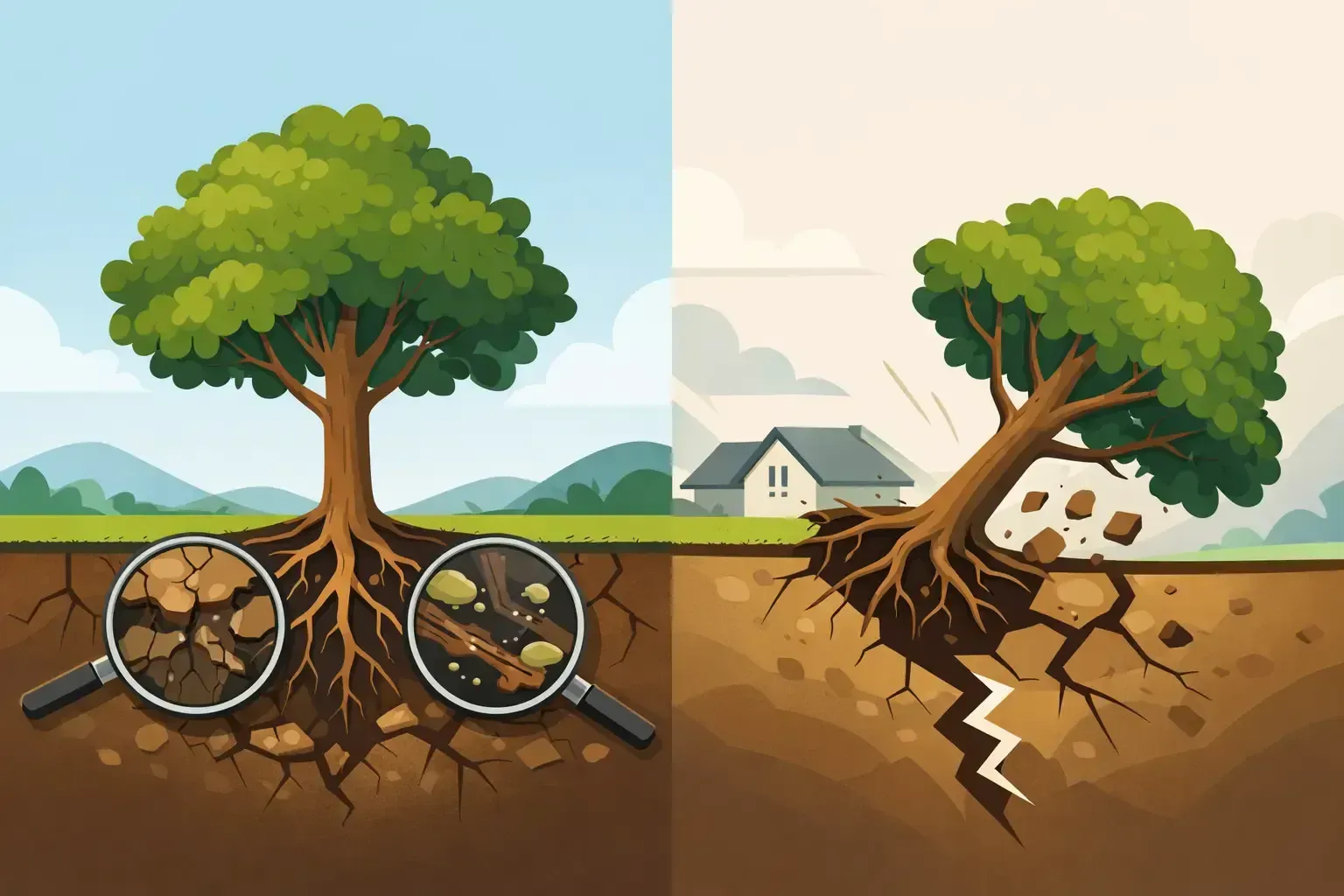
Healthy and damaged trees showing root health and drought soil cracking on a farm landscape
August 16, 2026
A live oak can look perfectly fine above ground while its support system is under serious stress below it. That is what makes root problems so frustrating fo...

Split view of deforestation and healthy green pasture with cows under a bright sky
August 14, 2026
A cedar-choked pasture can make a property feel smaller every year. Water disappears into dense juniper cover, native grasses lose sunlight, fence lines vani...
Split scene of tree trimming and lawn care in a sunny suburban yard, with workers using a saw and planting shrubs
August 12, 2026
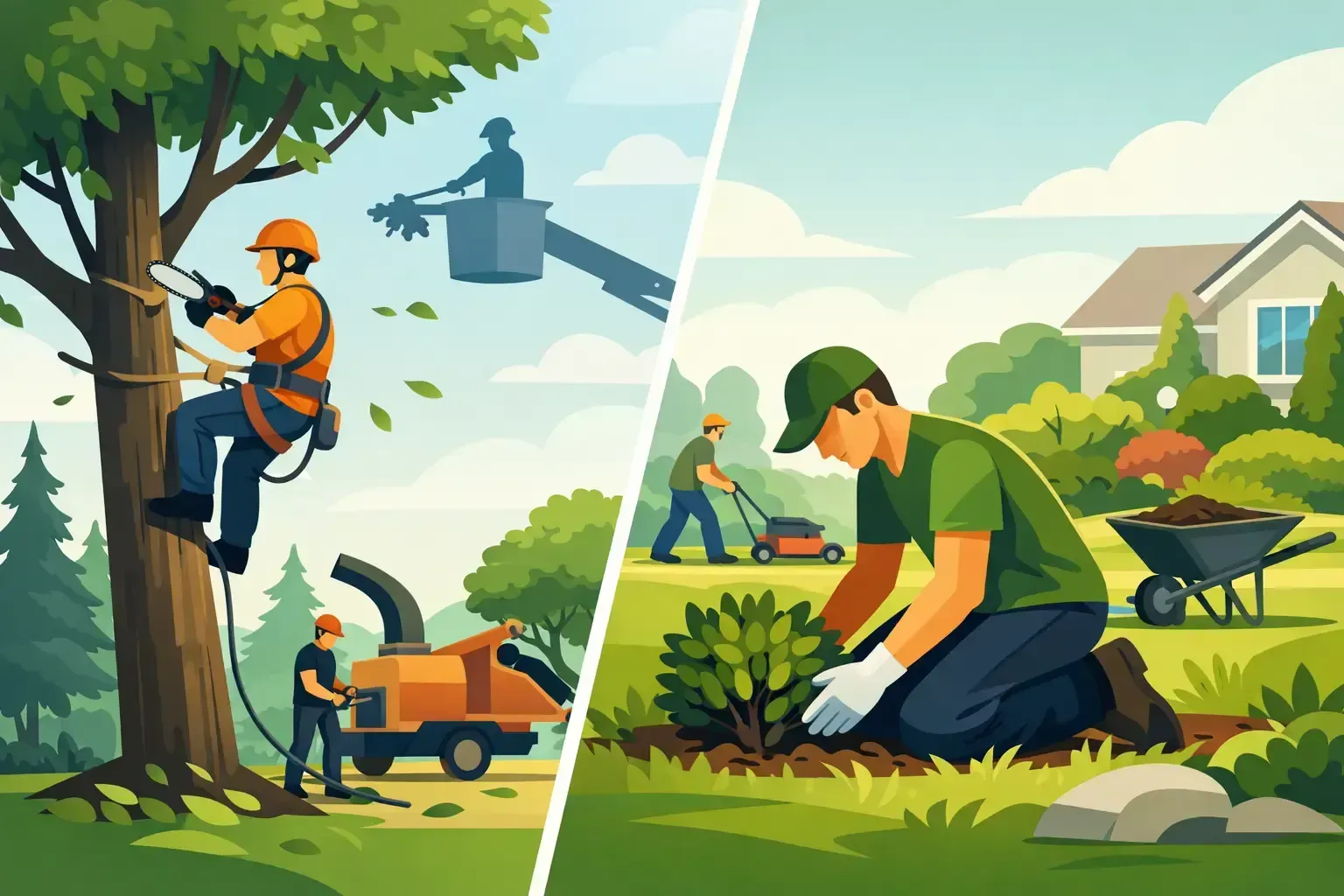
A sagging oak limb over the driveway is not a landscaping project. Neither is a cedar thicket pressing against your fence line, a storm-damaged tree near the...
Farmer in field watching a blue tractor spray crops, with cows, barn, hills, and smoke in the background
September 1, 2026
A ranch can look green and still be headed in the wrong direction. Dense brush can hide stressed oaks, crowd out usable pasture, choke access roads, and crea...
Wildfire burning in a forest with firefighters, helicopter, and smoke over a split rural landscape
August 30, 2026
A hot, windy afternoon can turn a forgotten brush pile, a crowded cedar stand, or low limbs near a structure into more than a property-maintenance issue. Tex...
Environmental inspection scene with drone, tree, magnifying glass, recycle bin, and hard hat in a city park
August 28, 2026
A shaded entry drive can become a liability fast when a heavy limb hangs over customer parking, a dead cedar leans toward a fence, or brush builds up around ...
Wildfire response with firefighters, water tanker, helicopter, and smoke near homes in a rural neighborhood
August 26, 2026
A Central Texas wildfire mitigation guide has to start with a hard truth: a beautiful Hill Country property can carry fire faster than most owners expect. Ce...
Savanna wildfire with trees, deer, and smoky hills under a bright sky
August 24, 2026
A beautiful shade tree should not become a fuse leading to your home. For Central Texas property owners, choosing the best trees for wildfire resistance mean...
Worker pruning a tree in a sunny yard beside a house, with tools on the grass.
August 22, 2026
A mature live oak shading a Bee Cave driveway can look indestructible right up until a heavy limb hangs over the roof, a cedar elm starts crowding the servic...