


Tree Pruning Bee Cave Property Owners Can Trust

August 22, 2026

A mature live oak shading a Bee Cave driveway can look indestructible right up until a heavy limb hangs over the roof, a cedar elm starts crowding the service line, or dense brush beneath the canopy turns into a fire concern. Tree pruning Bee Cave property owners need is not about making a tree look smaller. It is precise, health-minded work that improves safety, preserves the tree's structure, and makes the whole property more resilient.

Central Texas trees grow in hard conditions: long dry stretches, sudden downpours, shallow rocky soils, high winds, construction pressure, and intense summer heat. A quick cut in the wrong place can create a wound a tree struggles to close, trigger weak regrowth, or remove the very shade that protects the soil and root zone. Good pruning has a clear purpose, a disciplined plan, and a clean finish.

What Professional Tree Pruning in Bee Cave Should Accomplish

The first question should never be, "How much can we cut?" It should be, "What does this tree and property need?" That might mean removing deadwood over a patio, reducing end weight on an overextended limb, creating clearance for a roof, or selectively opening dense growth so wind can move through the canopy more naturally.

Proper pruning also protects the character of the property. Bee Cave lots often have mature oaks, native elms, Ashe juniper, and ornamental trees doing real work: cooling a home, framing views, supporting wildlife, and giving the land its Texas Hill Country feel. The goal is to correct problems without stripping away the assets that took decades to grow.

A qualified arborist looks beyond the branch itself. They consider attachment points, trunk condition, decay indicators, past cuts, root-zone stress, nearby targets, soil conditions, and how one removal changes the load carried by the rest of the tree. That engineering-based view is the difference between a thoughtful pruning prescription and a crew simply cutting until the pile gets bigger.

The Cuts That Cause Long-Term Problems

Homeowners are often offered a "cleanup" that sounds harmless but can leave a tree worse off. Topping is the classic example. Cutting major limbs back to stubs may produce an immediate reduction in height, but it removes stored energy, exposes interior wood to sun damage, and commonly leads to fast, weakly attached shoots. The tree becomes more hazardous, not less.

Over-thinning creates a different problem. Removing too much live canopy at once reduces the tree's ability to produce energy and can expose limbs and trunks that were previously shaded. On stressed Hill Country trees, that extra sun exposure can be a serious setback.

Flush cuts are another red flag. Trees need their branch collar, the slightly swollen area where a branch joins the parent limb, to seal a pruning wound effectively. Cutting into that tissue can slow the tree's natural defense process. Leaving long stubs is not the answer either, because stubs can die back and become entry points for decay.

The best work is usually less dramatic than people expect. A few well-chosen cuts can remove risk, restore clearance, and improve form without making the tree look butchered. If a proposed plan calls for removing a large percentage of a healthy canopy, it deserves a closer conversation about why, what alternatives exist, and whether the work should be phased over time.

Deadwood Removal Is Not the Same as Full Pruning

Removing dead or broken branches is a smart first step, especially after wind or drought stress. But deadwood removal alone may not solve a structural issue such as a heavy limb extending over a roof or multiple stems with a poor union. Conversely, a healthy tree does not always need major structural work just because it has a few dead twigs.

This is where a property walkthrough matters. The right scope depends on the tree species, age, condition, location, and risk targets below it. A limb over open pasture carries a different consequence than the same limb over a child's play area, parked vehicles, or a tile roof.

When to Prune Central Texas Oaks

Timing matters, particularly with oaks. In areas where oak wilt is a concern, pruning fresh oak wounds during periods of increased disease-vector activity can raise risk. For many Central Texas properties, the lower-risk pruning window is generally from July through January, but conditions and current local guidance matter. Storm damage is different: a broken or dangerous limb should be addressed promptly, regardless of the calendar.

When an oak must be pruned, crews should use clean tools and follow current best practices for protecting fresh cuts. Oak wound treatment is a local disease-management practice, not a cosmetic afterthought. The details matter because oak wilt can move through connected root systems and threaten more than one tree on a property.

Other species have their own preferences. Elms, ornamental trees, fruit trees, and junipers respond differently to timing and pruning intensity. A one-size-fits-all seasonal rule is not professional tree care. The best schedule balances tree biology, disease pressure, weather, access, and the urgency of the hazard.

Pruning for Wildfire Readiness Without Over-Clearing

In Bee Cave and across the Hill Country, tree care and wildfire readiness are connected. Pruning can reduce ladder fuels - vegetation that lets a ground fire move into shrubs and tree canopies - but aggressive clearing is not automatically safer or healthier. The objective is strategic spacing and fuel management, not turning a shaded property into bare ground.

Lower limbs near dense brush, accumulated dead material, and crowded understory growth may deserve attention. So may trees pressing together around structures, outbuildings, access roads, or evacuation routes. Yet mature canopy cover also provides cooling and protects soil moisture. The right plan separates vegetation where it creates a fire pathway while retaining valuable, healthy trees wherever practical.

This work should be coordinated with brush management, defensible-space planning, and proper debris handling. A neat-looking property can still have fuel continuity if cut material is left in the wrong place. Dynamo Dusty's Tree Service brings ISA Certified Arborist expertise and the ISA Wildfire Risk Reduction Qualification to this kind of planning, helping owners make improvements that look sharp and perform when conditions get tough.

Signs It Is Time to Schedule an Assessment

You do not need to wait for a branch to fall to call for a professional opinion. Changes in a tree's appearance or behavior often provide an earlier warning. Pay attention to these conditions:

  • Dead, cracked, hanging, or suddenly drooping limbs
  • Limbs rubbing the roof, blocking access, or growing into service lines
  • Large cavities, peeling bark, visible decay, or mushrooms near the trunk base
  • Multiple trunks splitting apart or a new crack at a major union
  • Canopy thinning, unusually small leaves, or branch dieback after heat or drought
  • Dense brush and low limbs creating a continuous fuel path toward buildings

None of these signs automatically means a tree must be removed. Some issues can be managed with targeted pruning, support strategies, root-zone care, or ongoing monitoring. Others may indicate that the risk is too high to accept. Clear recommendations should explain the condition, the options, and the trade-offs in plain language.

Protect the Tree After the Crew Leaves

Pruning is only one part of tree health. Trees under chronic stress are less able to recover from cuts, drought, pests, and storms. Avoid piling mulch against the trunk, parking equipment under the canopy, or adding fill soil over roots. Keep irrigation intentional rather than frequent and shallow, especially during dry periods. Deep, properly timed watering is generally more useful than a little water every day.

Construction is another major pressure point. Roots extend well beyond the visible canopy, and trenching, grading, and compaction can damage a tree long before leaves show distress. If a project involves a driveway expansion, pool, utility route, or new structure, bring tree planning into the conversation early. Preventing root damage is usually far less expensive than trying to correct decline later.

A well-pruned tree should still look like itself. It should have room to grow, better clearance where it matters, and fewer obvious hazards without looking scalped or lopsided. That is the standard worth holding onto: careful work now, stronger trees and a safer property for the seasons ahead.

Farmer in field watching a blue tractor spray crops, with cows, barn, hills, and smoke in the background
September 1, 2026
A ranch can look green and still be headed in the wrong direction. Dense brush can hide stressed oaks, crowd out usable pasture, choke access roads, and crea...

Wildfire burning in a forest with firefighters, helicopter, and smoke over a split rural landscape
August 30, 2026
A hot, windy afternoon can turn a forgotten brush pile, a crowded cedar stand, or low limbs near a structure into more than a property-maintenance issue. Tex...
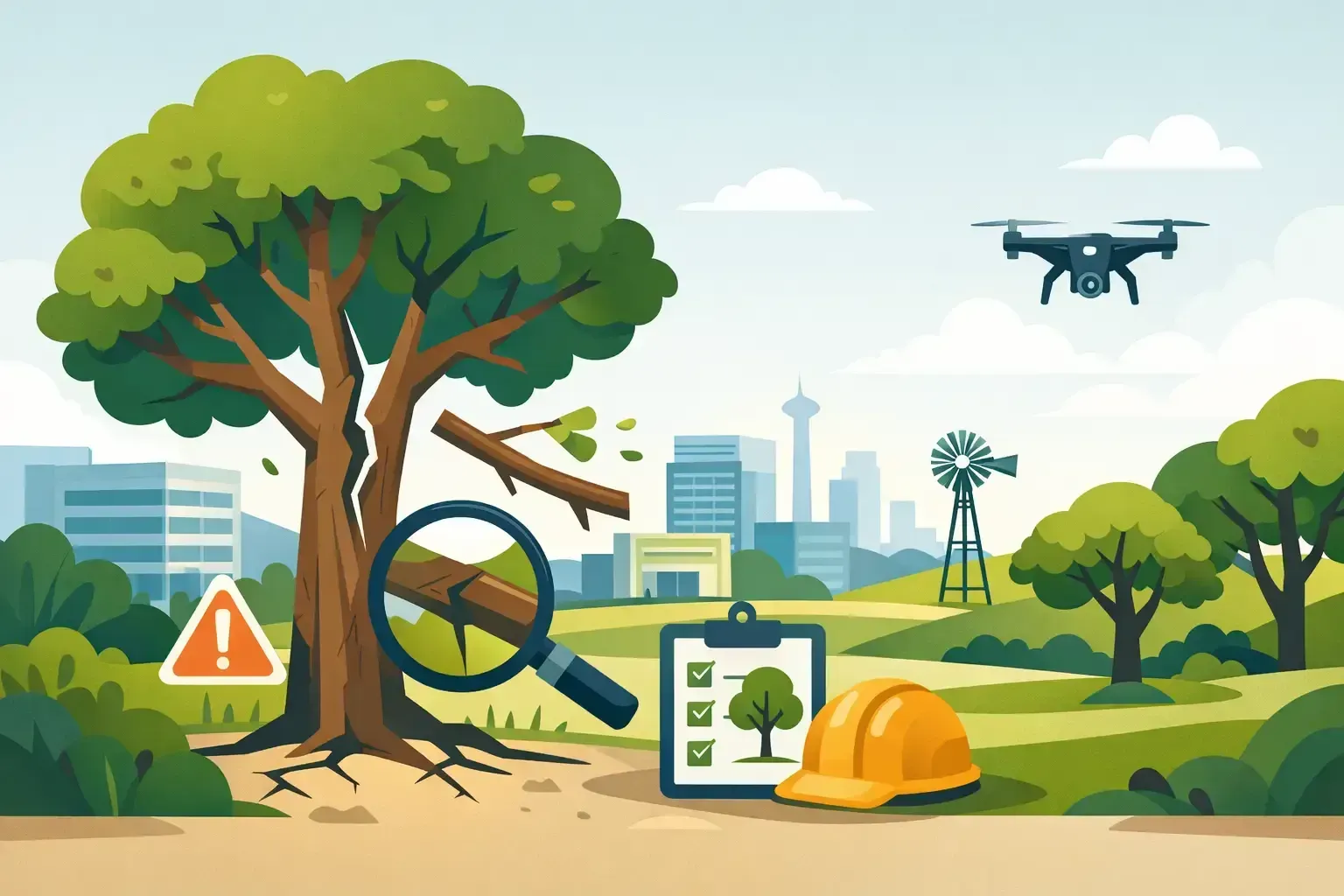
Environmental inspection scene with drone, tree, magnifying glass, recycle bin, and hard hat in a city park
August 28, 2026
A shaded entry drive can become a liability fast when a heavy limb hangs over customer parking, a dead cedar leans toward a fence, or brush builds up around ...

Wildfire response with firefighters, water tanker, helicopter, and smoke near homes in a rural neighborhood
August 26, 2026
A Central Texas wildfire mitigation guide has to start with a hard truth: a beautiful Hill Country property can carry fire faster than most owners expect. Ce...

Savanna wildfire with trees, deer, and smoky hills under a bright sky
August 24, 2026
A beautiful shade tree should not become a fuse leading to your home. For Central Texas property owners, choosing the best trees for wildfire resistance mean...
Person using a string trimmer beside a fenced field on a sunny day
August 20, 2026
A fence line can disappear fast in Central Texas. One wet spring, a few missed mowing cycles, and suddenly cedar, huisache, vines, fallen limbs, and thorny b...
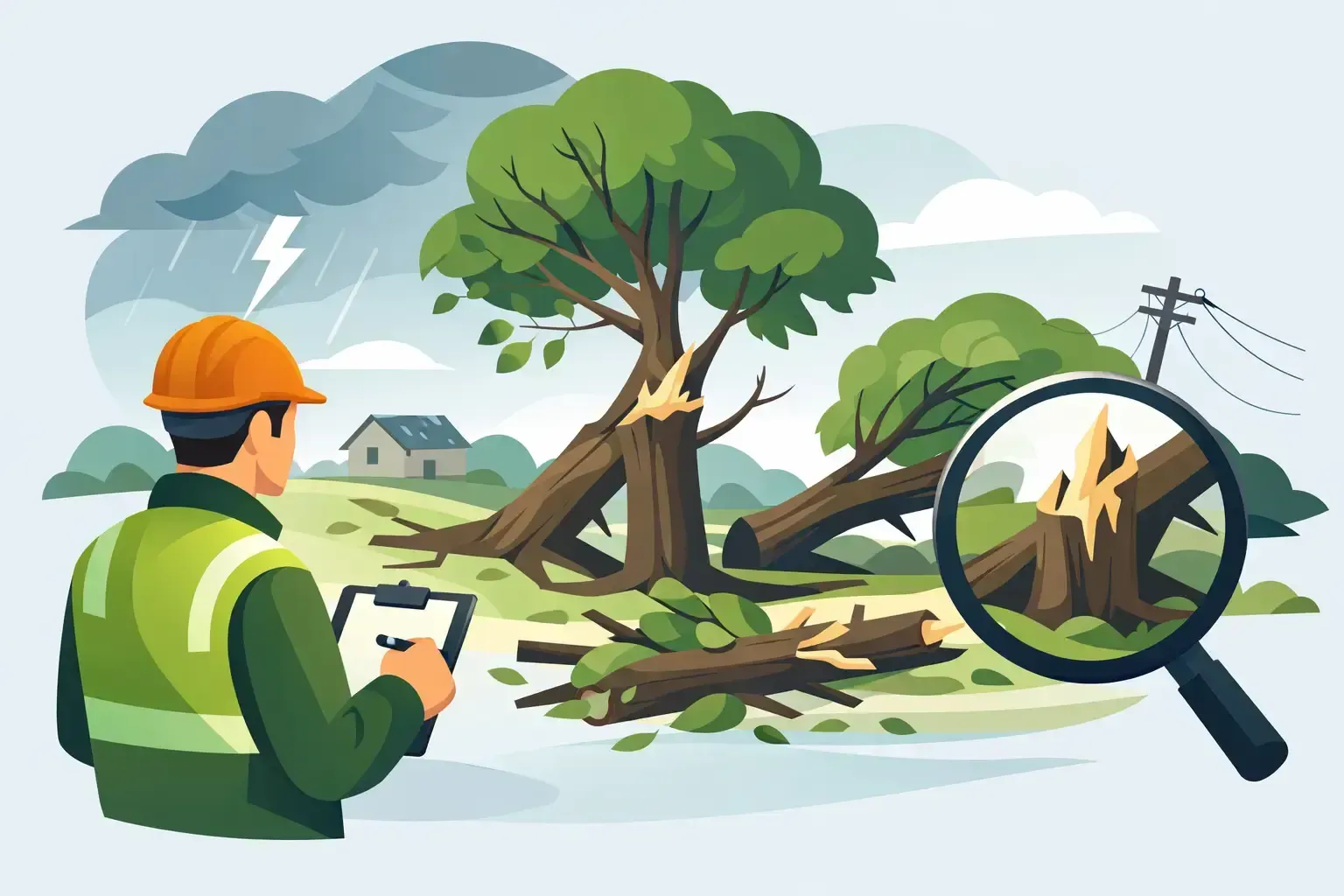
Worker inspecting storm-damaged tree with fallen branches and a magnifying glass in a windy yard
August 18, 2026
A hard Central Texas storm can turn a healthy-looking canopy into a real property hazard in a single night. This guide to storm damaged tree assessment helps...
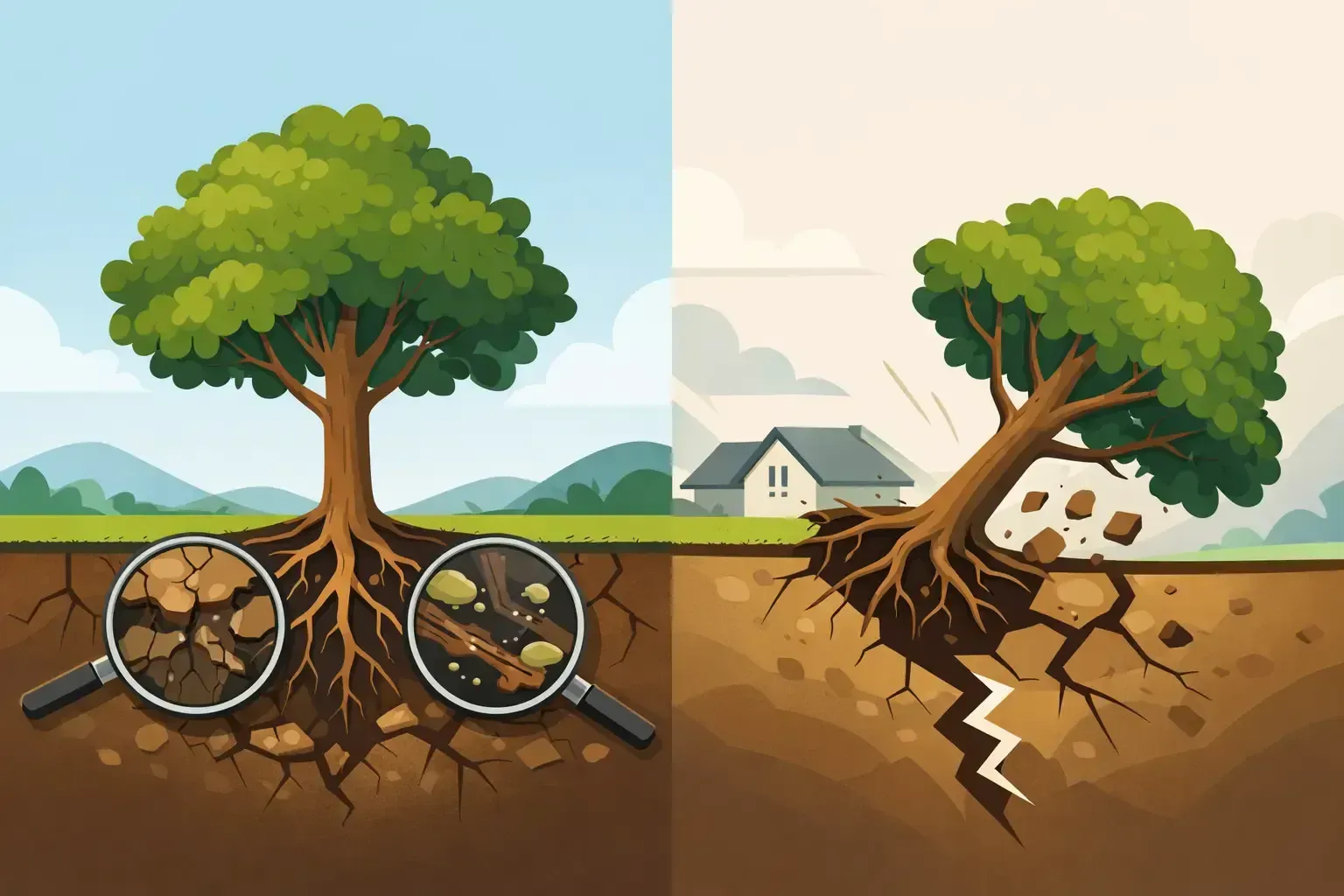
Healthy and damaged trees showing root health and drought soil cracking on a farm landscape
August 16, 2026
A live oak can look perfectly fine above ground while its support system is under serious stress below it. That is what makes root problems so frustrating fo...
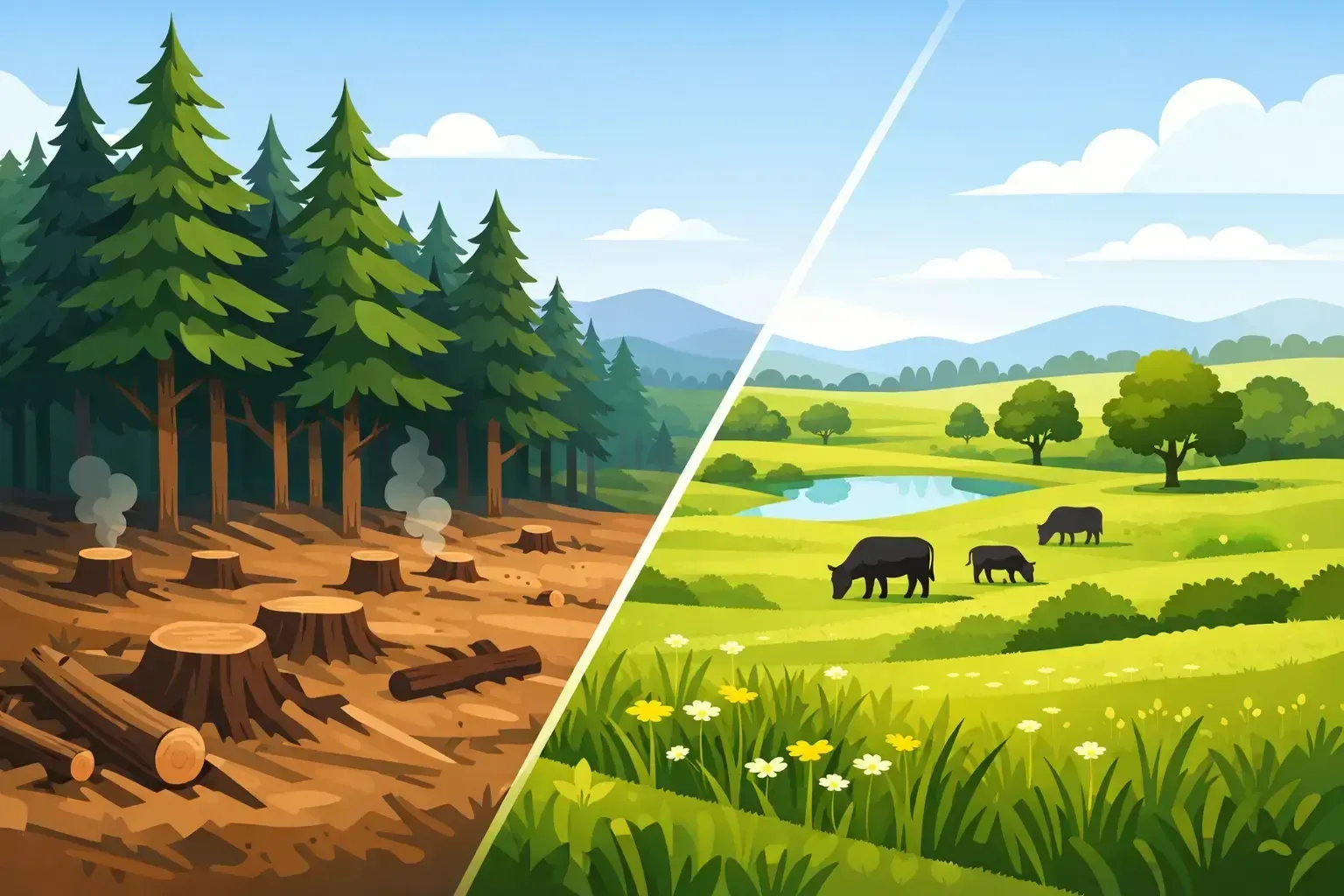
Split view of deforestation and healthy green pasture with cows under a bright sky
August 14, 2026
A cedar-choked pasture can make a property feel smaller every year. Water disappears into dense juniper cover, native grasses lose sunlight, fence lines vani...
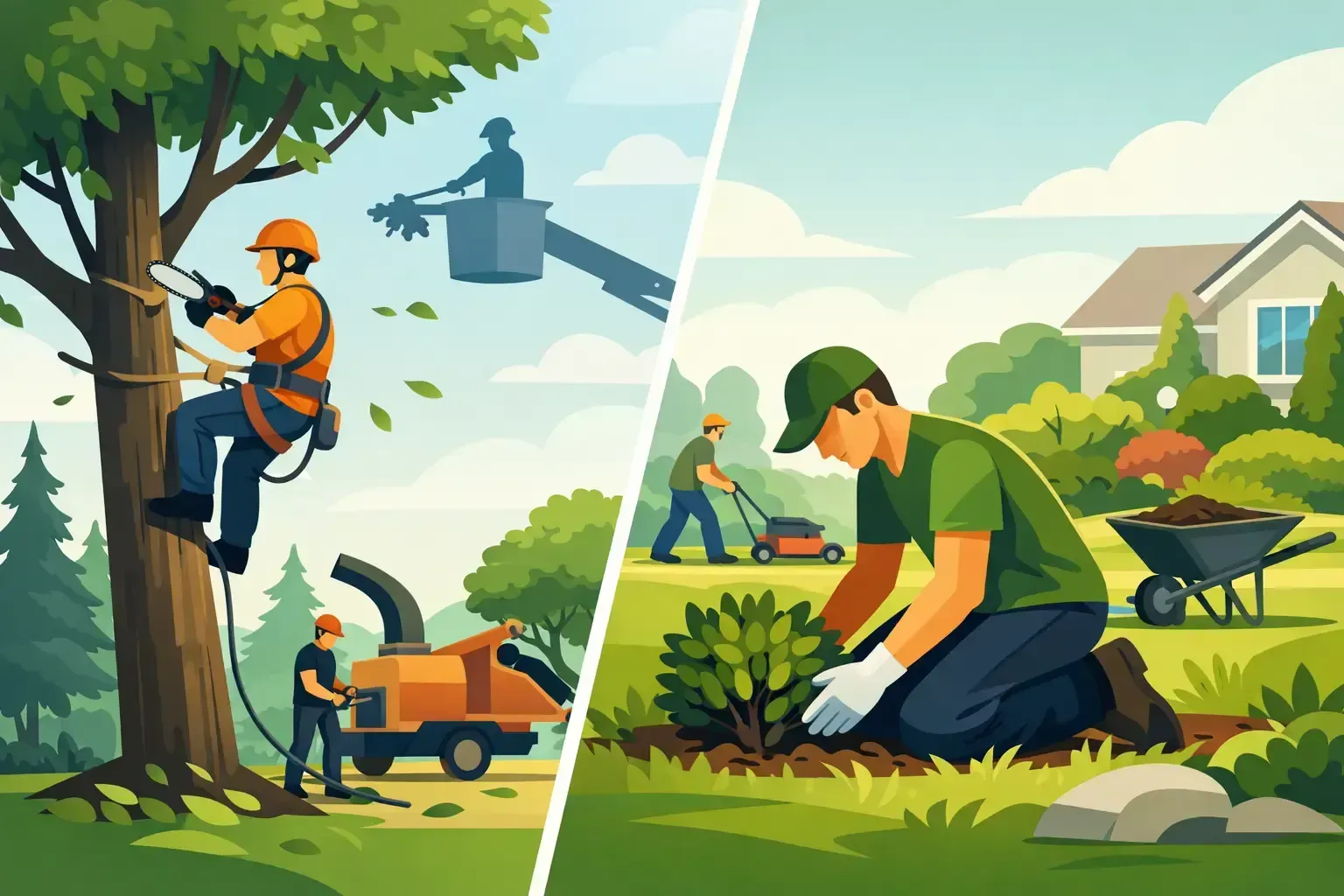
Split scene of tree trimming and lawn care in a sunny suburban yard, with workers using a saw and planting shrubs
August 12, 2026
A sagging oak limb over the driveway is not a landscaping project. Neither is a cedar thicket pressing against your fence line, a storm-damaged tree near the...
Farmer in field watching a blue tractor spray crops, with cows, barn, hills, and smoke in the background
September 1, 2026
A ranch can look green and still be headed in the wrong direction. Dense brush can hide stressed oaks, crowd out usable pasture, choke access roads, and crea...
Wildfire burning in a forest with firefighters, helicopter, and smoke over a split rural landscape
August 30, 2026
A hot, windy afternoon can turn a forgotten brush pile, a crowded cedar stand, or low limbs near a structure into more than a property-maintenance issue. Tex...
Environmental inspection scene with drone, tree, magnifying glass, recycle bin, and hard hat in a city park
August 28, 2026
A shaded entry drive can become a liability fast when a heavy limb hangs over customer parking, a dead cedar leans toward a fence, or brush builds up around ...
Wildfire response with firefighters, water tanker, helicopter, and smoke near homes in a rural neighborhood
August 26, 2026
A Central Texas wildfire mitigation guide has to start with a hard truth: a beautiful Hill Country property can carry fire faster than most owners expect. Ce...
Savanna wildfire with trees, deer, and smoky hills under a bright sky
August 24, 2026
A beautiful shade tree should not become a fuse leading to your home. For Central Texas property owners, choosing the best trees for wildfire resistance mean...
Person using a string trimmer beside a fenced field on a sunny day
August 20, 2026
A fence line can disappear fast in Central Texas. One wet spring, a few missed mowing cycles, and suddenly cedar, huisache, vines, fallen limbs, and thorny b...