
What Does an Arborist Do, Exactly?

May 1, 2026

If you have ever looked at a giant oak over your roofline and thought, Is this tree healthy, dangerous, or just overdue for attention, you are already asking the right question: what does an arborist do? The short answer is that an arborist is a trained tree care professional. The better answer is that a good arborist helps you make smart decisions about safety, tree health, property appearance, and long-term land management.

That matters more than most people realize. Tree work is not just cutting limbs until the yard looks cleaner. On a home lot, a ranch, or a commercial property, every cut changes weight, structure, growth, and risk. In Central Texas, where drought, storms, oak issues, cedar pressure, and wildfire exposure all collide, those choices carry real consequences.

What does an arborist do for a property owner?

An arborist evaluates trees as living assets, not just yard features. That means looking at structure, species, age, soil conditions, past pruning, storm damage, disease pressure, and how a tree interacts with buildings, driveways, fences, power lines, and surrounding vegetation.

In practical terms, an arborist helps you answer questions like these: Is this limb a hazard? Does this tree need pruning or removal? Why are the leaves thinning? Is the canopy too dense for wind? Are these trees too close together? How do we reduce wildfire risk without stripping the property bare?

That is the difference between professional arboriculture and random chainsaw work. A real arborist is not guessing. They are reading the tree, the site, and the likely outcomes before any equipment starts up.

Arborists inspect tree health and structural risk

One of the most valuable things an arborist does is diagnose problems before they turn into expensive surprises. Sometimes the issue is obvious, like a split trunk, dead limbs, or storm damage hanging over a driveway. More often, it is subtle. You might see sparse foliage, early leaf drop, bark cracking, root flare problems, fungal growth, or a tree leaning in a way that was not there before.

An arborist looks at those clues together. A declining tree does not always need removal. Sometimes the fix is pruning, soil improvement, watering changes, pest management, or simply reducing stress around the root zone. Other times, although it is a last resort, the safest call is to remove the tree before it fails.

This is where experience matters. Trees can look rough and still be stable. They can also look green and full while hiding serious structural defects. A trained arborist knows the difference, or at least knows when a closer level of assessment is needed. And caught early, a good arborist can turn a tree around.

Pruning is a big part of what an arborist does

A lot of people assume pruning is about appearance. That is part of it, but good pruning is mostly about function. An arborist prunes to remove deadwood, reduce failure risk, improve structure, clear roofs and roadways, manage canopy density, and support healthy growth.

Done right, pruning can make a tree safer and stronger while also improving the look of the property. Done poorly, it can stress the tree, trigger weak regrowth, leave it vulnerable to decay, or create the exact hazard the owner was trying to prevent.

There is no one-size-fits-all cut list. A young live oak and an aging cedar elm do not need the same approach. A tree near a house may need weight reduction and clearance. A tree in an open pasture may need structural correction and canopy balance. Timing matters too, especially in areas where disease concerns and heat stress affect recovery.

That is why arborists do more than trim. They prune with a purpose.

Arborists help decide when removal is necessary

Not every tree can or should be saved. Sometimes a tree is dead, structurally compromised, crowding out better specimens, damaging infrastructure, or creating too much risk near a home, road, parking area, or gathering space.

A good arborist does not rush to removal just because it is the biggest ticket item. They weigh the trade-offs. If a tree can be reasonably managed and preserved, that may be the right move. If the risk is too high or the health decline is too far gone, removal becomes the responsible choice.

That honest judgment is a major part of the job. Property owners do not just need someone who can do the work. They need someone who can tell them what work is actually worth doing.

What does an arborist do beyond trimming and removal?

Quite a bit, especially on larger properties or in demanding conditions.

Arborists often guide tree health care plans, including soil improvement, root zone protection, mulching strategies, watering recommendations, and treatments for pests or disease. In stressed landscapes, especially after drought or construction activity, the problem may not be in the canopy at all. It may be underground, where compacted soil, poor drainage, or damaged roots are quietly weakening the tree.

They also help with tree selection and placement. Putting the wrong species in the wrong spot creates years of maintenance headaches. A strong arborist can help property owners think ahead about mature size, sun exposure, soil type, irrigation, and proximity to structures.

On ranches, acreage, and heavily wooded properties, arborists may also assist with thinning and land management decisions. That includes reducing overcrowding, improving access, increasing the health of desirable trees, and lowering fuel loads that can intensify wildfire behavior.

Arborists play a major role in wildfire risk reduction

In Central Texas, this deserves its own conversation. Wildfire mitigation is not the same as clear-cutting, and it is not just mowing everything short and hoping for the best. An arborist with wildfire risk knowledge looks at ladder fuels, brush density, tree spacing, canopy continuity, dead material, and defensible space around structures.

The goal is not to make a property ugly. The goal is to make fire behavior less intense and less likely to move from grass and brush into trees, then toward homes, barns, fences, or outbuildings. Done right, wildfire risk mitigation work can actually beautify the landscape! Dynamo Dusty's is one of a handful of arborists with the additional qualification of Texas Wildfire Risk Reduction Qualified.

Precision matters. Take too little, and the risk stays high. Take too much, and you can damage the landscape, stress desirable trees, increase erosion, or create a property that feels scalped instead of protected. Good wildfire mitigation has a plan behind it.

For homeowners and landowners who have watched dry summers get hotter and winds get less forgiving, this part of arboriculture is no longer optional background knowledge. It is practical property protection.

Arborists help after storms too

After a storm, the obvious need is cleanup. But cleanup is only part of the equation. An arborist helps assess what can be saved, what needs immediate attention, and what may become a delayed hazard later.

A hanging limb over a driveway is urgent. So is a cracked union over a roof. But even trees that stay standing can be compromised by twisted branches, torn bark, root plate movement, or hidden fractures. Fast action matters, but so does calm judgment. Storm response should reduce risk, not add more damage through rushed, sloppy cuts.

For property managers, HOAs, and commercial owners, this can be especially valuable. You need the site safe, accessible, and presentable, but you also need decisions that hold up after the equipment leaves.

Certification matters, but communication matters too

Not everyone offering tree work is working at an arborist level. That is the plain truth. Equipment alone does not equal expertise, and a low quote can get expensive fast if the work is poorly planned.

ISA certification is one of the clearest trust markers because it shows formal arboricultural knowledge and an ongoing professional standard. But credentials are only part of the picture. A solid arborist also communicates clearly, explains the why behind the recommendation, prices work transparently, and treats your property with respect.

That combination is what earns trust. People want elite results, but they also want someone who shows up, tells the truth, and leaves the place better than they found it.

When should you call an arborist?

Usually sooner than you think. If a tree looks off, has deadwood, is rubbing a roof, blocks sightlines, leans suddenly, drops large limbs, or sits in an overgrown area near structures, it is time for a professional assessment. The same goes for properties with heavy brush, dense cedar, storm damage, or growing wildfire concerns.

Waiting can be reasonable if the issue is minor and being monitored. Waiting can also turn a manageable pruning job into an emergency removal. It depends on the tree, the target below it, and the season ahead.

A good arborist helps remove that guesswork. They do not just work on trees. They help property owners protect what is under, around, and beyond them.

For neighbors who want safer limbs, healthier trees, cleaner views, stronger curb appeal, or a more wildfire-ready property, that is the real value. The best time to understand your trees is before they force the conversation.

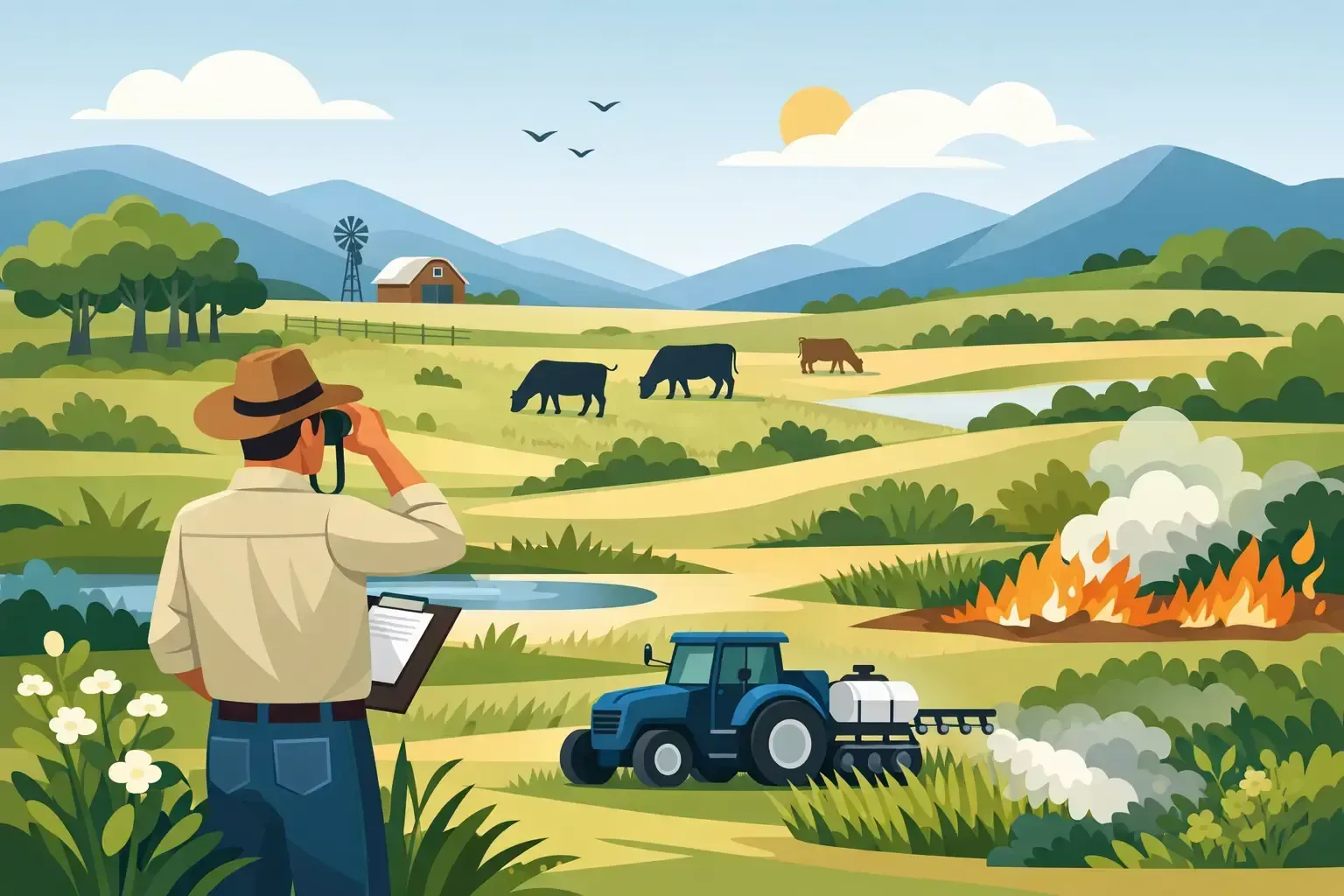
Farmer in field watching a blue tractor spray crops, with cows, barn, hills, and smoke in the background
September 1, 2026
A ranch can look green and still be headed in the wrong direction. Dense brush can hide stressed oaks, crowd out usable pasture, choke access roads, and crea...
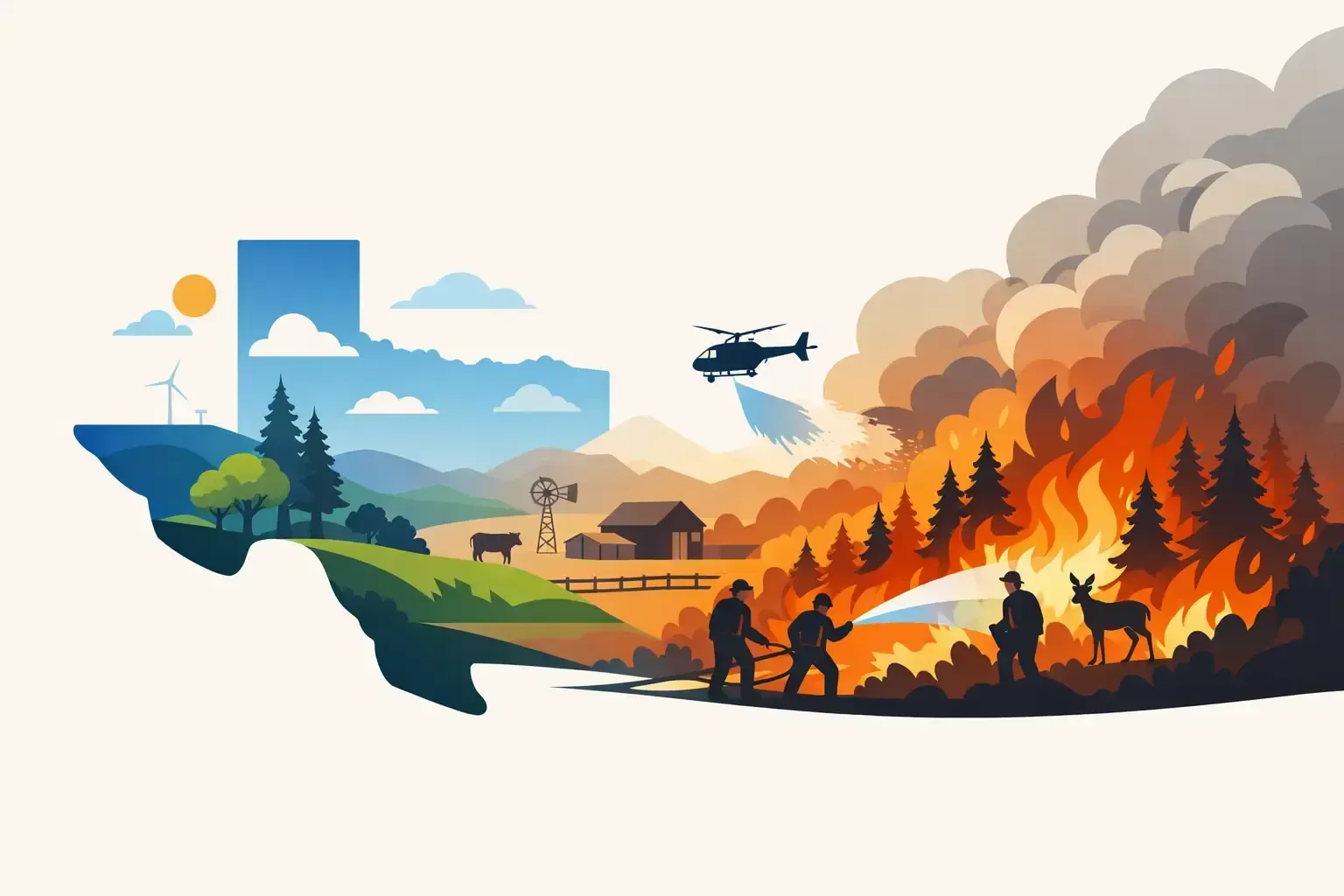
Wildfire burning in a forest with firefighters, helicopter, and smoke over a split rural landscape
August 30, 2026
A hot, windy afternoon can turn a forgotten brush pile, a crowded cedar stand, or low limbs near a structure into more than a property-maintenance issue. Tex...
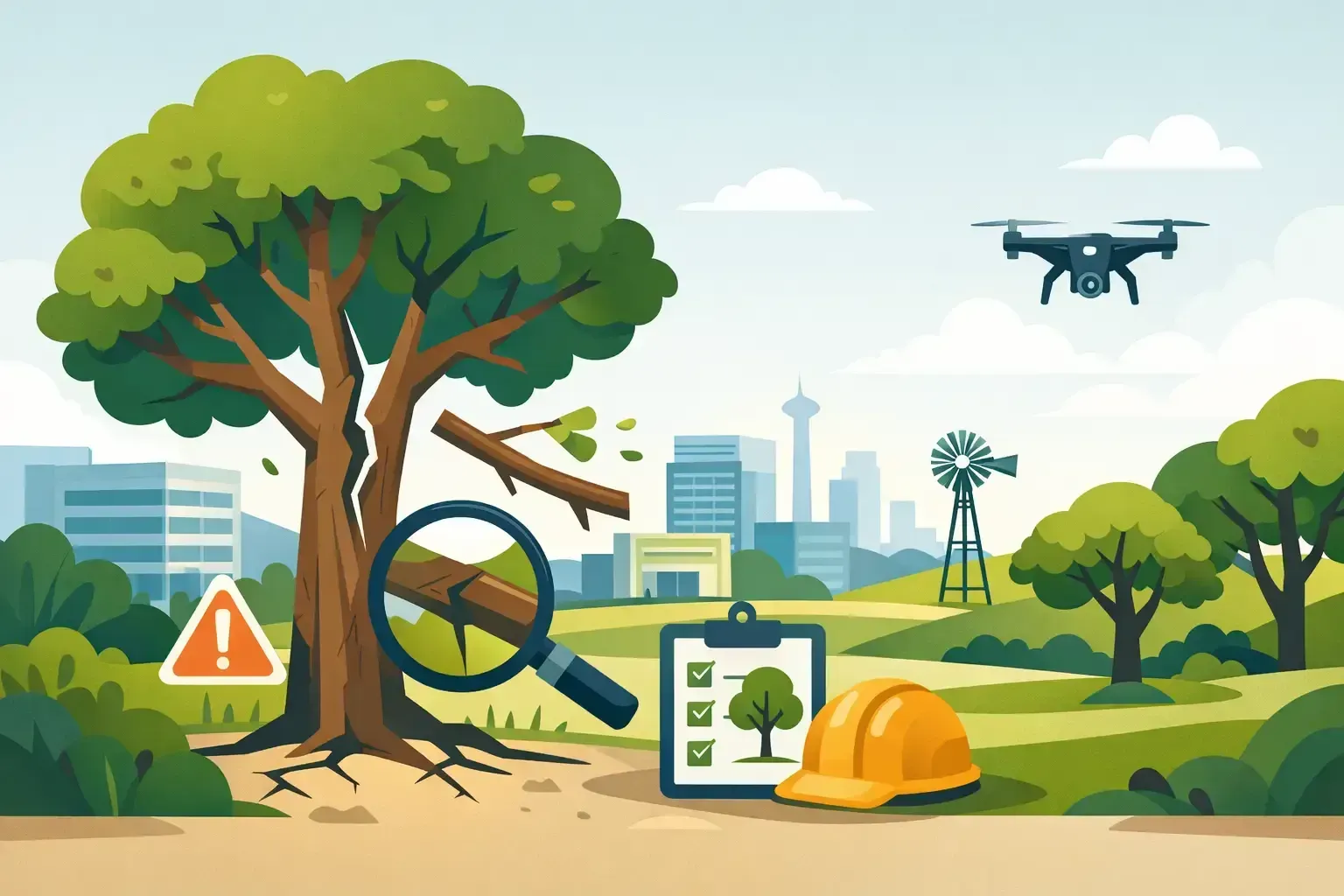
Environmental inspection scene with drone, tree, magnifying glass, recycle bin, and hard hat in a city park
August 28, 2026
A shaded entry drive can become a liability fast when a heavy limb hangs over customer parking, a dead cedar leans toward a fence, or brush builds up around ...
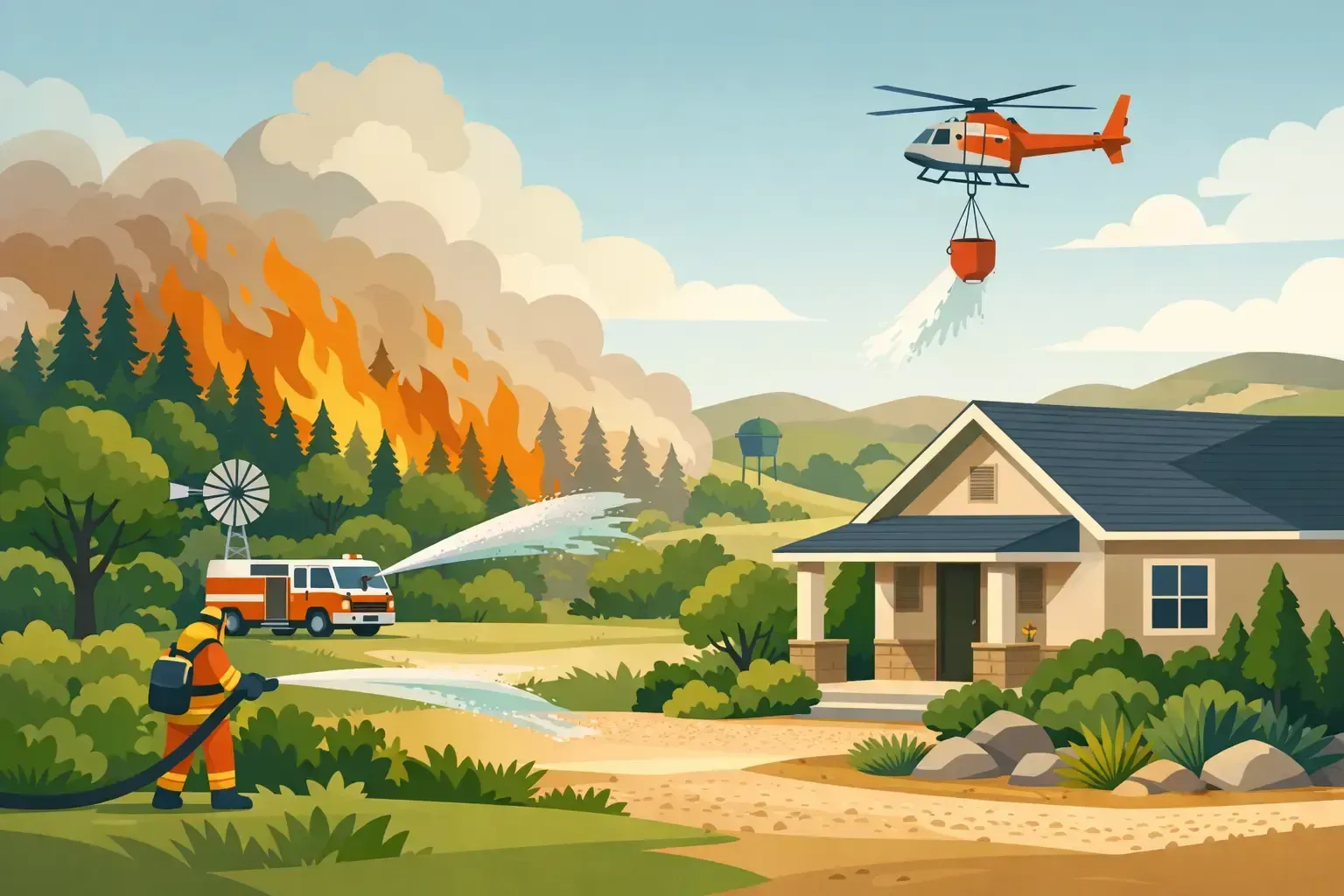
Wildfire response with firefighters, water tanker, helicopter, and smoke near homes in a rural neighborhood
August 26, 2026
A Central Texas wildfire mitigation guide has to start with a hard truth: a beautiful Hill Country property can carry fire faster than most owners expect. Ce...
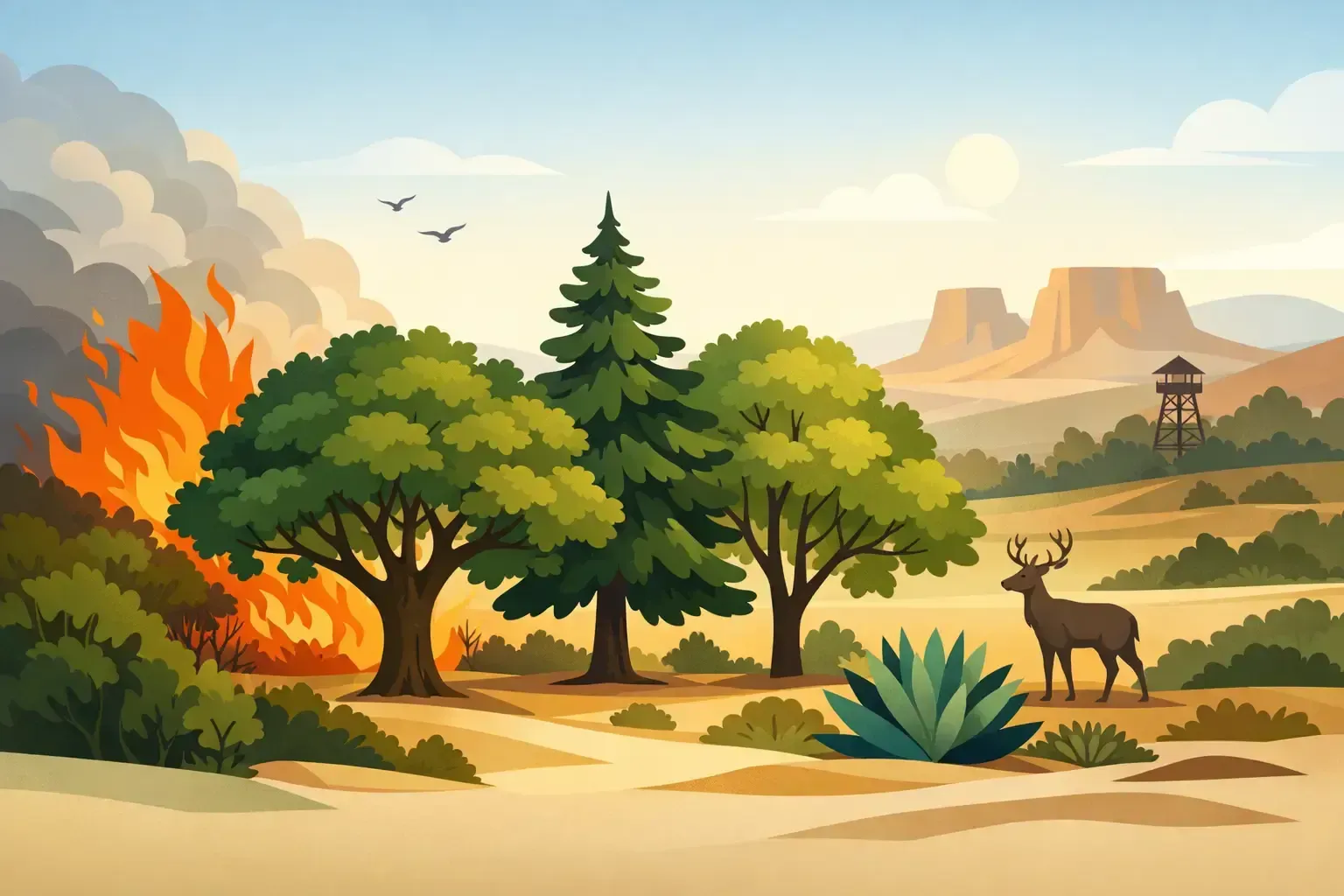
Savanna wildfire with trees, deer, and smoky hills under a bright sky
August 24, 2026
A beautiful shade tree should not become a fuse leading to your home. For Central Texas property owners, choosing the best trees for wildfire resistance mean...
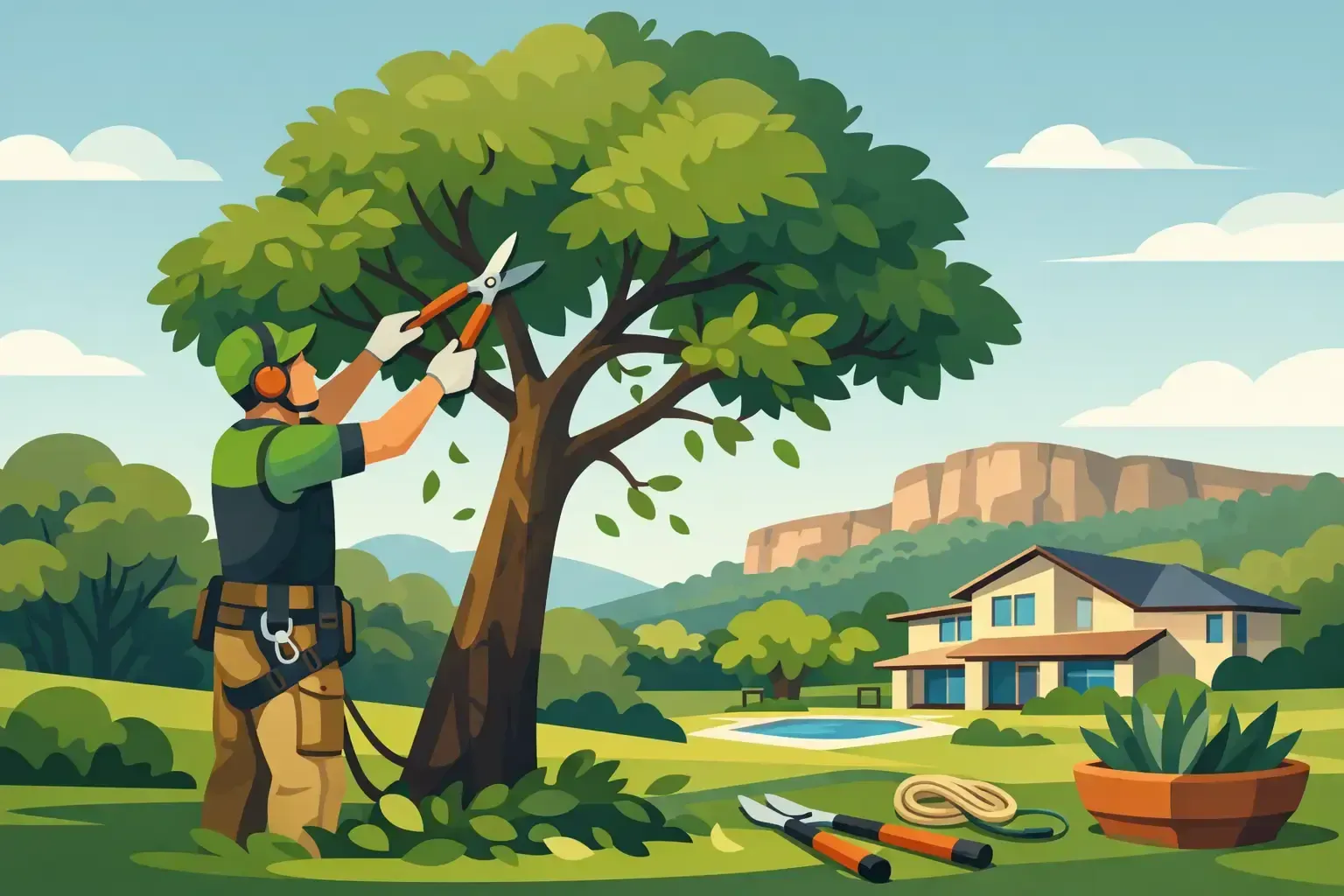
Worker pruning a tree in a sunny yard beside a house, with tools on the grass.
August 22, 2026
A mature live oak shading a Bee Cave driveway can look indestructible right up until a heavy limb hangs over the roof, a cedar elm starts crowding the servic...
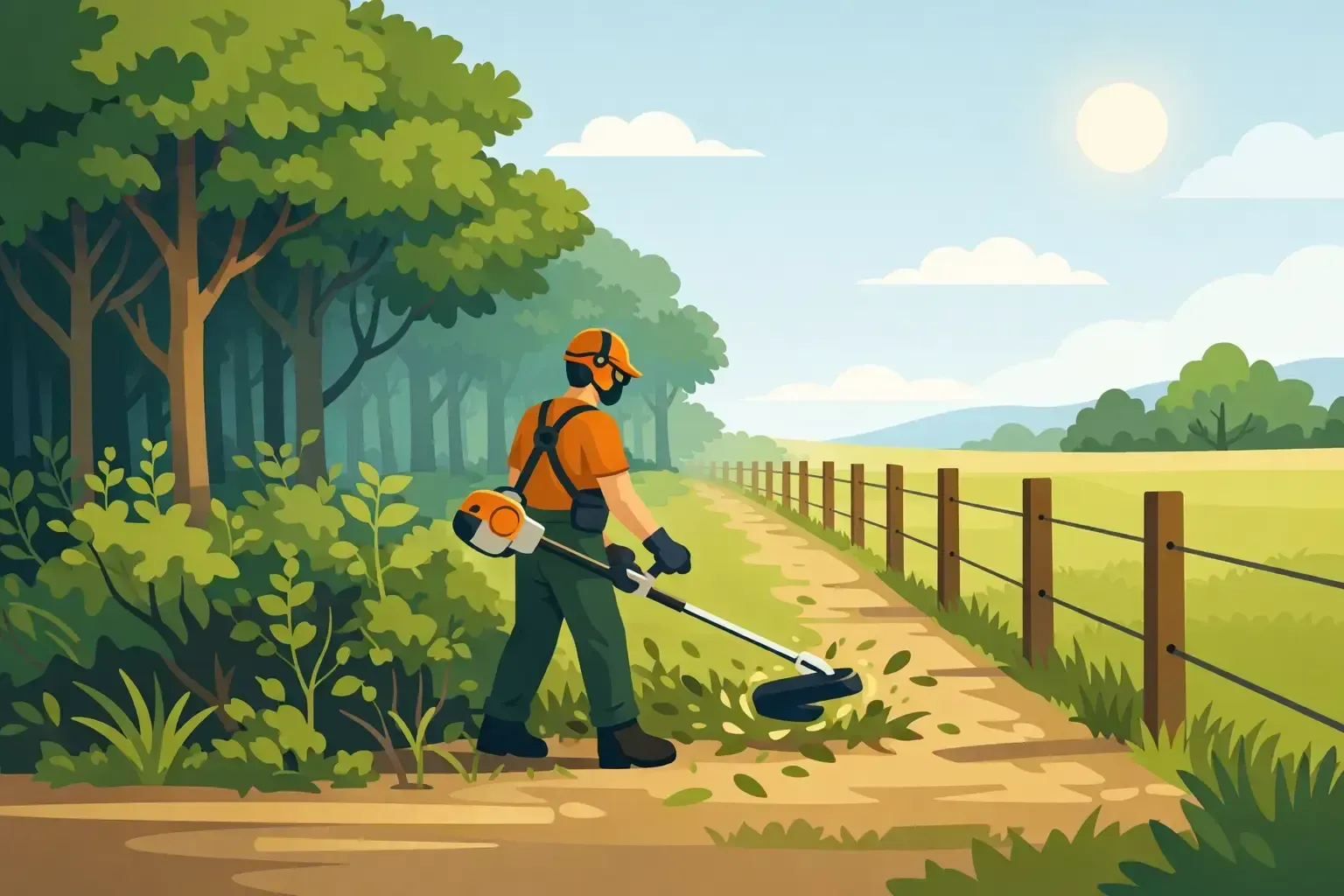
Person using a string trimmer beside a fenced field on a sunny day
August 20, 2026
A fence line can disappear fast in Central Texas. One wet spring, a few missed mowing cycles, and suddenly cedar, huisache, vines, fallen limbs, and thorny b...
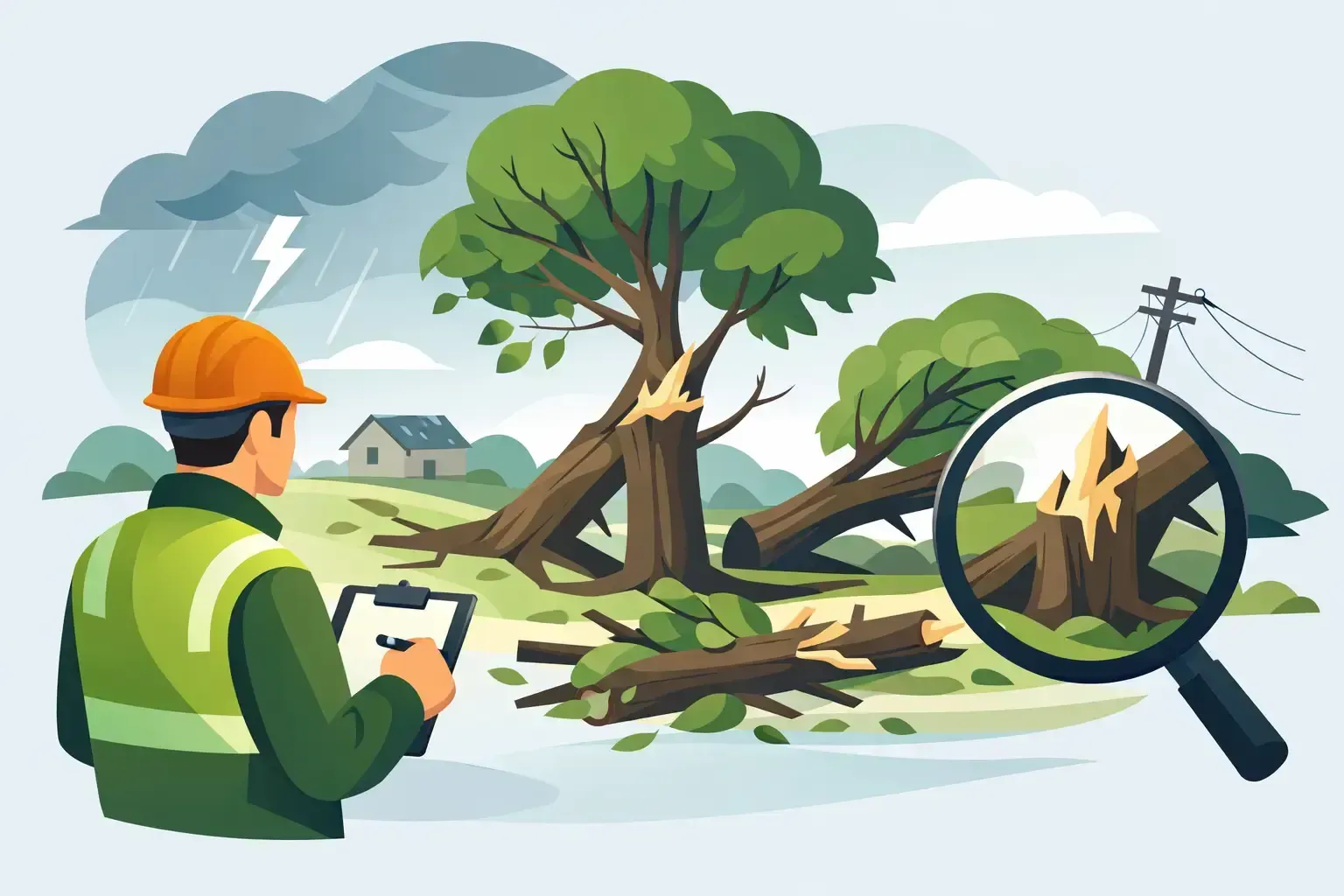
Worker inspecting storm-damaged tree with fallen branches and a magnifying glass in a windy yard
August 18, 2026
A hard Central Texas storm can turn a healthy-looking canopy into a real property hazard in a single night. This guide to storm damaged tree assessment helps...
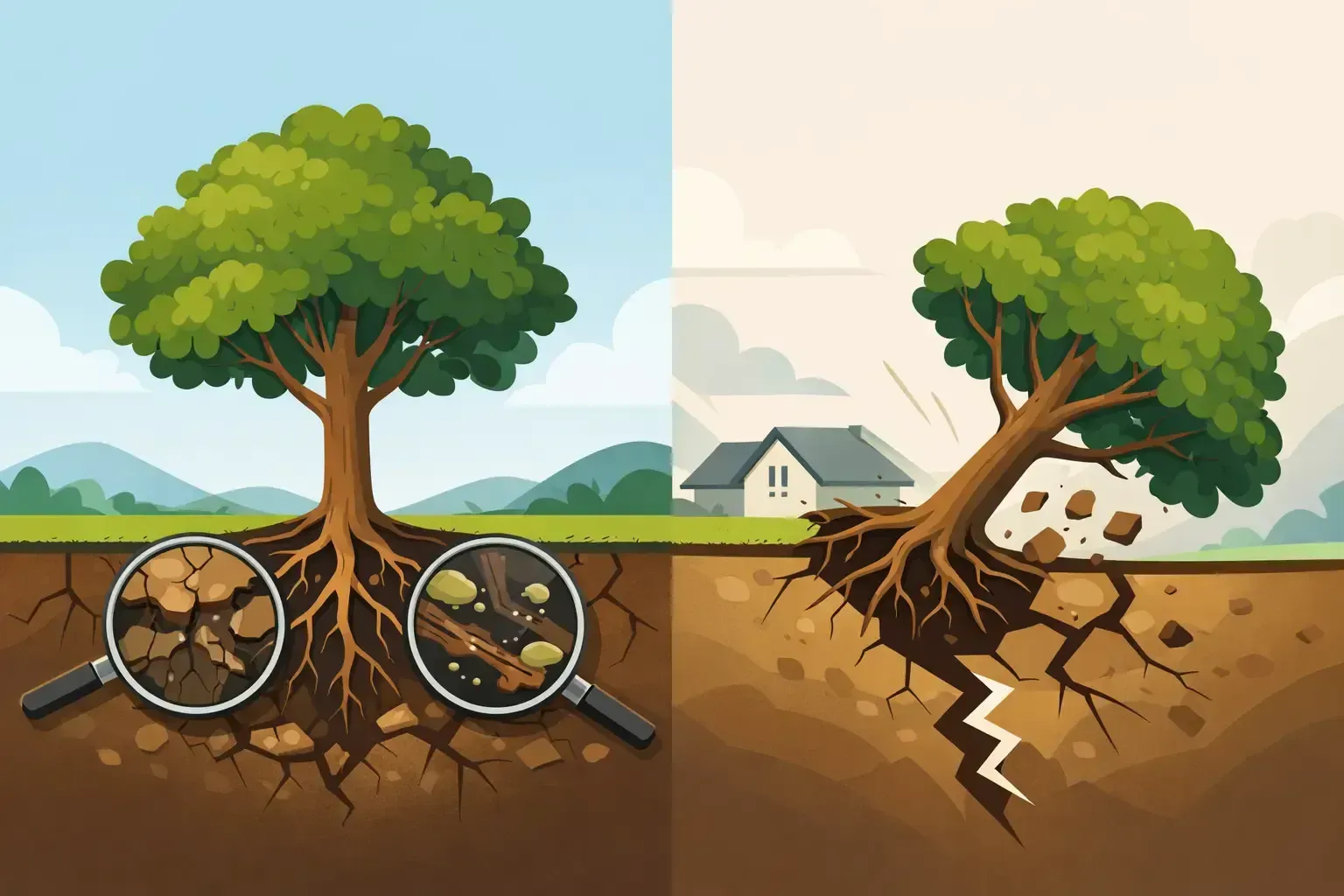
Healthy and damaged trees showing root health and drought soil cracking on a farm landscape
August 16, 2026
A live oak can look perfectly fine above ground while its support system is under serious stress below it. That is what makes root problems so frustrating fo...
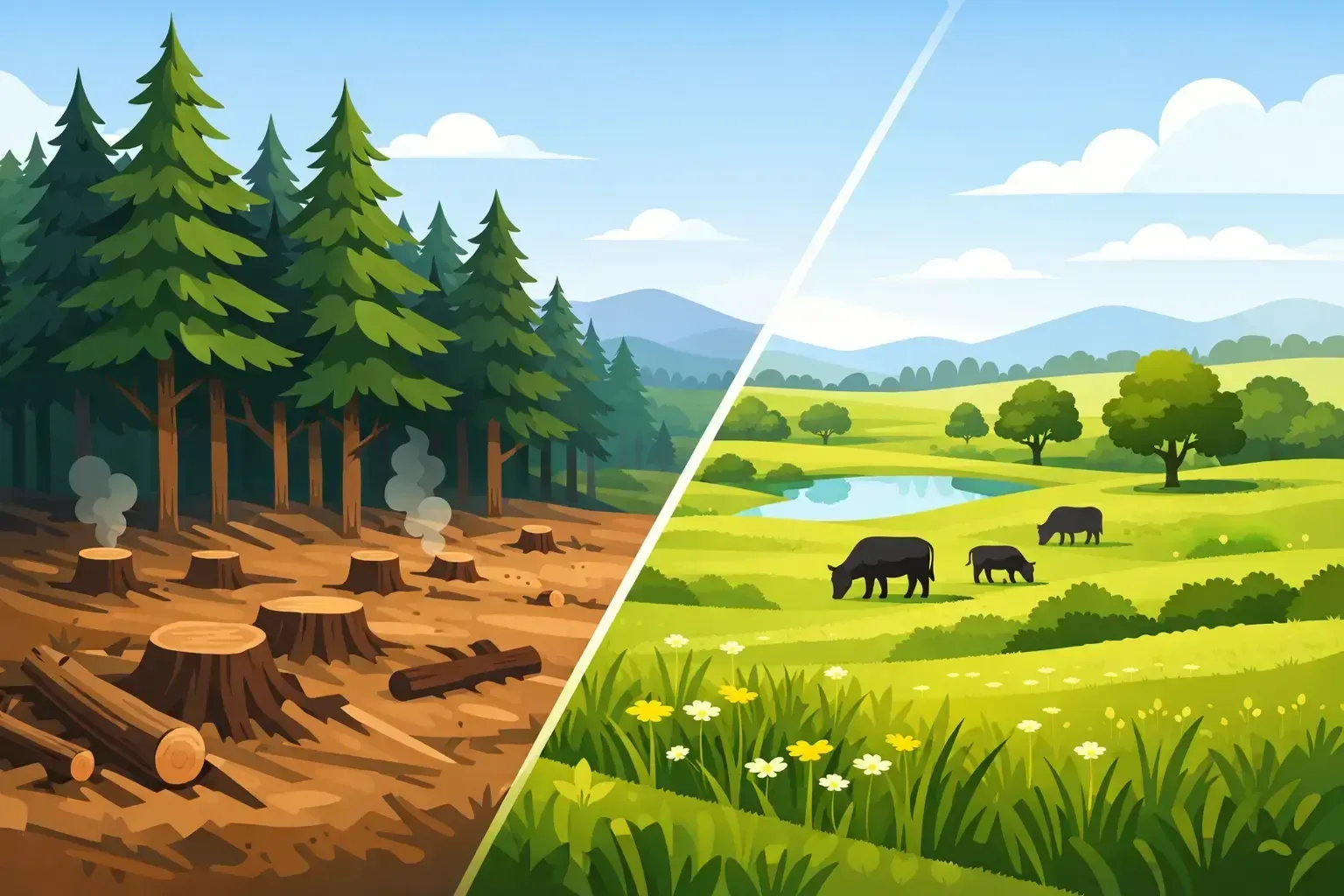
Split view of deforestation and healthy green pasture with cows under a bright sky
August 14, 2026
A cedar-choked pasture can make a property feel smaller every year. Water disappears into dense juniper cover, native grasses lose sunlight, fence lines vani...
Farmer in field watching a blue tractor spray crops, with cows, barn, hills, and smoke in the background
September 1, 2026
A ranch can look green and still be headed in the wrong direction. Dense brush can hide stressed oaks, crowd out usable pasture, choke access roads, and crea...
Wildfire burning in a forest with firefighters, helicopter, and smoke over a split rural landscape
August 30, 2026
A hot, windy afternoon can turn a forgotten brush pile, a crowded cedar stand, or low limbs near a structure into more than a property-maintenance issue. Tex...
Environmental inspection scene with drone, tree, magnifying glass, recycle bin, and hard hat in a city park
August 28, 2026
A shaded entry drive can become a liability fast when a heavy limb hangs over customer parking, a dead cedar leans toward a fence, or brush builds up around ...
Wildfire response with firefighters, water tanker, helicopter, and smoke near homes in a rural neighborhood
August 26, 2026
A Central Texas wildfire mitigation guide has to start with a hard truth: a beautiful Hill Country property can carry fire faster than most owners expect. Ce...
Savanna wildfire with trees, deer, and smoky hills under a bright sky
August 24, 2026
A beautiful shade tree should not become a fuse leading to your home. For Central Texas property owners, choosing the best trees for wildfire resistance mean...
Worker pruning a tree in a sunny yard beside a house, with tools on the grass.
August 22, 2026
A mature live oak shading a Bee Cave driveway can look indestructible right up until a heavy limb hangs over the roof, a cedar elm starts crowding the servic...