


Tree Trimming Dripping Springs TX Guide

May 11, 2026

A live oak dropping heavy limbs over your driveway is not a weekend project. In the Hill Country, tree trimming Dripping Springs TX property owners need is usually about more than looks. It is about safety, storm readiness, wildfire exposure, roof clearance, and keeping valuable trees strong through heat, drought, and high winds.

That is where a lot of property owners get burned by bad tree work. A crew shows up fast, cuts hard, leaves a mess, and calls it trimmed. The tree looks thinner for a while, but now the canopy is unbalanced, the wounds are poorly placed, and the property owner is left hoping the next storm does not test those cuts.

Good trimming is different. It is measured, intentional, and based on what the tree, site, and structure actually need.

What tree trimming should accomplish

On a healthy property, trimming has a job to do. Sometimes that job is clearance over a roof, driveway, fence line, or roadway. Sometimes it is reducing the chance of limb failure over a patio, parking area, or play space. Sometimes it is opening air flow, improving structure, or reducing fuel loads around the home in wildfire-prone areas.

The key point is this: trimming should solve a problem without creating a new one. Cutting too much can stress the tree. Cutting the wrong limbs can shift weight where you do not want it. Delaying needed work can leave deadwood, cracked attachments, and overextended limbs in place longer than they should be.

For homeowners and landowners in Dripping Springs, that balance matters. Native and adapted trees in Central Texas deal with rocky soils, summer heat, drought cycles, and sudden storm pressure. They do not need guesswork. They need a plan.

Tree trimming in Dripping Springs TX is not one-size-fits-all

A live oak near the house gets treated differently than cedar elm over a ranch road. A tree shading your home may need selective clearance, while a tree near a fence line may need weight reduction and risk-focused pruning. The right approach depends on species, age, form, past pruning, and what sits underneath the canopy.

That is why bargain tree work so often disappoints. Low-price crews tend to trim by appearance or speed. The result may look dramatic on day one, but dramatic is not the same as correct.

Professional trimming starts with questions. What are you trying to protect? What is the tree trying to do naturally? Where is the real risk? How much should be removed now, and what is better handled in phases? Those answers shape the cut list.

The problems most property owners are trying to solve

Most calls are not coming from people who woke up wanting a prettier tree. They are coming from people dealing with a real issue.

One common issue is encroachment. Limbs start brushing the roof, hanging over vehicles, crowding a gate, or blocking sightlines at a driveway entrance. Another is storm concern. Heavy lateral limbs, hanging deadwood, split attachments, and overextended canopy sections can become a serious liability when wind picks up.

Then there is wildfire exposure. In and around Dripping Springs, vegetation management is not a niche concern. Trees and brush too close to structures, low limbs acting as ladder fuels, and overgrown areas around outbuildings can all raise the stakes. Trimming done with wildfire risk reduction in mind can improve defensible space without stripping your property of character and shade.

And yes, aesthetics matter too. A well-trimmed tree frames a house better, improves light where it should, and makes the whole property feel maintained. But the best visual result usually comes from health-minded pruning, not aggressive cutting.

When to schedule tree trimming

There is no single calendar date that fits every tree. Timing depends on species, condition, and the reason for the work. Dead, broken, or hazardous limbs should be addressed when they are found. Risk does not care what month it is.

For routine pruning, many property owners schedule around storm season, growth habits, and property use. If you know limbs are hanging over a driveway, outdoor entertaining area, barn, or roofline, waiting until they become urgent is usually the most expensive way to handle it.

It also helps to think seasonally. Drought stress, heat stress, and storm stress all affect how a tree responds. A disciplined arborist will factor that in rather than pushing the same trimming package on every property.

What good tree trimming looks like on site

The process should feel organized from the first walkthrough. A solid evaluation looks at the tree, the targets below it, access, nearby structures, and the overall landscape. It also considers what the property owner actually wants. Clear communication matters because not every customer is asking the same question, even if they all say, "I need this tree trimmed."

Once the objective is clear, the work itself should be precise. That means selective cuts, balanced canopy management, proper clearance decisions, and a clean finish. It also means knowing when less is more.

On larger properties, it may involve prioritizing. Maybe the highest-risk trees near the home get handled first, then fence lines, pasture edges, shared roads, or entry corridors after that. On commercial sites, the priority may be customer access, signage visibility, parking lot clearance, and reducing liability around high-traffic areas.

A professional crew should leave visible results, not confusion. You should be able to see what changed and understand why it changed.

The trade-off between fast and right

Everybody wants quick service, especially after wind or when a tree starts making them nervous. Fast matters. But fast without a plan is how trees get butchered.

The better standard is responsive and disciplined. That means showing up when promised, evaluating the real issue, and executing with purpose. Sometimes that leads to a straightforward trim. Sometimes it leads to a phased approach. Sometimes it reveals that the bigger concern is not the branch you noticed, but the one on the opposite side carrying more load than it should.

That kind of judgment is what separates professional tree care from basic cutting. It protects the tree, the property, and your budget over time.

Why wildfire-aware trimming matters here

In this part of Texas, trimming and wildfire mitigation often overlap. That does not mean every property needs the same level of intervention, but it does mean the conversation should happen.

Low-hanging limbs near structures, dense understory growth, neglected brush lines, and crowded tree groupings can increase fire intensity and spread potential. Thoughtful trimming can help create separation, reduce ladder fuels, and improve access for maintenance and emergency response.

This is one reason many property owners want more than a standard tree crew. They want someone who understands how arboriculture, land management, and wildfire preparedness connect on the ground.

For ranch owners, HOAs, and larger-lot homeowners, that bigger-picture view is especially valuable. One section of the property may need aesthetic pruning, while another needs fuel reduction strategy. Treating those as the same task usually leads to mediocre results in both areas.

How to choose a tree trimming company in Dripping Springs TX

Start with professionalism, not promises. You want a company that communicates clearly, prices transparently, and explains the scope in plain English. If they cannot tell you why they are making certain cuts, that is a red flag.

Credentials matter too. ISA-certified expertise signals that the work is grounded in arboricultural standards rather than improvisation. On properties with wildfire concerns, that added layer of risk-reduction knowledge becomes even more important.

It also helps to choose a crew that respects the property as a whole. Tree work affects lawns, driveways, fencing, roofs, neighboring trees, and the overall appearance of the site. Precision is not just about the branch. It is about how the entire job is planned and executed.

Dynamo Dusty's Tree Service has built its reputation around that exact standard - high-skill work, clear communication, and visible results for Central Texas property owners who are tired of rolling the dice.

What you should expect after the work is done

A good trim should feel like a relief. The tree should look natural, the problem areas should be addressed, and the property should feel safer and more usable. You should not be staring at hacked stubs, wondering why half the canopy disappeared, or cleaning up a mess for the next two weekends.

You should also have a better sense of what comes next. Some trees may not need attention again for a while. Others may benefit from routine maintenance based on growth rate, exposure, and property goals. The right company will help you think ahead instead of waiting for another emergency.

If a tree on your property is over the roof, over the driveway, too close for comfort, or adding unnecessary wildfire risk, waiting rarely improves the situation. The smartest move is to get eyes on it, get a real plan, and handle it before the next storm or dry spell makes the decision for you.

Farmer in field watching a blue tractor spray crops, with cows, barn, hills, and smoke in the background
September 1, 2026
A ranch can look green and still be headed in the wrong direction. Dense brush can hide stressed oaks, crowd out usable pasture, choke access roads, and crea...

Wildfire burning in a forest with firefighters, helicopter, and smoke over a split rural landscape
August 30, 2026
A hot, windy afternoon can turn a forgotten brush pile, a crowded cedar stand, or low limbs near a structure into more than a property-maintenance issue. Tex...
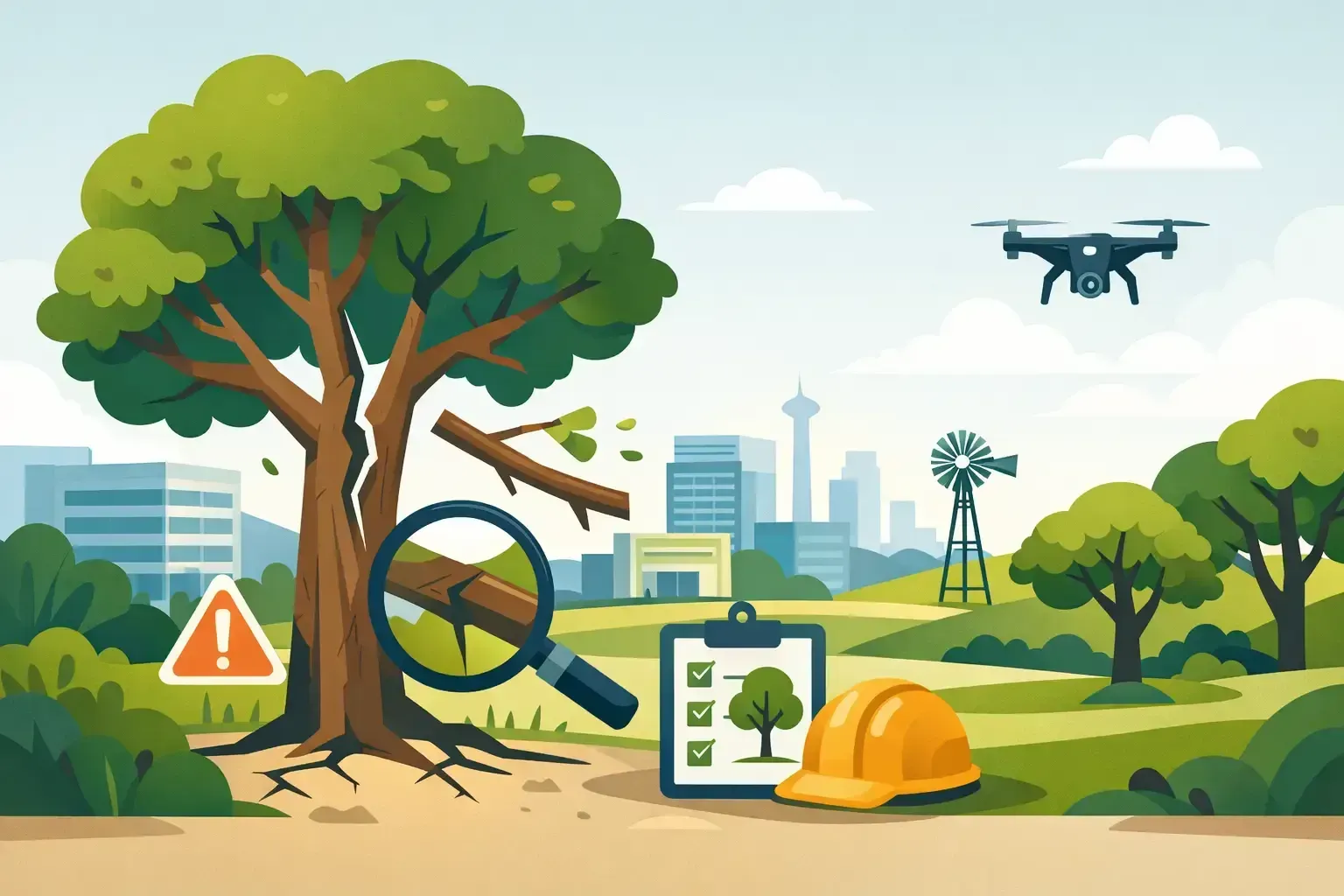
Environmental inspection scene with drone, tree, magnifying glass, recycle bin, and hard hat in a city park
August 28, 2026
A shaded entry drive can become a liability fast when a heavy limb hangs over customer parking, a dead cedar leans toward a fence, or brush builds up around ...
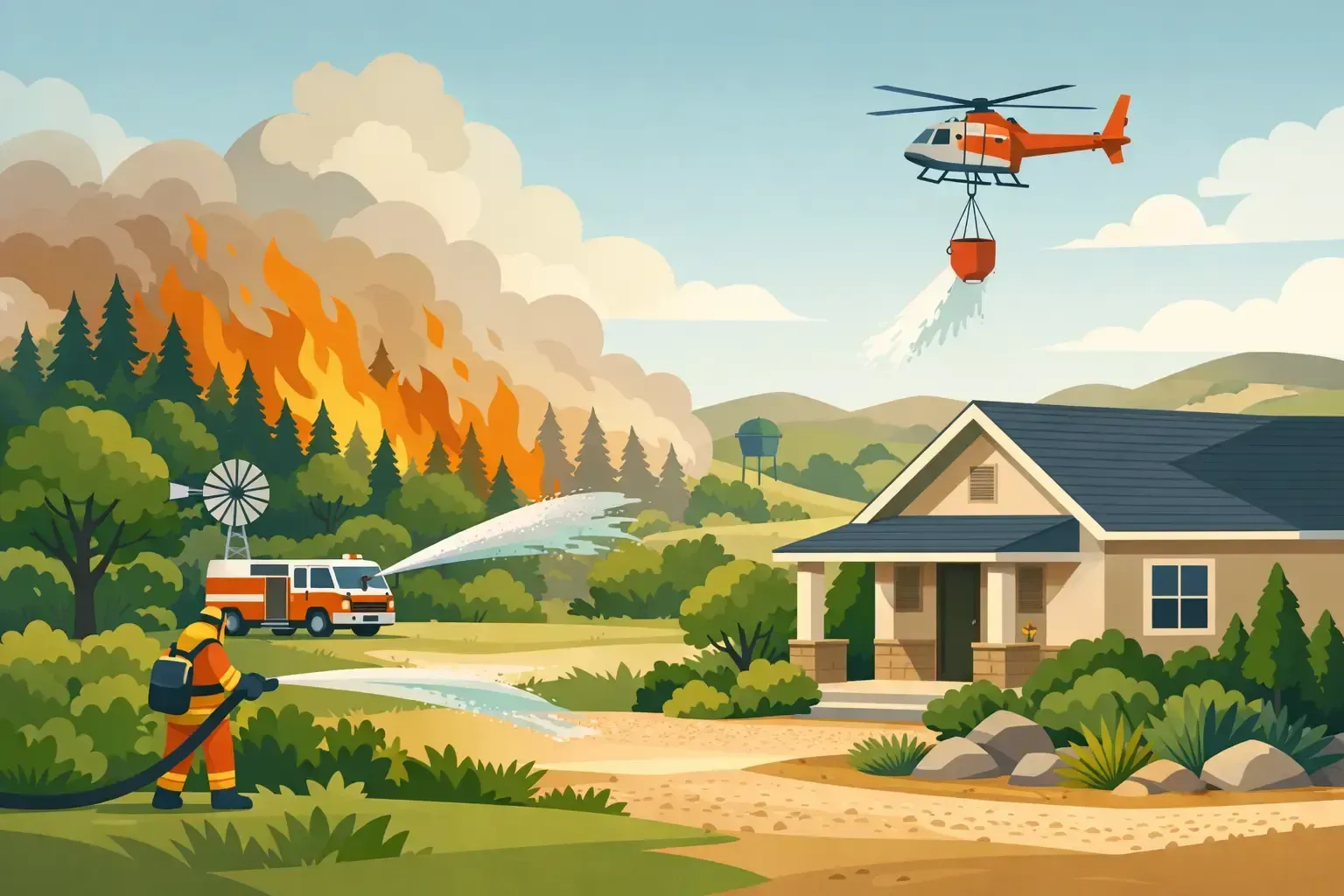
Wildfire response with firefighters, water tanker, helicopter, and smoke near homes in a rural neighborhood
August 26, 2026
A Central Texas wildfire mitigation guide has to start with a hard truth: a beautiful Hill Country property can carry fire faster than most owners expect. Ce...

Savanna wildfire with trees, deer, and smoky hills under a bright sky
August 24, 2026
A beautiful shade tree should not become a fuse leading to your home. For Central Texas property owners, choosing the best trees for wildfire resistance mean...
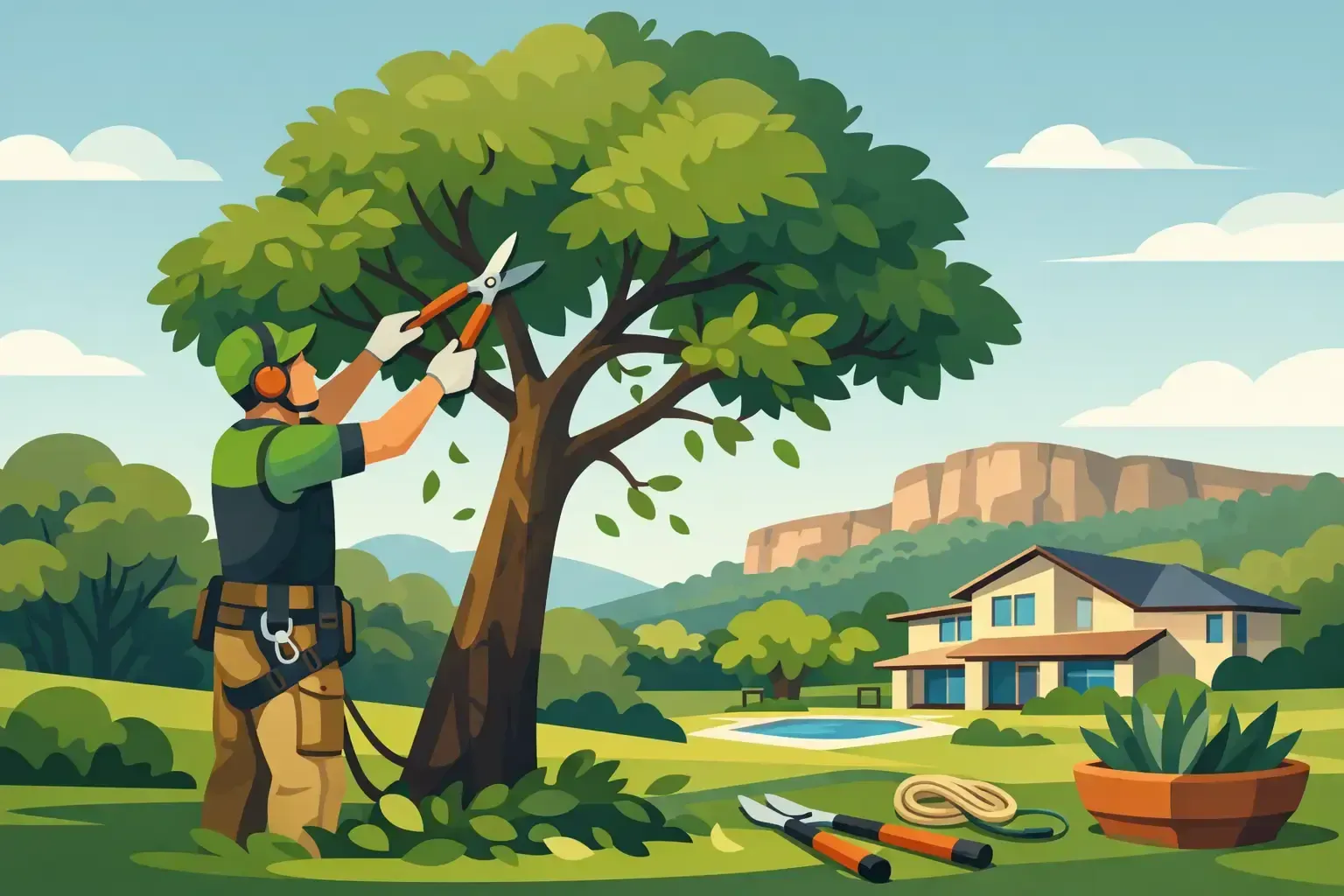
Worker pruning a tree in a sunny yard beside a house, with tools on the grass.
August 22, 2026
A mature live oak shading a Bee Cave driveway can look indestructible right up until a heavy limb hangs over the roof, a cedar elm starts crowding the servic...
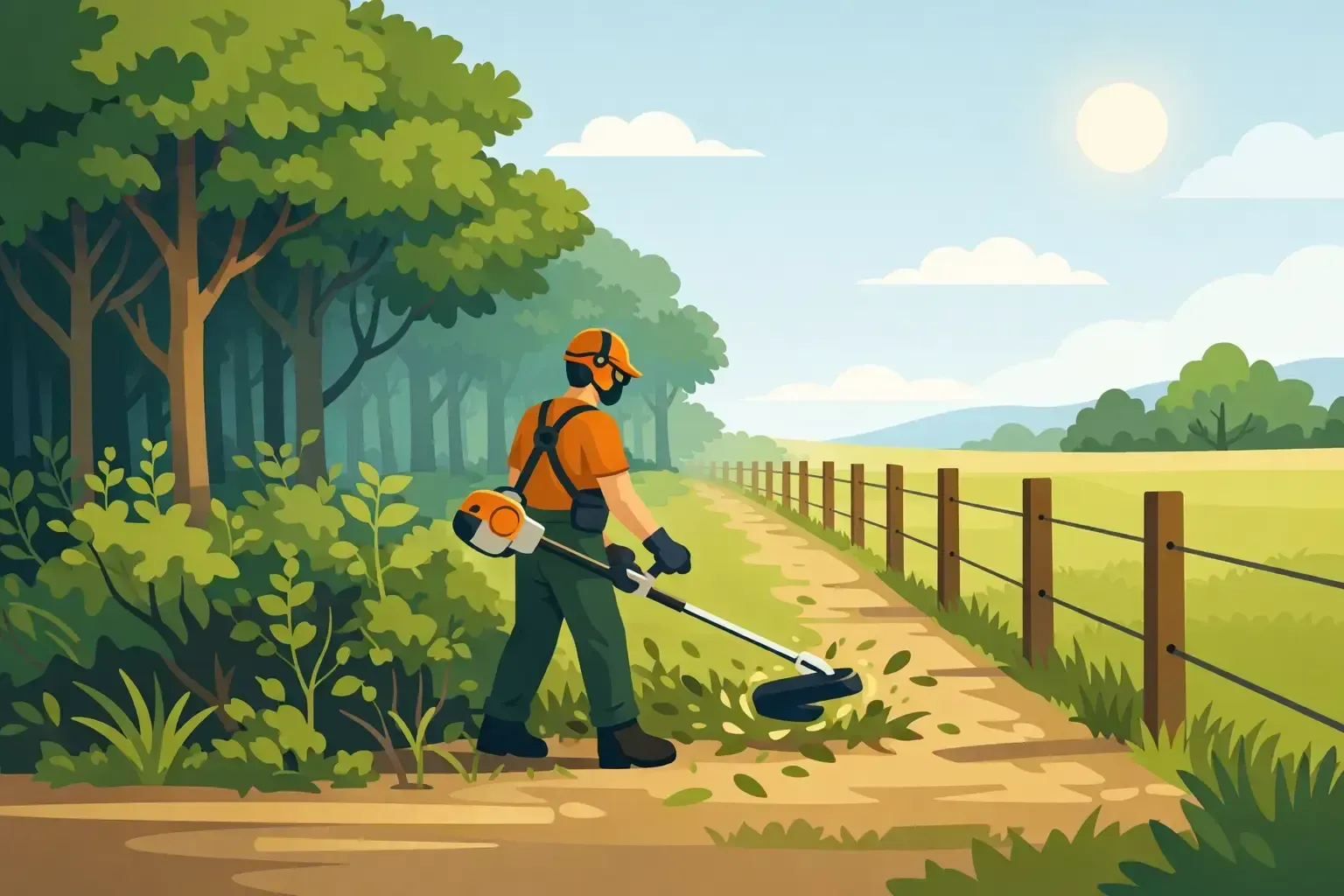
Person using a string trimmer beside a fenced field on a sunny day
August 20, 2026
A fence line can disappear fast in Central Texas. One wet spring, a few missed mowing cycles, and suddenly cedar, huisache, vines, fallen limbs, and thorny b...
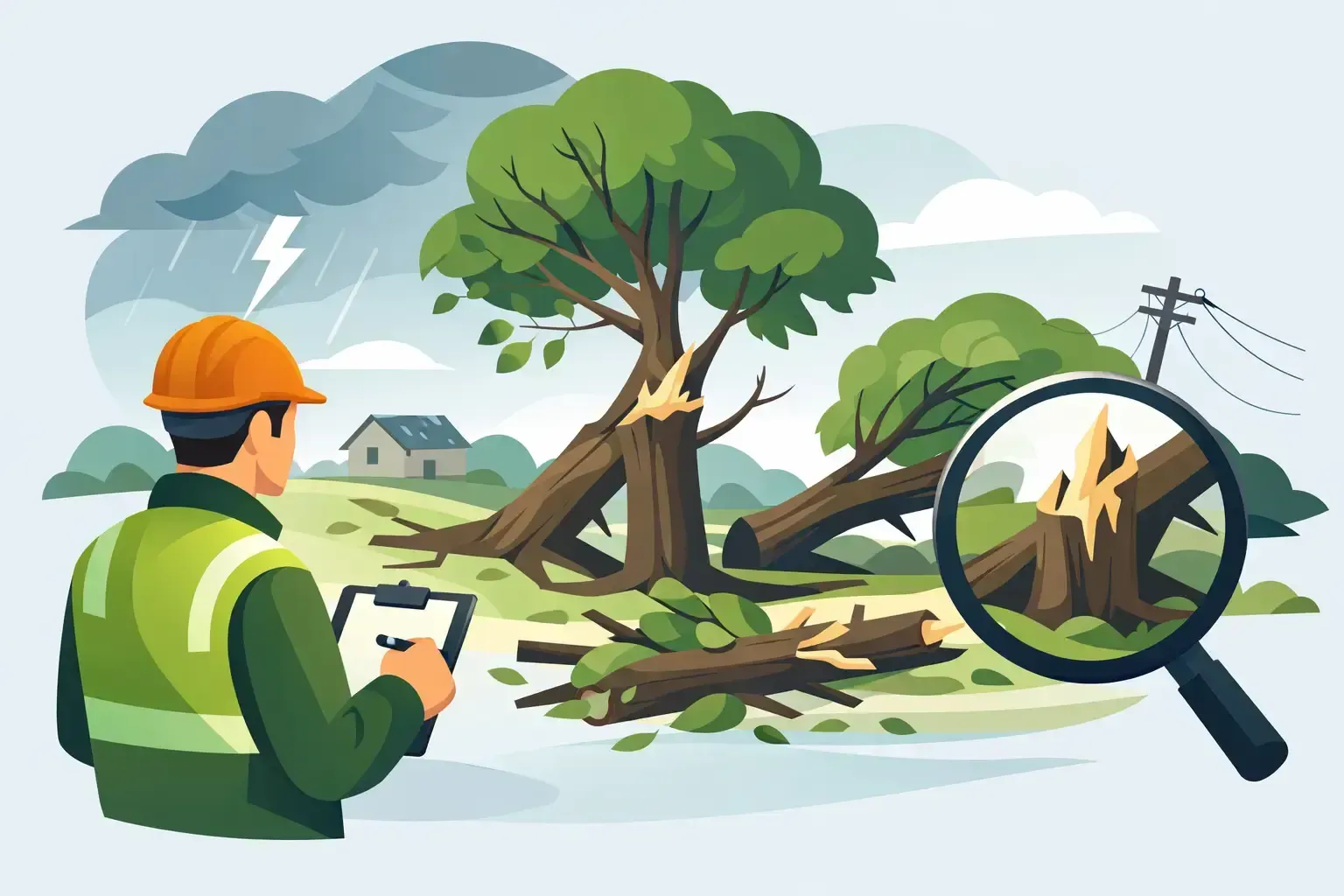
Worker inspecting storm-damaged tree with fallen branches and a magnifying glass in a windy yard
August 18, 2026
A hard Central Texas storm can turn a healthy-looking canopy into a real property hazard in a single night. This guide to storm damaged tree assessment helps...
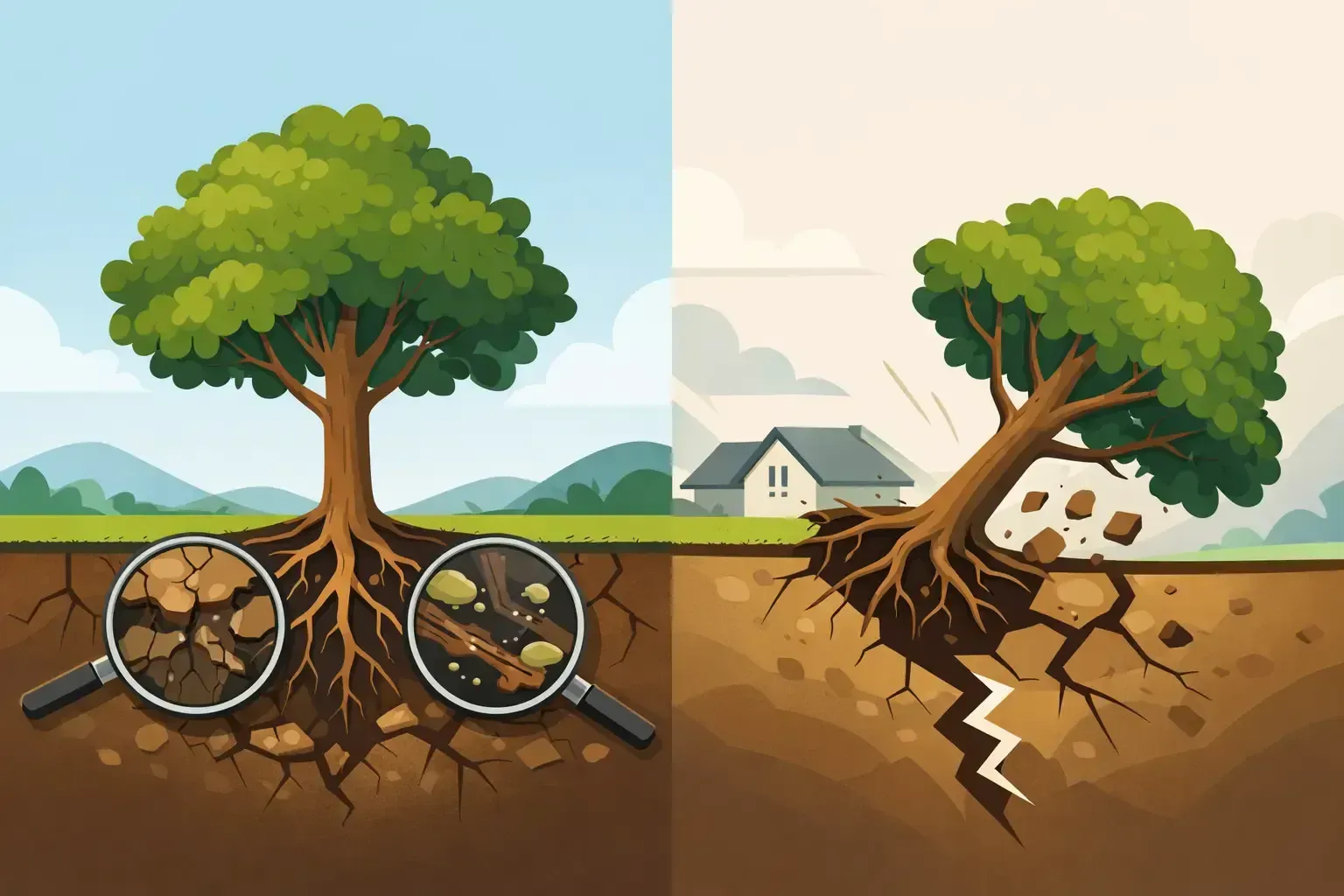
Healthy and damaged trees showing root health and drought soil cracking on a farm landscape
August 16, 2026
A live oak can look perfectly fine above ground while its support system is under serious stress below it. That is what makes root problems so frustrating fo...

Split view of deforestation and healthy green pasture with cows under a bright sky
August 14, 2026
A cedar-choked pasture can make a property feel smaller every year. Water disappears into dense juniper cover, native grasses lose sunlight, fence lines vani...
Farmer in field watching a blue tractor spray crops, with cows, barn, hills, and smoke in the background
September 1, 2026
A ranch can look green and still be headed in the wrong direction. Dense brush can hide stressed oaks, crowd out usable pasture, choke access roads, and crea...
Wildfire burning in a forest with firefighters, helicopter, and smoke over a split rural landscape
August 30, 2026
A hot, windy afternoon can turn a forgotten brush pile, a crowded cedar stand, or low limbs near a structure into more than a property-maintenance issue. Tex...
Environmental inspection scene with drone, tree, magnifying glass, recycle bin, and hard hat in a city park
August 28, 2026
A shaded entry drive can become a liability fast when a heavy limb hangs over customer parking, a dead cedar leans toward a fence, or brush builds up around ...
Wildfire response with firefighters, water tanker, helicopter, and smoke near homes in a rural neighborhood
August 26, 2026
A Central Texas wildfire mitigation guide has to start with a hard truth: a beautiful Hill Country property can carry fire faster than most owners expect. Ce...
Savanna wildfire with trees, deer, and smoky hills under a bright sky
August 24, 2026
A beautiful shade tree should not become a fuse leading to your home. For Central Texas property owners, choosing the best trees for wildfire resistance mean...
Worker pruning a tree in a sunny yard beside a house, with tools on the grass.
August 22, 2026
A mature live oak shading a Bee Cave driveway can look indestructible right up until a heavy limb hangs over the roof, a cedar elm starts crowding the servic...