


Tree Trimming Austin Property Owners Trust

June 27, 2026

A live oak dropping heavy limbs over your driveway in August is not a small problem. Neither is a cedar thicket pressing up against a fence line right before fire season. When people search for tree trimming Austin services, they are usually not shopping for a guy with a saw. They are trying to solve a real property issue - safety, clearance, appearance, storm prep, or wildfire exposure.

That is where good trimming separates itself from cheap cutting. Done right, trimming improves the shape, strength, and long-term health of the tree while making the property cleaner, safer, and easier to manage. Done poorly, it can leave a tree stressed, unstable, and uglier than when you started. Around Central Texas, where heat, drought, storms, and dense growth all put pressure on the landscape, precision matters.

What tree trimming in Austin should actually accomplish

A lot of property owners have been burned before. They paid for a quick cleanup and ended up with hacked canopies, bad cuts, torn bark, and a mess left behind. The goal of professional tree trimming is not to remove as much as possible. The goal is to remove the right material, in the right places, for the right reason.

Sometimes that means lifting limbs away from a roof or driveway. Sometimes it means thinning interior growth so wind can move through more cleanly during a storm. Sometimes it means reducing deadwood that could come down without warning. On larger lots and ranch properties, trimming may also be part of broader land management- improving access, visibility, fence clearance, or defensible space.

In Austin and the Hill Country, every property has its own set of variables. Live oaks, cedar elm, pecan, ash, and juniper all respond differently. Soil conditions vary. Drought stress changes the plan. A tree over a patio gets evaluated differently than one out in a back pasture. That is why a disciplined, arborist-led approach beats guesswork every time.

Why Central Texas trees need a smarter approach

Trees here do not live in easy conditions. They deal with blazing summer heat, compacted soils, sudden freezes, long dry stretches, and the kind of thunderstorms that can turn a weak limb into a major insurance claim. Add in construction stress, root disturbance, and fast-growing brush, and you have a recipe for preventable damage.

That is also why over-pruning can backfire. When too much canopy gets removed, the tree loses energy reserves and becomes more vulnerable to sunscald, stress, and weak regrowth. On the other hand, leaving dead, rubbing, cracked, or overextended limbs in place can raise the odds of failure. The right answer is usually not aggressive and it is usually not hands-off. It depends on the species, the condition of the tree, and what is around it.

For many Austin property owners, trimming also ties directly to wildfire preparedness. Dense ladder fuels, low branches, neglected understory, and overgrown cedar can create pathways for fire to move. Tree work is not the whole fire mitigation plan, but it is often a major part of it. A crew that understands both arboriculture and wildfire risk reduction brings a different level of value to that conversation.

Signs your property is due for tree trimming Austin service

Most trees do not send a calendar invite when they need attention. They do, however, give warnings.

If branches are hanging over the roof, scraping siding, blocking lighting, crowding power-adjacent spaces, or obscuring sightlines at a driveway entrance, that is usually your cue. The same goes for visible deadwood, cracked limb unions, storm-damaged branches, and trees growing into each other. On larger properties, you may also notice lower limbs interfering with mowers, trailers, livestock movement, or fence access.

Appearance matters too. A canopy that looks lopsided, overloaded, or shaggy may not be dangerous yet, but it can drag down curb appeal and make a well-kept property look neglected. Good trimming creates a clean, intentional look without making the tree appear stripped or unnatural.

If you are unsure whether a tree needs pruning, reduction, thinning, clearance work, or something more serious, that is normal. The point is not to diagnose it yourself. The point is to have someone qualified assess what the tree is doing and what the property needs next.

What a professional trimming plan looks like

The best tree work starts before the first cut. A proper walkthrough should look at species, age, structure, defects, site use, nearby targets, and your goals for the property. If the plan is simply to make everything smaller, that is a red flag.

A strong trimming plan usually balances several outcomes at once. It may improve clearance, reduce hazard exposure, preserve the natural form of the tree, and support better long-term growth. It should also account for seasonality. Some trimming can be done year-round, but timing still matters depending on species stress, disease pressure, and weather patterns.

Execution matters just as much as planning. Clean cuts in the right locations help the tree compartmentalize wounds more effectively. Random stub cuts do not. Selective work preserves strength better than indiscriminate removal. And on premium residential or commercial properties, cleanup is not an extra. It is part of the job.

That is one reason experienced crews stand out. They move with purpose, communicate clearly, protect the site, and leave behind visible results instead of surprises. For customers who have had bad experiences with fly-by-night operators, that professionalism is often just as important as the trimming itself.

Tree trimming is not only about beauty

Yes, a well-pruned tree looks better. It frames a home, opens a view, improves light, and instantly sharpens the appearance of a property. But the bigger wins usually go beyond curb appeal.

Smart trimming can reduce the chance of storm breakage. It can lower wear on roofs and gutters. It can improve access for vehicles, pedestrians, and equipment. On ranches and larger tracts, it can support usable space and cleaner movement through the land. For commercial sites and HOAs, it can improve visibility, reduce liability concerns, and create a more polished environment for residents, tenants, or visitors.

Then there is the wildfire side of the equation. In high-risk areas, strategic pruning and vegetation management can help reduce fuel continuity and create more defensible space around structures. That work needs to be done with judgment, because not every branch should be removed and not every dense area should be opened up the same way. Still, if fire risk is part of your property reality, tree trimming deserves to be part of the plan, not an afterthought.

How to choose the right tree service

If you are comparing providers, ask better questions than How cheap can you do it? Ask how they evaluate tree health and structure. Ask what they are removing and why. Ask whether they understand species-specific needs, storm risk, and wildfire considerations. Ask how they protect the rest of the property while the work is happening.

Credentials matter, but so does communication. ISA-certified arborist involvement is a strong signal that the work is being guided by professional standards rather than improvisation. Clear pricing matters too. You should know what is included, what the crew is solving, and what the finished result should look like.

You also want a company that treats tree care like skilled property work, not random labor. That means showing up when promised, walking the site carefully, explaining the trade-offs, and doing the kind of cleanup that makes the improvement feel complete. Premium service is not about being flashy. It is about consistency, accountability, and results you can actually see.

For many Central Texas owners, that blend of precision and neighborly service is what restores trust in the process. Dynamo Dusty's Tree Service has built its reputation around exactly that kind of disciplined, arborist-led work.

When waiting costs more

A limb over the roof rarely gets lighter with time. Brush around the house does not get less dense by itself. Trees under stress do not usually self-correct. Delaying needed trimming can turn manageable work into emergency work, and emergency work is almost always more disruptive.

That does not mean every tree issue is urgent. Some are seasonal and some can wait for a better pruning window. But if you already see deadwood, clearance problems, storm damage, or fuel buildup, it is worth getting a professional opinion sooner rather than later.

A good tree plan gives you more than a prettier yard. It gives you a safer, more usable, more resilient property. And around Austin, that is never wasted effort.

If your trees are starting to crowd the house, block the view, drop hazards, or raise fire concerns, trust your gut. A careful walkthrough and a smart trimming plan can change the whole feel of a property without turning it upside down.

Farmer in field watching a blue tractor spray crops, with cows, barn, hills, and smoke in the background
September 1, 2026
A ranch can look green and still be headed in the wrong direction. Dense brush can hide stressed oaks, crowd out usable pasture, choke access roads, and crea...

Wildfire burning in a forest with firefighters, helicopter, and smoke over a split rural landscape
August 30, 2026
A hot, windy afternoon can turn a forgotten brush pile, a crowded cedar stand, or low limbs near a structure into more than a property-maintenance issue. Tex...
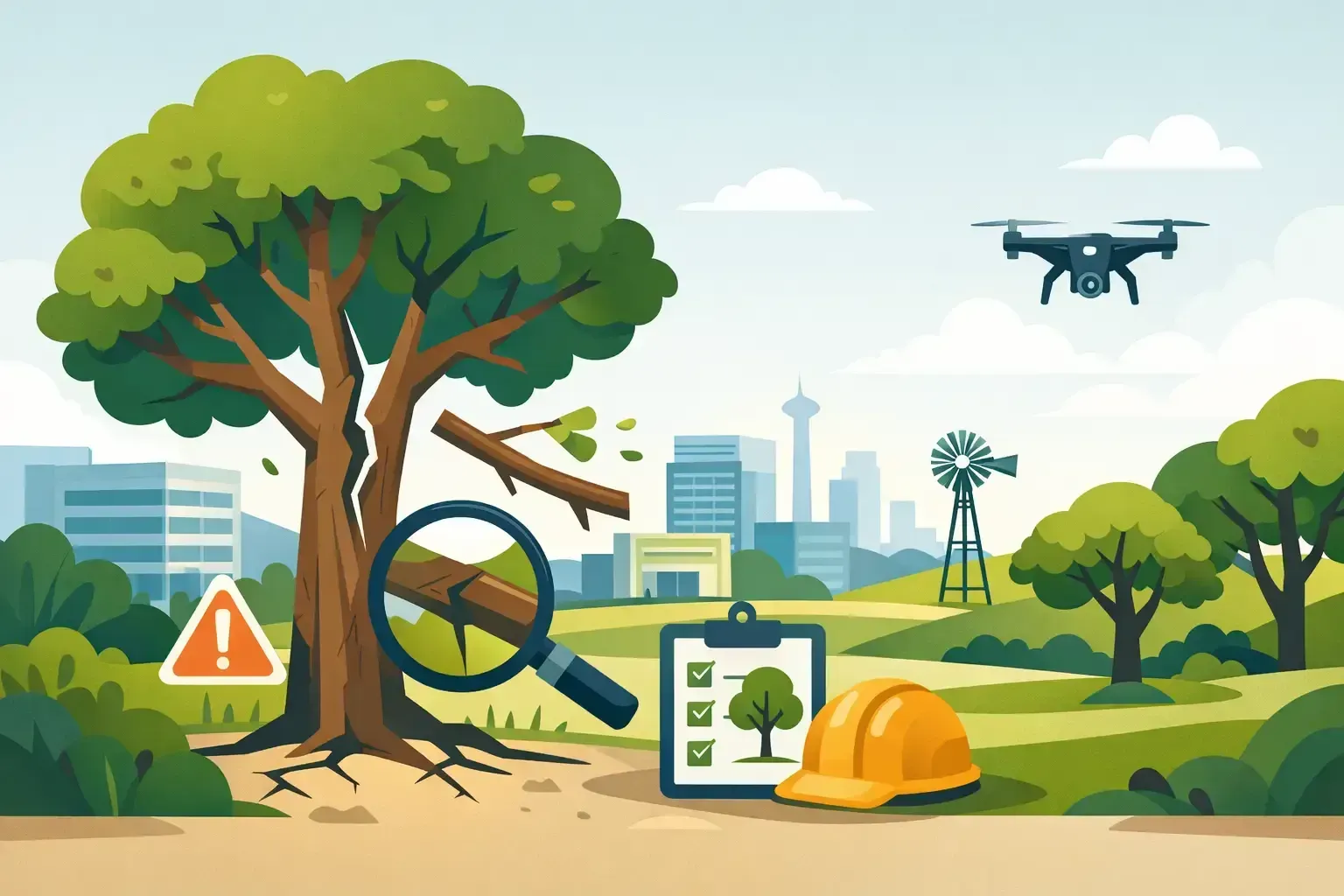
Environmental inspection scene with drone, tree, magnifying glass, recycle bin, and hard hat in a city park
August 28, 2026
A shaded entry drive can become a liability fast when a heavy limb hangs over customer parking, a dead cedar leans toward a fence, or brush builds up around ...

Wildfire response with firefighters, water tanker, helicopter, and smoke near homes in a rural neighborhood
August 26, 2026
A Central Texas wildfire mitigation guide has to start with a hard truth: a beautiful Hill Country property can carry fire faster than most owners expect. Ce...
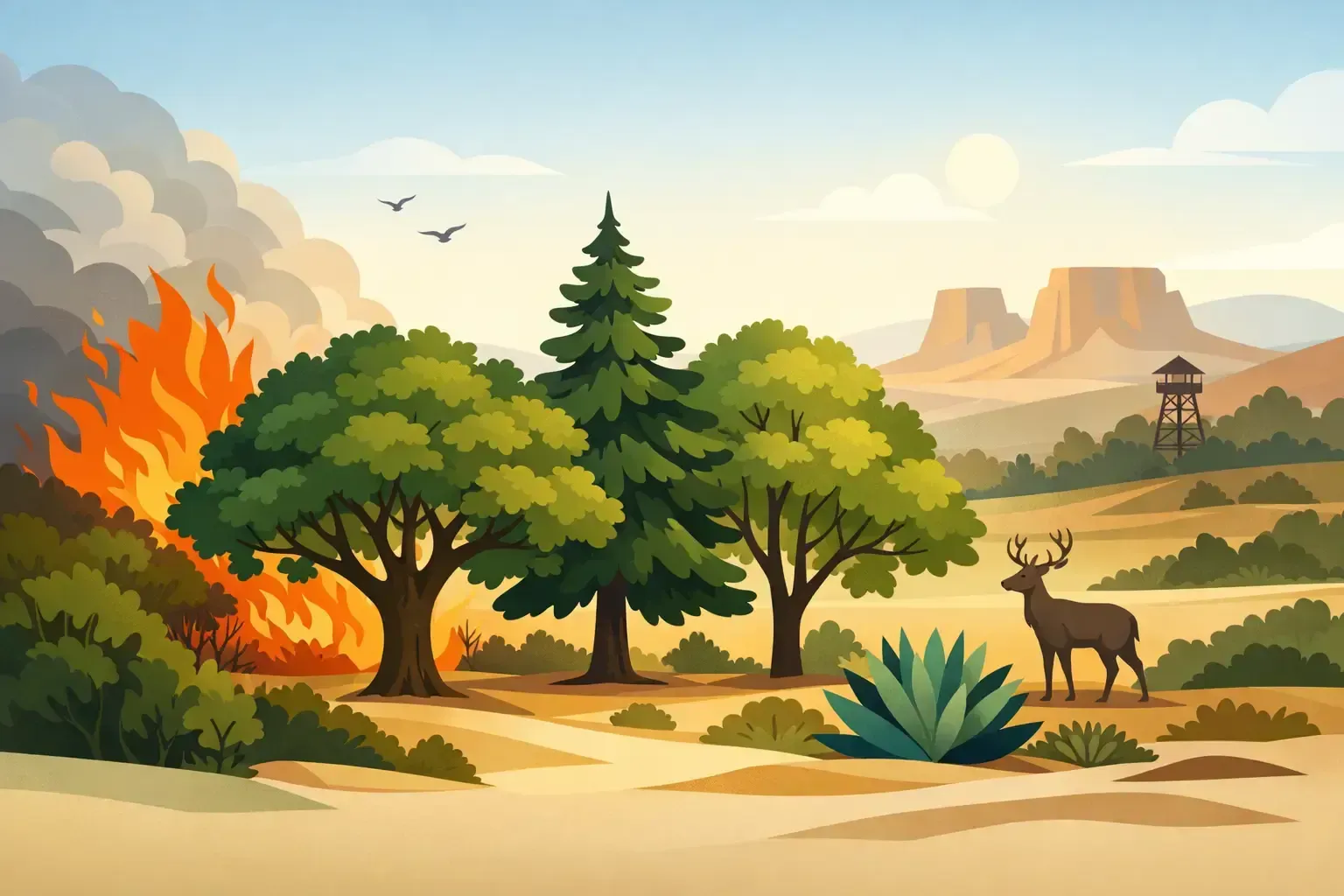
Savanna wildfire with trees, deer, and smoky hills under a bright sky
August 24, 2026
A beautiful shade tree should not become a fuse leading to your home. For Central Texas property owners, choosing the best trees for wildfire resistance mean...
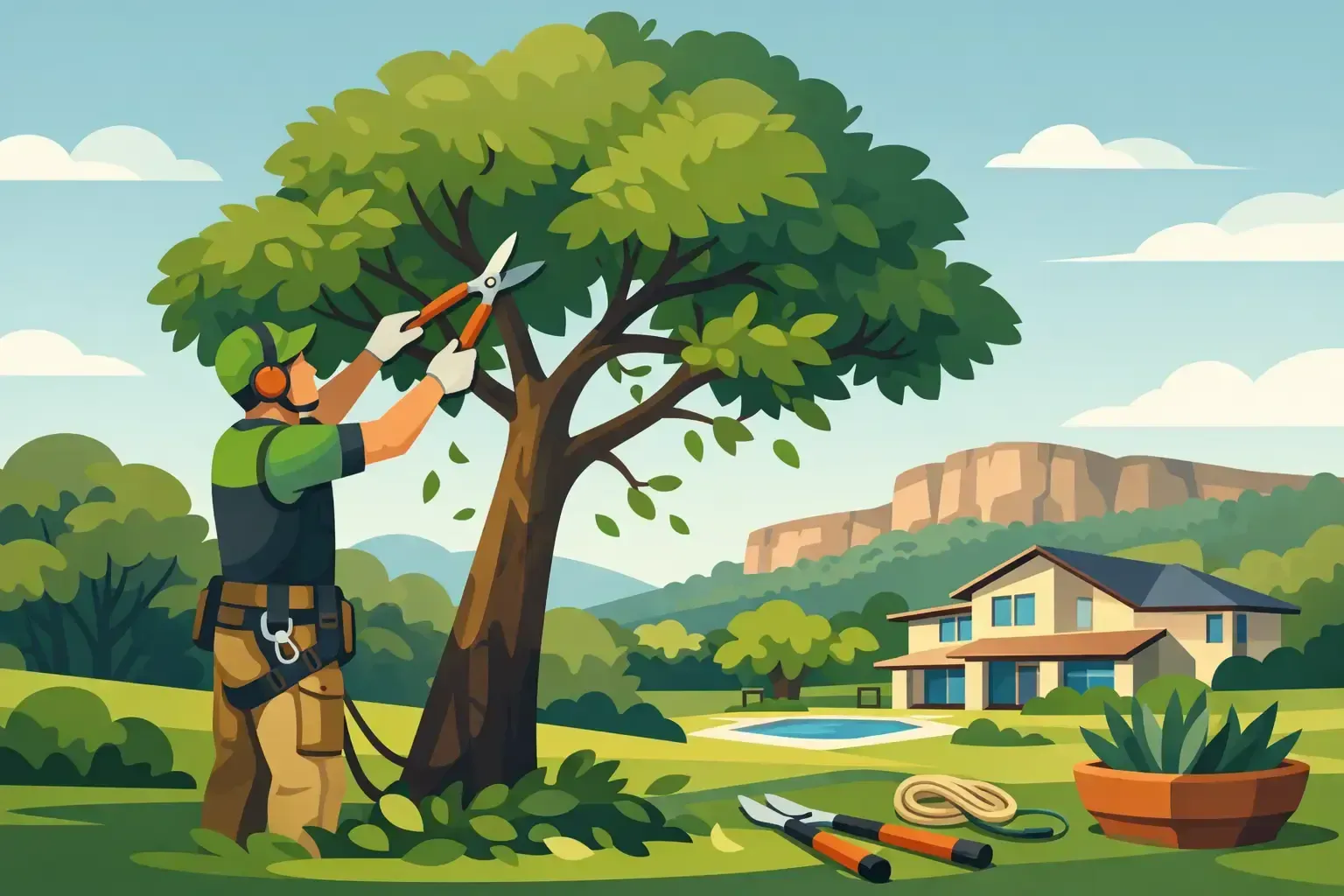
Worker pruning a tree in a sunny yard beside a house, with tools on the grass.
August 22, 2026
A mature live oak shading a Bee Cave driveway can look indestructible right up until a heavy limb hangs over the roof, a cedar elm starts crowding the servic...
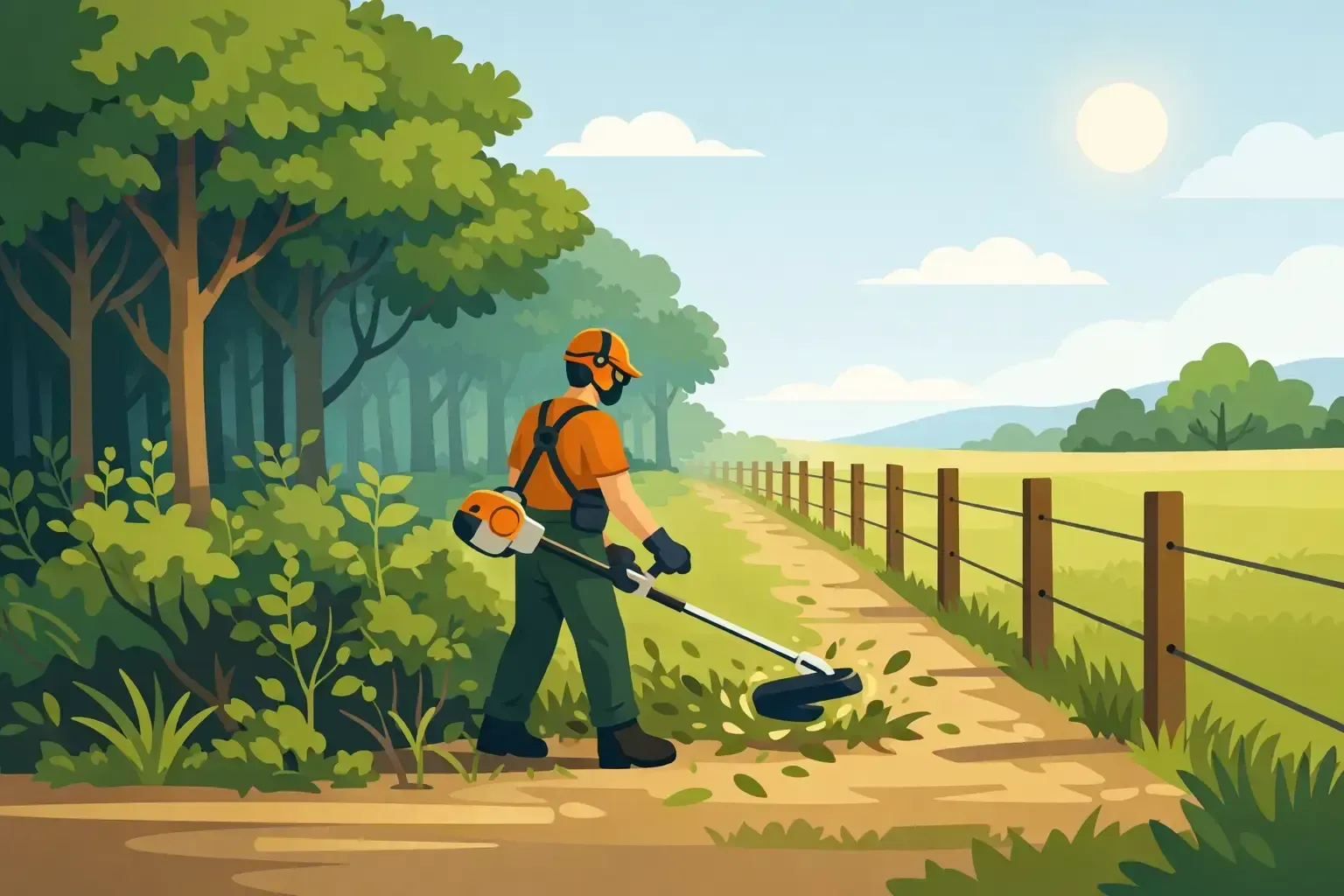
Person using a string trimmer beside a fenced field on a sunny day
August 20, 2026
A fence line can disappear fast in Central Texas. One wet spring, a few missed mowing cycles, and suddenly cedar, huisache, vines, fallen limbs, and thorny b...
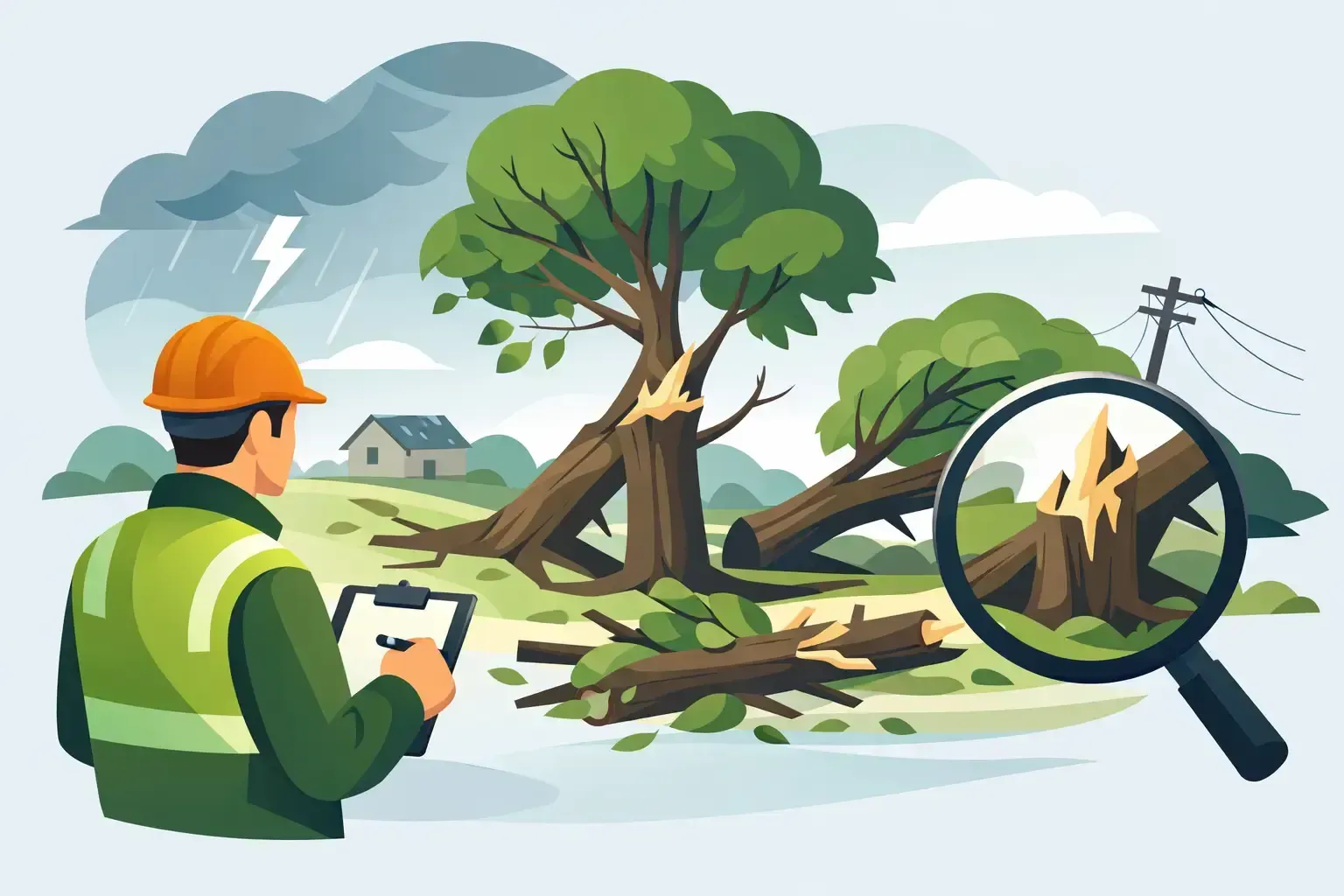
Worker inspecting storm-damaged tree with fallen branches and a magnifying glass in a windy yard
August 18, 2026
A hard Central Texas storm can turn a healthy-looking canopy into a real property hazard in a single night. This guide to storm damaged tree assessment helps...
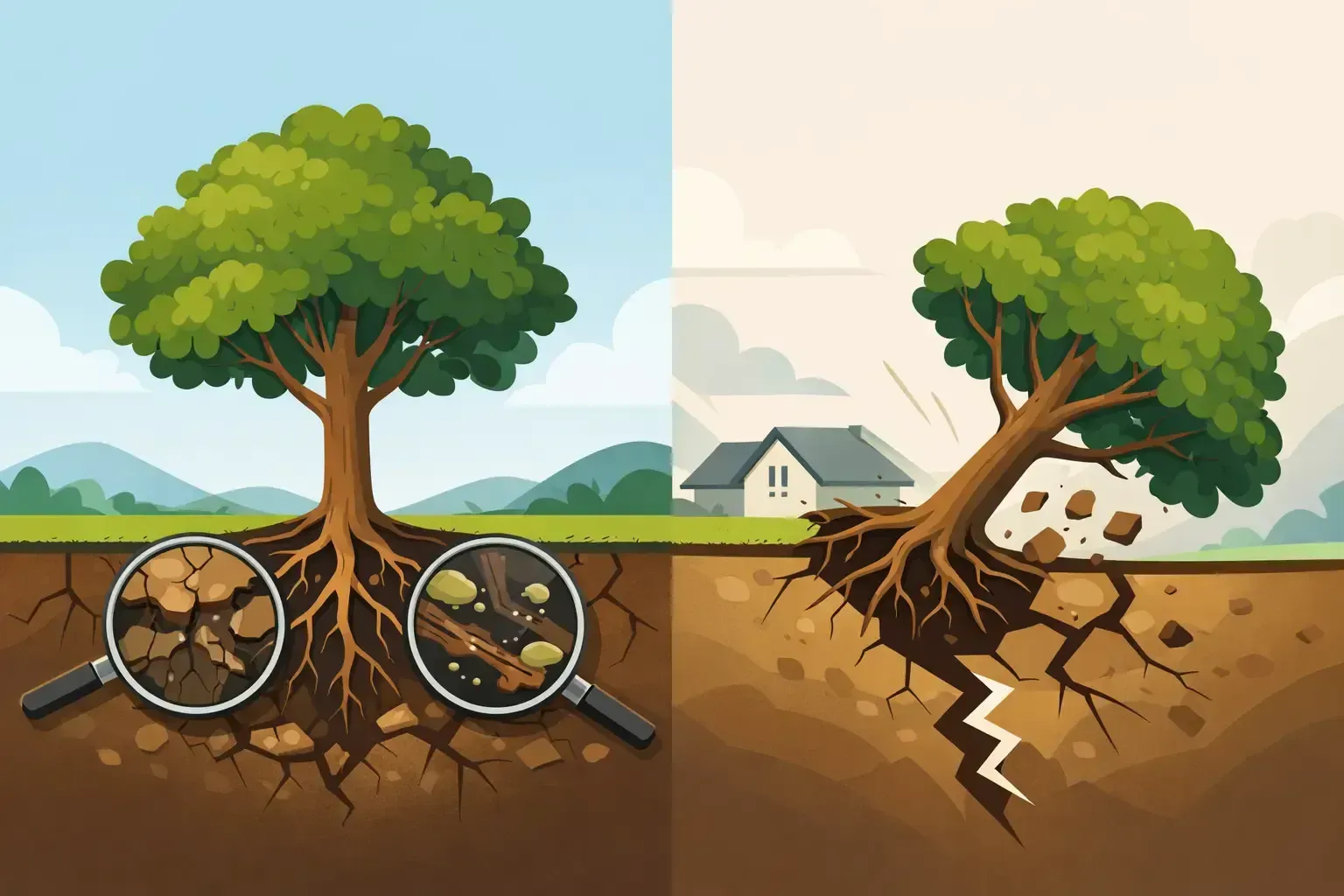
Healthy and damaged trees showing root health and drought soil cracking on a farm landscape
August 16, 2026
A live oak can look perfectly fine above ground while its support system is under serious stress below it. That is what makes root problems so frustrating fo...
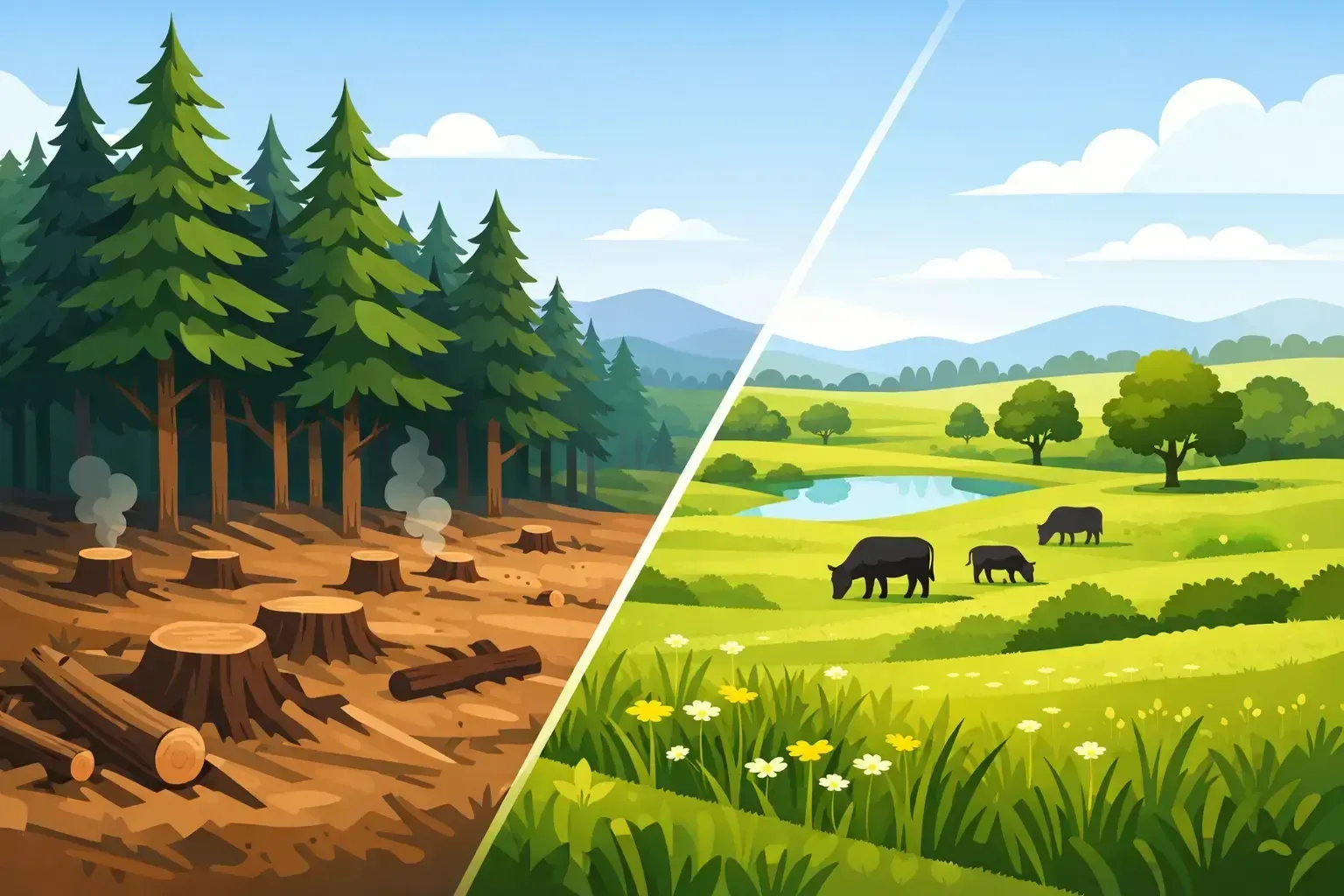
Split view of deforestation and healthy green pasture with cows under a bright sky
August 14, 2026
A cedar-choked pasture can make a property feel smaller every year. Water disappears into dense juniper cover, native grasses lose sunlight, fence lines vani...
Farmer in field watching a blue tractor spray crops, with cows, barn, hills, and smoke in the background
September 1, 2026
A ranch can look green and still be headed in the wrong direction. Dense brush can hide stressed oaks, crowd out usable pasture, choke access roads, and crea...
Wildfire burning in a forest with firefighters, helicopter, and smoke over a split rural landscape
August 30, 2026
A hot, windy afternoon can turn a forgotten brush pile, a crowded cedar stand, or low limbs near a structure into more than a property-maintenance issue. Tex...
Environmental inspection scene with drone, tree, magnifying glass, recycle bin, and hard hat in a city park
August 28, 2026
A shaded entry drive can become a liability fast when a heavy limb hangs over customer parking, a dead cedar leans toward a fence, or brush builds up around ...
Wildfire response with firefighters, water tanker, helicopter, and smoke near homes in a rural neighborhood
August 26, 2026
A Central Texas wildfire mitigation guide has to start with a hard truth: a beautiful Hill Country property can carry fire faster than most owners expect. Ce...
Savanna wildfire with trees, deer, and smoky hills under a bright sky
August 24, 2026
A beautiful shade tree should not become a fuse leading to your home. For Central Texas property owners, choosing the best trees for wildfire resistance mean...
Worker pruning a tree in a sunny yard beside a house, with tools on the grass.
August 22, 2026
A mature live oak shading a Bee Cave driveway can look indestructible right up until a heavy limb hangs over the roof, a cedar elm starts crowding the servic...