
Land Clearing vs Land Thinning

June 29, 2026

If you are staring at a brushy lot, cedar-choked ranch acreage, or a property line that feels like it is slowly disappearing, the question usually is not whether work needs to happen. It is which kind of work. Land clearing vs land thinning sounds like a small distinction, but it changes your budget, your results, and the long-term health of the property.

A lot of Central Texas landowners use the terms interchangeably. That is where expensive mistakes start. Clearing and thinning are not the same service, and choosing the wrong one can leave you with a property that looks overdone, still feels unsafe, or creates more maintenance than you expected.

Land clearing vs land thinning: the core difference

Land clearing is the heavier move. The goal is to remove most or all vegetation from a defined area so the land can be repurposed or fully opened up. That often means taking out brush, understory growth, volunteer saplings, dead material, and sometimes mature trees depending on the project. Clearing is common when you need a homesite, driveway access, fence lines, utility corridors, pasture recovery, or a major reset after years of overgrowth.

Land thinning is more selective. The goal is not to wipe the slate clean. It is to reduce density, improve spacing, lower competition, and keep the strongest trees and native vegetation working for the property instead of against it. Thinning is often the smarter choice when you want better views, healthier trees, reduced wildfire risk, improved access, and a cleaner look without stripping the character out of the land.

Think of clearing as removal for a new purpose. Think of thinning as editing for a better version of what is already there.

When land clearing makes sense

Sometimes the right answer is decisive action. If a portion of your property is so overgrown that it is unusable, inaccessible, or creating a safety issue, clearing may be the correct path.

This is especially true for new construction pads, road or trail access, overrun fence lines, neglected commercial parcels, and ranch sections where invasive growth has taken over. If cedars and brush are swallowing up the ground layer and preventing any practical use of the space, selective thinning may not go far enough.

Clearing can also make sense after storm damage or on properties where dead, diseased, or badly compromised vegetation is spread throughout the work zone. In that case, the issue is not aesthetics. It is function and safety.

That said, full clearing is a big move. It can expose soil, change drainage patterns, increase sun and wind exposure, and remove privacy fast. If the work is not planned carefully, you can trade one problem for three new ones.

Signs you may need clearing

If you cannot walk the property safely, cannot access key sections with equipment, or cannot use the land for its intended purpose, clearing may be warranted. The same goes for areas with dense brush buildup close to structures, utility routes, or planned improvements.

On larger acreage, landowners also choose clearing to reclaim pasture, create fuel breaks, or open corridors that have disappeared over time.

When land thinning is the better call

For many homeowners and acreage owners, thinning is the better investment because it solves the problem without overcorrecting.

A thinned property still has shade, screening, habitat value, and visual depth. But it breathes better. Trees have room to grow. You can move through the land more easily. It feels intentional instead of crowded.

In wildfire-prone areas, thinning is often a major part of risk reduction. Dense ladder fuels, overlapping canopies, dead understory growth, and tight cedar clusters can all increase fire intensity and make a property harder to defend. Thinning addresses those conditions by reducing fuel continuity while preserving key canopy trees and desirable species.

That selective approach matters. You do not want to remove valuable trees that provide structure, beauty, and long-term value just because the property feels overgrown. In many cases, the problem is not that there are trees. It is that there are too many growing too close together, with too much brush and debris around them.

Good candidates for thinning

If your lot or acreage still has strong trees worth keeping, thinning is usually the first option to consider. It works well for homes with privacy concerns, ranches that need more usable ground without losing cover, HOAs that want cleaner common areas, and commercial sites that need safer sightlines and easier maintenance.

It is also a smart fit when the goal is appearance and defensible space, not a total land conversion.

Cost, speed, and appearance: the trade-offs

Property owners usually want a simple answer: which one is cheaper? The honest answer is that it depends on density, access, terrain, disposal needs, and what you want the property to look like afterward.

Land clearing can cost more because it often involves more volume, more hauling, and more extensive finish work. But not always. If a crew is removing everything in a relatively open area, the production can be straightforward.

Land thinning can be less disruptive, but it is often more decision-heavy. Selective work takes judgment. Someone has to decide what stays, what goes, how spacing should work, and how to reduce fuel without damaging the best features of the site. That precision is where experience matters.

Appearance is another major factor. Clearing creates a dramatic before-and-after result. Some owners love that. Others look at a freshly cleared section and realize it feels harsher than they expected. Thinning gives a more natural finish, but the result is subtler. If you are expecting a total transformation, thinning can seem too conservative unless the goals are clearly set from the start.

Why wildfire risk changes the conversation

In Central Texas, this decision is not just about looks or land use. Wildfire risk has to be part of the plan.

Too much vegetation packed too tightly can allow fire to move faster across the ground and climb upward into taller fuels. That is where thinning shines. It can break up that fuel path, improve spacing, and reduce the chance that a small ignition becomes a major event.

But wildfire mitigation is not the same as random cutting. Taking out the wrong material while leaving ladder fuels behind does not solve the problem. Neither does stripping a property so aggressively that erosion and regrowth become new issues. Smart mitigation balances spacing, species selection, debris management, and the relationship between vegetation and nearby structures.

That is one reason many landowners benefit from having an ISA-certified arborist and wildfire-qualified team evaluate the site instead of treating every brush problem like a bulldozer problem.

How to decide what your property actually needs

Start with the end goal, not the tool. Ask what success looks like six months after the work is done.

If success means a build-ready area, a usable pasture section, clean fence lines, or full access for future improvements, clearing may be the right move. If success means healthier trees, cleaner sightlines, lower fire risk, and a property that still feels wooded, thinning is probably closer to the mark.

Then look at what should stay. Mature oaks, well-placed native trees, screening near the home, and stable root systems often have long-term value that should not be sacrificed just because the property feels crowded today.

It also helps to think beyond the first day after the crew leaves. A property that is over-cleared can require more erosion control, more irrigation for new plantings, more weed management, and more effort to rebuild privacy. A well-thinned property usually settles in more naturally.

The biggest mistake: treating all vegetation the same

Brush is not the same as a healthy native tree. A dead cedar snag is not the same as a mature shade tree near a patio. Thick understory growth near a structure deserves different treatment than a wooded edge farther out on the property.

The best projects are not driven by a blanket rule. They are driven by purpose, spacing, species, access, safety, and finish quality. That is where disciplined planning beats guesswork every time.

A good crew should be able to explain why certain material is being removed, what is being preserved, and how the finished property will function better. If the plan is just cut it all down or barely touch it, that is usually a sign the middle ground has not been evaluated carefully enough.

For many local owners, the right answer is not land clearing or land thinning across the entire property. It is a combination. One area may need a hard reset for access or use, while another needs selective thinning to protect tree health, improve appearance, and reduce fire risk. That kind of planning gives you better results and fewer regrets.

If you are weighing your options, do not start with how much you can remove. Start with what your land needs to do for you, your family, your tenants, or your operation. The right work should make the property safer, stronger, and easier to live with for years to come.

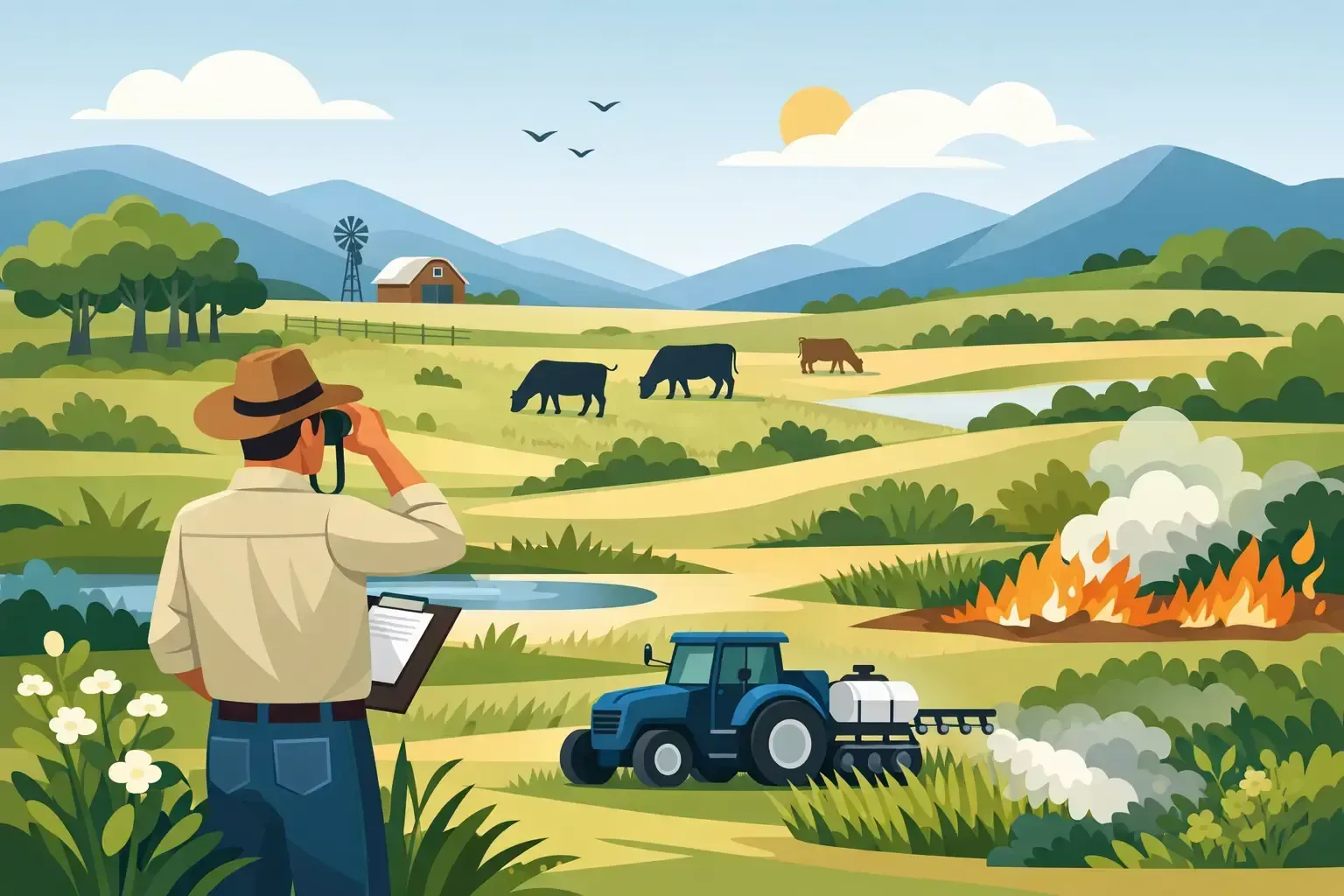
Farmer in field watching a blue tractor spray crops, with cows, barn, hills, and smoke in the background
September 1, 2026
A ranch can look green and still be headed in the wrong direction. Dense brush can hide stressed oaks, crowd out usable pasture, choke access roads, and crea...
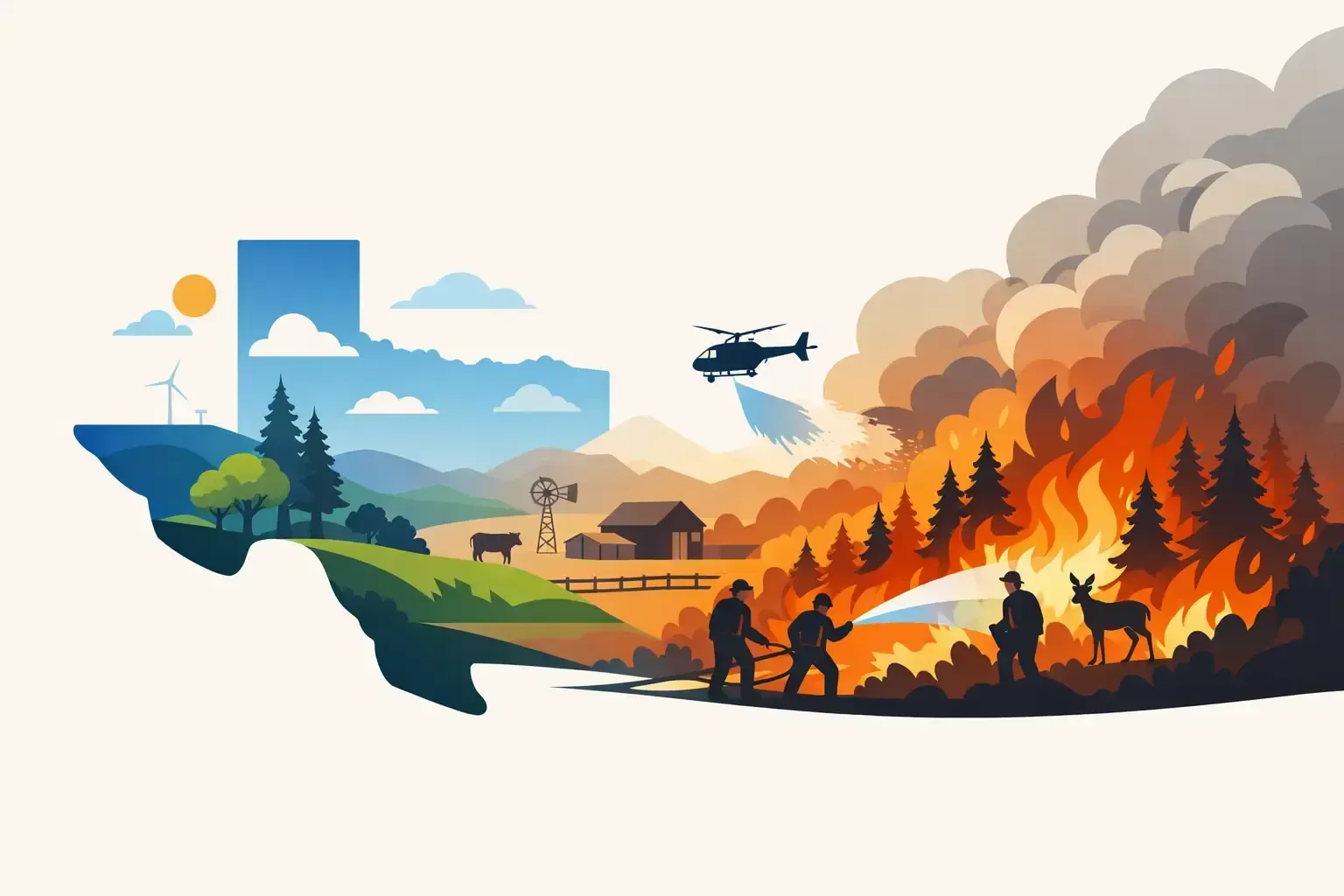
Wildfire burning in a forest with firefighters, helicopter, and smoke over a split rural landscape
August 30, 2026
A hot, windy afternoon can turn a forgotten brush pile, a crowded cedar stand, or low limbs near a structure into more than a property-maintenance issue. Tex...
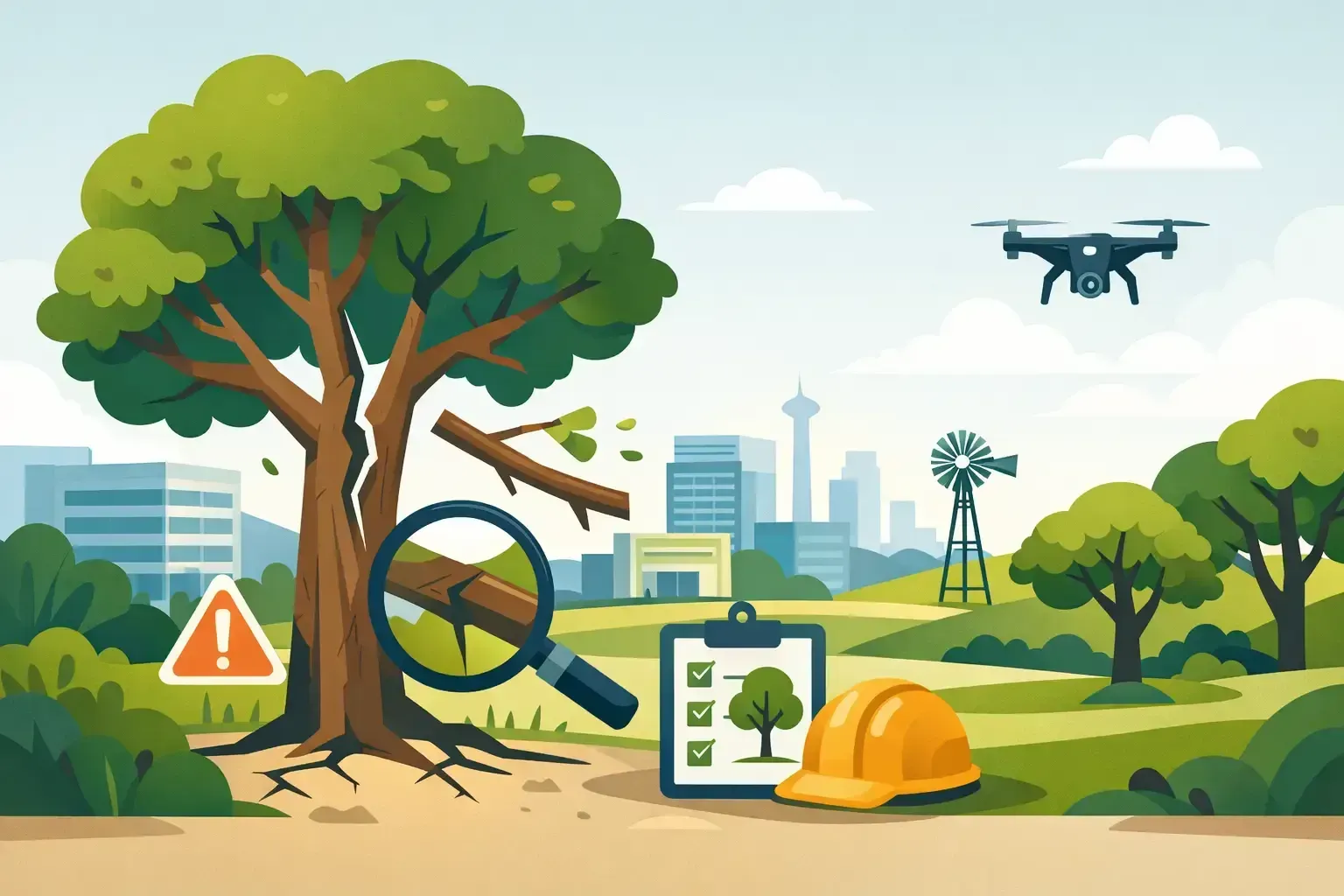
Environmental inspection scene with drone, tree, magnifying glass, recycle bin, and hard hat in a city park
August 28, 2026
A shaded entry drive can become a liability fast when a heavy limb hangs over customer parking, a dead cedar leans toward a fence, or brush builds up around ...
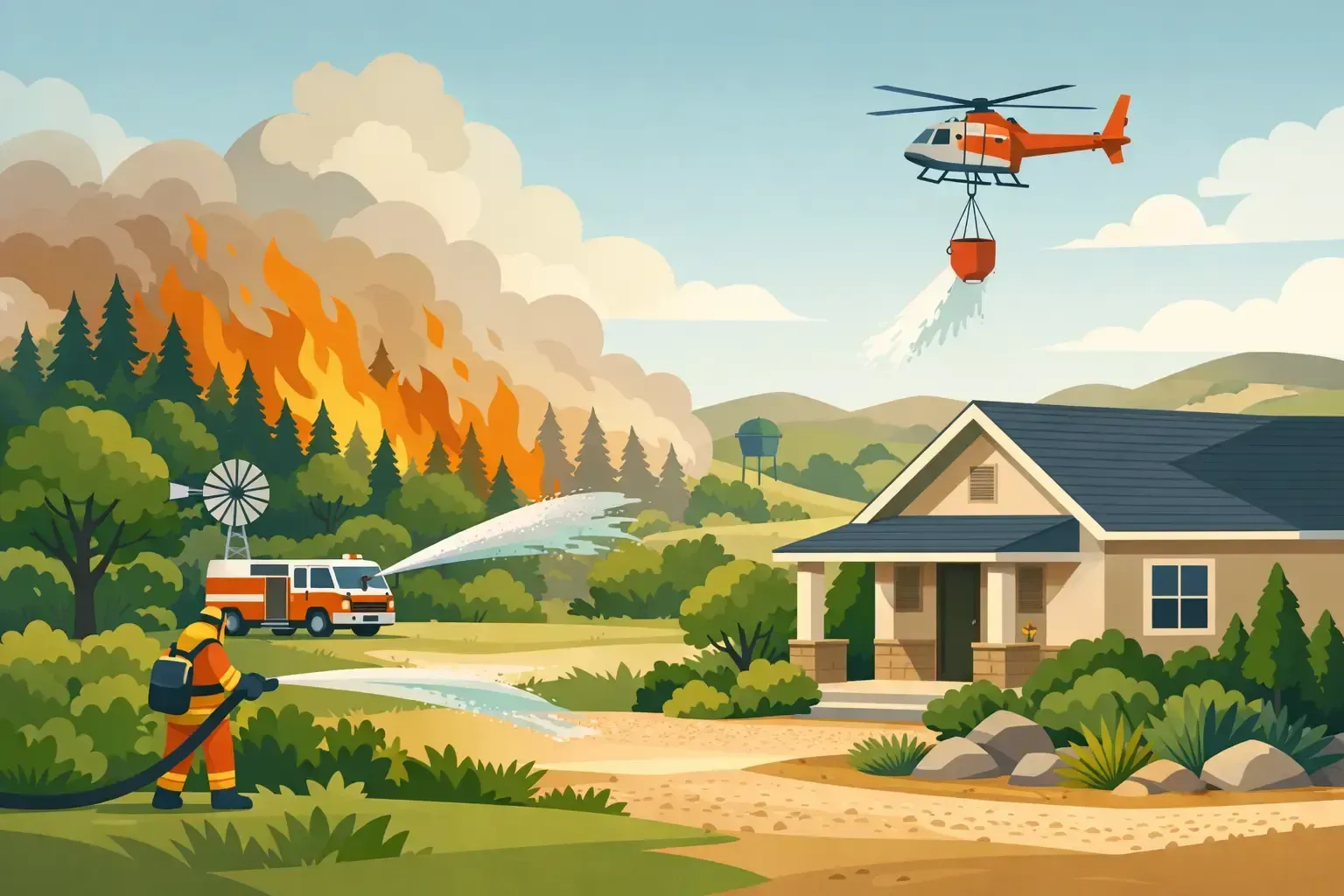
Wildfire response with firefighters, water tanker, helicopter, and smoke near homes in a rural neighborhood
August 26, 2026
A Central Texas wildfire mitigation guide has to start with a hard truth: a beautiful Hill Country property can carry fire faster than most owners expect. Ce...
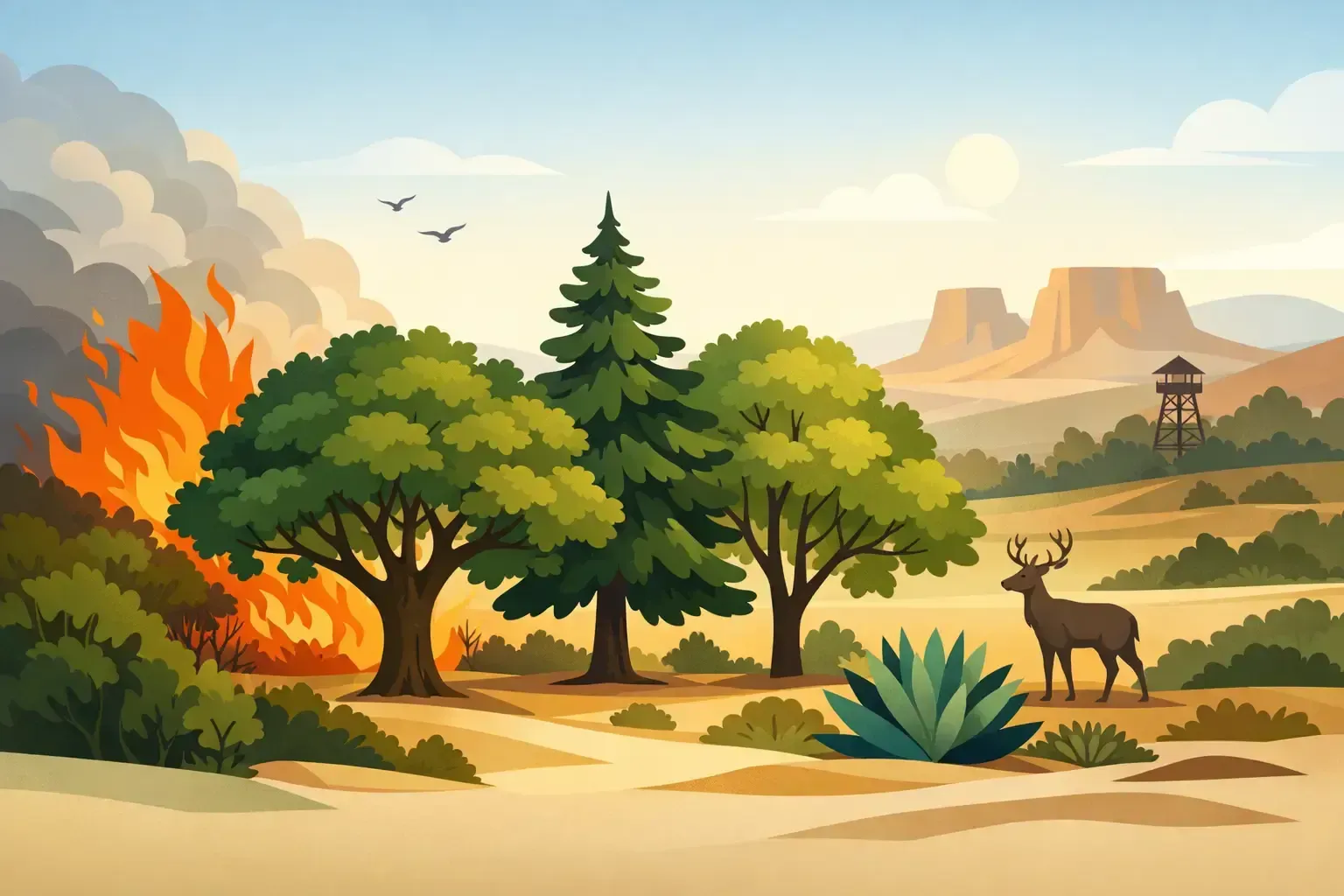
Savanna wildfire with trees, deer, and smoky hills under a bright sky
August 24, 2026
A beautiful shade tree should not become a fuse leading to your home. For Central Texas property owners, choosing the best trees for wildfire resistance mean...
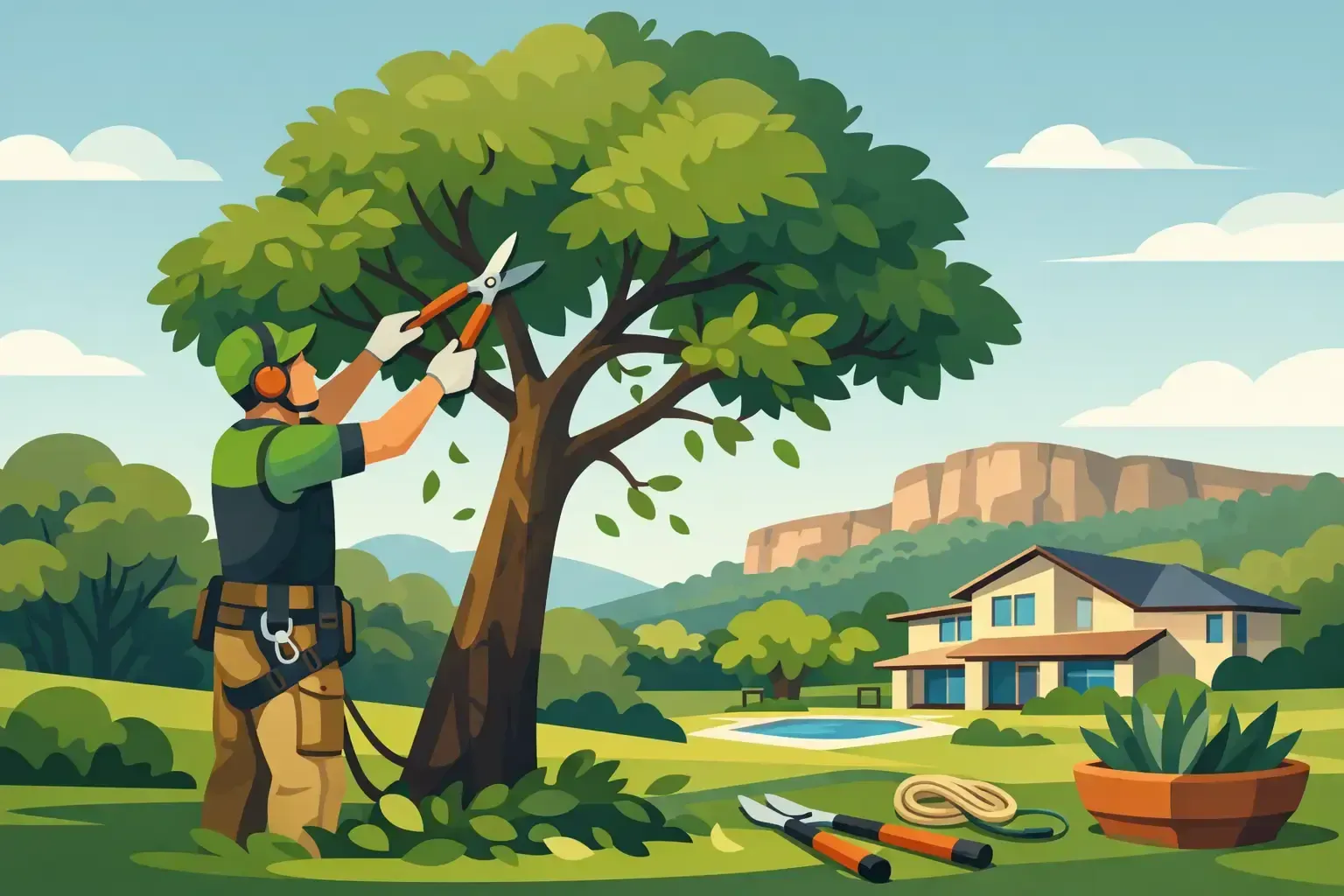
Worker pruning a tree in a sunny yard beside a house, with tools on the grass.
August 22, 2026
A mature live oak shading a Bee Cave driveway can look indestructible right up until a heavy limb hangs over the roof, a cedar elm starts crowding the servic...
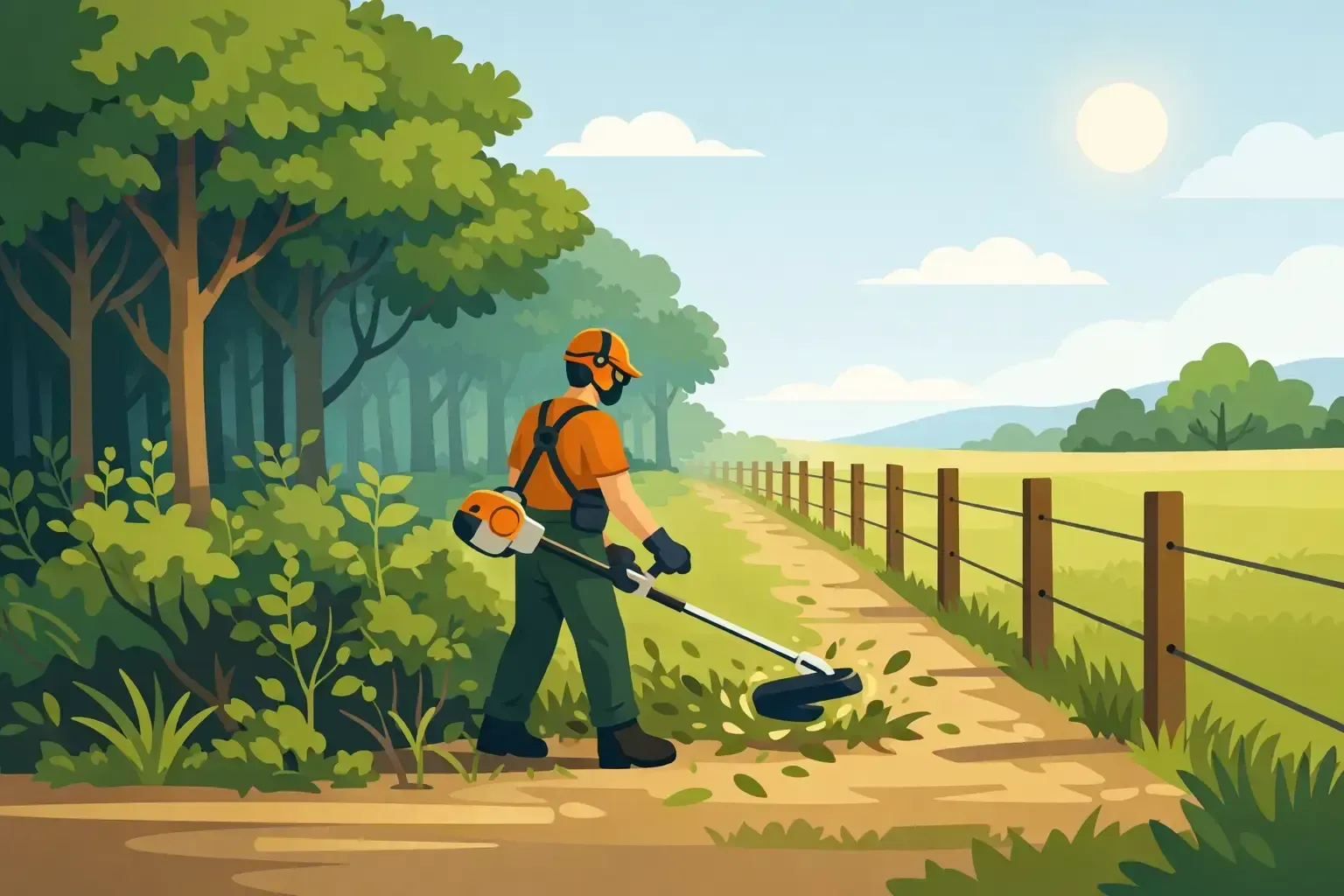
Person using a string trimmer beside a fenced field on a sunny day
August 20, 2026
A fence line can disappear fast in Central Texas. One wet spring, a few missed mowing cycles, and suddenly cedar, huisache, vines, fallen limbs, and thorny b...
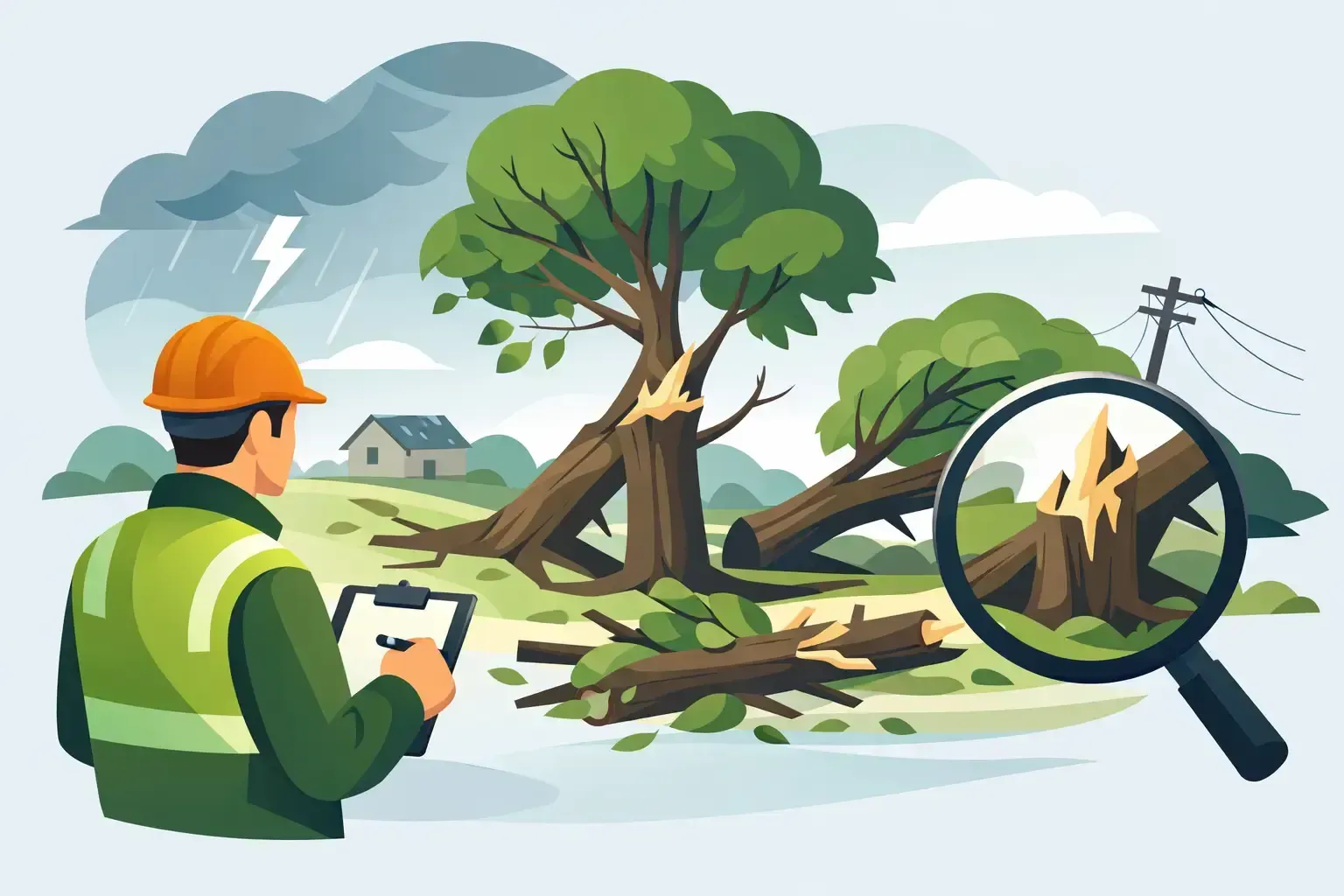
Worker inspecting storm-damaged tree with fallen branches and a magnifying glass in a windy yard
August 18, 2026
A hard Central Texas storm can turn a healthy-looking canopy into a real property hazard in a single night. This guide to storm damaged tree assessment helps...
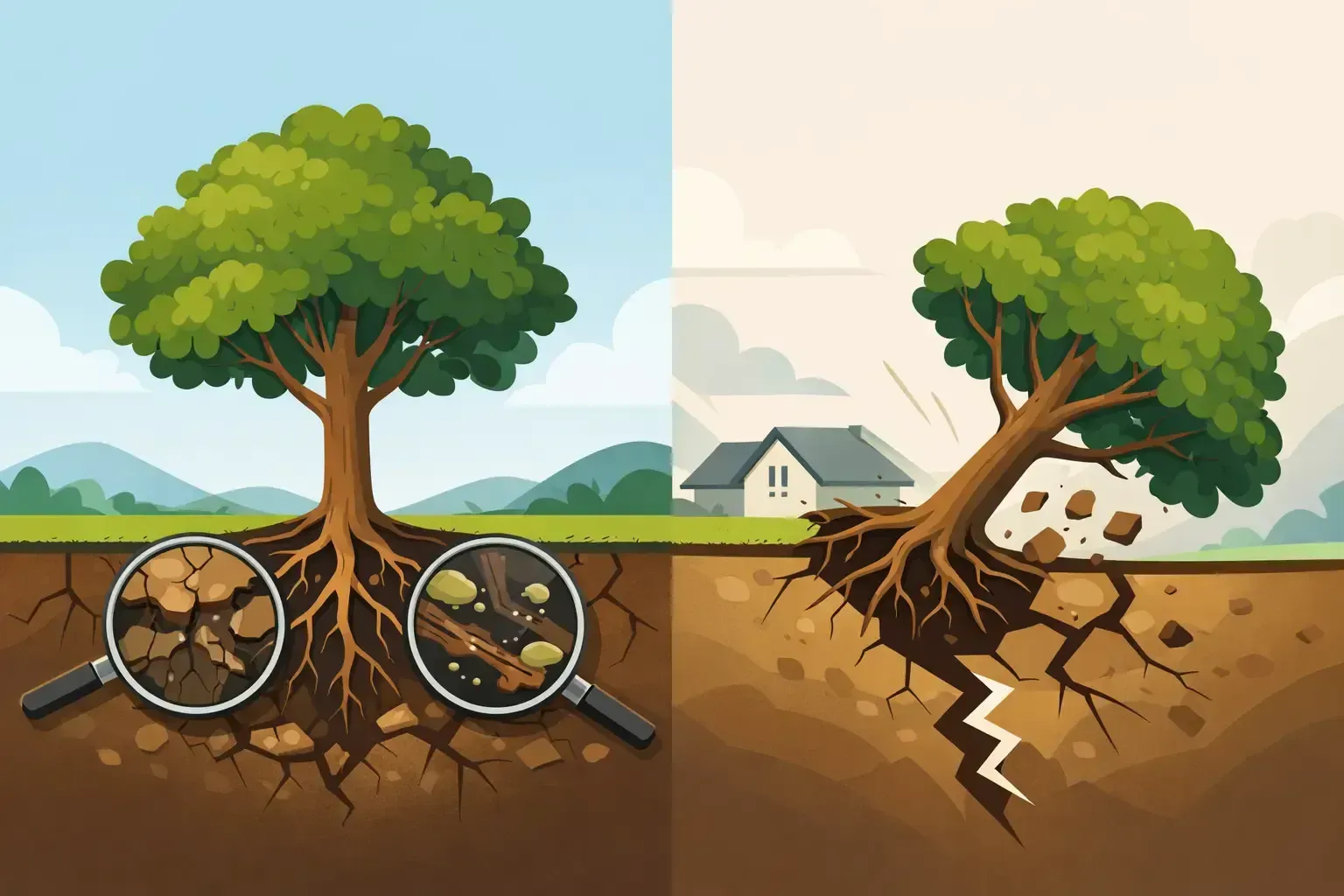
Healthy and damaged trees showing root health and drought soil cracking on a farm landscape
August 16, 2026
A live oak can look perfectly fine above ground while its support system is under serious stress below it. That is what makes root problems so frustrating fo...
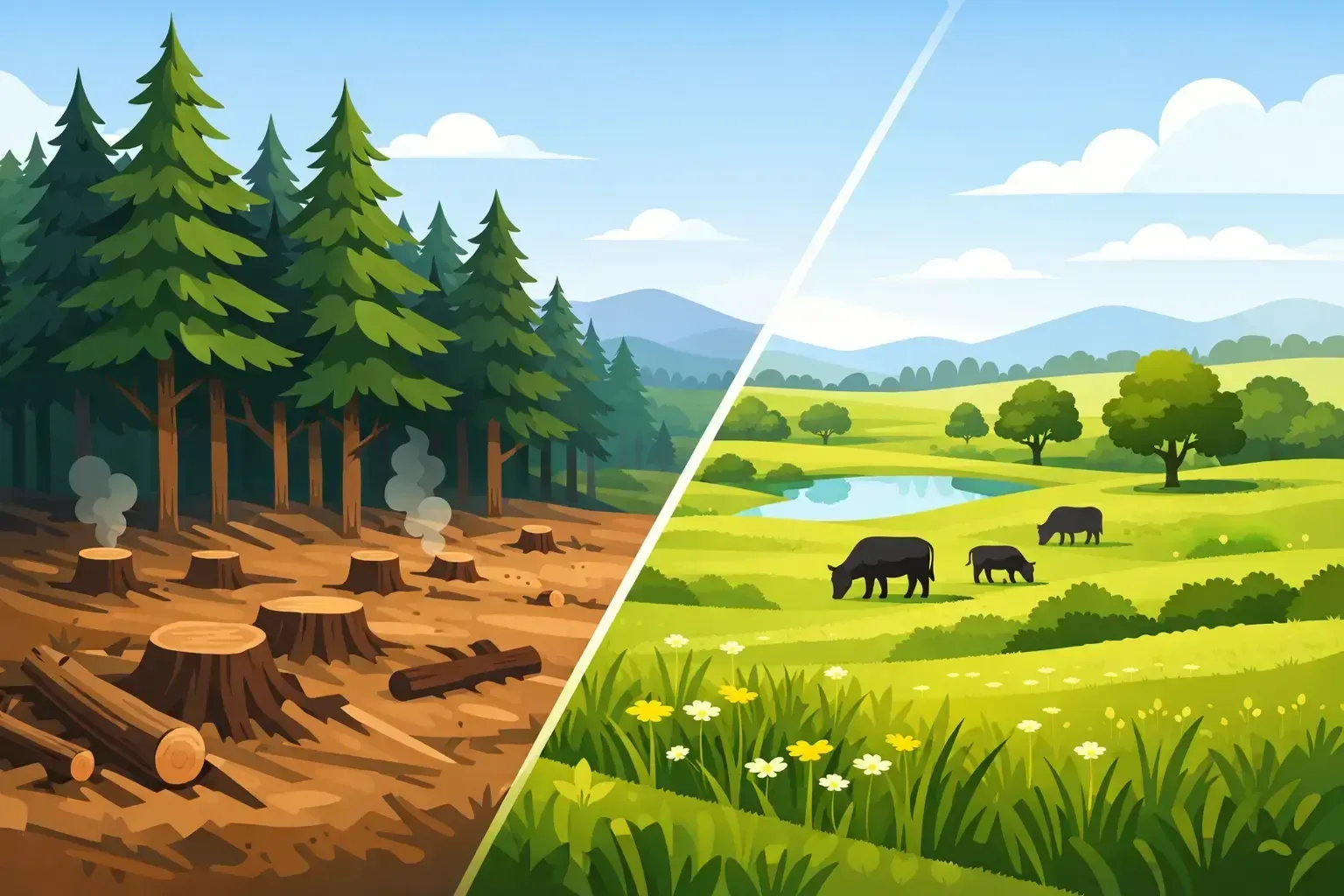
Split view of deforestation and healthy green pasture with cows under a bright sky
August 14, 2026
A cedar-choked pasture can make a property feel smaller every year. Water disappears into dense juniper cover, native grasses lose sunlight, fence lines vani...
Farmer in field watching a blue tractor spray crops, with cows, barn, hills, and smoke in the background
September 1, 2026
A ranch can look green and still be headed in the wrong direction. Dense brush can hide stressed oaks, crowd out usable pasture, choke access roads, and crea...
Wildfire burning in a forest with firefighters, helicopter, and smoke over a split rural landscape
August 30, 2026
A hot, windy afternoon can turn a forgotten brush pile, a crowded cedar stand, or low limbs near a structure into more than a property-maintenance issue. Tex...
Environmental inspection scene with drone, tree, magnifying glass, recycle bin, and hard hat in a city park
August 28, 2026
A shaded entry drive can become a liability fast when a heavy limb hangs over customer parking, a dead cedar leans toward a fence, or brush builds up around ...
Wildfire response with firefighters, water tanker, helicopter, and smoke near homes in a rural neighborhood
August 26, 2026
A Central Texas wildfire mitigation guide has to start with a hard truth: a beautiful Hill Country property can carry fire faster than most owners expect. Ce...
Savanna wildfire with trees, deer, and smoky hills under a bright sky
August 24, 2026
A beautiful shade tree should not become a fuse leading to your home. For Central Texas property owners, choosing the best trees for wildfire resistance mean...
Worker pruning a tree in a sunny yard beside a house, with tools on the grass.
August 22, 2026
A mature live oak shading a Bee Cave driveway can look indestructible right up until a heavy limb hangs over the roof, a cedar elm starts crowding the servic...