
Tree Canopy Thinning Benefits That Matter

May 18, 2026

When a tree starts blocking half your yard, scraping the roof in a storm, or turning every breeze into a limb-dropping event, the answer is not always removal. In many cases, tree canopy thinning benefits show up fast and in ways property owners can actually see - better light, better airflow, fewer hazards, and a healthier-looking landscape that feels more usable.

For homeowners and landowners in Central Texas, that matters. Our trees take a beating from heat, drought, sudden storms, compacted soil, and long stretches of harsh weather. A dense canopy might look full from the street, but full is not always healthy, and it is definitely not always safe. Good thinning is not about hacking a tree back. It is a precision job that improves structure, performance, and the way the whole property functions.

What canopy thinning actually does

Canopy thinning means selectively removing smaller live branches throughout the crown to reduce density. The goal is not to change the species, force a weird shape, or strip the inside bare. The goal is to create better spacing so light and air can move through the tree while preserving its natural form.

That distinction matters because poor pruning can create the exact problems you were trying to avoid. Over-thinning can stress a tree, trigger weak regrowth, increase sunscald risk, and leave it looking rough for years. Done correctly, thinning should look almost invisible to the untrained eye. The tree just looks cleaner, stronger, and more balanced.

The biggest tree canopy thinning benefits for property owners

One of the most immediate improvements is reduced wind resistance. In a storm, a heavy, crowded canopy acts like a sail. When wind cannot move through the crown, pressure builds, and that can lead to broken limbs, split unions, or whole-tree failure in extreme cases. Strategic thinning allows wind to pass through more easily, which can lower storm stress.

Another major benefit is better light penetration. If your grass is thinning out, your understory plants are struggling, or parts of the yard stay dark and damp all day, a dense canopy may be the reason. Letting in filtered sunlight can improve turf performance, support healthier groundcover, and make outdoor spaces feel bigger and more inviting.

Airflow is another big win, especially in our climate. Stagnant canopies trap humidity and heat. Better air circulation helps foliage dry faster and can reduce conditions that support some fungal issues and pest pressure. It is not a cure-all, but it often gives the tree and the surrounding landscape a better operating environment.

There is also the simple issue of visibility and peace of mind. Thinning can open sightlines around driveways, structures, fences, and entry points. That makes a property feel cleaner and more secure. For commercial sites, HOAs, and larger estates, that visual order goes a long way.

Tree canopy thinning benefits for tree health

People sometimes assume that removing branches automatically harms a tree. The truth is more nuanced. Any cut is a wound, so pruning should always be deliberate. But when a canopy is overcrowded, selective thinning can improve how the tree allocates resources.

Branches that are crossing, rubbing, poorly attached, shaded out, or competing for the same space do not always belong there long term. Removing certain smaller branches can reduce internal conflict within the canopy and help the tree maintain a more durable structure.

Thinning can also reduce end weight on overextended limbs. That matters when branches are reaching over roofs, parking areas, patios, or livestock zones. By reducing excess foliage and branch load in the right places, you can lower the chance of failure without taking the whole limb off.

That said, not every tree wants the same approach. Live oaks, cedar elms, pecans, and ornamental species all respond differently. Age, health, past pruning history, and drought stress matter too. This is why good arboricultural judgment beats one-size-fits-all tree work every time.

Why this matters in Central Texas

Central Texas properties present a very specific set of challenges. We deal with strong storm cells, high winds, long dry periods, sudden freezes, wildfire exposure, and lots of trees growing close to homes, barns, roads, and utility corridors. On larger lots and ranch properties, canopies often grow unchecked for years until the risk becomes obvious.

In that setting, thinning is not just about looks. It can be part of broader risk reduction. A properly managed canopy may help reduce the chance of limb failure over high-value areas. It can also improve defensible space planning when paired with brush management, ladder fuel reduction, and sane separation between vegetation layers.

If your property backs up to native areas or carries a heavier fuel load during dry seasons, thinning may support wildfire readiness by reducing dense, continuous vegetation in and around key trees. It is not the whole plan, but it can be an important piece of one.

Better curb appeal without the butchered look

Most property owners want a clean, elevated look, but they do not want their trees left looking scalped. Fair concern. Bad pruning is easy to spot and hard to forget.

One of the underrated tree canopy thinning benefits is aesthetic control. A well-thinned tree keeps its character while looking sharper and more intentional. The canopy appears lighter, more layered, and more refined. You can often see architectural features of the home again. Outdoor lighting performs better. Views open up. The entire property feels less crowded.

That matters for homeowners preparing to sell, HOAs trying to maintain standards, and commercial properties that need a polished first impression. Trees should add value, not create visual chaos.

When thinning makes sense - and when it does not

Thinning makes sense when the canopy is overly dense, storm-vulnerable, interfering with visibility, or contributing to health and maintenance issues elsewhere on the property. It is especially useful when a tree has good long-term potential but needs structural correction or load reduction.

It may not make sense if the tree is already stressed, in severe decline, or responding to drought and root damage. In those cases, additional pruning can push it further. Some species also do not tolerate aggressive thinning well. Timing matters too. Pruning at the wrong time of year can increase stress or raise disease concerns depending on the species.

This is where a careful walkthrough matters. The right answer is not always more cutting. Sometimes the better move is light structural pruning, crown cleaning, soil work, or simply leaving a tree alone for a season.

What good canopy thinning should look like

Good thinning is measured, not dramatic. You should not see huge empty gaps or long stubs left behind. The tree should still look like itself, just improved. Branch spacing should feel more even, weight should be reduced where it matters, and the canopy should move more naturally in wind.

A disciplined crew will also think beyond the cut list. How close is the tree to the house? What targets sit beneath it? Is there existing storm damage? Does the property need wildfire risk reduction? Are there signs of stress, decay, soil compaction, or root-zone problems that should change the plan?

That is the difference between basic trimming and professional tree care. One removes branches. The other solves property problems.

Choosing thinning for long-term results

If you wait until limbs are overextended, scraping buildings, or failing in storms, the work usually gets more expensive and the options get narrower. Selective thinning done at the right time can keep a manageable issue from turning into an emergency.

It also fits well into an ongoing property maintenance strategy. For larger homesites, ranches, and commercial landscapes, periodic evaluation helps keep trees safer, better looking, and easier to manage over time. That kind of consistency protects both the trees and the investment around them.

At Dynamo Dusty's Tree Service, we take an engineering-based approach because every cut has a purpose. Property owners deserve more than guesswork and chainsaw chaos. They deserve a clear plan, skilled execution, and results they can see from the driveway.

If your trees feel too dense, too risky, or just plain overdue for attention, canopy thinning may be the move that gives your property room to breathe again. A good tree should provide shade and strength, not constant worry.

Farmer in field watching a blue tractor spray crops, with cows, barn, hills, and smoke in the background
September 1, 2026
A ranch can look green and still be headed in the wrong direction. Dense brush can hide stressed oaks, crowd out usable pasture, choke access roads, and crea...

Wildfire burning in a forest with firefighters, helicopter, and smoke over a split rural landscape
August 30, 2026
A hot, windy afternoon can turn a forgotten brush pile, a crowded cedar stand, or low limbs near a structure into more than a property-maintenance issue. Tex...
Environmental inspection scene with drone, tree, magnifying glass, recycle bin, and hard hat in a city park
August 28, 2026
A shaded entry drive can become a liability fast when a heavy limb hangs over customer parking, a dead cedar leans toward a fence, or brush builds up around ...
Wildfire response with firefighters, water tanker, helicopter, and smoke near homes in a rural neighborhood
August 26, 2026
A Central Texas wildfire mitigation guide has to start with a hard truth: a beautiful Hill Country property can carry fire faster than most owners expect. Ce...
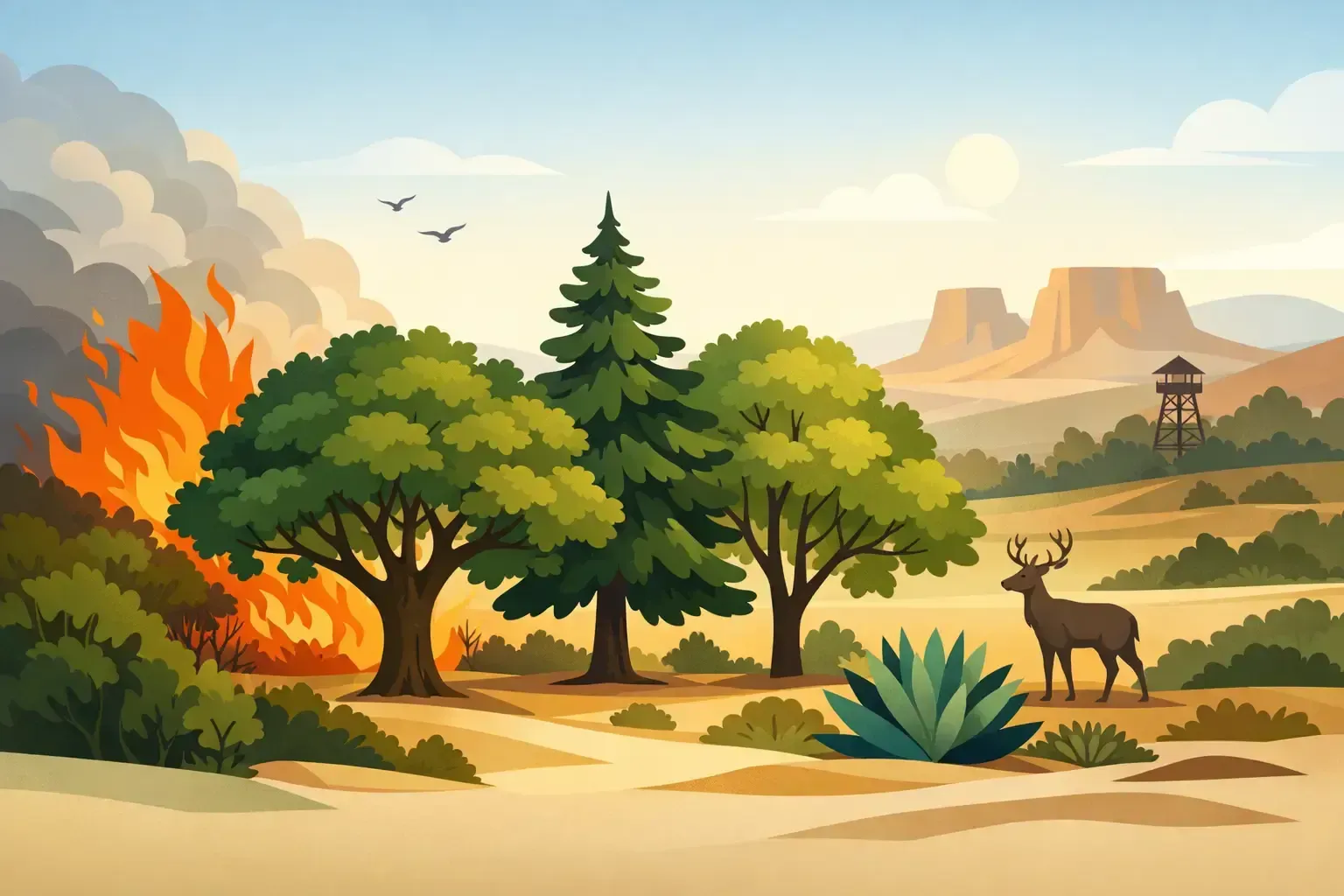
Savanna wildfire with trees, deer, and smoky hills under a bright sky
August 24, 2026
A beautiful shade tree should not become a fuse leading to your home. For Central Texas property owners, choosing the best trees for wildfire resistance mean...
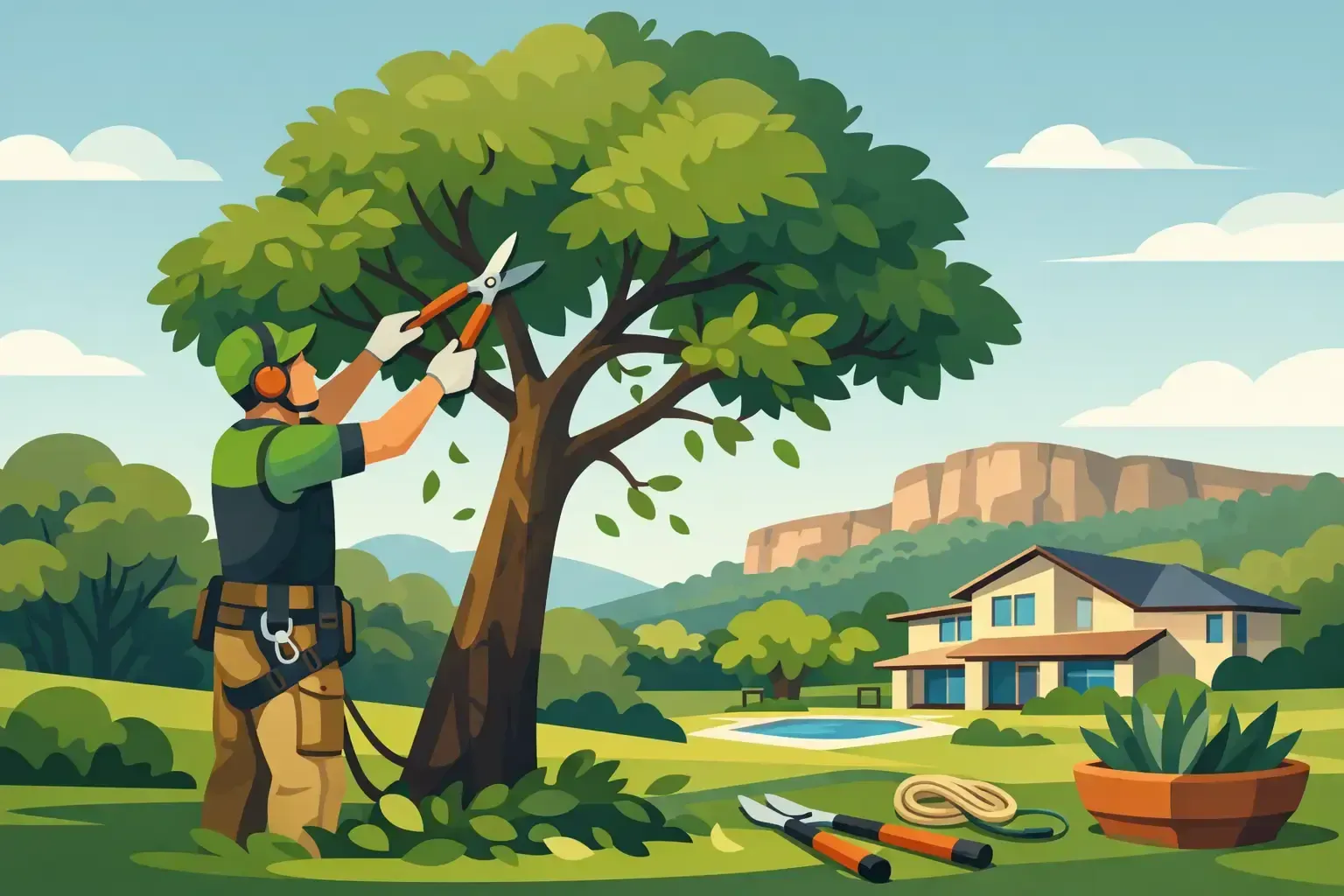
Worker pruning a tree in a sunny yard beside a house, with tools on the grass.
August 22, 2026
A mature live oak shading a Bee Cave driveway can look indestructible right up until a heavy limb hangs over the roof, a cedar elm starts crowding the servic...
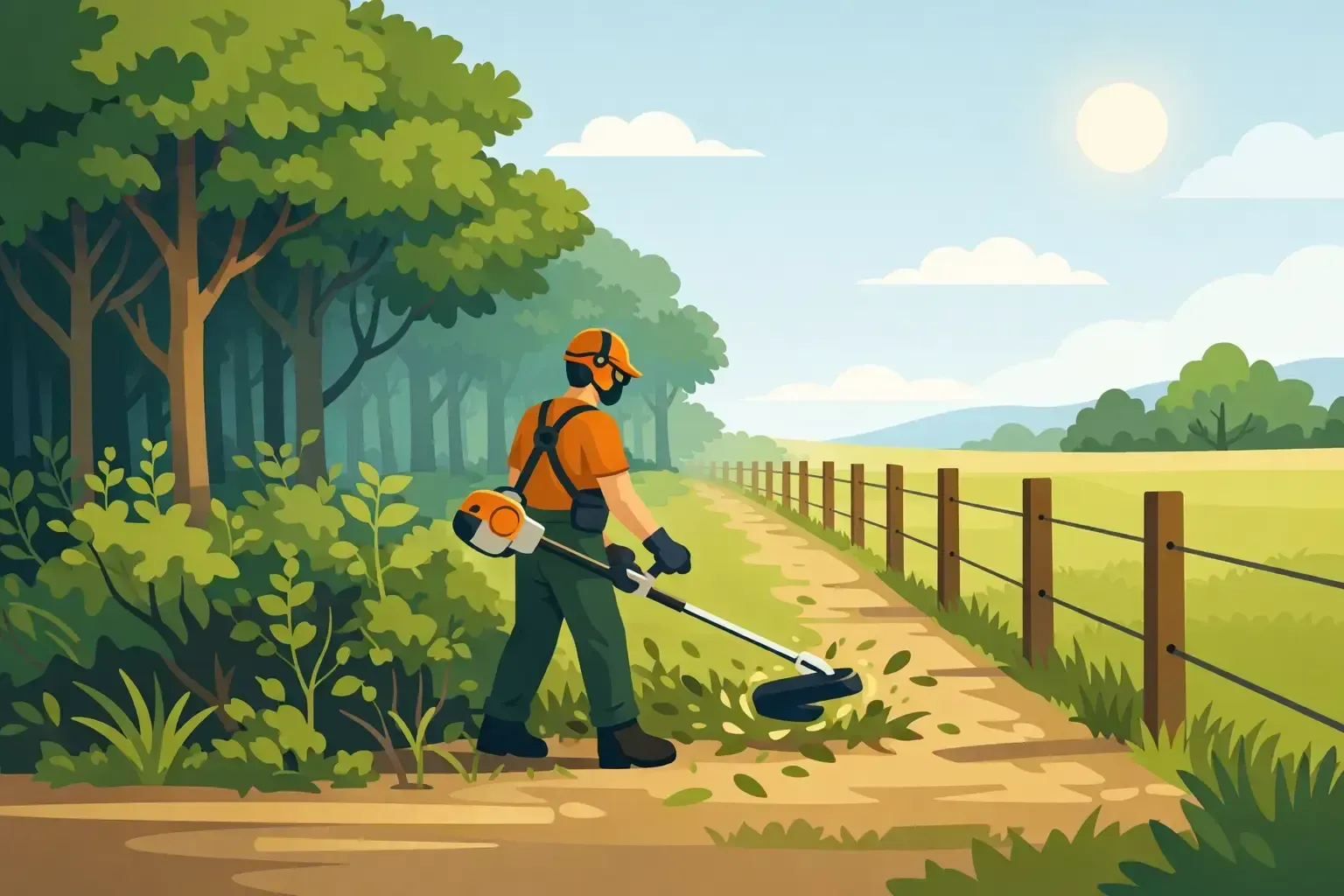
Person using a string trimmer beside a fenced field on a sunny day
August 20, 2026
A fence line can disappear fast in Central Texas. One wet spring, a few missed mowing cycles, and suddenly cedar, huisache, vines, fallen limbs, and thorny b...
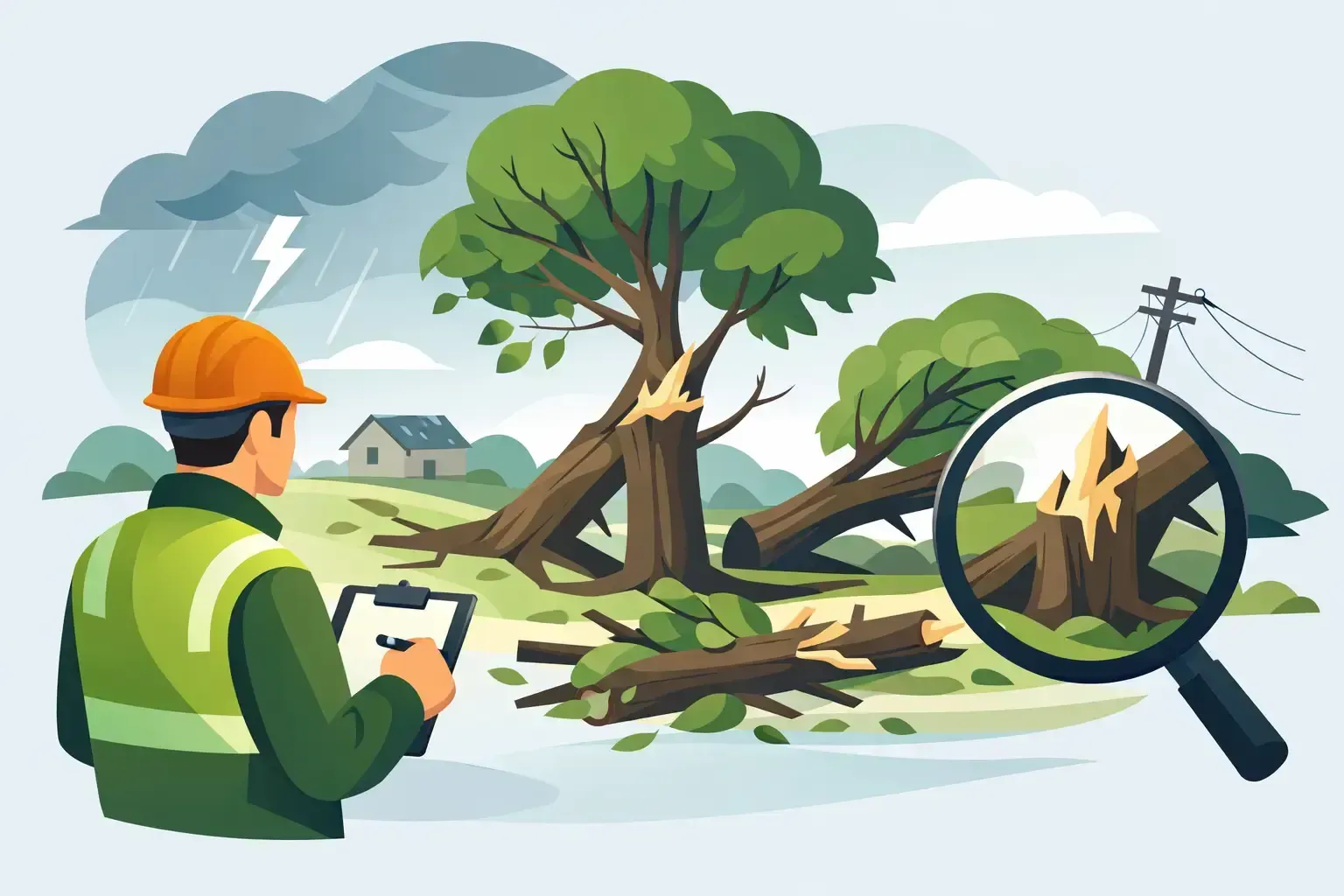
Worker inspecting storm-damaged tree with fallen branches and a magnifying glass in a windy yard
August 18, 2026
A hard Central Texas storm can turn a healthy-looking canopy into a real property hazard in a single night. This guide to storm damaged tree assessment helps...
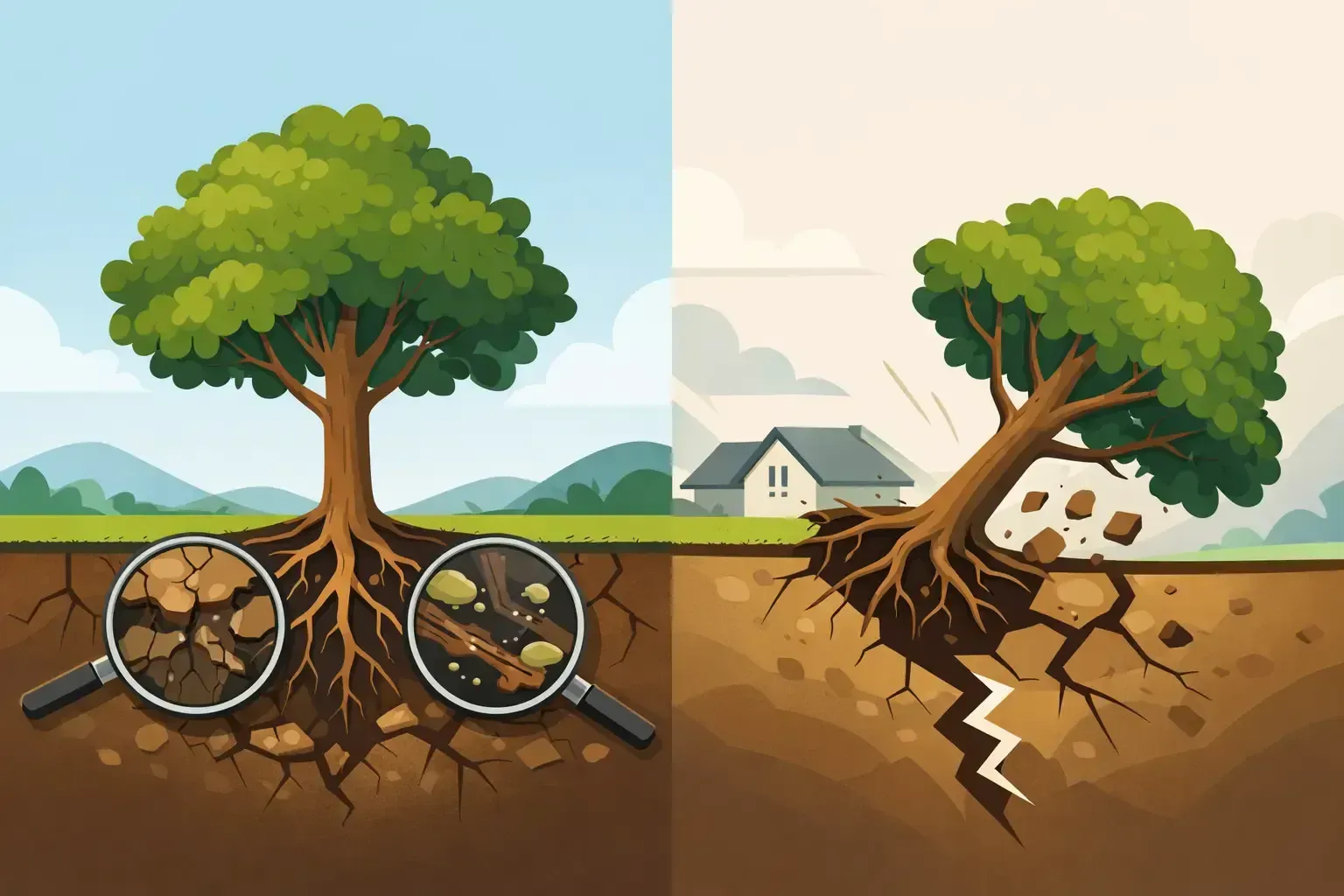
Healthy and damaged trees showing root health and drought soil cracking on a farm landscape
August 16, 2026
A live oak can look perfectly fine above ground while its support system is under serious stress below it. That is what makes root problems so frustrating fo...
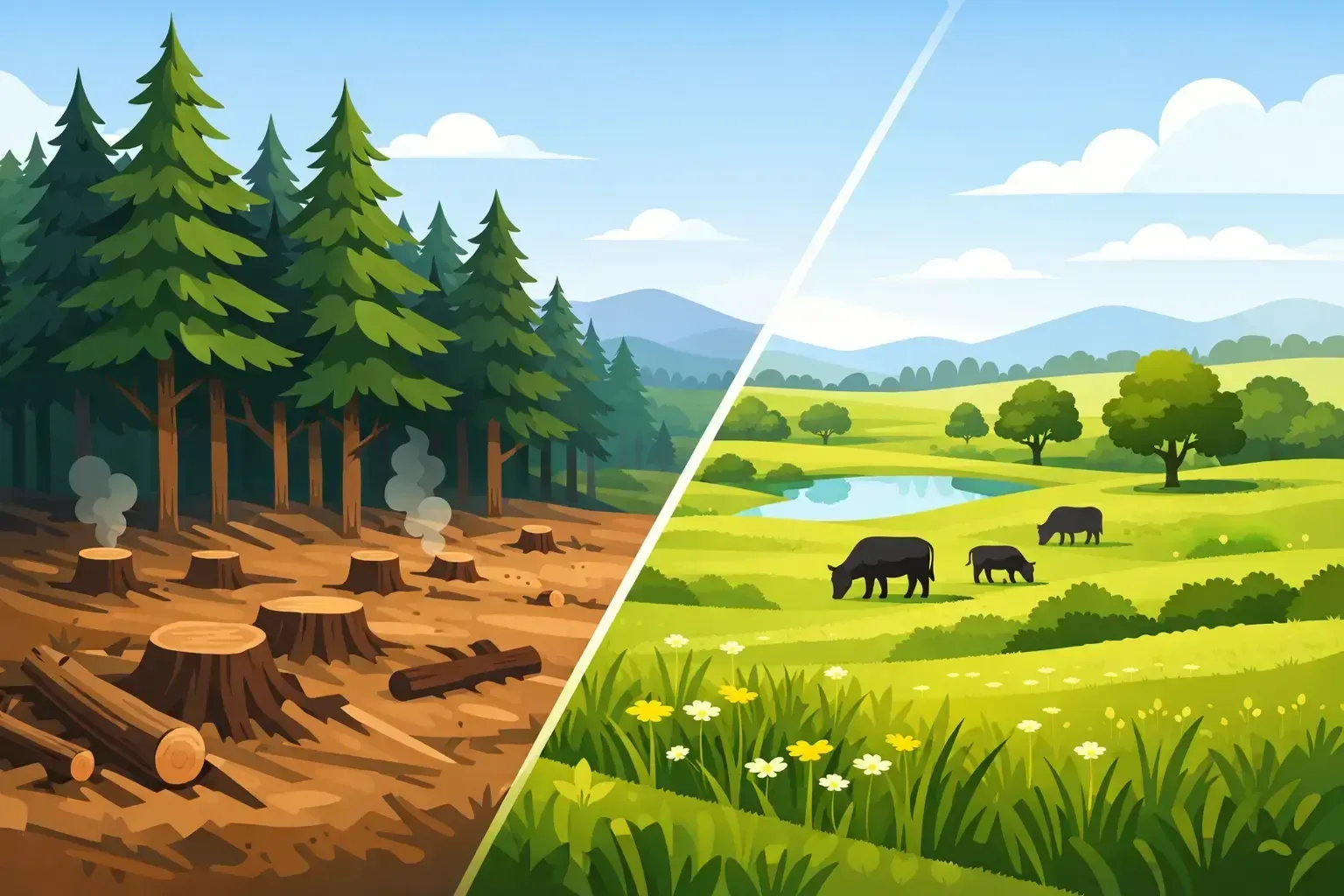
Split view of deforestation and healthy green pasture with cows under a bright sky
August 14, 2026
A cedar-choked pasture can make a property feel smaller every year. Water disappears into dense juniper cover, native grasses lose sunlight, fence lines vani...
Farmer in field watching a blue tractor spray crops, with cows, barn, hills, and smoke in the background
September 1, 2026
A ranch can look green and still be headed in the wrong direction. Dense brush can hide stressed oaks, crowd out usable pasture, choke access roads, and crea...
Wildfire burning in a forest with firefighters, helicopter, and smoke over a split rural landscape
August 30, 2026
A hot, windy afternoon can turn a forgotten brush pile, a crowded cedar stand, or low limbs near a structure into more than a property-maintenance issue. Tex...
Environmental inspection scene with drone, tree, magnifying glass, recycle bin, and hard hat in a city park
August 28, 2026
A shaded entry drive can become a liability fast when a heavy limb hangs over customer parking, a dead cedar leans toward a fence, or brush builds up around ...
Wildfire response with firefighters, water tanker, helicopter, and smoke near homes in a rural neighborhood
August 26, 2026
A Central Texas wildfire mitigation guide has to start with a hard truth: a beautiful Hill Country property can carry fire faster than most owners expect. Ce...
Savanna wildfire with trees, deer, and smoky hills under a bright sky
August 24, 2026
A beautiful shade tree should not become a fuse leading to your home. For Central Texas property owners, choosing the best trees for wildfire resistance mean...
Worker pruning a tree in a sunny yard beside a house, with tools on the grass.
August 22, 2026
A mature live oak shading a Bee Cave driveway can look indestructible right up until a heavy limb hangs over the roof, a cedar elm starts crowding the servic...