


Land Clearing Austin TX: What Good Work Looks Like

May 22, 2026

A lot of land clearing jobs look impressive for about five minutes. Brush is gone, the lot feels bigger, and everything seems cleaner - until the first hard rain cuts ruts through exposed soil, the wrong trees start declining, or a property owner realizes the crew cleared fast but not smart. If you are looking for land clearing Austin TX property owners can actually feel good about six months later, the real question is not who can remove material the fastest. It is who can improve the land without creating new problems.

In Central Texas, that distinction matters. Our properties are rarely simple. You might be dealing with cedar thickets, live oaks worth protecting, rocky grades, drainage concerns, fence lines, access limits, wildfire exposure, or a mix of residential goals and ranch needs on the same piece of ground. Good clearing is not brute force. It is planning, judgment, and execution.

What land clearing in Austin TX should actually accomplish

Land clearing should make a property more usable, safer, and easier to maintain. That sounds obvious, but plenty of projects stop at the visual change and miss the bigger outcome. A cleared lot that still has ladder fuels packed under tree canopies, poor access for equipment, and weak specimen trees left stressed by root disturbance is not a finished success.

For homeowners, good clearing often means reclaiming space around the home, opening sightlines, reducing storm debris, and making the property feel intentional instead of overrun. For ranch owners and large-acreage landowners, it may mean improving access roads, opening pasture edges, reducing fuel load, and setting up cleaner long-term maintenance. For HOAs, commercial sites, and utility districts, the goal is usually a balance of safety, appearance, and manageable regrowth.

The best projects start by defining that goal clearly. Are you trying to reduce wildfire risk? Prepare for a build? Restore neglected acreage? Improve drainage visibility? Create defensible space while preserving mature canopy? Those are different jobs, and they should not all be priced, planned, or executed the same way.

The biggest mistake in land clearing Austin TX projects

The biggest mistake is treating every tree and every brush line like waste. That approach may feel efficient on day one, but in Central Texas it can damage property value, raise heat load around a home, destabilize soil, and remove the very trees that make a lot attractive in the first place.

Not all vegetation deserves equal protection, but not all of it should be wiped out either. A disciplined crew understands how to thin, not just erase. They know the difference between clearing for access, clearing for fire safety, and over-clearing that leaves the land harsh, exposed, and expensive to recover.

That matters especially around mature oaks. These trees add beauty and value, but they can be stressed by compaction, grade changes, and careless disturbance near the root zone. The wrong clearing plan can leave a property looking better this season and worse two years from now.

Why selective clearing usually beats full clearing

Selective clearing is often the smarter move because it keeps the land functional and resilient. You can remove dense underbrush, dead material, invasive growth, and problem trees while preserving high-value canopy and natural character. That gives you better visibility, lower fire risk, and more usable space without turning the property into a blank, overheated field.

It also tends to support better long-term maintenance. When a property is cleared with intention, future trimming, mowing, inspections, and storm cleanup are all easier. The land works with you instead of fighting you every season.

What a professional clearing plan includes

A serious land clearing contractor should be able to explain the plan in plain English before the first machine moves. That does not mean vague promises about cleaning things up. It means defining what stays, what goes, how debris will be handled, how access will work, and what the finished result should look like.

On some properties, the first priority is identifying trees worth protecting. On others, it is establishing buffer zones, clearing fence lines, opening emergency access, or reducing combustible vegetation near structures. In higher-risk areas, wildfire mitigation should shape the plan from the start, not get treated as a bonus feature.

An engineering-based mindset helps here. Every site has variables: slope, density, equipment access, soil conditions, drainage patterns, neighboring structures, and future use. Good crews assess those conditions and adjust. They do not force the same template onto every lot.

Debris removal matters more than people think

A job is not done because material is cut down. The site still needs to be managed correctly. Depending on the property and the owner's goals, debris may be chipped, stacked, hauled off, processed for mulch, or otherwise handled as part of a broader land management plan.

This is one place where expectations should be crystal clear. Some owners want a fully cleaned finish. Others are fine with designated habitat piles or staged material for later use. Neither is wrong, but surprises are where frustration starts. Clear communication on debris handling is part of professional work, not an extra.

Wildfire risk changes the conversation

In Central Texas, land clearing is not only about appearance. It is also about fuel management. That is a big difference between ordinary brush removal and work that genuinely improves safety.

Dense juniper, dead understory, low-hanging limbs, and crowded vegetation near structures can all contribute to faster fire spread and higher intensity. The right clearing strategy creates separation - between ground fuels and tree canopies, between vegetation clusters and structures, and between unmanaged areas and the places people actually live and work.

That does not mean stripping a property bare. It means reducing the pathways fire uses to move. Well-executed mitigation protects the look of the property while improving survivability and access for emergency response. In that sense, the best land clearing in Austin TX is not just neat. It is strategic.

How to tell if a contractor is the real deal

If a contractor talks only about how much they can remove in a day, keep asking questions. Speed matters, but judgment matters more. You want to know how they decide what stays, how they protect desirable trees, how they approach wildfire risk, and what the property will look like after the machines leave.

Look for clear communication and transparent pricing. A professional should be able to walk the property with you, point out trade-offs, and explain why one plan may cost more but preserve more value. Maybe a full clear is right for a build site. Maybe a selective thinning plan gives you 90 percent of the benefit without sacrificing mature canopy. It depends on the land and your goals.

Credentials also matter, especially when tree preservation is part of the project. A crew with real arboricultural expertise brings a different level of decision-making to mixed tree and brush sites. That is especially valuable when you need clearing, thinning, and tree protection all in the same scope.

When cheap land clearing gets expensive

Low bids often leave out the details that actually protect the property. The price may not include proper debris handling, finish grading awareness, tree protection, or a thoughtful final result. Sometimes the work gets done quickly because no time was spent planning. That speed can cost you in cleanup, erosion issues, tree loss, and disappointing aesthetics.

This is one of those services where visible results can be misleading. A property can look dramatically different in a single day and still have been managed poorly. Clean does not always mean correct.

For many owners, especially those who have had a bad contractor experience before, the better value comes from hiring a team that communicates well, shows up when they say they will, and treats the land like an asset instead of a demolition target. That is the difference between a stressful project and one you feel proud of every time you pull into the drive.

The Austin-area properties that benefit most from clearing

Not every property needs major intervention, but some are prime candidates. Large residential lots with years of unchecked growth often benefit right away. Ranch entrances and boundary areas can become more usable and safer with strategic thinning. Commercial and community-managed properties usually gain from improved visibility, cleaner edges, and easier ongoing maintenance.

Properties in the Hill Country and surrounding areas also tend to have a mix of beauty and risk living side by side. Thick native growth can feel private and scenic, but when it crowds structures or creates fuel continuity, it starts working against you. The sweet spot is a property that still feels like Central Texas while functioning better for the people responsible for it.

That balance is where experienced crews earn their keep. Companies like Dynamo Dusty's Tree Service are built for that middle ground - large enough to handle serious projects, disciplined enough to plan them correctly, and skilled enough to deliver a finish that looks intentional, not hacked together.

If you are considering a clearing project, start with the end in mind. Think beyond getting brush off the ground. Think about access, appearance, safety, maintenance, and what your land should feel like when the job is done right. A good clearing job gives you more than open space. It gives your property a stronger future.

Farmer in field watching a blue tractor spray crops, with cows, barn, hills, and smoke in the background
September 1, 2026
A ranch can look green and still be headed in the wrong direction. Dense brush can hide stressed oaks, crowd out usable pasture, choke access roads, and crea...

Wildfire burning in a forest with firefighters, helicopter, and smoke over a split rural landscape
August 30, 2026
A hot, windy afternoon can turn a forgotten brush pile, a crowded cedar stand, or low limbs near a structure into more than a property-maintenance issue. Tex...

Environmental inspection scene with drone, tree, magnifying glass, recycle bin, and hard hat in a city park
August 28, 2026
A shaded entry drive can become a liability fast when a heavy limb hangs over customer parking, a dead cedar leans toward a fence, or brush builds up around ...

Wildfire response with firefighters, water tanker, helicopter, and smoke near homes in a rural neighborhood
August 26, 2026
A Central Texas wildfire mitigation guide has to start with a hard truth: a beautiful Hill Country property can carry fire faster than most owners expect. Ce...

Savanna wildfire with trees, deer, and smoky hills under a bright sky
August 24, 2026
A beautiful shade tree should not become a fuse leading to your home. For Central Texas property owners, choosing the best trees for wildfire resistance mean...

Worker pruning a tree in a sunny yard beside a house, with tools on the grass.
August 22, 2026
A mature live oak shading a Bee Cave driveway can look indestructible right up until a heavy limb hangs over the roof, a cedar elm starts crowding the servic...
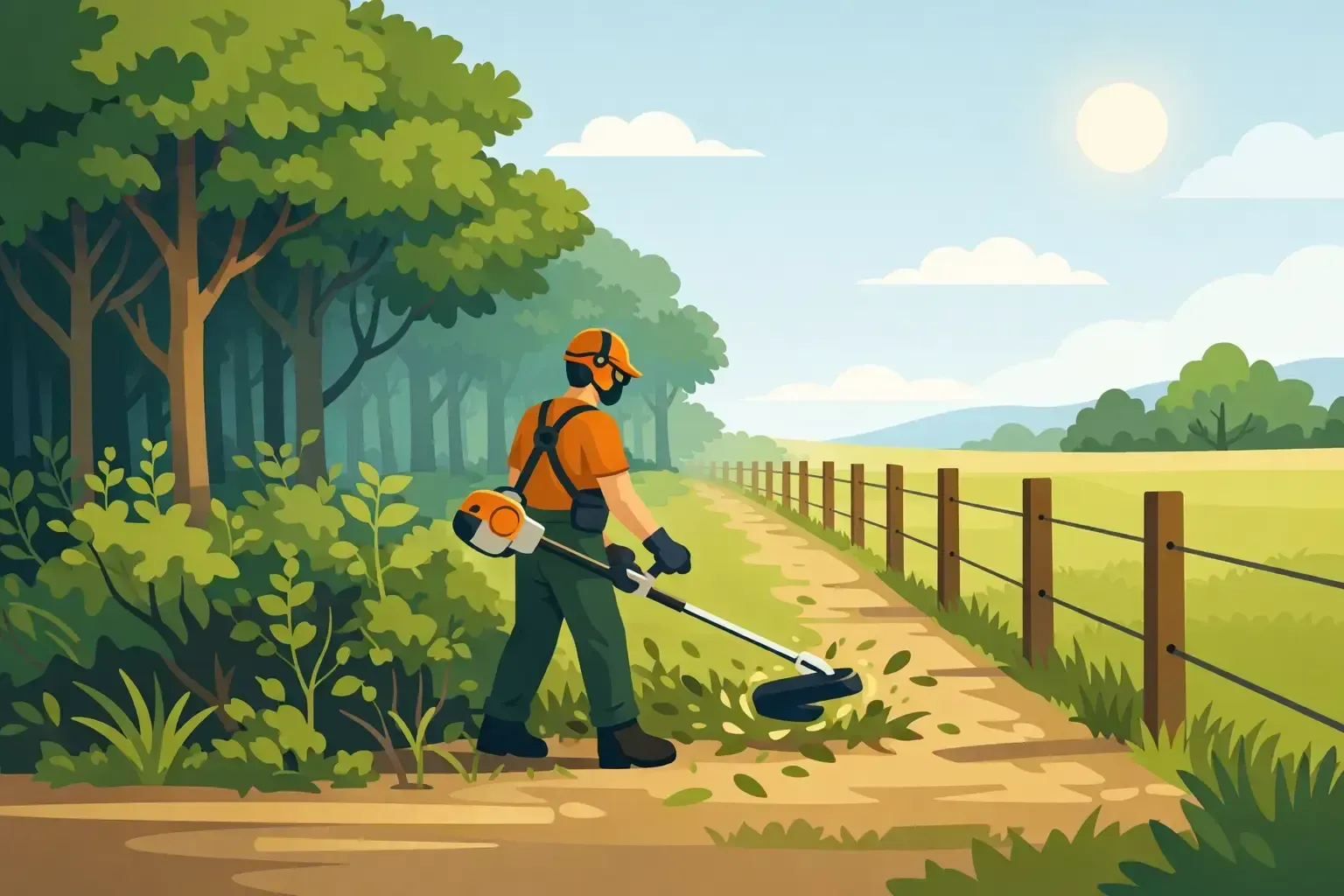
Person using a string trimmer beside a fenced field on a sunny day
August 20, 2026
A fence line can disappear fast in Central Texas. One wet spring, a few missed mowing cycles, and suddenly cedar, huisache, vines, fallen limbs, and thorny b...

Worker inspecting storm-damaged tree with fallen branches and a magnifying glass in a windy yard
August 18, 2026
A hard Central Texas storm can turn a healthy-looking canopy into a real property hazard in a single night. This guide to storm damaged tree assessment helps...
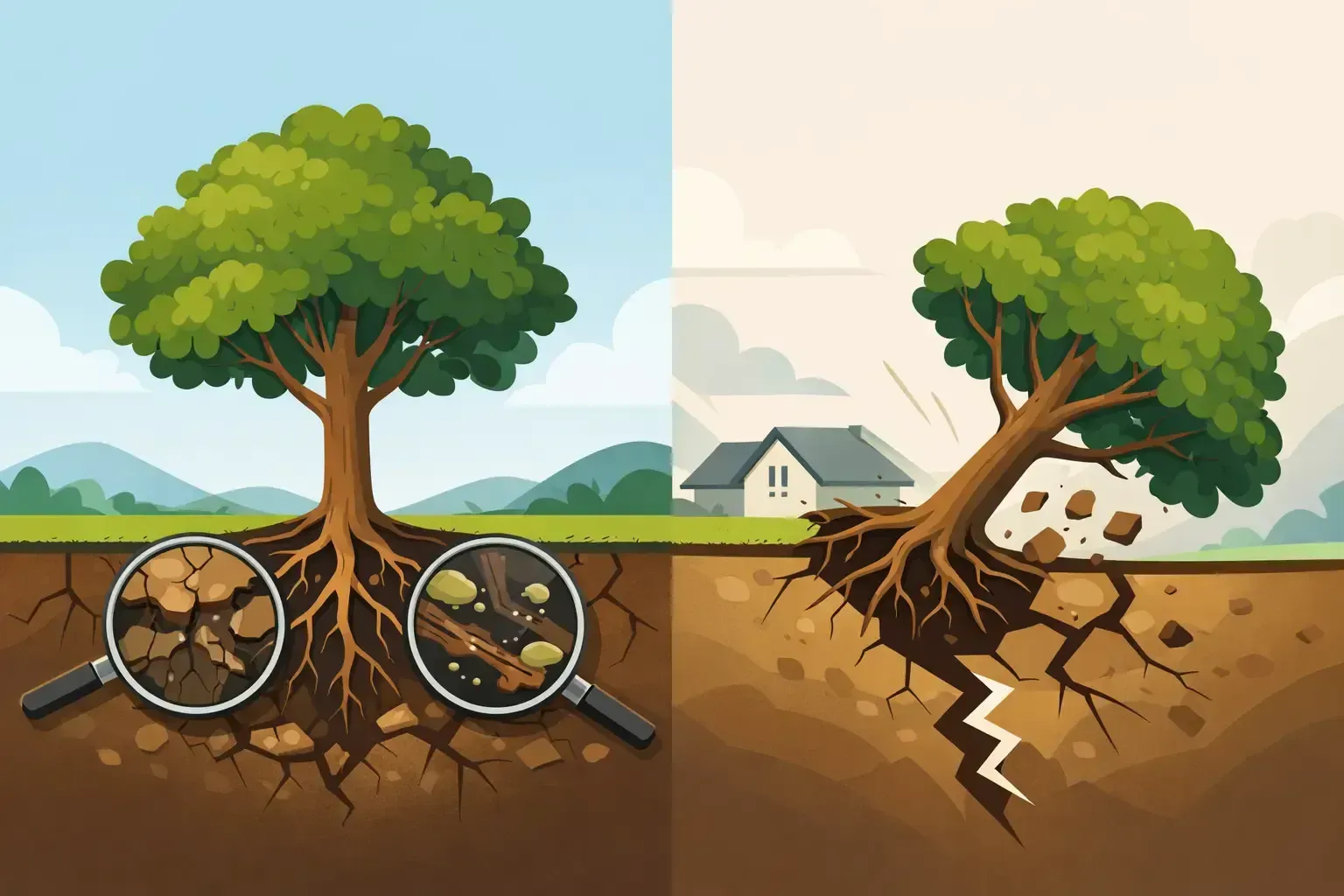
Healthy and damaged trees showing root health and drought soil cracking on a farm landscape
August 16, 2026
A live oak can look perfectly fine above ground while its support system is under serious stress below it. That is what makes root problems so frustrating fo...

Split view of deforestation and healthy green pasture with cows under a bright sky
August 14, 2026
A cedar-choked pasture can make a property feel smaller every year. Water disappears into dense juniper cover, native grasses lose sunlight, fence lines vani...
Farmer in field watching a blue tractor spray crops, with cows, barn, hills, and smoke in the background
September 1, 2026
A ranch can look green and still be headed in the wrong direction. Dense brush can hide stressed oaks, crowd out usable pasture, choke access roads, and crea...
Wildfire burning in a forest with firefighters, helicopter, and smoke over a split rural landscape
August 30, 2026
A hot, windy afternoon can turn a forgotten brush pile, a crowded cedar stand, or low limbs near a structure into more than a property-maintenance issue. Tex...
Environmental inspection scene with drone, tree, magnifying glass, recycle bin, and hard hat in a city park
August 28, 2026
A shaded entry drive can become a liability fast when a heavy limb hangs over customer parking, a dead cedar leans toward a fence, or brush builds up around ...
Wildfire response with firefighters, water tanker, helicopter, and smoke near homes in a rural neighborhood
August 26, 2026
A Central Texas wildfire mitigation guide has to start with a hard truth: a beautiful Hill Country property can carry fire faster than most owners expect. Ce...
Savanna wildfire with trees, deer, and smoky hills under a bright sky
August 24, 2026
A beautiful shade tree should not become a fuse leading to your home. For Central Texas property owners, choosing the best trees for wildfire resistance mean...
Worker pruning a tree in a sunny yard beside a house, with tools on the grass.
August 22, 2026
A mature live oak shading a Bee Cave driveway can look indestructible right up until a heavy limb hangs over the roof, a cedar elm starts crowding the servic...