


A Transparent Estimate Process for Tree Work

June 8, 2026

If you have ever gotten two tree bids that looked nothing alike, you already know the problem. One number is scribbled in a text, another lands in your inbox with line items, and somehow both claim to cover the same job. A transparent estimate process for tree work cuts through that confusion and gives you something better than a low number - it gives you confidence in what is actually being done on your property.

For homeowners, ranch owners, HOAs, and property managers, that confidence matters. Tree work is not just about making a yard look cleaner. It can affect roof clearance, driveway access, wildfire exposure, storm risk, fence lines, views, drainage, and the long-term health of valuable trees. When the estimate is vague, the job usually gets vague too.

What a transparent estimate process for tree work should include

A real estimate starts with a real look at the property. That sounds obvious, but plenty of companies throw out pricing based on a few photos and a rough description. Sometimes that is enough for a simple pickup job. More often, it misses the details that drive labor, equipment needs, cleanup time, and safety planning.

A solid walkthrough should identify exactly which trees or brush areas are part of the project, what work is recommended, and why. If a live oak needs canopy elevation over a driveway, that should be stated clearly. If cedar thinning is meant to improve defensible space around a home, that should be spelled out. If a damaged limb overhangs a structure, the estimate should note the risk and the approach.

The best estimates also separate scope from assumptions. That means the customer can see what is included, what is not included, and what might change if site conditions are different than expected. On rural acreage or large lots around Central Texas, this matters even more because access, terrain, and debris volume can swing the job in a big way.

Cheap numbers are easy to give. Clear numbers are harder.

A lot of frustration in this industry comes from customers trying to compare prices that are not built the same way. One company may include haul-off, fine cleanup, traffic control, and protection for nearby structures. Another may price only the cutting portion and leave the rest fuzzy. On paper, one quote looks expensive and the other looks like a bargain. On the jobsite, that bargain can turn into a headache fast.

Transparency means the number has context. You should be able to tell whether debris is being removed, stacked, chipped, or left on site. You should know if stump work is included or separate. You should know whether the crew is addressing the whole tree, selected limbs, brush undergrowth, fence-line clearing, or wildfire risk reduction around structures.

This is especially important when the work has a safety component. Hazard mitigation, storm-damaged trees, and overgrown lots near homes are not jobs where guesswork belongs. A disciplined company will explain what drives cost instead of hiding behind a one-line total.

Why the walkthrough matters more than the PDF

The written estimate matters, but the walkthrough with you tells you a lot about how the company operates and whether their goals are aligned with yours for your property. This is where you find out whether the estimator listens, asks smart questions, and notices the things that matter on your property.

A good walkthrough is not a sales ambush. It should feel like problem solving. The estimator should ask what you are trying to accomplish. Better curb appeal? More clearance for vehicles or equipment? Better tree health? Reduced wildfire fuel? Faster storm recovery? Those goals shape the plan.

That matters because the right tree work is not always the most aggressive tree work. Sometimes selective pruning is enough. Sometimes thinning brush is smarter than clearing everything. Sometimes a tree that looks rough after a storm can be preserved safely with the right cuts, and sometimes it cannot. A transparent process makes room for those trade-offs instead of treating every property like a one-size-fits-all cleanup job.

The details that should never be fuzzy

When you review an estimate, look for plain language. You should not need a decoder ring to understand it. The scope should identify the work area, the service type, the expected cleanup, and any special conditions.

Timing is one of the biggest points of confusion. A strong estimate should give you a realistic sense of scheduling, not a magical promise. Weather, emergency storm calls, permit issues, and site access can affect timing. Honest companies will tell you that up front instead of overpromising and disappearing for two weeks.

Cleanup is another one. Customers often assume cleanup means everything will be raked, blown, hauled, and left polished. Sometimes that is included. Sometimes the property owner wants chips spread on site or firewood bucked and stacked. Sometimes pasture or ranch work calls for a different finish standard than a front yard in a neighborhood. None of those options are wrong, but they should be defined before work starts.

Payment terms should also be clear. Not dramatic. Not slippery. Just clear. If there is a deposit, progress billing, or change-order process, it should be stated plainly.

How transparent estimates prevent change-order drama

Not every change during a tree project is a red flag. Hidden fence wire in brush, unexpected decay, poor access after rain, or debris volume that is much heavier than visible from the driveway can legitimately affect the scope. The problem is not that changes happen. The problem is when they happen with no explanation.

A transparent estimate process for tree work reduces that friction because the original document establishes the baseline. Everyone knows what the crew came to do. If conditions shift, the company can explain what changed, why it matters, and what the added work involves.

That kind of communication protects both sides. Property owners avoid surprise charges. Crews avoid being pushed into extra work that was never priced. It is a more professional way to run a job, and frankly, it is a lot less stressful.

Transparency is not just about price

This part gets missed all the time. Transparent pricing is good, but pricing alone does not make an estimate trustworthy. You also need transparency about methods, expected results, and limitations.

For example, tree health work can involve more variables than straightforward removal or trimming. Soil conditions, drought stress, root zone damage, and species-specific response all affect recommendations. Wildfire mitigation planning has its own set of priorities too. Creating safer spacing and reducing ladder fuels can improve resilience, but the exact approach depends on the structure, surrounding vegetation, slope, and property use.

That is where certified expertise matters. An estimate should reflect more than labor hours. It should reflect judgment. If a company can explain not just what it plans to do, but why that approach fits your property, that is a strong sign you are dealing with professionals rather than a crew chasing the next chainsaw job.

What customers should ask before saying yes

You do not need to interrogate the estimator like it is a police interview, but a few direct questions help. Ask what is included in cleanup, how the scope is defined, whether the work is meant for aesthetics, risk reduction, or both, and what site conditions could affect the final price. Ask how the crew protects driveways, lawns, fences, and structures. Ask what success should look like when the job is done.

Those questions are not picky. They are practical. Good companies welcome them because they lead to fewer misunderstandings and better results.

If the answers feel rushed or slippery, pay attention. Clear communication during the estimate stage usually predicts clear communication during the job. The opposite is true too.

Why this matters in Central Texas

Around here, tree work is tied to more than appearance. Oak canopies over homes, cedar buildup near structures, storm-damaged limbs, dry understory, and access issues on larger properties all raise the stakes. On some sites, the job is as much about land management and wildfire readiness as it is about trimming branches.

That is why the estimate process deserves more respect than it usually gets. It is not paperwork. It is the planning phase. It sets expectations, aligns priorities, and helps you understand what your money is buying.

Teams like Dynamo Dusty's Tree Service have built their reputation on that kind of straight-talk approach because customers are tired of mystery pricing and fuzzy promises. They want elite results, yes, but they also want to know the crew has a plan.

When a company takes the time to define scope, explain risks, and price the work clearly, that is not fluff. That is professionalism. And for the kind of properties where one bad decision can mean damaged trees, property risk, or a cleanup mess that drags on for days, professionalism is worth a lot.

The best estimate is not the one with the lowest number. It is the one that lets you say, with a straight face, I know exactly what is about to happen on my property.

Farmer in field watching a blue tractor spray crops, with cows, barn, hills, and smoke in the background
September 1, 2026
A ranch can look green and still be headed in the wrong direction. Dense brush can hide stressed oaks, crowd out usable pasture, choke access roads, and crea...

Wildfire burning in a forest with firefighters, helicopter, and smoke over a split rural landscape
August 30, 2026
A hot, windy afternoon can turn a forgotten brush pile, a crowded cedar stand, or low limbs near a structure into more than a property-maintenance issue. Tex...
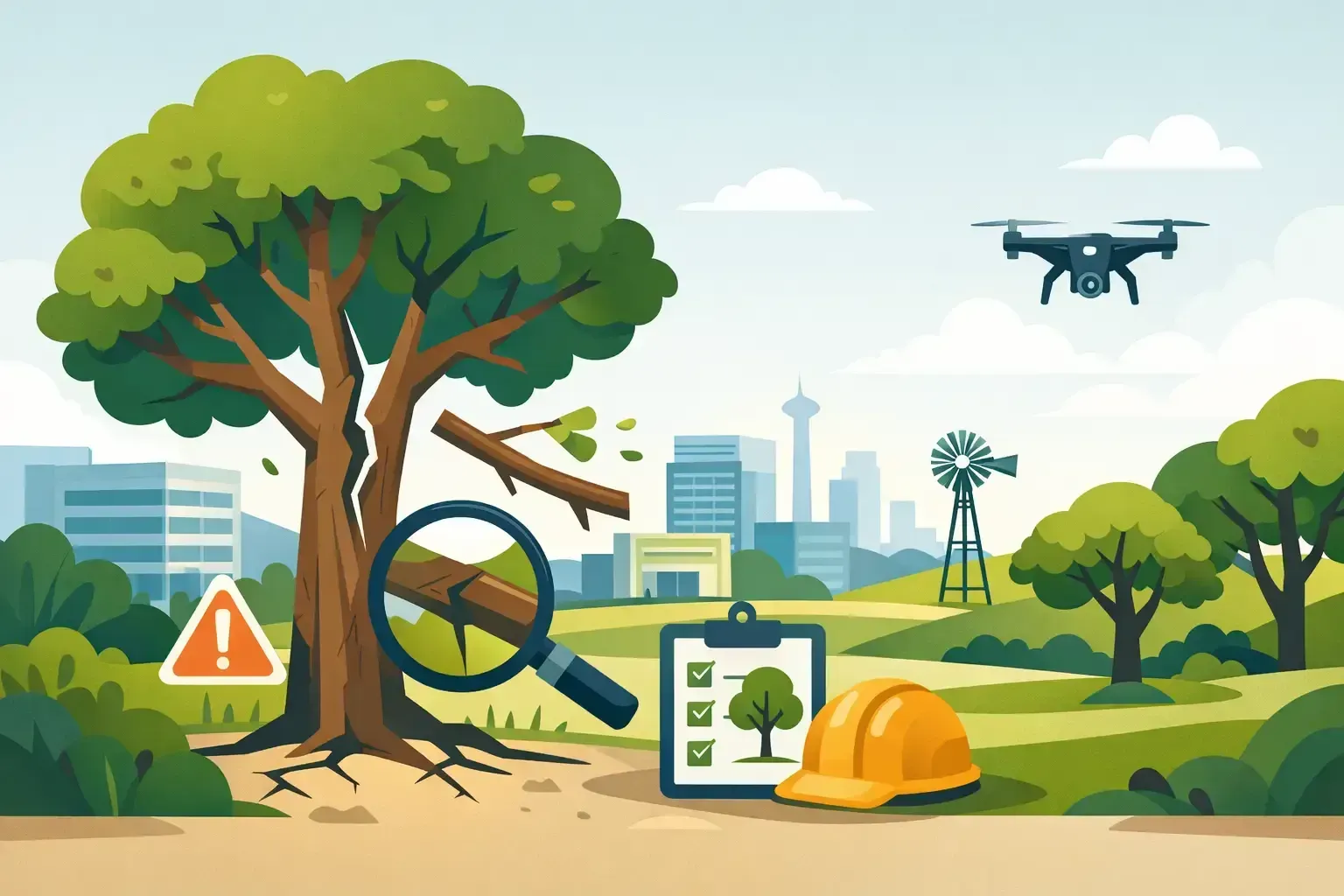
Environmental inspection scene with drone, tree, magnifying glass, recycle bin, and hard hat in a city park
August 28, 2026
A shaded entry drive can become a liability fast when a heavy limb hangs over customer parking, a dead cedar leans toward a fence, or brush builds up around ...
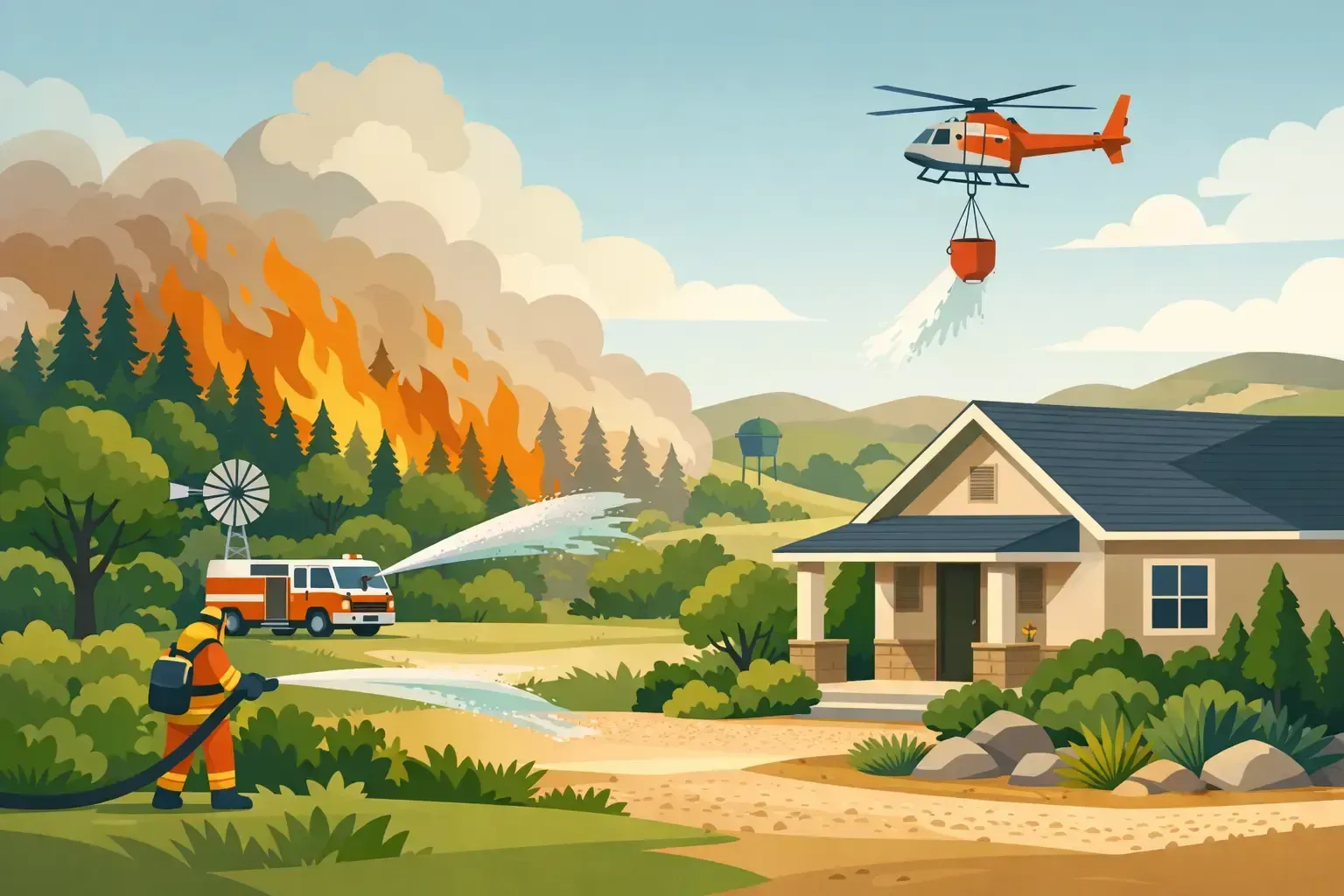
Wildfire response with firefighters, water tanker, helicopter, and smoke near homes in a rural neighborhood
August 26, 2026
A Central Texas wildfire mitigation guide has to start with a hard truth: a beautiful Hill Country property can carry fire faster than most owners expect. Ce...
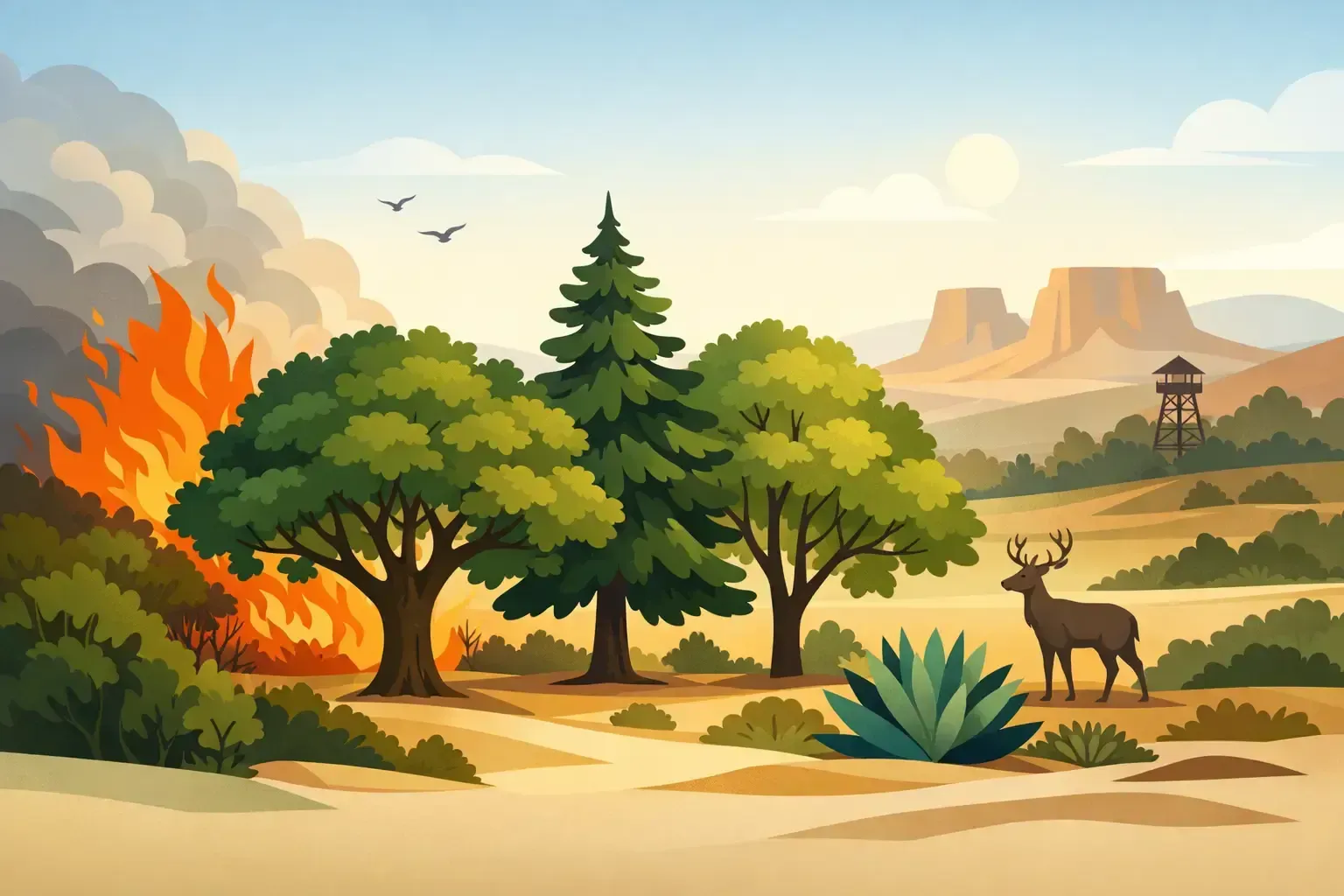
Savanna wildfire with trees, deer, and smoky hills under a bright sky
August 24, 2026
A beautiful shade tree should not become a fuse leading to your home. For Central Texas property owners, choosing the best trees for wildfire resistance mean...
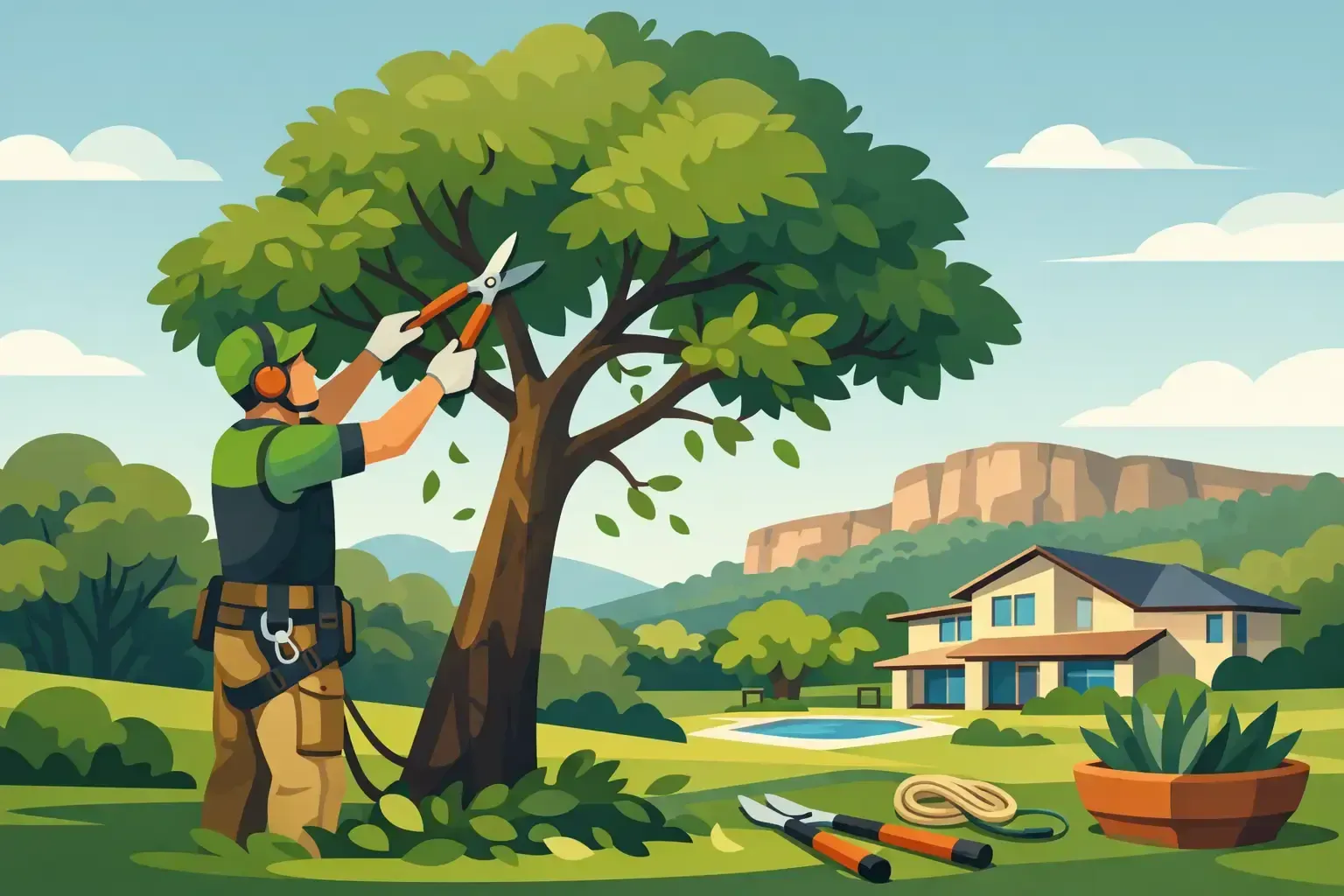
Worker pruning a tree in a sunny yard beside a house, with tools on the grass.
August 22, 2026
A mature live oak shading a Bee Cave driveway can look indestructible right up until a heavy limb hangs over the roof, a cedar elm starts crowding the servic...
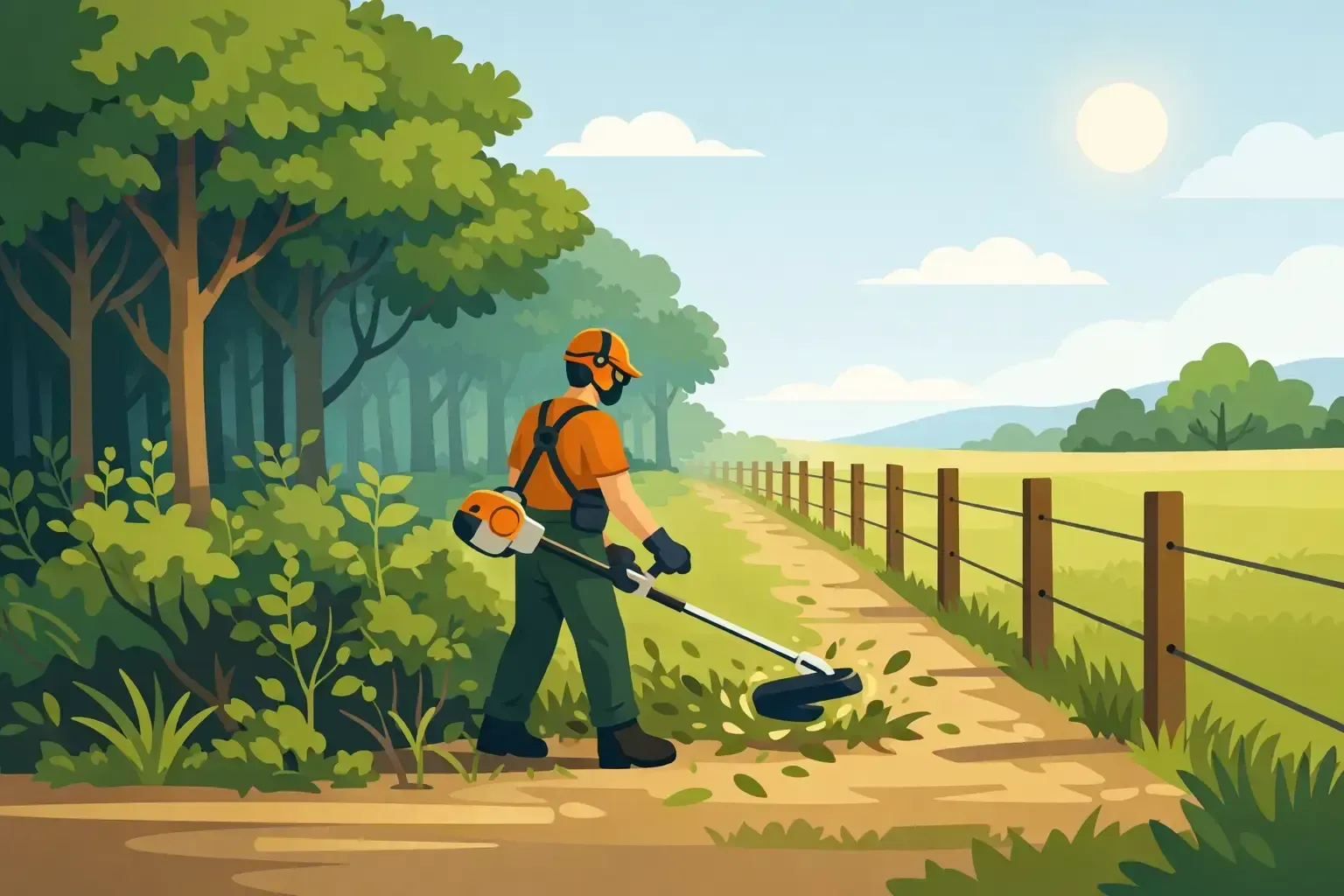
Person using a string trimmer beside a fenced field on a sunny day
August 20, 2026
A fence line can disappear fast in Central Texas. One wet spring, a few missed mowing cycles, and suddenly cedar, huisache, vines, fallen limbs, and thorny b...
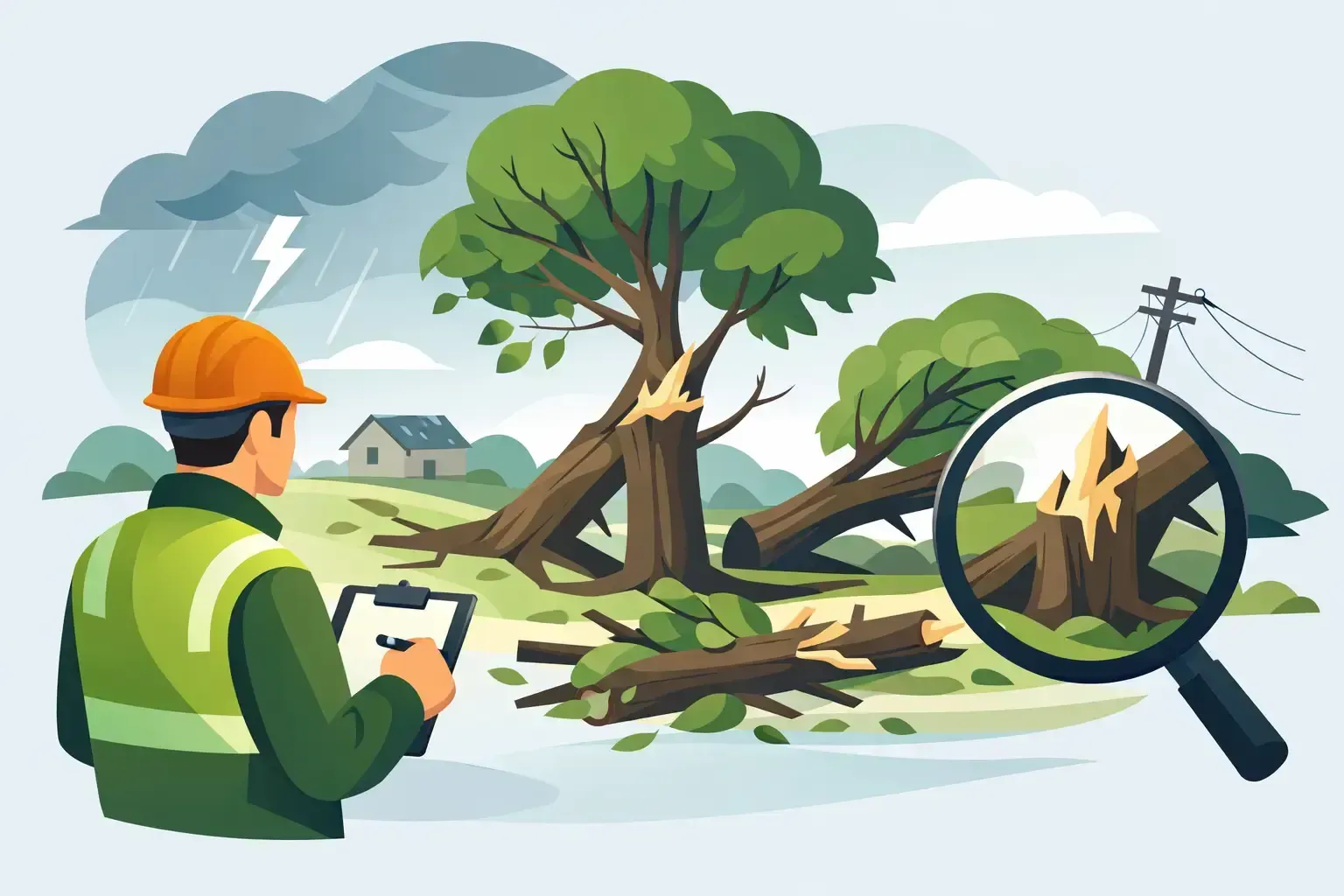
Worker inspecting storm-damaged tree with fallen branches and a magnifying glass in a windy yard
August 18, 2026
A hard Central Texas storm can turn a healthy-looking canopy into a real property hazard in a single night. This guide to storm damaged tree assessment helps...
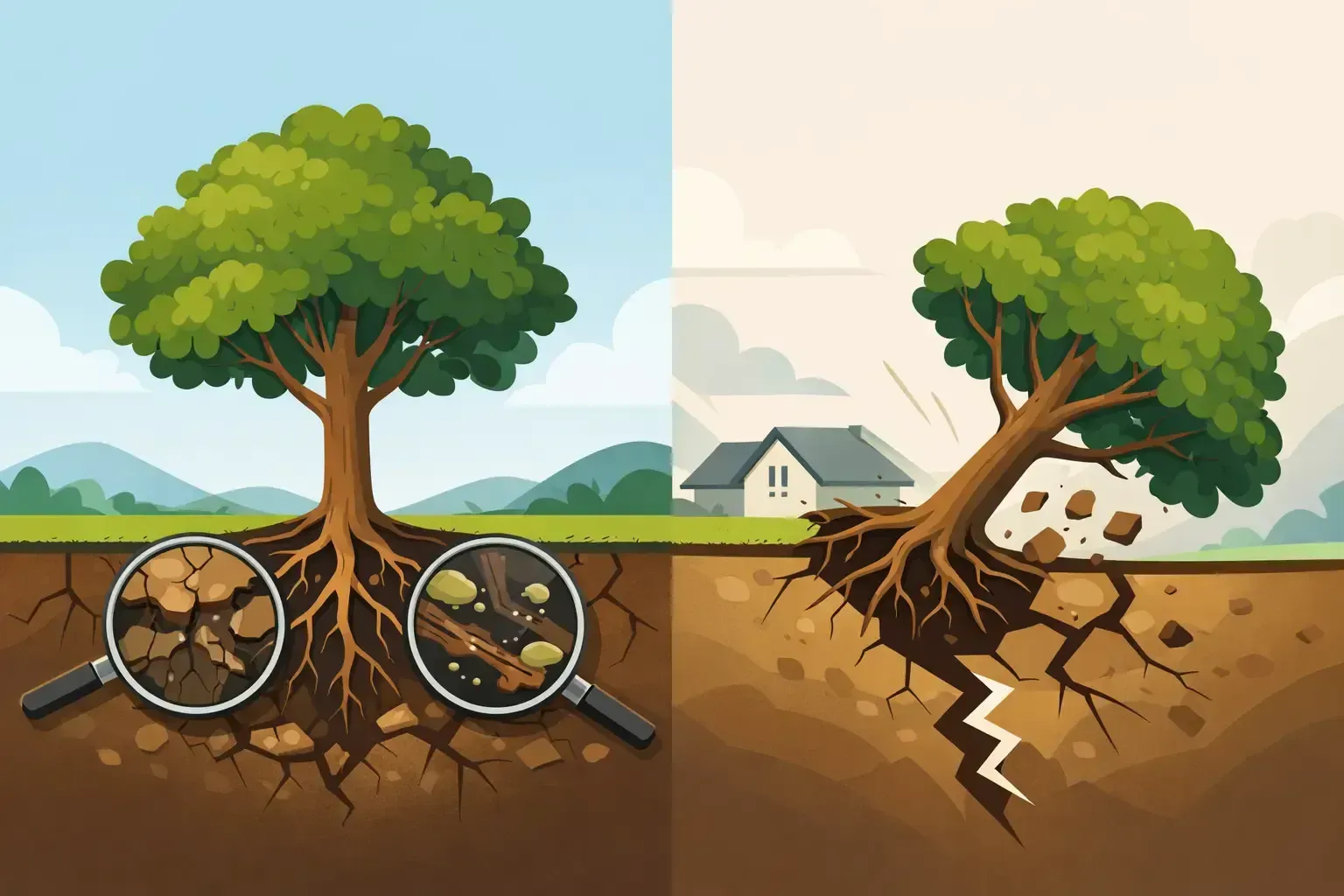
Healthy and damaged trees showing root health and drought soil cracking on a farm landscape
August 16, 2026
A live oak can look perfectly fine above ground while its support system is under serious stress below it. That is what makes root problems so frustrating fo...

Split view of deforestation and healthy green pasture with cows under a bright sky
August 14, 2026
A cedar-choked pasture can make a property feel smaller every year. Water disappears into dense juniper cover, native grasses lose sunlight, fence lines vani...
Farmer in field watching a blue tractor spray crops, with cows, barn, hills, and smoke in the background
September 1, 2026
A ranch can look green and still be headed in the wrong direction. Dense brush can hide stressed oaks, crowd out usable pasture, choke access roads, and crea...
Wildfire burning in a forest with firefighters, helicopter, and smoke over a split rural landscape
August 30, 2026
A hot, windy afternoon can turn a forgotten brush pile, a crowded cedar stand, or low limbs near a structure into more than a property-maintenance issue. Tex...
Environmental inspection scene with drone, tree, magnifying glass, recycle bin, and hard hat in a city park
August 28, 2026
A shaded entry drive can become a liability fast when a heavy limb hangs over customer parking, a dead cedar leans toward a fence, or brush builds up around ...
Wildfire response with firefighters, water tanker, helicopter, and smoke near homes in a rural neighborhood
August 26, 2026
A Central Texas wildfire mitigation guide has to start with a hard truth: a beautiful Hill Country property can carry fire faster than most owners expect. Ce...
Savanna wildfire with trees, deer, and smoky hills under a bright sky
August 24, 2026
A beautiful shade tree should not become a fuse leading to your home. For Central Texas property owners, choosing the best trees for wildfire resistance mean...
Worker pruning a tree in a sunny yard beside a house, with tools on the grass.
August 22, 2026
A mature live oak shading a Bee Cave driveway can look indestructible right up until a heavy limb hangs over the roof, a cedar elm starts crowding the servic...