
Arborist vs Tree Cutter: What's the Difference?

June 8, 2026

A lot of expensive tree problems start with one bad assumption: if someone owns a chainsaw, they must know trees. That is exactly where the arborist vs tree cutter question matters.

For a homeowner or landowner, the difference is not just job titles. It affects safety, long-term tree health, wildfire exposure, cleanup quality, and whether the work actually improves your property or leaves you with a bigger mess a year from now. If you care about curb appeal, storm readiness, and getting the job done right the first time, this distinction is worth understanding.

Arborist vs Tree Cutter: The Real Difference

At the simplest level, a tree cutter focuses on cutting. An arborist focuses on trees as living systems.

That sounds obvious, but it changes everything. A tree cutter may be able to remove a limb or take down a tree. An arborist is trained to evaluate structure, species, health, decay, risk, growth patterns, and how one cut affects the rest of the tree over time. They are not just asking, Can this be cut? They are asking, Should it be cut, how much should be removed, what is the safest method, and what happens next?

A good tree cutter might handle straightforward work just fine. If a small dead tree is sitting far from structures, utilities, fences, and valuable landscape features, basic removal may not require a highly technical diagnosis. But many jobs in Central Texas are not that simple. Mature oaks, storm-damaged canopies, dense cedar, drought stress, and wildfire risk create conditions where skill and judgment matter a lot.

That is why credentials matter. An ISA-certified arborist has formal training and is held to professional standards. That does not magically make every arborist perfect, and it does not mean every non-certified worker is reckless. But certification is a strong signal that you are hiring someone who understands tree biology, risk assessment, pruning standards, and proper care.

What an Arborist Actually Does

An arborist is not there just to cut less. Sometimes an arborist recommends significant reduction, structural pruning, full removal, or large-scale thinning. The difference is that those decisions are made with a plan.

If a live oak has heavy end weight over a roof, an arborist looks at branch attachment, canopy balance, wound response, and the tree's ability to handle pruning. If several junipers are packed too tightly on a rural property, an arborist may recommend selective clearing and spacing that lowers wildfire fuel while preserving privacy and land value. If a tree looks "mostly fine" but keeps dropping limbs, an arborist knows how to spot signs of internal decay, root stress, or poor previous pruning.

This broader view matters because tree work is rarely isolated. One removal changes wind exposure. One aggressive trim can trigger stress. One ignored dead limb can become a liability in the next storm. Arboriculture is about managing the whole picture, not just the immediate cut.

Where a Tree Cutter Fits

To be fair, not every project needs advanced arboricultural planning. There are situations where a tree cutter may be a reasonable option.

If you have a simple cleanup task, a downed tree already on the ground, or obvious brush that needs to be cleared in an open area, a basic cutting crew may be enough. The key phrase is may be enough. You still want proper insurance, safe work practices, clear communication, and a crew that leaves the property cleaner than they found it.

The problem is that many companies present themselves as full-service tree experts when they are really offering chainsaw labor. That gap between marketing and actual expertise is where property owners get burned. A tree can look neat on day one and be structurally compromised by month six. The invoice may be cheap, but the correction later is not.

Arborist vs Tree Cutter for Pruning

Pruning is where the difference becomes obvious fast.

To an untrained eye, pruning can look simple. Remove the low branches, thin the canopy, shape it up, move on. In reality, bad pruning is one of the fastest ways to damage a healthy tree. Over-pruning can stress the tree, increase sunscald, encourage weak regrowth, and create long-term structural issues. Poor cut placement can leave wounds that do not close well. Random thinning can make a tree look airy while actually making it less stable.

An arborist prunes with a purpose. That purpose may be clearance, structure, health, weight reduction, view improvement, or hazard mitigation. The cuts are selected, not guessed. The result should look natural, balanced, and sustainable for the species.

That matters on residential properties where shade, appearance, and property value all count. It matters even more on ranchland or larger tracts where the wrong approach can affect tree longevity, sight lines, access, and fire behavior.

Removals Are Not Just About Getting It Down

People often assume removals are equal across companies. If the tree is gone, the job was done. Not exactly.

A professional removal starts before the first cut. The crew should be evaluating drop zones, structures, fencing, utilities, access routes, nearby trees, ground conditions, and cleanup logistics. They should also be honest about whether the tree really needs to come out.

That last point matters. A tree cutter makes money by cutting. A good arborist earns trust by making the right call, even if that means a tree can be retained with pruning, support, monitoring, or soil and root-zone care. Sometimes removal is absolutely the right answer. Dead trees, severe structural defects, major storm damage, and high-risk placement can make the choice clear. But when it is borderline, you want judgment, not just horsepower.

The Central Texas Factor: Wildfire, Drought, and Storms

In this region, tree work is not only about looks. It is also about resilience.

Between drought cycles, sudden storms, cedar buildup, and wildfire risk, your trees and brush can become a real safety issue. That is another reason the arborist vs tree cutter conversation matters here more than it might in some other areas.

A tree cutter may remove visible brush or take down problem trees. An arborist with wildfire risk training looks at ladder fuels, spacing, deadwood accumulation, defensible space, species behavior, and how vegetation management affects the whole property. That approach can improve access, reduce fire intensity near structures, and make your land more usable without clear-cutting it into a moonscape.

It is the difference between hacking away at symptoms and managing risk with intention.

How to Tell Who You're Really Hiring

Most property owners are not looking for textbook definitions. They just want to know if the crew showing up is the real deal.

Start with how they talk about the work. If the conversation is all speed and price, with no questions about tree condition, objectives, safety concerns, or long-term results, that is a clue. If they recommend major cutting without explaining why, that is another one. If every tree problem somehow has the same answer, be careful.

By contrast, a professional arborist tends to ask better questions. What is the goal? Safety, aesthetics, clearance, tree health, wildfire reduction, storm prep, or all of the above? What species is involved? What changed recently? How close are structures or targets? Is this a one-time need or part of ongoing property maintenance?

You should also look for certification, insurance, and a clear scope of work. Not vague promises. Real specifics. What will be pruned, removed, hauled, chipped, stacked, or left onsite? Will the canopy be reduced or just raised? Will the crew protect nearby landscape and surfaces? Precision starts with communication.

Which One Should You Hire?

It depends on the stakes.

If the job is basic, isolated, and low-risk, a tree cutter may be sufficient. But if the tree is valuable, near a home, visibly stressed, storm-damaged, overgrown, or part of a larger land management issue, an arborist is usually the better investment.

That is especially true if you are trying to preserve mature trees, improve appearance without overdoing it, reduce wildfire risk, or avoid repeating the same problem every year. The cheapest crew can become the most expensive choice if the work creates hazards, weak regrowth, ugly structure, or preventable damage.

For many property owners, this is really about peace of mind. You are not hiring someone just to make wood hit the ground. You are hiring someone to protect what is on that property and improve it in a way you can see and trust.

At Dynamo Dusty's Tree Service, that is how we look at the job - not as random cutting, but as disciplined tree care and land management with clear communication from start to finish.

When the work is done right, your property feels safer, cleaner, stronger, and better prepared for whatever Texas throws at it next. That is the standard worth hiring for.

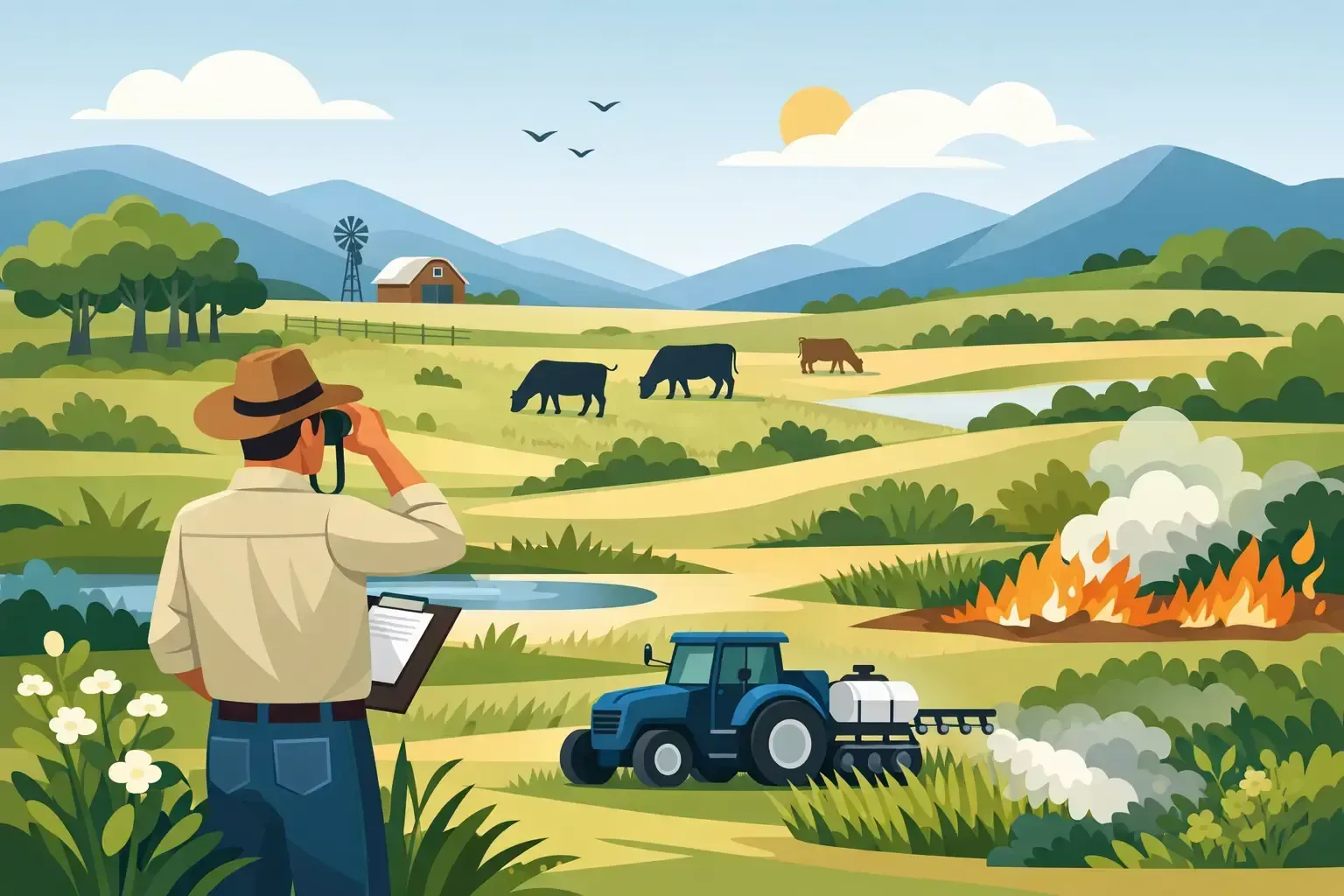
Farmer in field watching a blue tractor spray crops, with cows, barn, hills, and smoke in the background
September 1, 2026
A ranch can look green and still be headed in the wrong direction. Dense brush can hide stressed oaks, crowd out usable pasture, choke access roads, and crea...
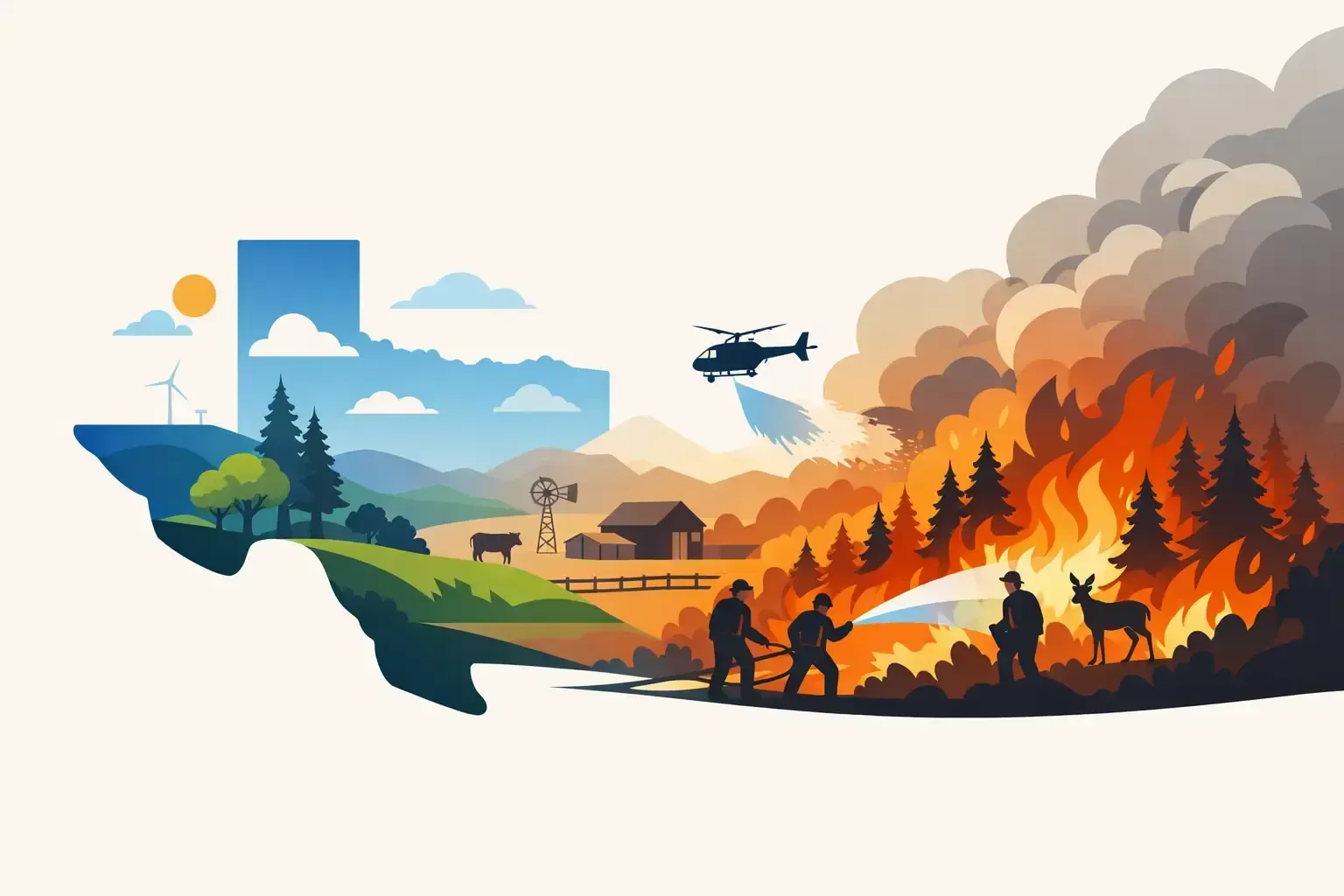
Wildfire burning in a forest with firefighters, helicopter, and smoke over a split rural landscape
August 30, 2026
A hot, windy afternoon can turn a forgotten brush pile, a crowded cedar stand, or low limbs near a structure into more than a property-maintenance issue. Tex...
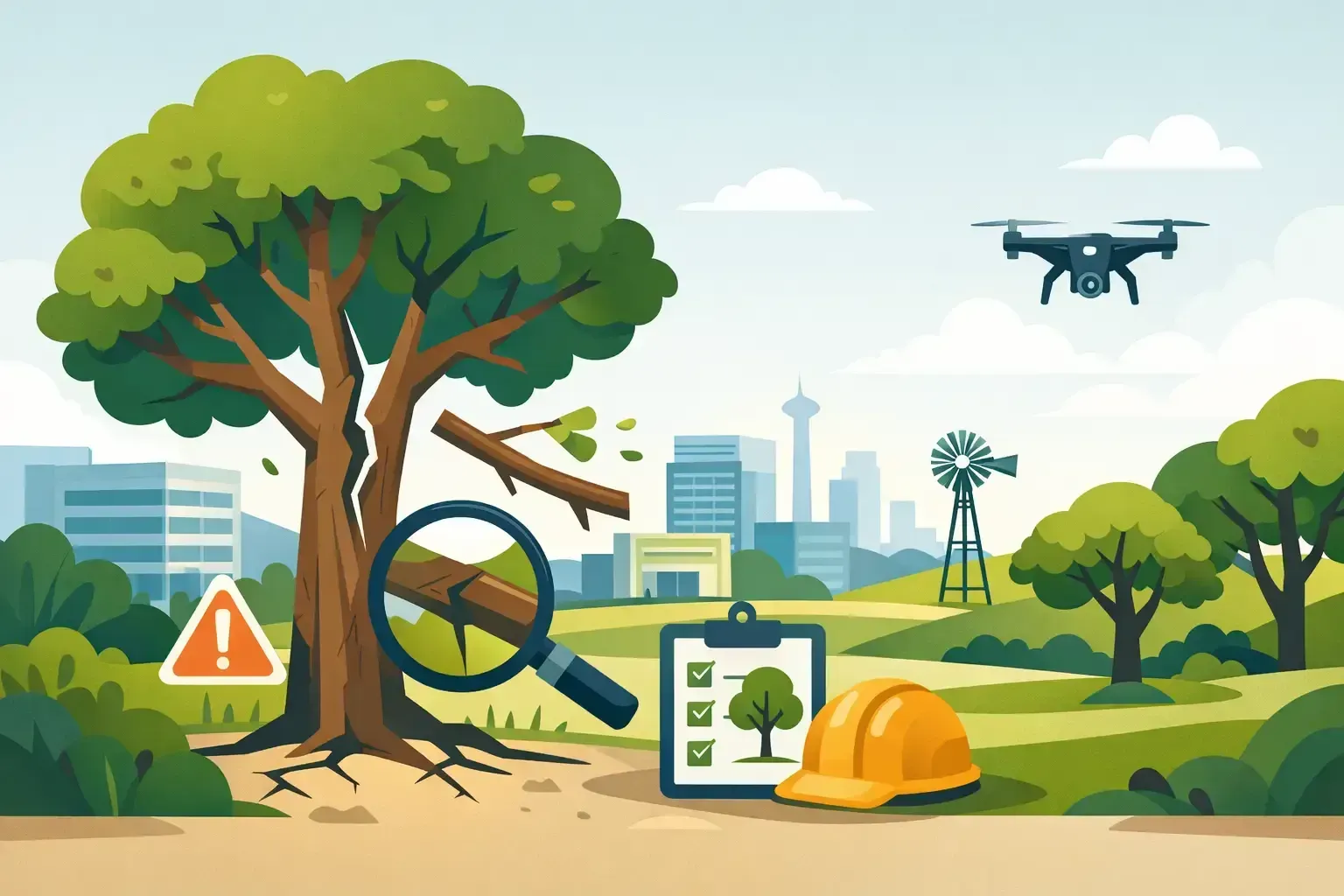
Environmental inspection scene with drone, tree, magnifying glass, recycle bin, and hard hat in a city park
August 28, 2026
A shaded entry drive can become a liability fast when a heavy limb hangs over customer parking, a dead cedar leans toward a fence, or brush builds up around ...
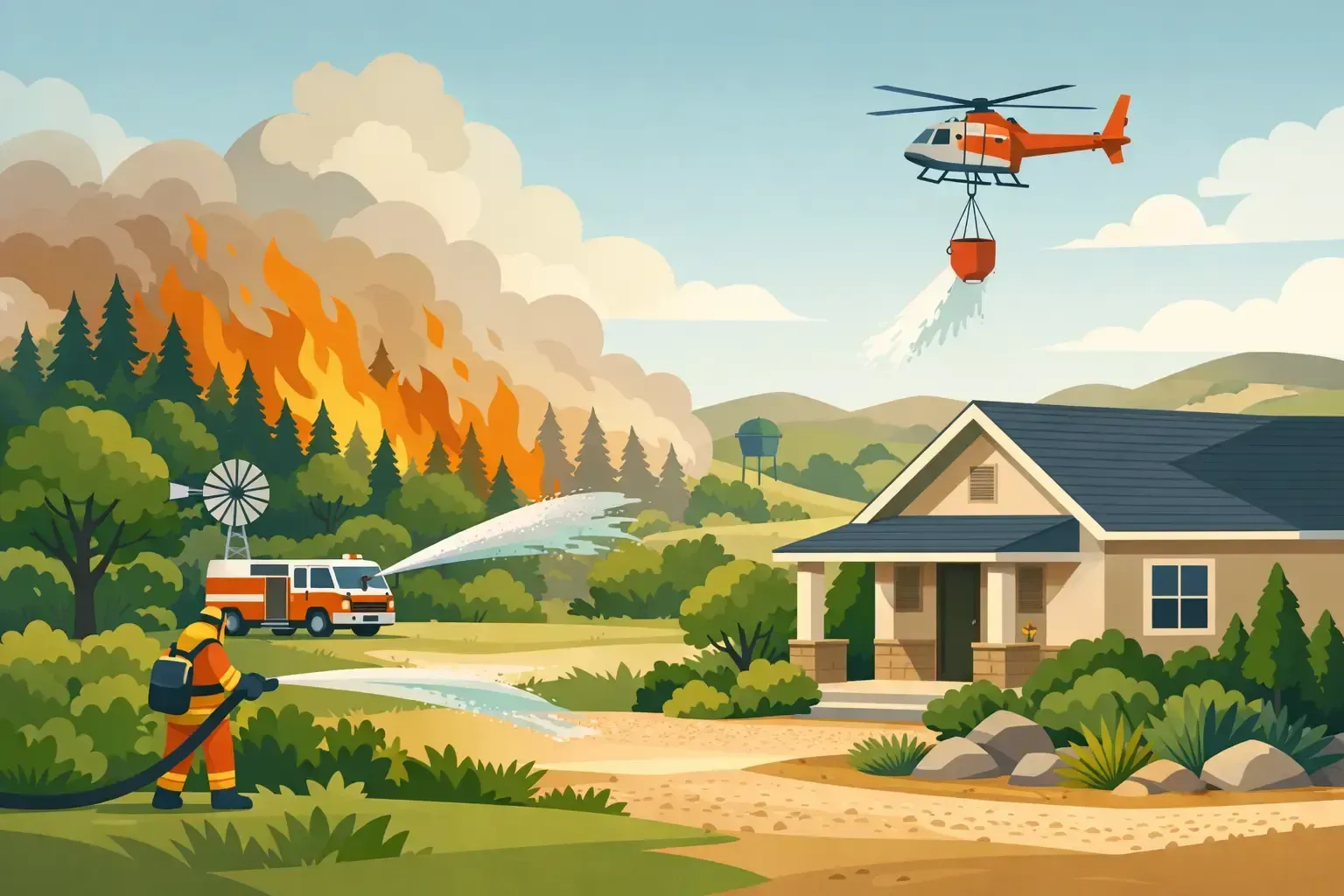
Wildfire response with firefighters, water tanker, helicopter, and smoke near homes in a rural neighborhood
August 26, 2026
A Central Texas wildfire mitigation guide has to start with a hard truth: a beautiful Hill Country property can carry fire faster than most owners expect. Ce...
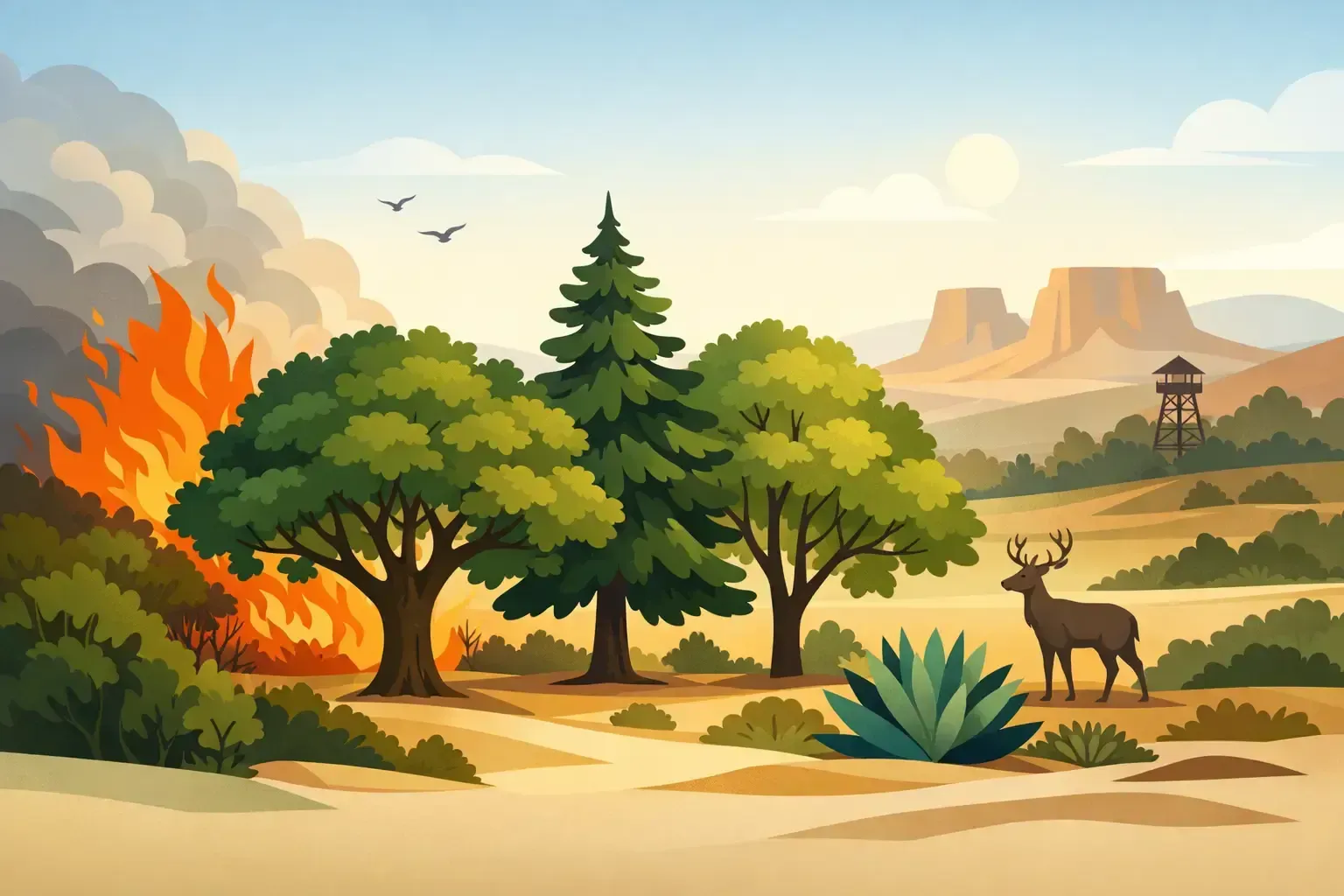
Savanna wildfire with trees, deer, and smoky hills under a bright sky
August 24, 2026
A beautiful shade tree should not become a fuse leading to your home. For Central Texas property owners, choosing the best trees for wildfire resistance mean...
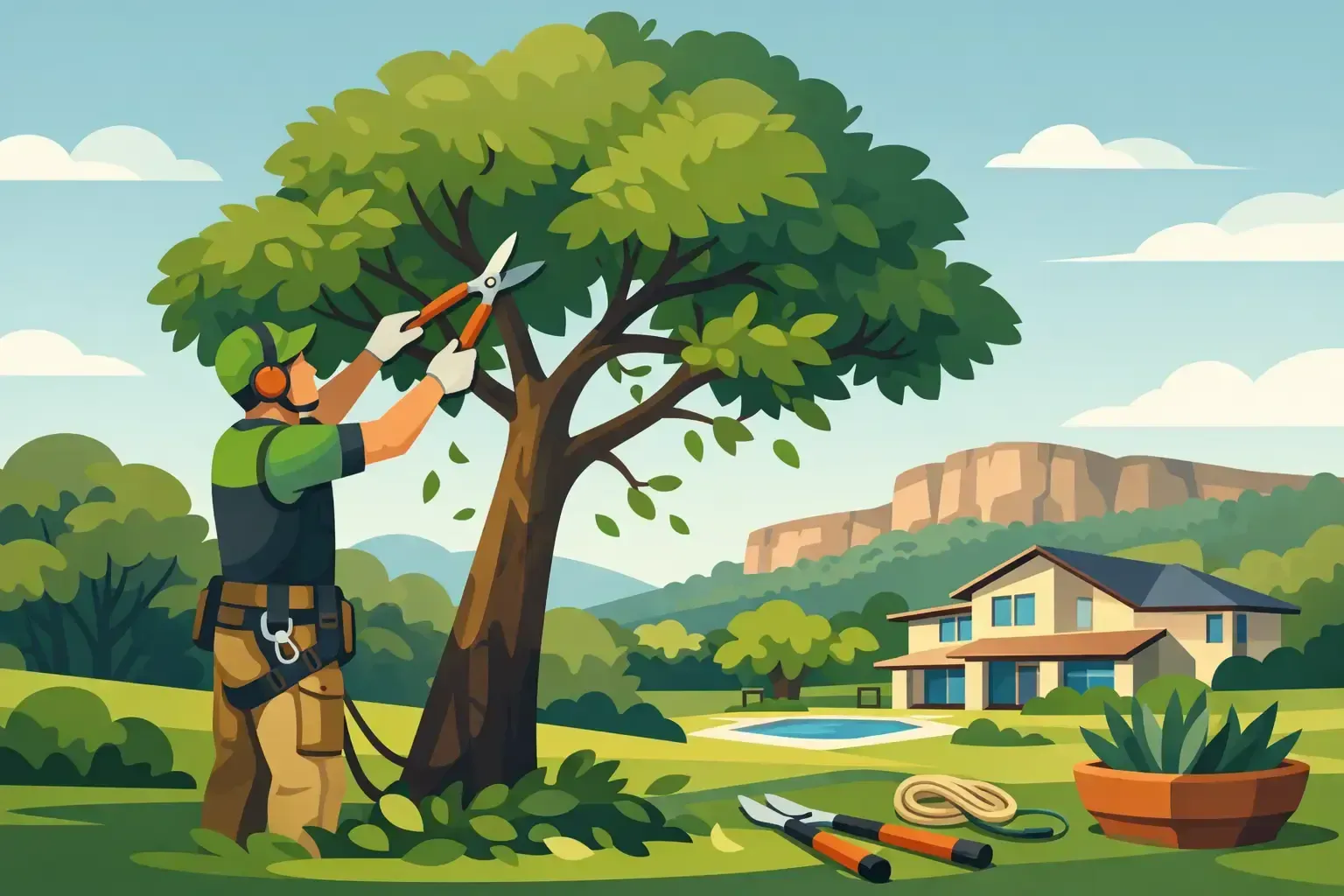
Worker pruning a tree in a sunny yard beside a house, with tools on the grass.
August 22, 2026
A mature live oak shading a Bee Cave driveway can look indestructible right up until a heavy limb hangs over the roof, a cedar elm starts crowding the servic...
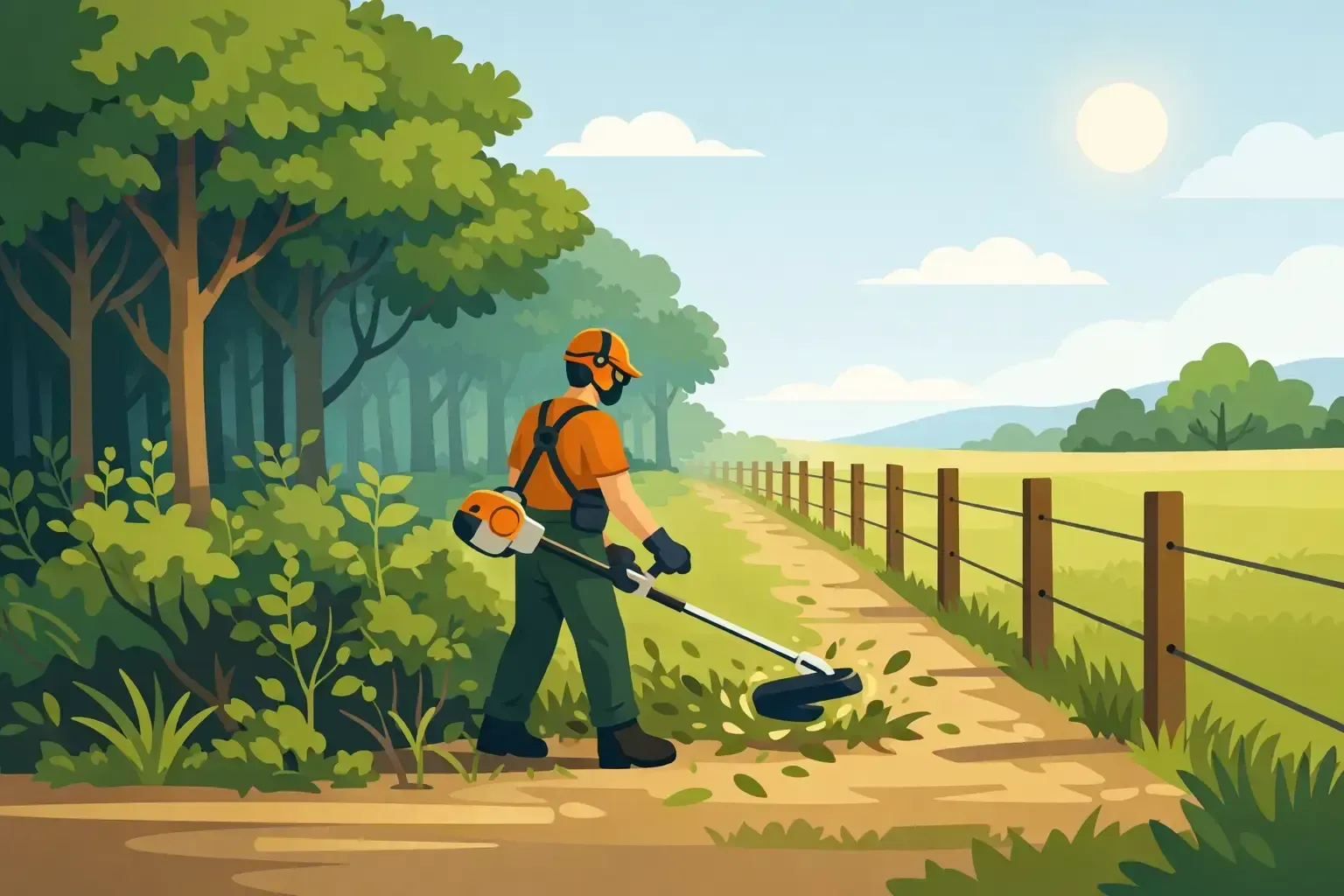
Person using a string trimmer beside a fenced field on a sunny day
August 20, 2026
A fence line can disappear fast in Central Texas. One wet spring, a few missed mowing cycles, and suddenly cedar, huisache, vines, fallen limbs, and thorny b...
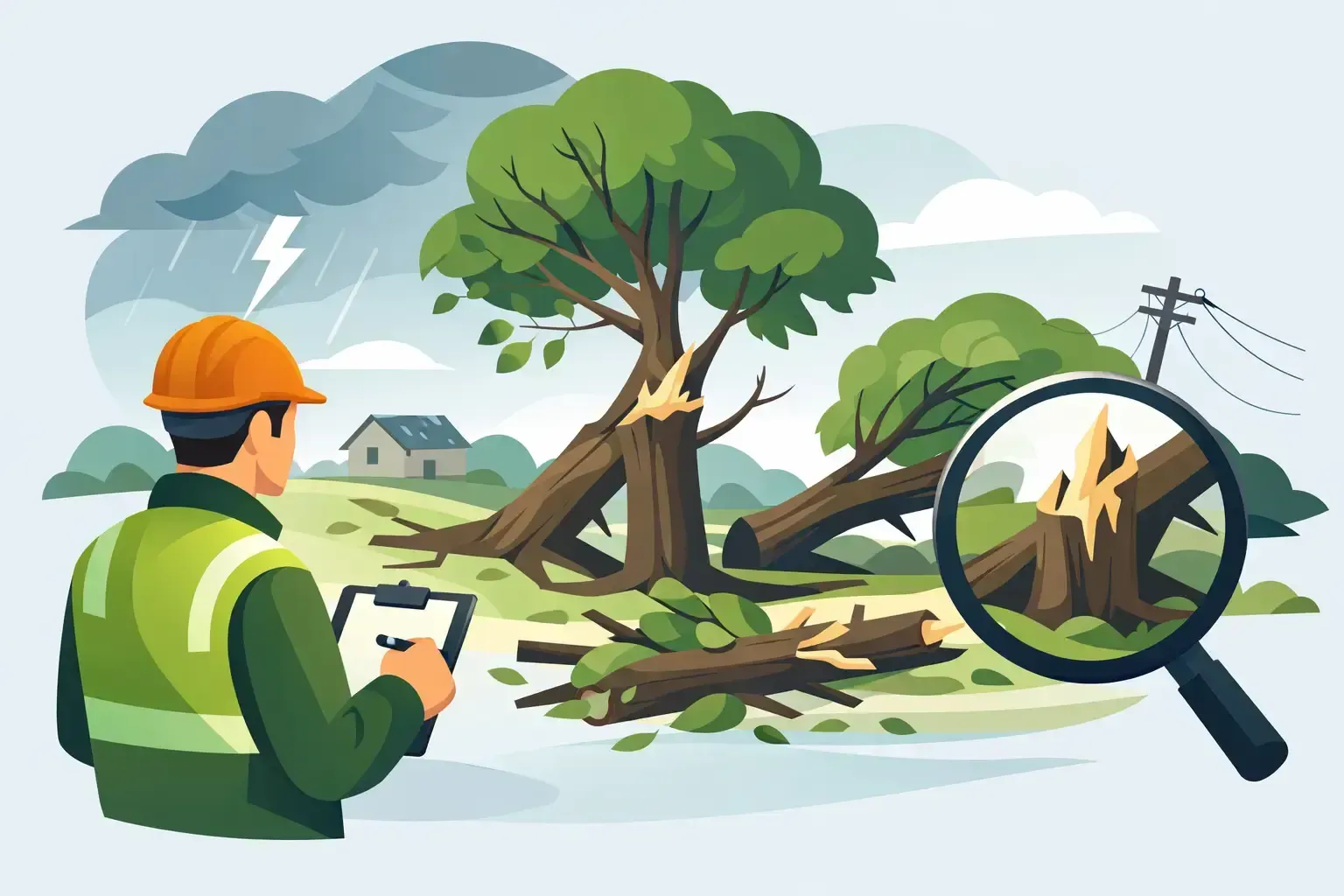
Worker inspecting storm-damaged tree with fallen branches and a magnifying glass in a windy yard
August 18, 2026
A hard Central Texas storm can turn a healthy-looking canopy into a real property hazard in a single night. This guide to storm damaged tree assessment helps...
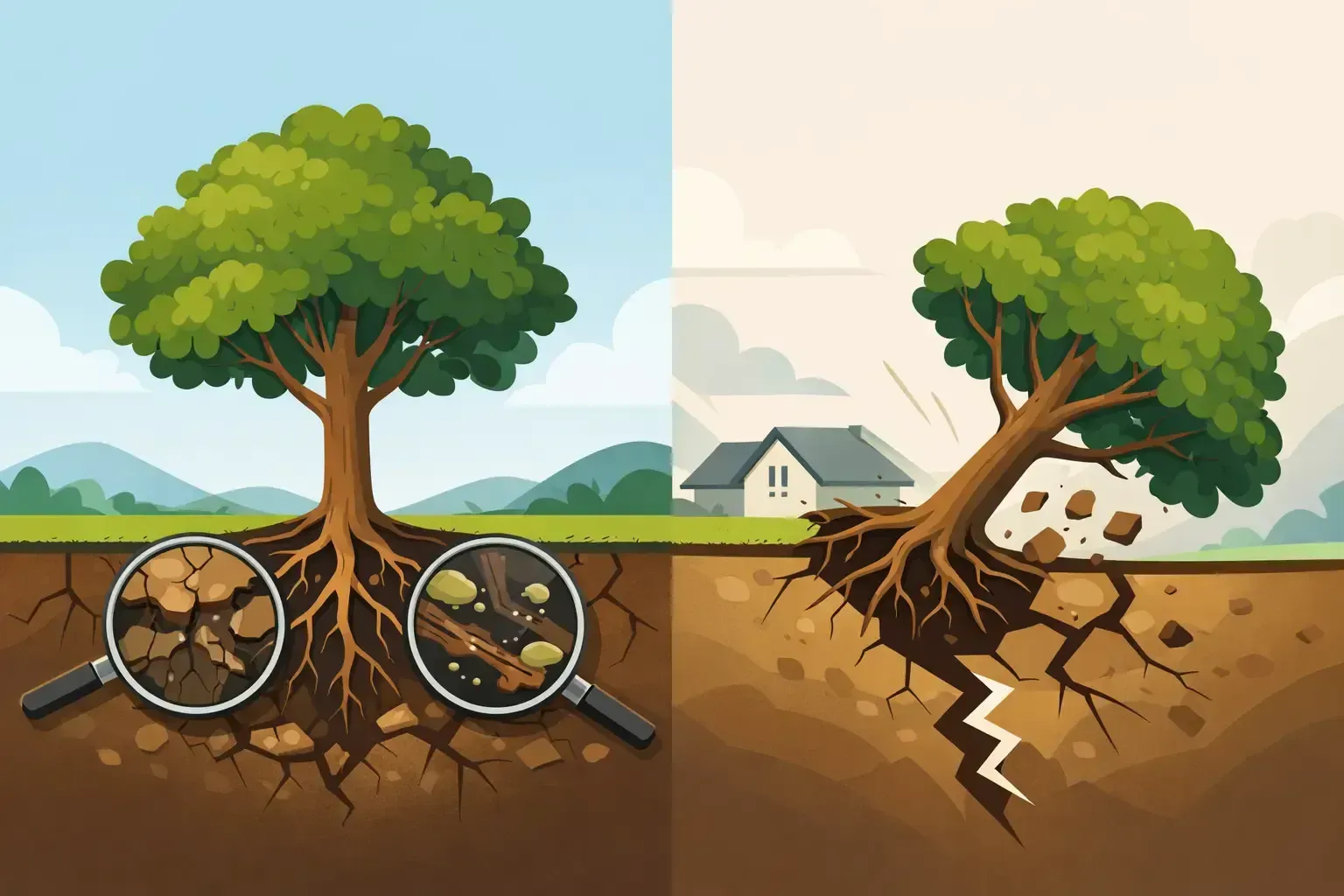
Healthy and damaged trees showing root health and drought soil cracking on a farm landscape
August 16, 2026
A live oak can look perfectly fine above ground while its support system is under serious stress below it. That is what makes root problems so frustrating fo...
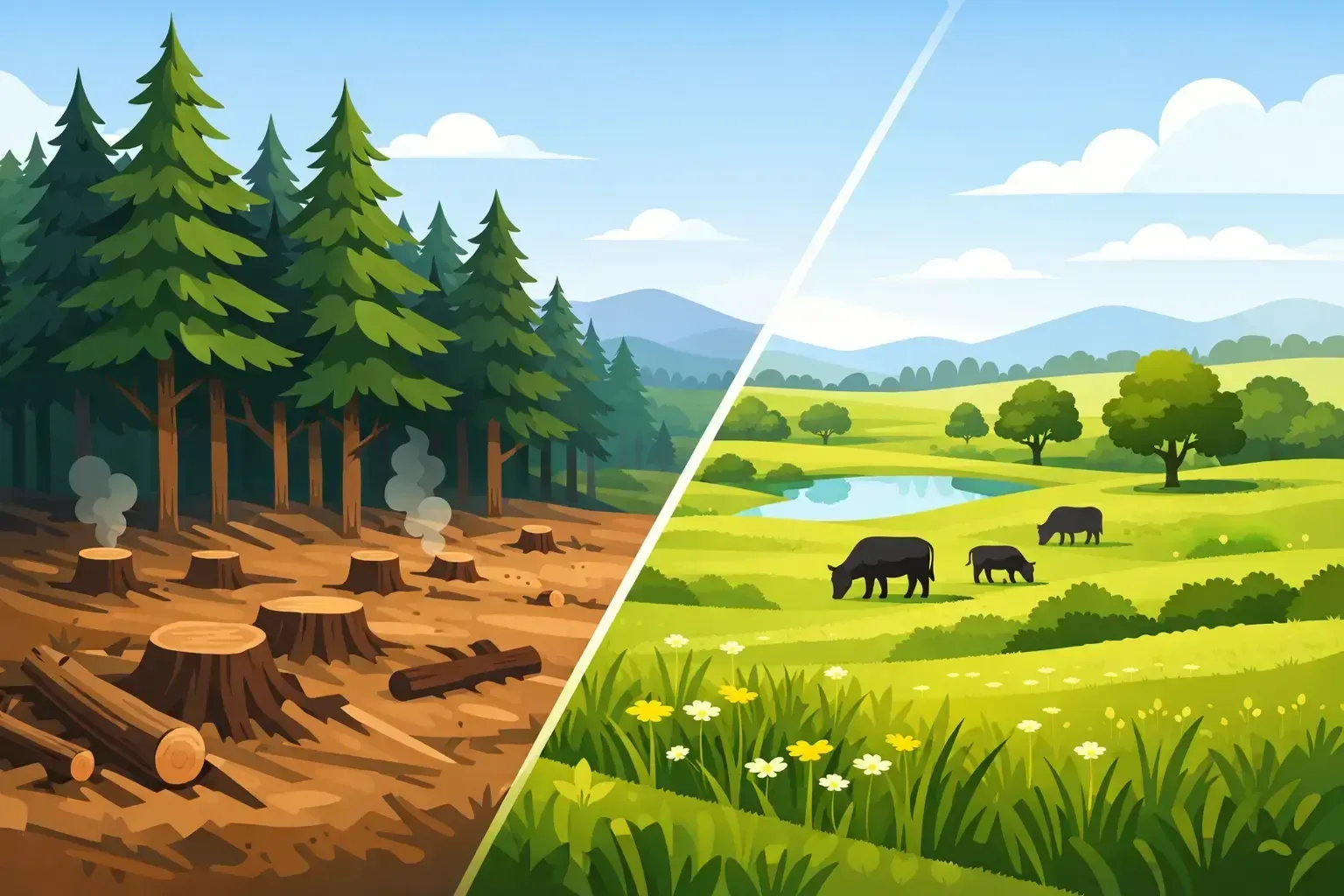
Split view of deforestation and healthy green pasture with cows under a bright sky
August 14, 2026
A cedar-choked pasture can make a property feel smaller every year. Water disappears into dense juniper cover, native grasses lose sunlight, fence lines vani...
Farmer in field watching a blue tractor spray crops, with cows, barn, hills, and smoke in the background
September 1, 2026
A ranch can look green and still be headed in the wrong direction. Dense brush can hide stressed oaks, crowd out usable pasture, choke access roads, and crea...
Wildfire burning in a forest with firefighters, helicopter, and smoke over a split rural landscape
August 30, 2026
A hot, windy afternoon can turn a forgotten brush pile, a crowded cedar stand, or low limbs near a structure into more than a property-maintenance issue. Tex...
Environmental inspection scene with drone, tree, magnifying glass, recycle bin, and hard hat in a city park
August 28, 2026
A shaded entry drive can become a liability fast when a heavy limb hangs over customer parking, a dead cedar leans toward a fence, or brush builds up around ...
Wildfire response with firefighters, water tanker, helicopter, and smoke near homes in a rural neighborhood
August 26, 2026
A Central Texas wildfire mitigation guide has to start with a hard truth: a beautiful Hill Country property can carry fire faster than most owners expect. Ce...
Savanna wildfire with trees, deer, and smoky hills under a bright sky
August 24, 2026
A beautiful shade tree should not become a fuse leading to your home. For Central Texas property owners, choosing the best trees for wildfire resistance mean...
Worker pruning a tree in a sunny yard beside a house, with tools on the grass.
August 22, 2026
A mature live oak shading a Bee Cave driveway can look indestructible right up until a heavy limb hangs over the roof, a cedar elm starts crowding the servic...