


A Property Maintenance Plan for Mature Trees

July 13, 2026

A mature live oak shading the driveway or a pecan anchoring the backyard can add more value to a property than most owners realize. It can also become a serious liability when neglected. A property maintenance plan for mature trees gives those high-value assets the deliberate attention they need - before a heavy limb fails, drought stress takes hold, or thick brush turns a beautiful grove into a wildfire concern.

For Central Texas homeowners, ranch owners, HOAs, and commercial property managers, mature-tree care is not a once-every-few-years trimming job. It is a disciplined cycle of inspection, selective pruning, soil care, risk management, and follow-through. The goal is simple: preserve the trees worth keeping, reduce hazards, and keep the property looking sharp and working hard.

Why Mature Trees Need a Different Standard of Care

Young trees are mostly about establishment. Mature trees are about preservation. They have larger canopies, heavier limbs, older wounds, and more complex root systems. A cut that might be minor on a young tree can create a long-term issue on an established oak. Likewise, a hidden defect in a major limb can carry real consequences when it hangs over a roof, gate, road, play area, or outdoor gathering space.

Central Texas adds pressure. Extended heat, compacted soil, construction activity, sudden downpours, high winds, oak wilt concerns, and drought cycles can all expose weaknesses in a mature tree. Some problems appear obvious, such as a cracked limb or dead top. Others show up quietly through thinning foliage, early leaf drop, fungal growth near the base, or soil that has been packed hard around the root zone.

Good maintenance does not mean cutting every tree into a tidy shape. Over-pruning can reduce stored energy, expose limbs to sun damage, and prompt weak, fast-growing shoots. The better approach is measured and specific: remove hazards, improve structure where possible, protect roots, and respect what the tree can realistically recover from.

Start Your Property Maintenance Plan for Mature Trees With an Inventory

A useful plan starts by identifying what is actually on the property. This is especially important on acreage, common areas, commercial sites, and older neighborhoods where trees have grown without a clear strategy.

Create a working inventory of the mature trees that affect safety, access, building clearance, shade, and fire behavior. For each priority tree, document its species, approximate size, location, visible condition, and what it could strike if a limb or the full tree failed. A mature oak away from people and structures may need routine observation. The same oak over a driveway, pool deck, or utility line deserves a closer inspection and a more frequent schedule.

This is also the time to identify trees with special value. That may include a legacy oak near a home, a pecan that shades livestock, trees defining an entrance, or a grove that provides meaningful curb appeal. Not every mature tree can or should be saved, but the plan should make those decisions intentional instead of reactive.

An ISA Certified Arborist can help separate cosmetic concerns from legitimate structural or health issues. That distinction protects both your budget and your trees. A tree that simply looks uneven may be perfectly stable. A full-looking canopy, on the other hand, may hide included bark, decay, or excessive end weight in a major limb.

Build a Seasonal Inspection Schedule

Mature trees should be inspected at least annually, with additional checks after major weather events. Properties with dense canopy, high public use, wildfire exposure, or known tree-health concerns often benefit from a more frequent schedule.

Late Winter: Plan Structure and Access Work

Late winter is a practical time to review canopy clearance, deadwood, hanging limbs, and access around drives, roofs, fences, and roads. For many species, this is also a smart window for planned pruning. Oak pruning timing requires special care in Central Texas because of oak wilt risk, so work should follow current local guidance and proper wound treatment practices when applicable.

This is the time to plan work before spring growth hides defects. It is also a good opportunity to identify limbs that may interfere with equipment access, emergency routes, or future construction plans.

Spring and Early Summer: Watch Vigor and Soil Conditions

As leaves emerge, mature trees reveal a great deal about their condition. Look for delayed leaf-out, sparse sections of canopy, unusual leaf size, sudden dieback, or one branch system that appears weaker than the rest. These signs do not automatically mean removal is needed, but they deserve professional evaluation.

Pay attention to the ground, too. Excessive foot traffic, parked vehicles, fill dirt, trenching, and repeated equipment movement can compact soil and damage roots. Mature trees often decline years after root disturbance, which is why soil protection belongs in the maintenance plan even when the canopy looks healthy.

Late Summer: Manage Drought Stress and Fire Fuel

Long hot stretches are tough on established trees, particularly those growing near lawns, driveways, compacted soil, or new construction. Deep, occasional watering in the active root zone may be appropriate during prolonged drought, depending on water restrictions, soil type, species, and the tree's condition. Frequent shallow watering usually does less good than people expect.

Late summer is also the moment to address wildfire risk. Low dead limbs, brush, dense understory growth, downed woody debris, and vegetation crowding around structures can allow fire to move more easily through a property. Firewise work is not about stripping a landscape bare. It is about reducing available fuel, creating defensible space, and keeping the healthiest, best-placed trees as part of a safer property.

Fall: Prepare for Storms and Review Priorities

Before storm season ramps up, inspect trees near structures, parking areas, entry roads, and utility corridors. Remove identified deadwood and address defects that have worsened over the year. Review drainage around roots, because standing water and erosion can both affect stability.

Fall is also the right time to look back at what changed. Did a tree lose a major limb? Did new construction alter runoff? Has brush filled in beneath a canopy? A maintenance plan should evolve with the property rather than sit in a folder untouched.

Use Pruning for Safety, Not Just Appearance

The best pruning work has a clear purpose. It may reduce the weight on a long limb, remove dead or damaged branches, provide clearance from a roof, improve visibility at a driveway, or reduce conflict between neighboring limbs. Every cut should support the tree's long-term structure as much as possible.

Be cautious when a crew recommends removing a large percentage of live canopy simply to "thin it out." Excessive thinning can stress mature trees and create more problems than it solves. Topping is another red flag. Cutting back major limbs to stubs leaves large wounds and often leads to weak replacement growth.

Precision matters. Proper pruning considers branch attachment, decay, load distribution, species response, and the tree's overall condition. That engineering-minded approach is what separates professional arboricultural care from a quick chainsaw operation.

Protect the Root Zone Like It Is Part of the Tree

The roots are where many mature-tree problems begin, even though the symptoms show up overhead. Most feeder roots are relatively shallow and extend well beyond the drip line. When soil is compacted, grade is changed, or roots are cut for a trench or driveway, the tree may lose access to water, oxygen, and nutrients.

Keep vehicles, heavy materials, and repeated traffic out of protected root areas whenever possible. If a project must happen near a valuable tree, establish protection boundaries before work begins, not after equipment has already crossed the site.

Mulch can help moderate soil temperature and retain moisture, but it needs to be applied correctly. Spread it in a broad, thin layer and keep it away from the trunk. Mulch piled against the base traps moisture where it does not belong and can invite decay and pests.

For trees showing decline, soil testing and targeted remediation may be more useful than another round of pruning. Healthy soil supports root function. Healthy roots give mature trees a better chance to handle heat, storms, and the normal stresses of age.

Match the Plan to Your Property's Risk Level

A shaded suburban lot, a Hill Country ranch, and a commercial campus do not need identical maintenance schedules. The right plan depends on the tree species, canopy density, public exposure, soil conditions, wildfire risk, and what sits beneath the trees.

For a homeowner, the priority may be protecting a roof, pool, or driveway while preserving shade. For an HOA or MUD, it may be keeping common areas safe, accessible, and attractive without creating surprise expenses. Ranch and acreage owners may need a broader strategy that combines selective thinning, brush management, access improvement, and wildfire mitigation across many acres.

This is where a professional walkthrough earns its keep. A clear scope, ranked priorities, and transparent pricing let property owners handle urgent work now while scheduling lower-priority improvements intelligently. Dynamo Dusty's Tree Service brings ISA Certified Arborist expertise and Wildfire Risk Reduction Qualification to that kind of planning, with recommendations built around the property instead of a one-size-fits-all package.

The strongest maintenance plans protect what took decades to grow while making the property safer to live on, work on, and enjoy. Give your mature trees a regular place on the calendar, and they can keep doing their job with strength, shade, and far fewer surprises.

Farmer in field watching a blue tractor spray crops, with cows, barn, hills, and smoke in the background
September 1, 2026
A ranch can look green and still be headed in the wrong direction. Dense brush can hide stressed oaks, crowd out usable pasture, choke access roads, and crea...

Wildfire burning in a forest with firefighters, helicopter, and smoke over a split rural landscape
August 30, 2026
A hot, windy afternoon can turn a forgotten brush pile, a crowded cedar stand, or low limbs near a structure into more than a property-maintenance issue. Tex...
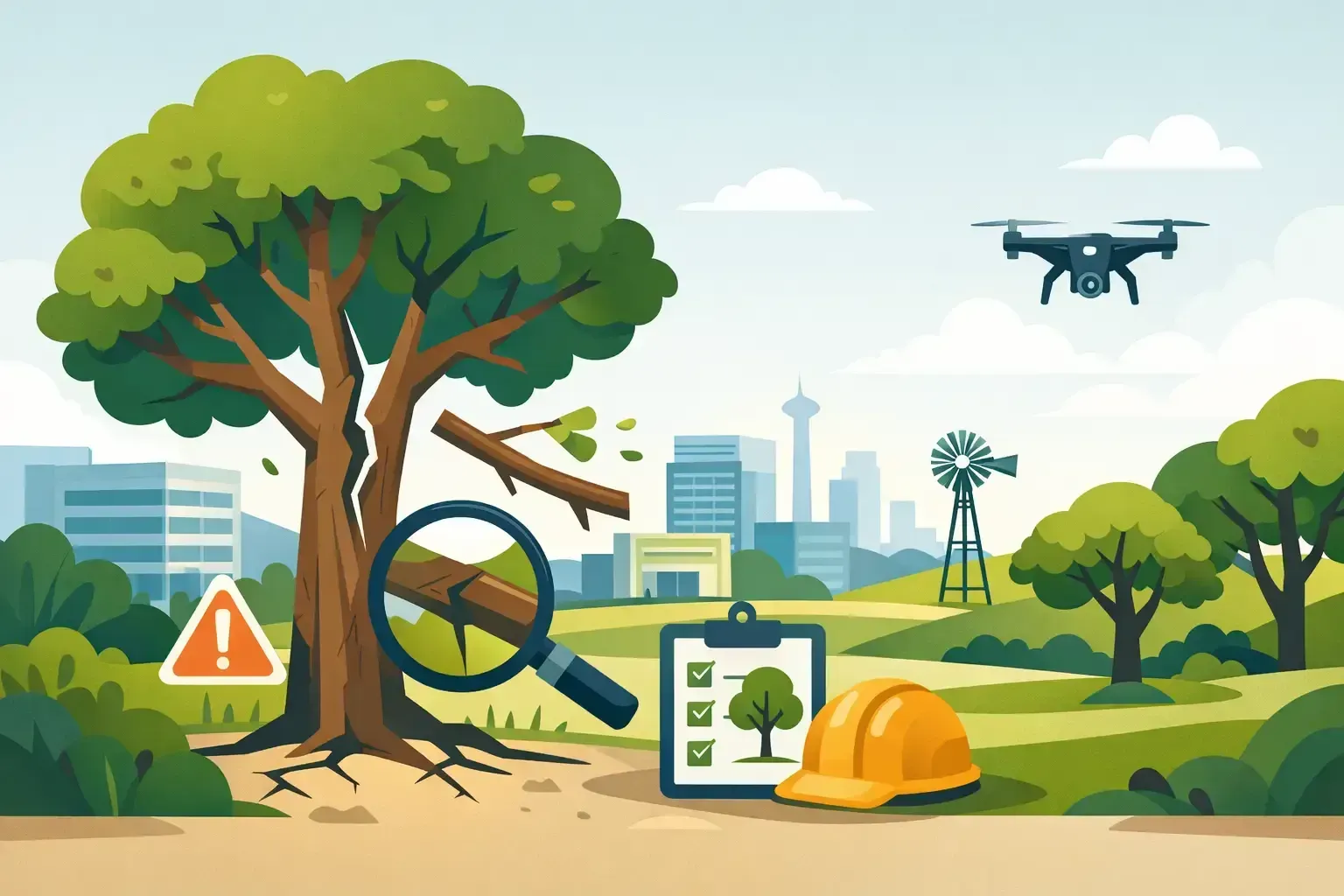
Environmental inspection scene with drone, tree, magnifying glass, recycle bin, and hard hat in a city park
August 28, 2026
A shaded entry drive can become a liability fast when a heavy limb hangs over customer parking, a dead cedar leans toward a fence, or brush builds up around ...

Wildfire response with firefighters, water tanker, helicopter, and smoke near homes in a rural neighborhood
August 26, 2026
A Central Texas wildfire mitigation guide has to start with a hard truth: a beautiful Hill Country property can carry fire faster than most owners expect. Ce...
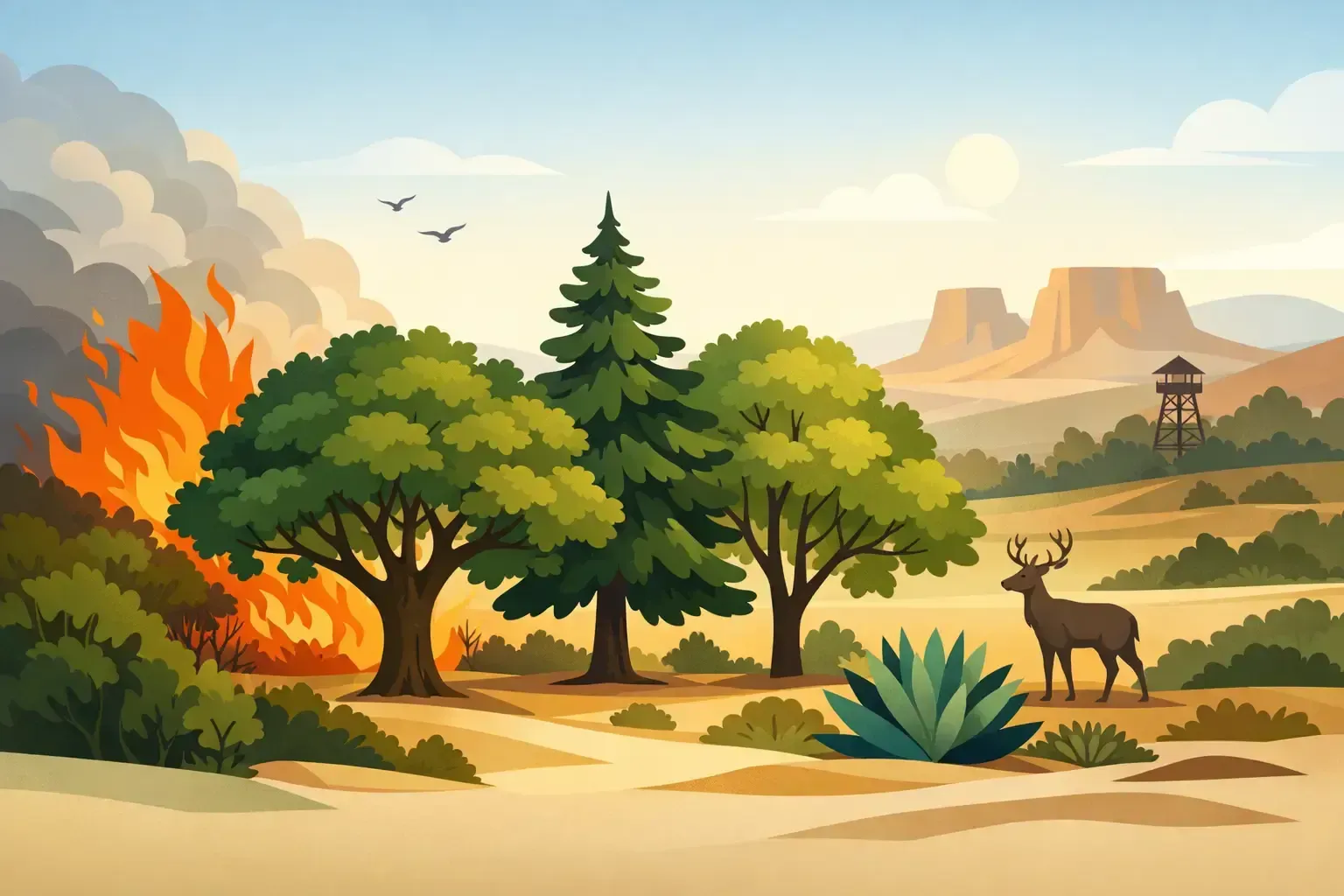
Savanna wildfire with trees, deer, and smoky hills under a bright sky
August 24, 2026
A beautiful shade tree should not become a fuse leading to your home. For Central Texas property owners, choosing the best trees for wildfire resistance mean...
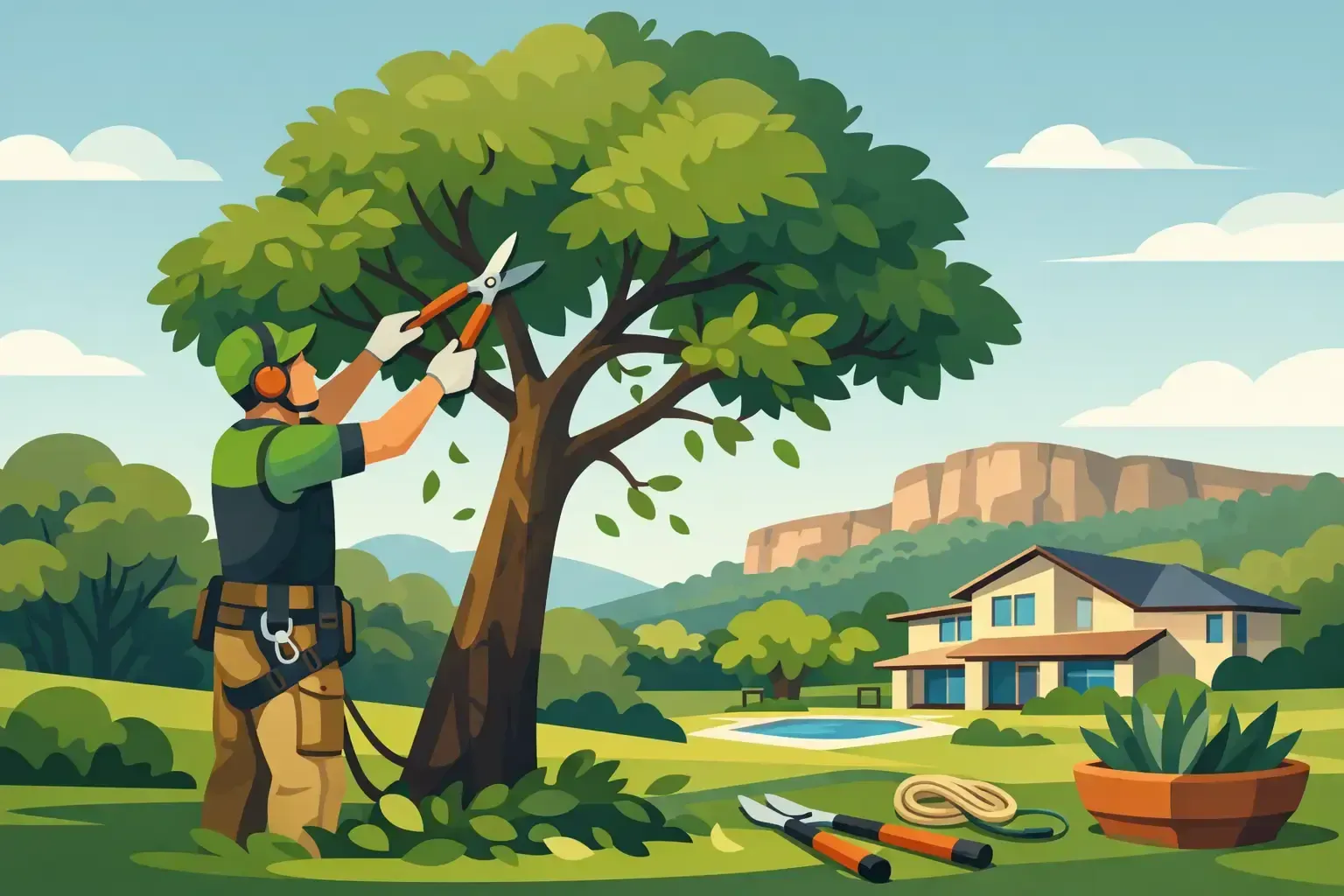
Worker pruning a tree in a sunny yard beside a house, with tools on the grass.
August 22, 2026
A mature live oak shading a Bee Cave driveway can look indestructible right up until a heavy limb hangs over the roof, a cedar elm starts crowding the servic...
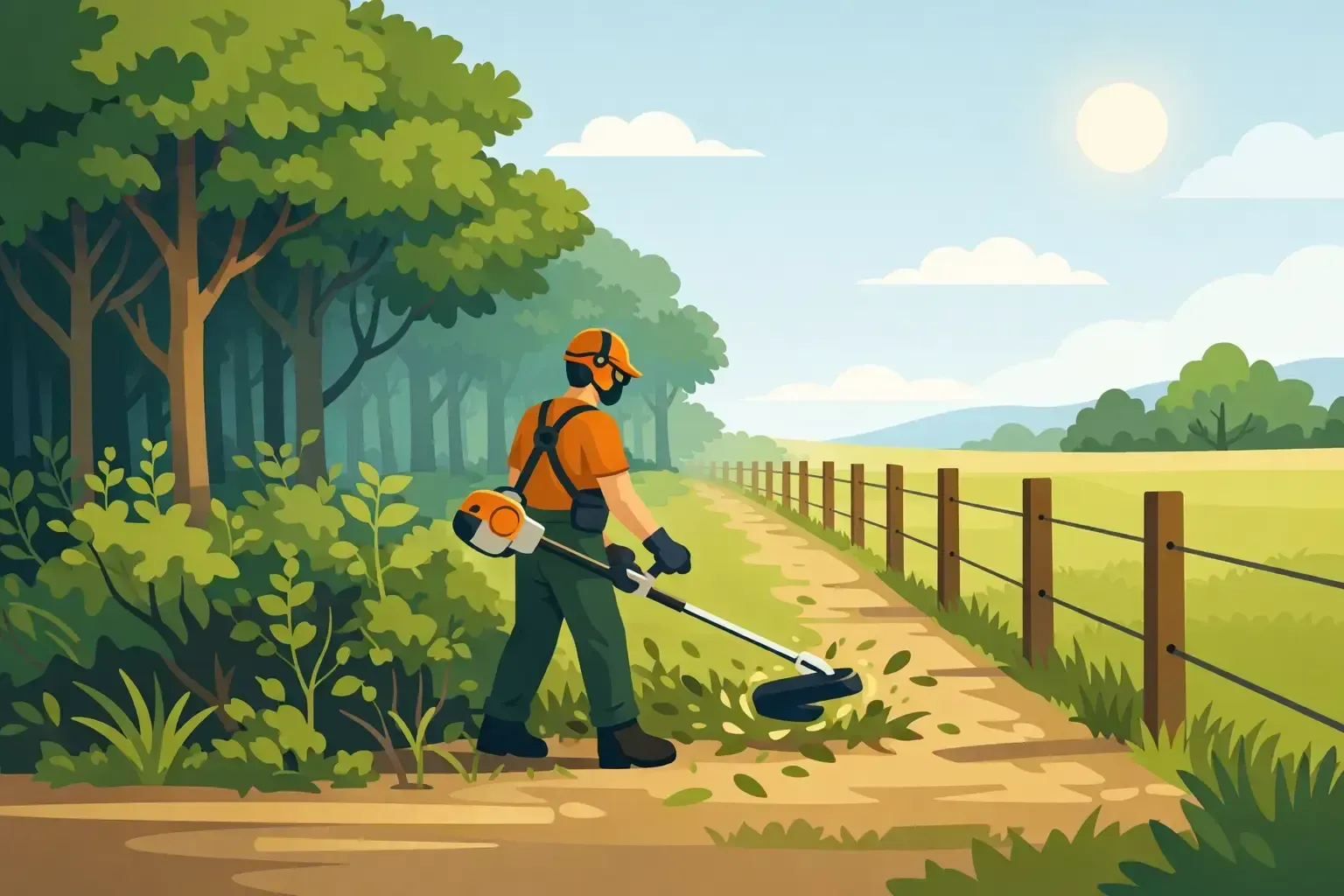
Person using a string trimmer beside a fenced field on a sunny day
August 20, 2026
A fence line can disappear fast in Central Texas. One wet spring, a few missed mowing cycles, and suddenly cedar, huisache, vines, fallen limbs, and thorny b...
Worker inspecting storm-damaged tree with fallen branches and a magnifying glass in a windy yard
August 18, 2026
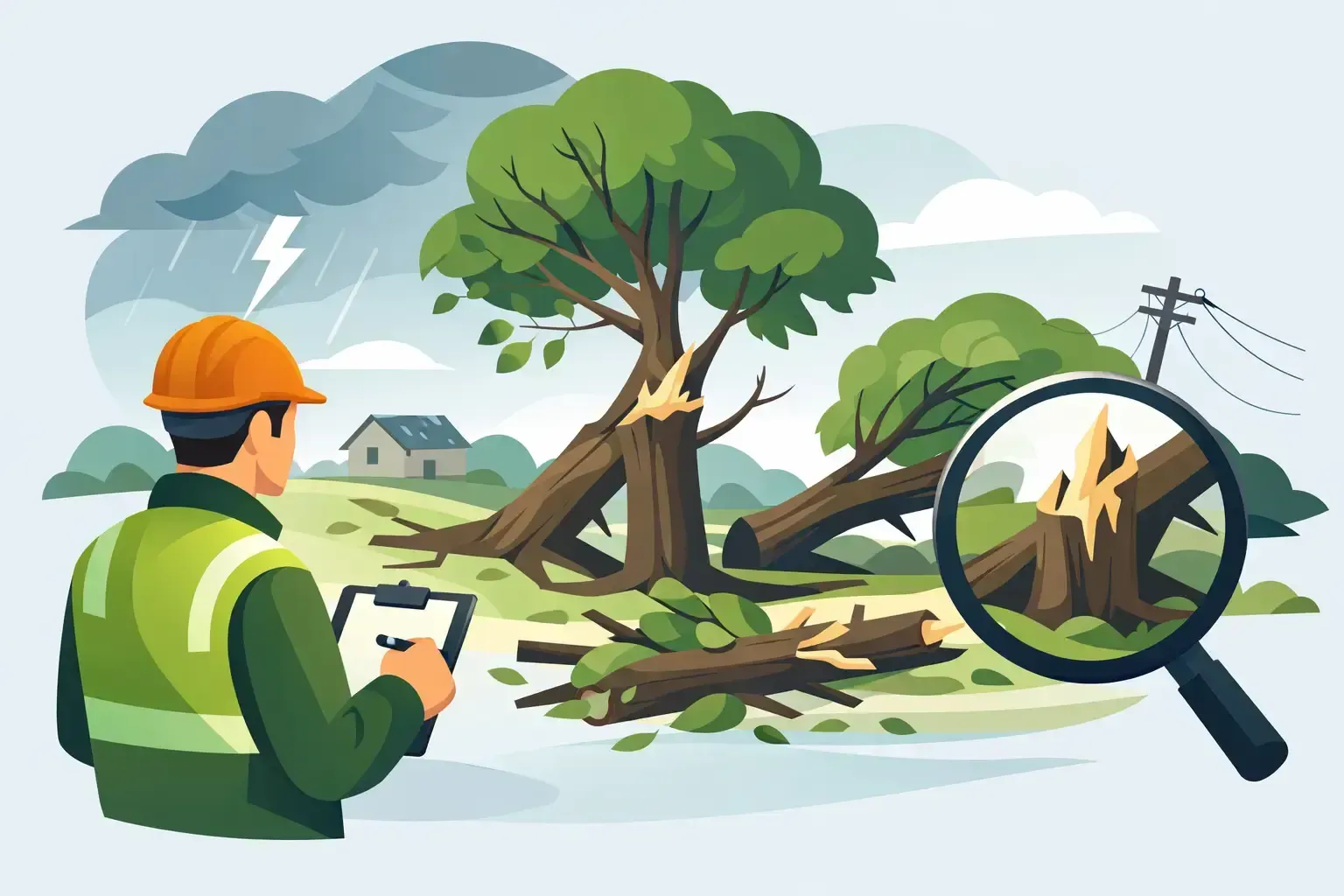
A hard Central Texas storm can turn a healthy-looking canopy into a real property hazard in a single night. This guide to storm damaged tree assessment helps...
Healthy and damaged trees showing root health and drought soil cracking on a farm landscape
August 16, 2026
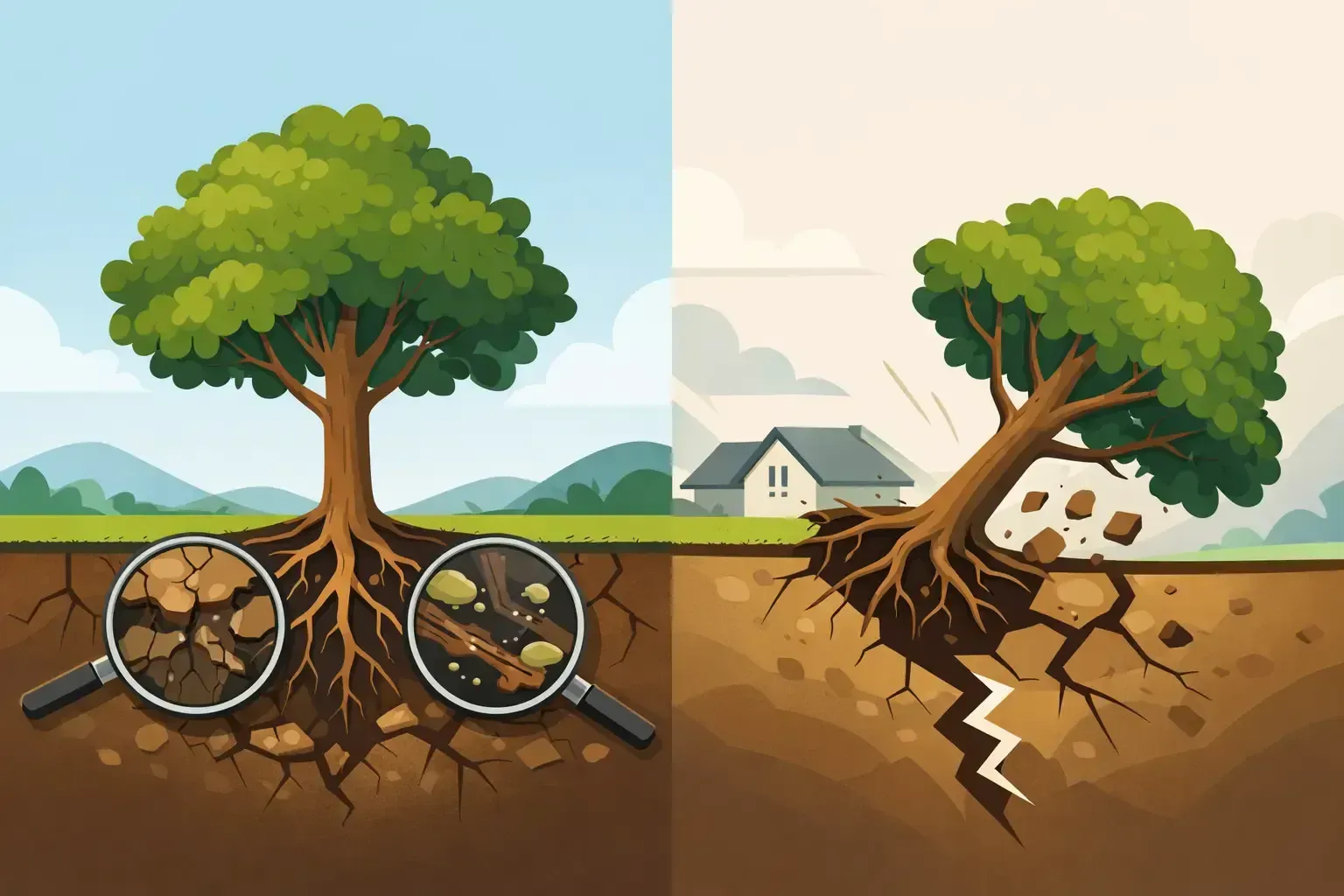
A live oak can look perfectly fine above ground while its support system is under serious stress below it. That is what makes root problems so frustrating fo...
Split view of deforestation and healthy green pasture with cows under a bright sky
August 14, 2026
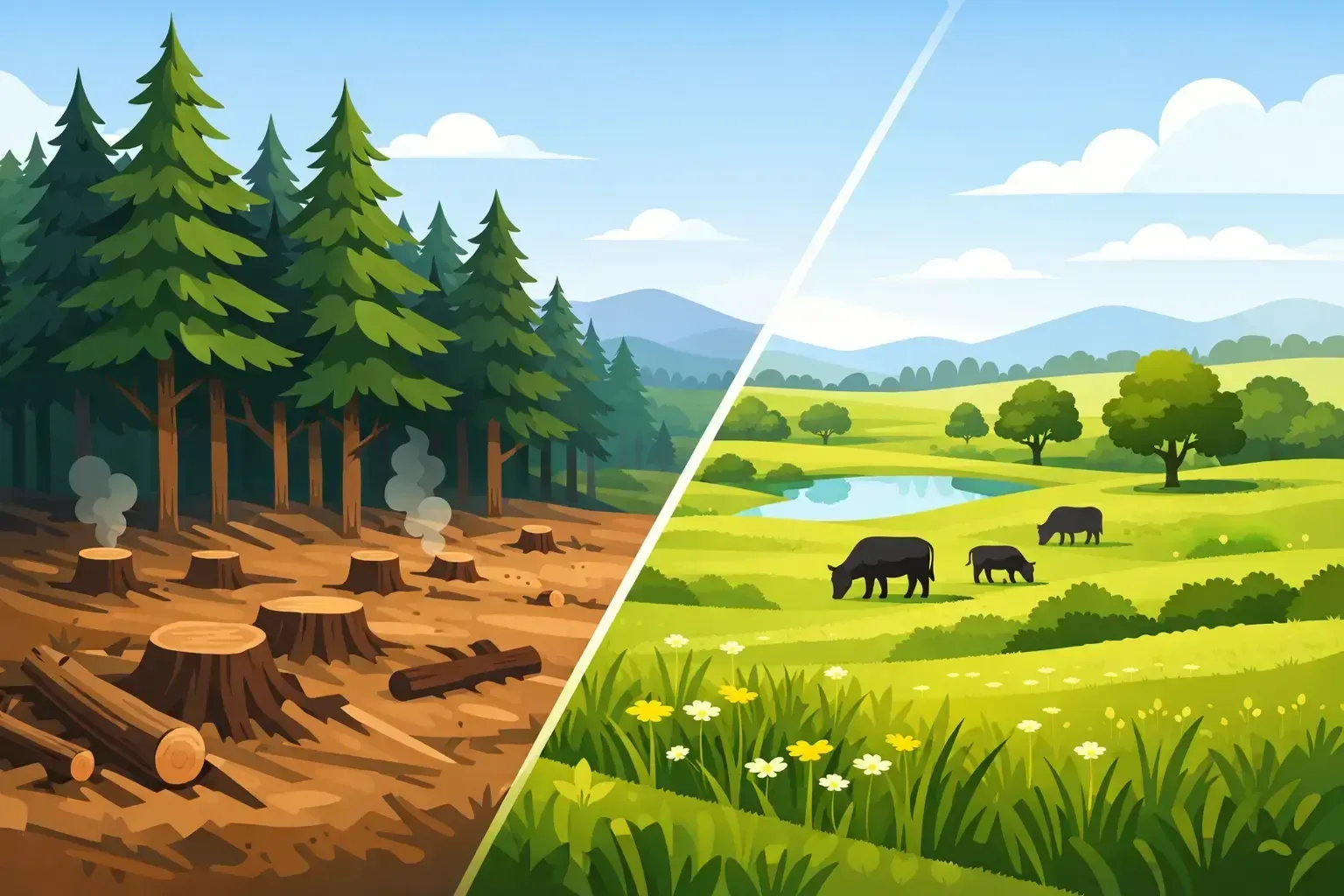
A cedar-choked pasture can make a property feel smaller every year. Water disappears into dense juniper cover, native grasses lose sunlight, fence lines vani...
Farmer in field watching a blue tractor spray crops, with cows, barn, hills, and smoke in the background
September 1, 2026
A ranch can look green and still be headed in the wrong direction. Dense brush can hide stressed oaks, crowd out usable pasture, choke access roads, and crea...
Wildfire burning in a forest with firefighters, helicopter, and smoke over a split rural landscape
August 30, 2026
A hot, windy afternoon can turn a forgotten brush pile, a crowded cedar stand, or low limbs near a structure into more than a property-maintenance issue. Tex...
Environmental inspection scene with drone, tree, magnifying glass, recycle bin, and hard hat in a city park
August 28, 2026
A shaded entry drive can become a liability fast when a heavy limb hangs over customer parking, a dead cedar leans toward a fence, or brush builds up around ...
Wildfire response with firefighters, water tanker, helicopter, and smoke near homes in a rural neighborhood
August 26, 2026
A Central Texas wildfire mitigation guide has to start with a hard truth: a beautiful Hill Country property can carry fire faster than most owners expect. Ce...
Savanna wildfire with trees, deer, and smoky hills under a bright sky
August 24, 2026
A beautiful shade tree should not become a fuse leading to your home. For Central Texas property owners, choosing the best trees for wildfire resistance mean...
Worker pruning a tree in a sunny yard beside a house, with tools on the grass.
August 22, 2026
A mature live oak shading a Bee Cave driveway can look indestructible right up until a heavy limb hangs over the roof, a cedar elm starts crowding the servic...