
A shade tree can make a Central Texas property feel 15 degrees cooler, look more established, and become the place where everybody gathers. It can also become a serious liability when heavy limbs extend over a roof, deadwood hangs above a driveway, or a dense canopy catches too much wind. Knowing how to trim shade trees
starts with one rule: prune for the tree's future structure, not just for a cleaner-looking canopy today.
Good trimming is selective. Bad trimming removes too much, leaves weak stubs, or strips out the interior until a mature tree has no natural defense against heat and sunscald. The goal is a safer, healthier, better-balanced tree that still provides the shade you bought the property for.
Start With the Job the Tree Needs to Do
Before making a single cut, step back far enough to see the whole tree. Ask what needs to improve. Is the priority roof clearance, vehicle access, sightlines at a driveway, storm preparation, or removing dead and damaged limbs? A clear objective prevents the common mistake of cutting every branch that looks crowded.
A well-trimmed shade tree should keep its natural form. Live oaks should still look like live oaks. Cedar elms should still carry their broad, upright character. Pecan trees need room for sturdy scaffold limbs and a canopy that can handle wind. The exact approach depends on the species, age, health, growing conditions, and nearby targets.
For most established trees, the work usually centers on three types of pruning: removing dead, broken, diseased, or rubbing branches; reducing the weight and reach of an overextended limb; and selectively opening congested areas so light and air can move through the canopy. Those are precise decisions, not a race to make the tree look smaller.
How to Trim Shade Trees With Proper Cuts
Each cut matters because every wound is work for the tree. The tree does not heal in the way human skin heals. Instead, it seals off damaged tissue and grows around the wound over time. A clean, properly placed cut gives it the best chance to do that job.
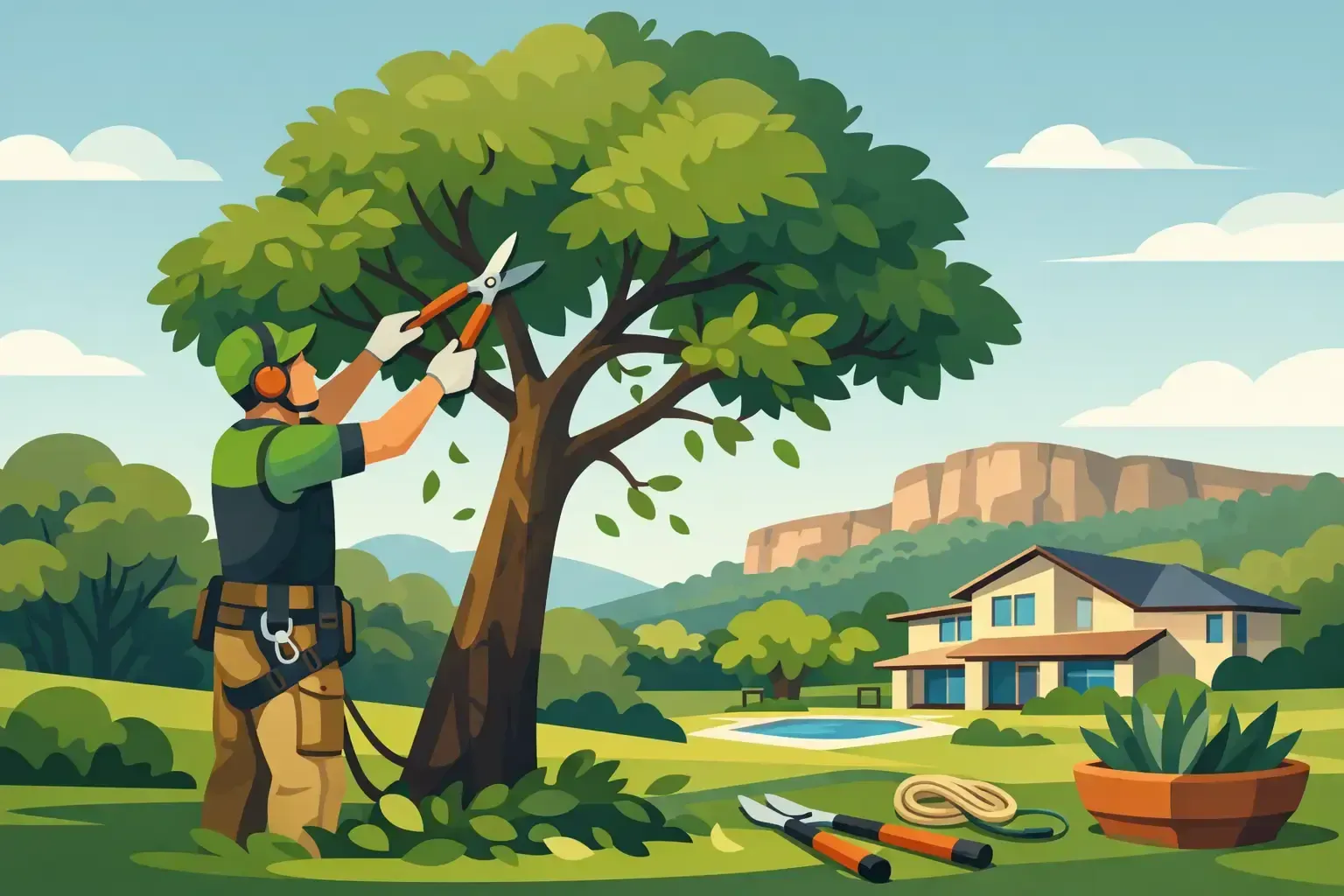
Find the branch collar, the slightly swollen area where a branch joins the trunk or a larger limb. Cut just outside that collar. Do not cut flush against the trunk, and do not leave a long stub. A flush cut removes protective tissue. A stub dies back, invites decay, and can become a weak point later.
When removing a larger limb, use a three-cut method to prevent bark from tearing down the trunk. First, make a small undercut a short distance from the branch collar. Next, cut from the top farther out on the limb until the branch drops away. Then remove the remaining short section with a final cut just outside the collar. That sequence is simple, but it protects the tree from a much larger injury.
Use sharp, clean tools sized for the work. Hand pruners work for small live growth, loppers handle modest branches, and a hand saw is often the better choice for controlled cuts on larger limbs. Chainsaws have a place in professional tree work, but they are not a shortcut for homeowners standing on a ladder near a house, fence, or power line.
Remove Problems First, Then Stop and Reassess
Start with obvious hazards: deadwood, cracked branches, broken hangers, and limbs rubbing against one another. Next, look for branches growing inward toward the center of the tree, competing leaders, or limbs with weak attachment angles.
Then pause. A tree can look dramatically cleaner after only a handful of well-chosen cuts. That is the disciplined part of trimming. Once the major issues are addressed, it is easy to keep cutting because the tools are already out. Resist that urge.
As a general guardrail, avoid removing more than about 20 to 25 percent of a healthy mature tree's live canopy in one season. In hot, dry conditions, even that may be too much. Over-pruning reduces the tree's ability to produce energy, exposes bark and soil to more sun, and can trigger a burst of weak, fast-growing shoots that create future maintenance problems.
Never top a shade tree by cutting major limbs back to stubs or indiscriminately chopping off the upper canopy. Topping creates large wounds, encourages poorly attached regrowth, and can turn a manageable tree into a repeated hazard. If a tree has simply outgrown its space, selective reduction pruning
by a qualified arborist is usually the smarter answer. Sometimes, though, the honest answer is that the wrong tree is in the wrong location.
Raise the Canopy Carefully
Canopy raising means removing or shortening lower branches to create clearance for people, mowers, vehicles, structures, or better visibility. It is useful around driveways, patios, rural gates, and commercial parking areas, but it needs restraint.
Lower limbs are not disposable. They help the trunk develop strength and protect it from intense Central Texas sun. Remove the lowest limbs gradually over more than one pruning cycle, particularly on younger trees. On mature trees, preserve enough lower canopy to keep the tree balanced and its trunk shaded.
If a limb reaches over a roof, do not assume complete removal is the only option. Selective reduction can shorten the limb back to a suitable lateral branch while retaining the tree's shape and reducing leverage in high winds. That kind of cut takes judgment. It is where precision pays off.
Pick the Right Season for Your Tree
Timing depends on the species and the purpose of the work. Dead, broken, or immediately hazardous limbs
can be addressed when safety requires it. Routine live pruning is different.
For many Central Texas shade trees, the cooler dormant period is a practical window for structural pruning. Oaks require special attention because of oak wilt risk. In areas where oak wilt is present or suspected, avoid routine pruning during the high-risk spring period when possible. If an oak is wounded, follow current local disease-prevention guidance, including applying wound paint promptly when recommended for your area and situation.
Avoid heavy pruning during severe heat, prolonged drought, or immediately after a tree has been stressed by construction, root disturbance, storm damage, or disease. A stressed tree needs its canopy to produce energy. Removing too much at the wrong time compounds the problem.
Watch for Signs That This Is Professional Work
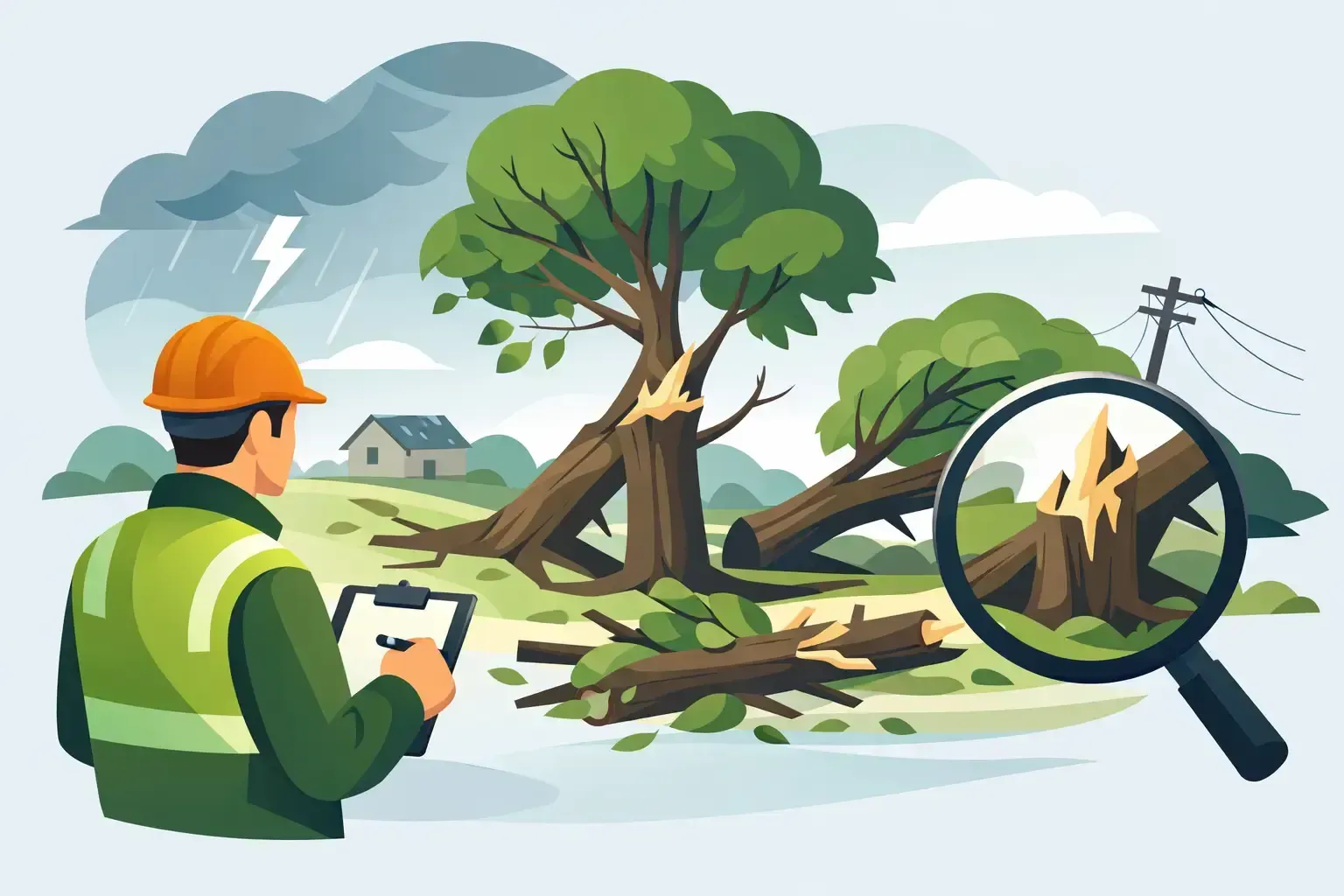
Homeowners can often handle small, reachable branches with the right tools and a conservative plan. The risk changes quickly when the work involves height, heavy limbs, decay, structures, roads, fences, or utility lines. Keep well clear of power lines and call the utility provider or a qualified tree professional. Treat every nearby line as energized.
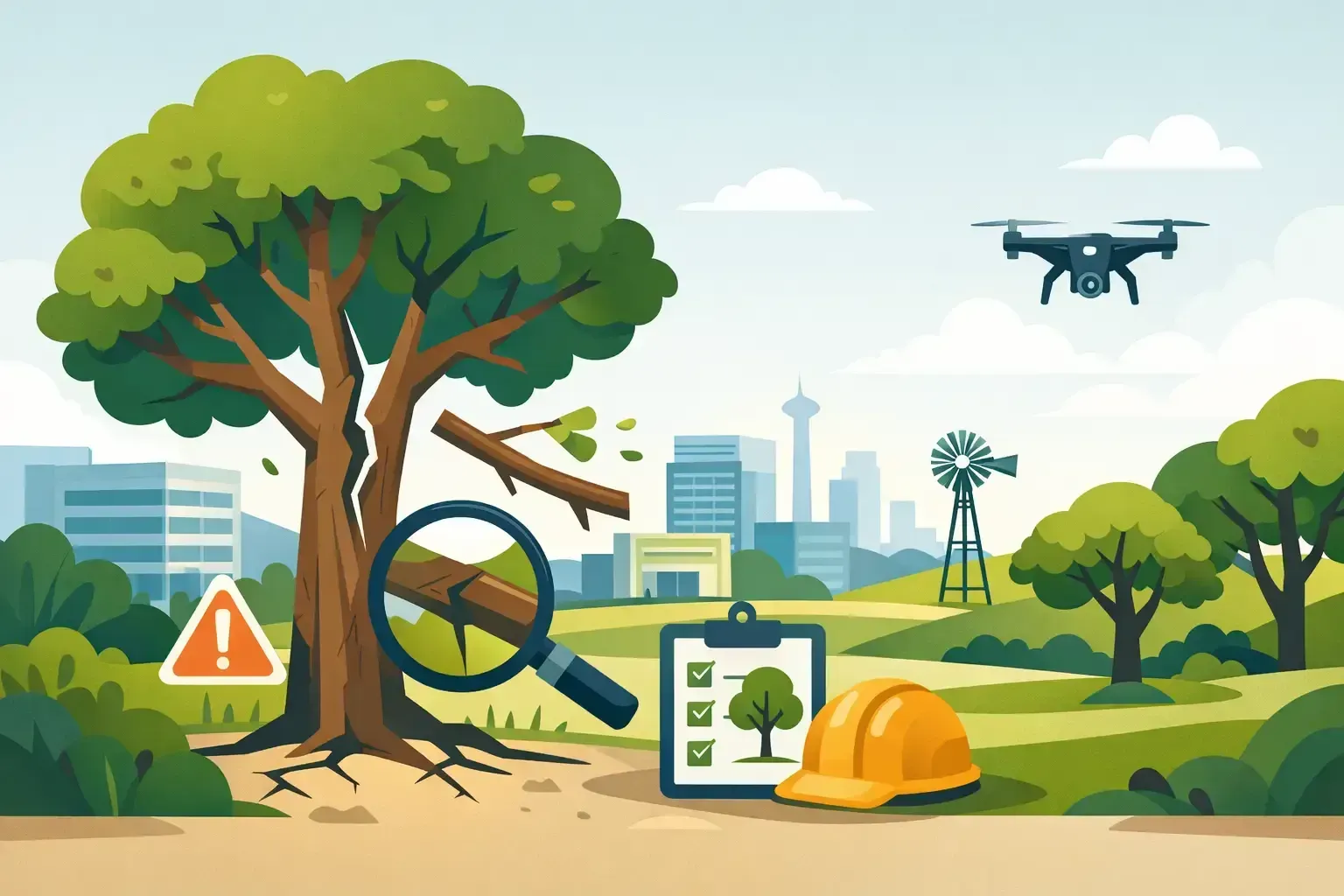
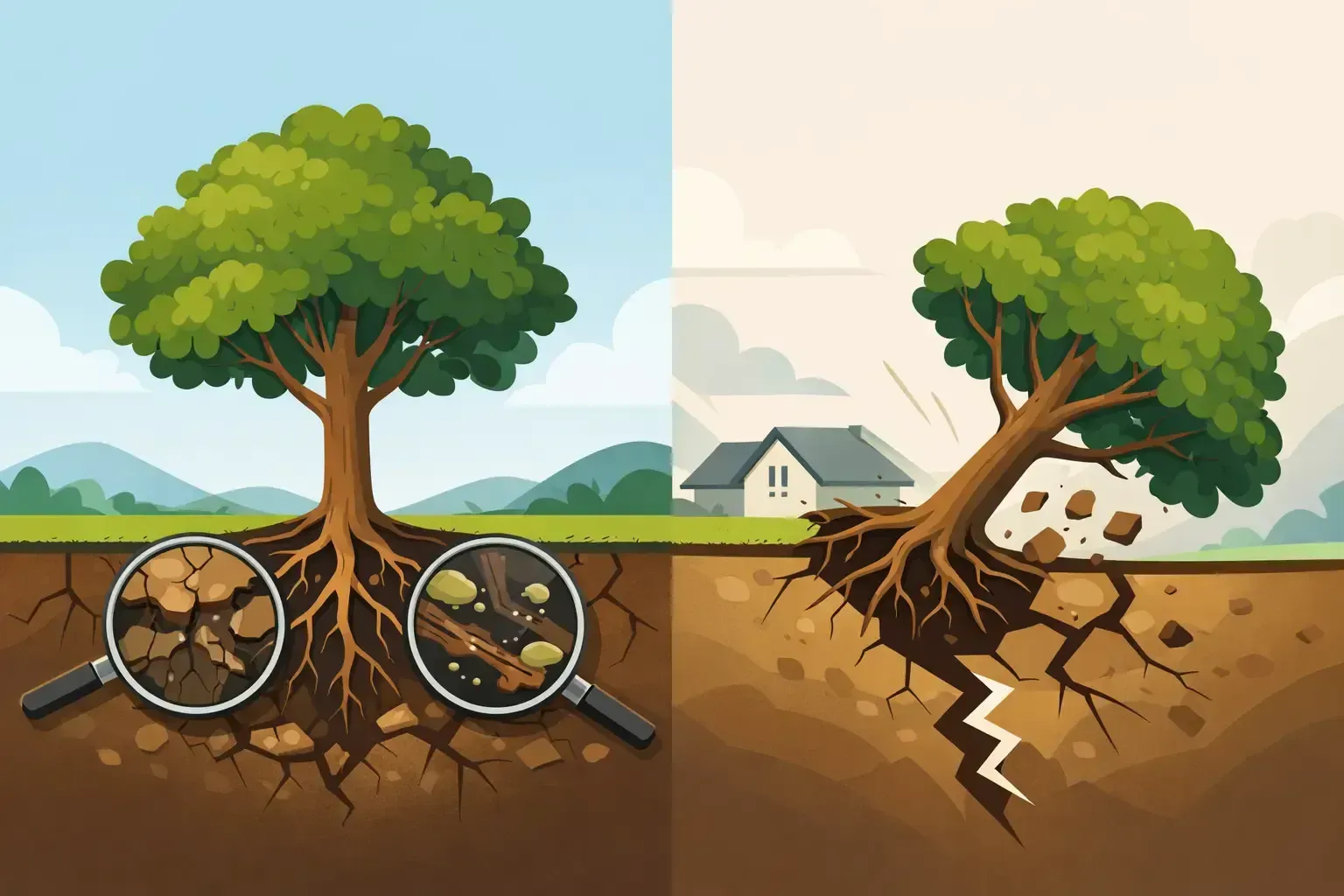
Bring in an ISA Certified Arborist when you see significant cracks, hollow areas, mushrooms at the base, peeling bark, a sudden lean, soil lifting around roots, or large limbs extending over a home or high-use area. Those conditions call for an assessment, not guesswork.
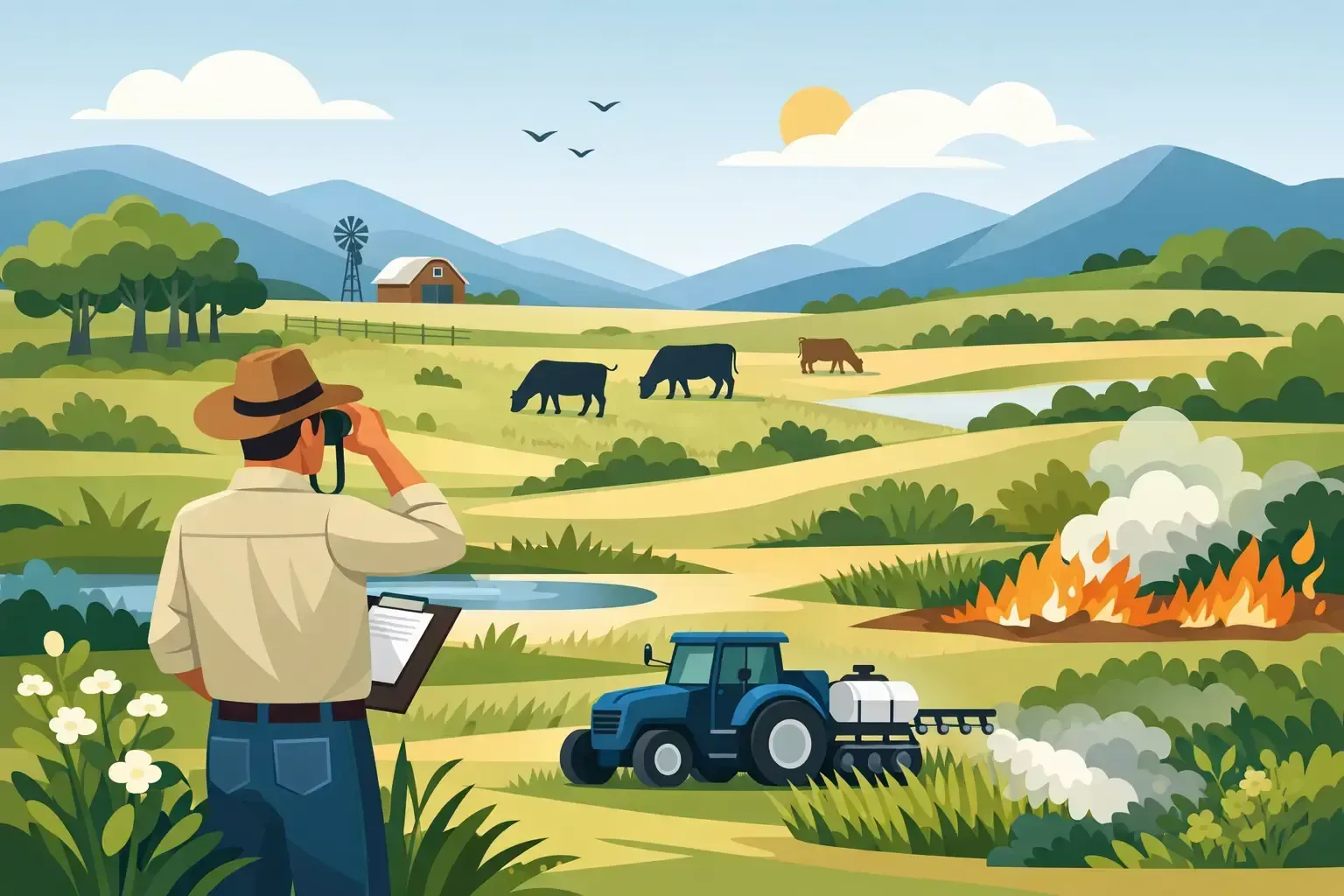
For rural properties and tree-dense neighborhoods, trimming should also support wildfire readiness. Removing deadwood, separating low limbs from dry brush where appropriate, and managing dense vegetation near structures can reduce the pathways that carry fire into the canopy. The objective is not to strip a property bare. It is to create smarter spacing while protecting the shade, habitat, and beauty that make the land valuable.
Give the Tree a Better Recovery Plan
After pruning, do not seal ordinary cuts with tar, spray products, or improvised coatings. Clean cuts and good overall tree health are more useful. Keep mulch a few inches away from the trunk, water deeply during dry periods when appropriate for the species and soil, and avoid piling soil, gravel, or construction materials over the root zone.
If you are unsure whether a branch should come off, leave it for now. Trees are patient. A carefully planned second visit is far better than one aggressive afternoon that cannot be undone.
The best shade-tree trimming leaves a property looking sharper without advertising every cut. You notice the clear driveway, the safer roofline, the healthier canopy, and the extra confidence when the next Texas storm rolls through. That is the standard worth aiming for.