
Top Signs of Tree Decline to Watch For

May 22, 2026

That big oak out back usually tells on itself before it fails. Maybe the canopy looks thinner than last spring. Maybe bark is peeling where it used to be tight. Maybe one side of the tree looks fine and the other looks tired, like it is running on fumes. The top signs of tree decline are often visible long before a tree becomes an emergency, but only if you know what to watch for.

In Central Texas, trees deal with a tough mix of stress - drought, heat, compacted soil, storm damage, construction impacts, pests, and sometimes wildfire pressure. A declining tree does not always look dramatic right away. In fact, some of the most serious problems start quietly. That is why early detection matters. Catch decline early, and you may be able to improve health, reduce risk, and avoid a much bigger problem later.

Why tree decline gets missed

A lot of property owners look for one obvious red flag, like a dead tree with no leaves at all. Real life is usually messier than that. Tree decline is often gradual, and symptoms can come and go with the season.

A stressed tree may leaf out weakly one year, seem to recover after rain, then slide backward again in summer. That back-and-forth can fool people into thinking the issue solved itself. Sometimes it did not. Sometimes the tree is just spending stored energy to hang on.

There is also the location factor. Trees on ranch land, fence lines, large commercial properties, and the far edge of a lot do not get the same attention as the front-yard showpieces. By the time someone notices a problem, a lot of the damage is already done.

Top signs of tree decline in the canopy

The canopy is usually the first place decline shows up in a way homeowners can spot from the ground. If the top of the tree looks thin, uneven, or late to leaf out, pay attention.

Thinning leaves or sparse canopy

Healthy mature trees should produce a full canopy for their species and season. If you notice fewer leaves than usual, smaller leaves, or scattered bare sections, that can point to root stress, poor soil conditions, disease, drought strain, or internal decay. One thin season after an extreme weather event may not mean the tree is lost. Repeated thinning over multiple seasons is a different story.

Dead branches in the upper crown

When the upper canopy starts dying back, the tree may be struggling to move water and nutrients efficiently. A few small dead twigs here and there are normal. Larger dead limbs, repeated branch death, or a canopy that seems to be retreating from the top down is not.

This matters for safety as much as health. Dead wood can drop without much warning, especially during wind, heat stress, or storms.

Off-color or undersized leaves

Leaves that are pale, scorched, spotted, curling, or dropping early can signal stress. The exact cause depends on species and site conditions. Sometimes it is simple water stress. Sometimes it is soil compaction, root damage, nutrient imbalance, or a pest issue.

The key is comparison. If the tree always looks that way, it may be normal for the species in that spot. If the leaf color or size changed noticeably from previous years, the tree is telling you something.

Bark and trunk warning signs

A tree trunk is not supposed to look perfect, but major changes in the bark and stem are worth taking seriously. The trunk is the structural center of the tree. Problems there can affect both survival and stability.

Cracks, splits, or seams

Fresh cracks in the trunk or major limbs can be signs of mechanical stress, storm injury, or internal weakness. Some are obvious after a storm. Others develop slowly and widen over time.

Not every crack means immediate failure, but it does mean the tree needs a closer look. If the crack is deep, long, or associated with movement, that raises the stakes.

Bark peeling, sloughing, or falling off

Loose bark can show up on declining trees because the living tissue underneath is compromised. In some species, natural exfoliation is normal, so context matters. What is not normal is sudden bark loss, large dead patches, or bark dropping off alongside canopy decline and branch death.

When bark comes off and the wood underneath looks dry, dark, soft, or insect-damaged, that is a stronger indicator that the tree is in trouble.

Cavities and decay pockets

A hollow area or visible cavity does not automatically mean a tree has to go. Some trees can live for years with internal decay. But cavities do change the structural equation.

The concern is where the decay is located, how extensive it is, and what targets sit nearby. A tree with a trunk cavity over open pasture is one conversation. The same tree leaning over a driveway, playground, roofline, or HOA common area is another.

What the base of the tree can tell you

A lot of decline starts below ground, and roots do not send text messages. They do, however, leave clues around the base of the tree.

Fungal growth near roots

Mushrooms or conks around the root flare or trunk base can indicate decay in the root system or lower trunk. Not all fungi are destructive, but some are clear warning signs that the tree is breaking down internally.

This is one of those situations where guessing is a bad plan. A healthy-looking canopy can still sit on compromised roots.

Soil heaving or recent lean

If the ground around the base looks lifted, cracked, or disturbed, especially after rain or wind, the root plate may be shifting. A tree that has developed a new lean, or a lean that appears to be worsening, deserves immediate attention.

Some trees naturally grow at an angle and remain stable for decades. A sudden change is the issue, not just the presence of lean itself.

Root damage after construction

One of the most common causes of decline is damage that happened months earlier during trenching, grading, driveway work, utility installation, or heavy equipment traffic. Trees often decline on a delay. The project ends, everything looks fine, and then the canopy starts thinning a season or two later.

If a tree changed after nearby construction, that history matters.

Top signs of tree decline after storms, drought, or heat

In Texas, weather is not gentle. Even strong native trees can get pushed hard.

After prolonged drought, trees may shed leaves early, die back in sections, or struggle to leaf out fully the next year. Heat stress can also make trees more vulnerable to boring insects and secondary disease issues. After storms, cracked unions, torn limbs, and hidden structural damage may not show immediate failure, but they can start a decline cycle.

This is where experience matters. Some trees can recover with proper pruning, soil support, and time. Others are already past the point where intervention will change the outcome. Knowing the difference can save money and reduce risk.

When decline is more than a health issue

Tree decline is not just about whether a tree survives. It is also about what happens if it fails.

A declining tree near a home, barn, road, fence, utility area, or outdoor gathering space is a property risk. On larger lots and ranchland, the concern may be wildfire exposure as much as impact damage. Dead limbs, heavy fuel buildup, and stressed trees near structures can raise the hazard profile fast during dry periods.

That is one reason a disciplined tree care plan matters. Good arborcare is not cosmetic fluff. It is part of protecting the usability, safety, and long-term value of the property.

When to call for a professional assessment

If you are seeing one mild symptom, watch the tree closely and compare it across the season. If you are seeing multiple symptoms at once - thinning canopy, dead branches, bark loss, decay, fungal growth, or a changing lean - it is time to bring in a qualified arborist.

This is especially true when the tree is large, near a target, recently storm-damaged, or part of a broader land management issue. On some properties, one declining tree is not an isolated problem. It can point to compaction, drainage trouble, overcrowding, or site-wide stress.

At Dynamo Dusty's Tree Service, the goal is not to push removals that do not need to happen. It is to read the site clearly, communicate plainly, and recommend the right move based on tree health, structure, and risk. Sometimes that means targeted pruning and soil-focused care. Sometimes it means reducing wildfire risk. Sometimes it means acting quickly before a failing tree makes the decision for you. We view tree removal as a last resort.

If a tree on your property looks off, trust that instinct and get it checked. Trees rarely decline overnight, but waiting too long can turn a manageable fix into a costly mess.

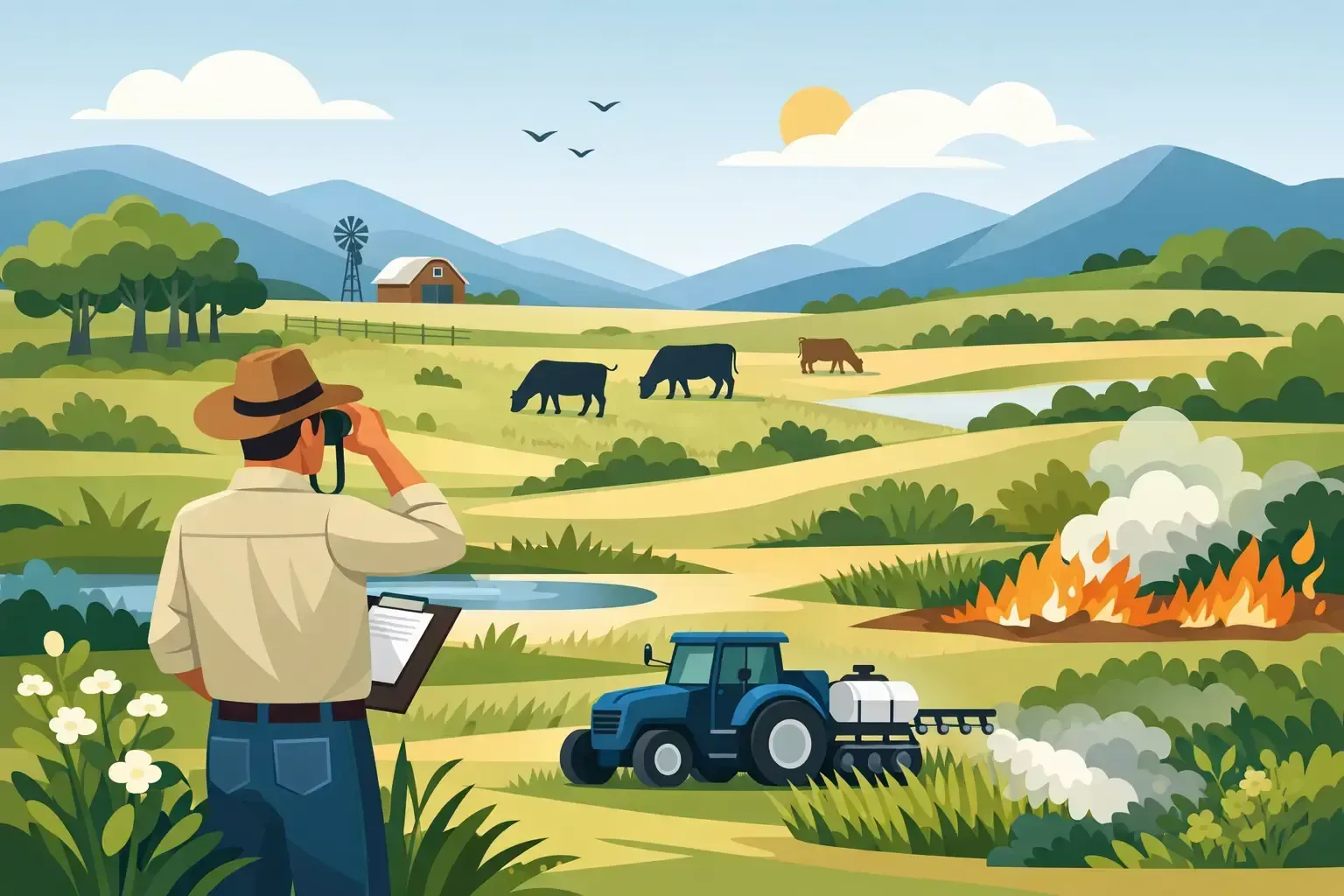
Farmer in field watching a blue tractor spray crops, with cows, barn, hills, and smoke in the background
September 1, 2026
A ranch can look green and still be headed in the wrong direction. Dense brush can hide stressed oaks, crowd out usable pasture, choke access roads, and crea...
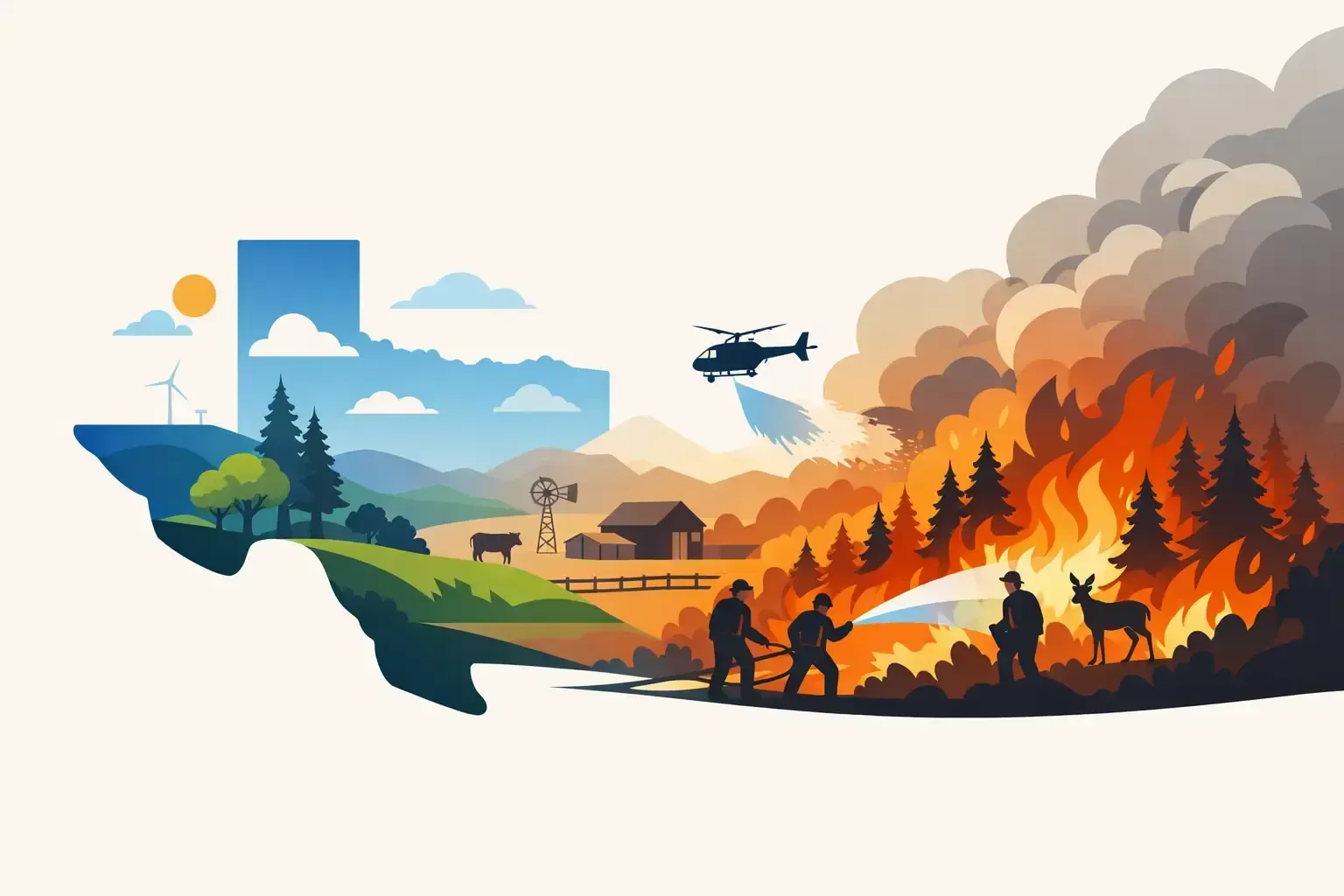
Wildfire burning in a forest with firefighters, helicopter, and smoke over a split rural landscape
August 30, 2026
A hot, windy afternoon can turn a forgotten brush pile, a crowded cedar stand, or low limbs near a structure into more than a property-maintenance issue. Tex...
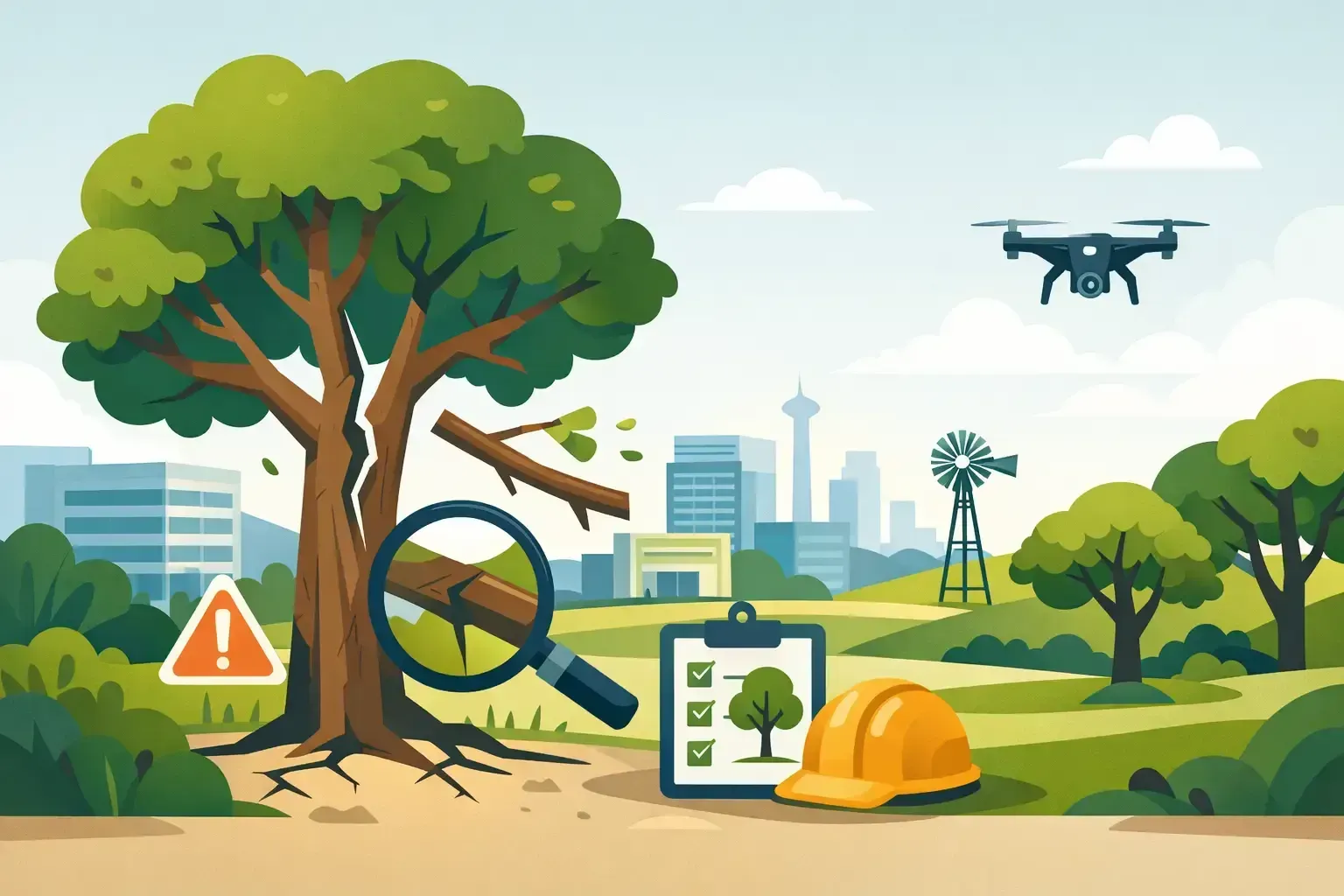
Environmental inspection scene with drone, tree, magnifying glass, recycle bin, and hard hat in a city park
August 28, 2026
A shaded entry drive can become a liability fast when a heavy limb hangs over customer parking, a dead cedar leans toward a fence, or brush builds up around ...
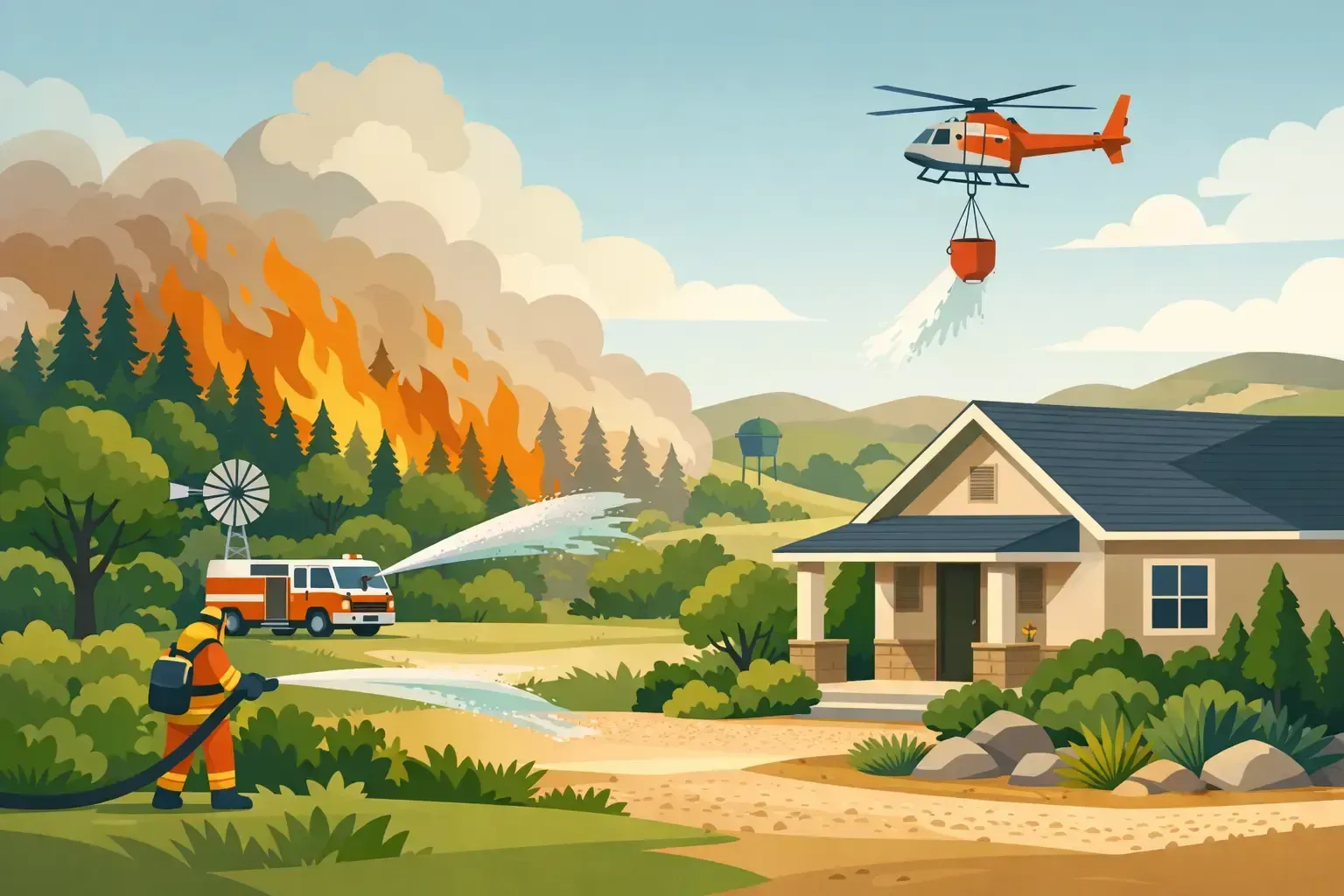
Wildfire response with firefighters, water tanker, helicopter, and smoke near homes in a rural neighborhood
August 26, 2026
A Central Texas wildfire mitigation guide has to start with a hard truth: a beautiful Hill Country property can carry fire faster than most owners expect. Ce...
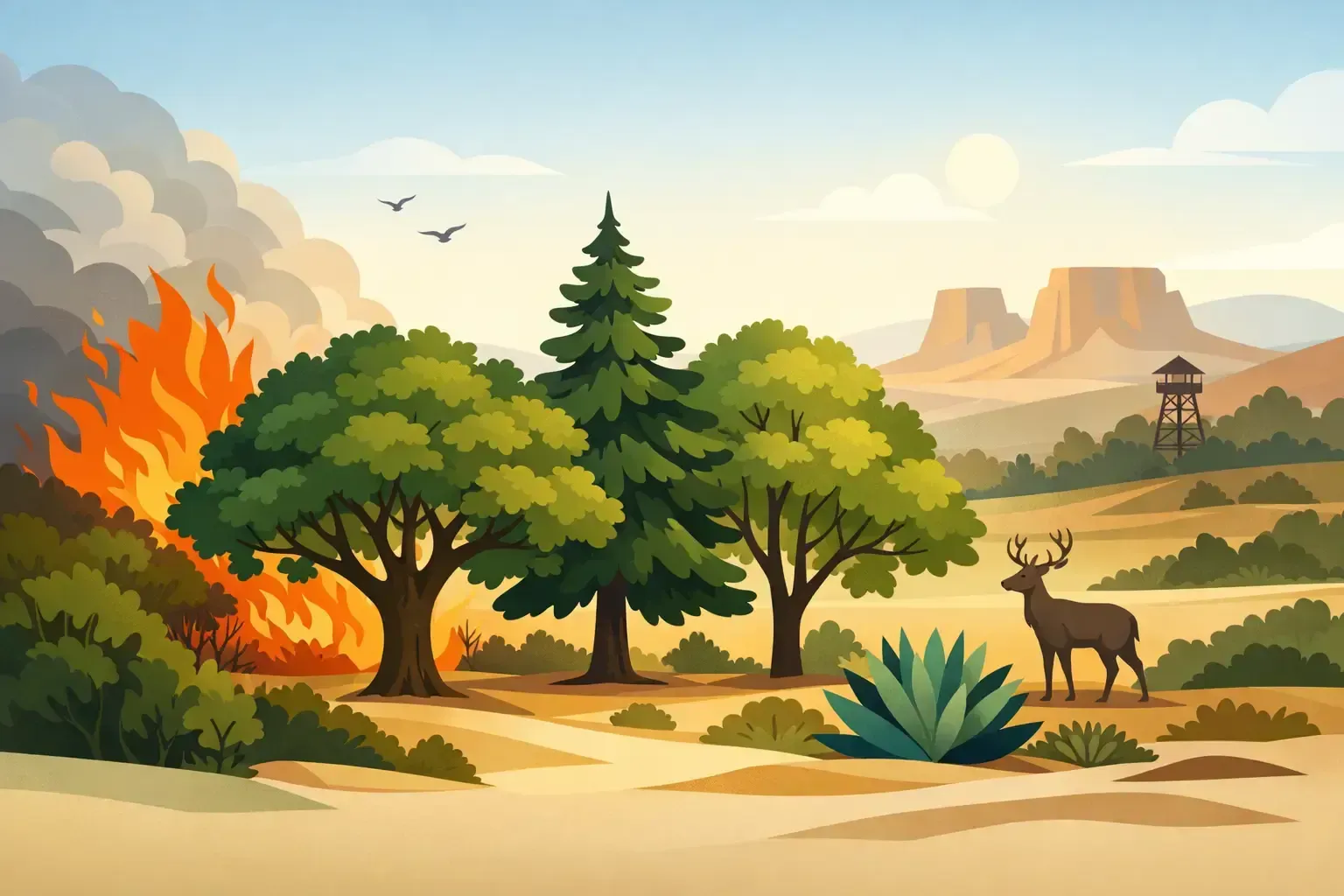
Savanna wildfire with trees, deer, and smoky hills under a bright sky
August 24, 2026
A beautiful shade tree should not become a fuse leading to your home. For Central Texas property owners, choosing the best trees for wildfire resistance mean...
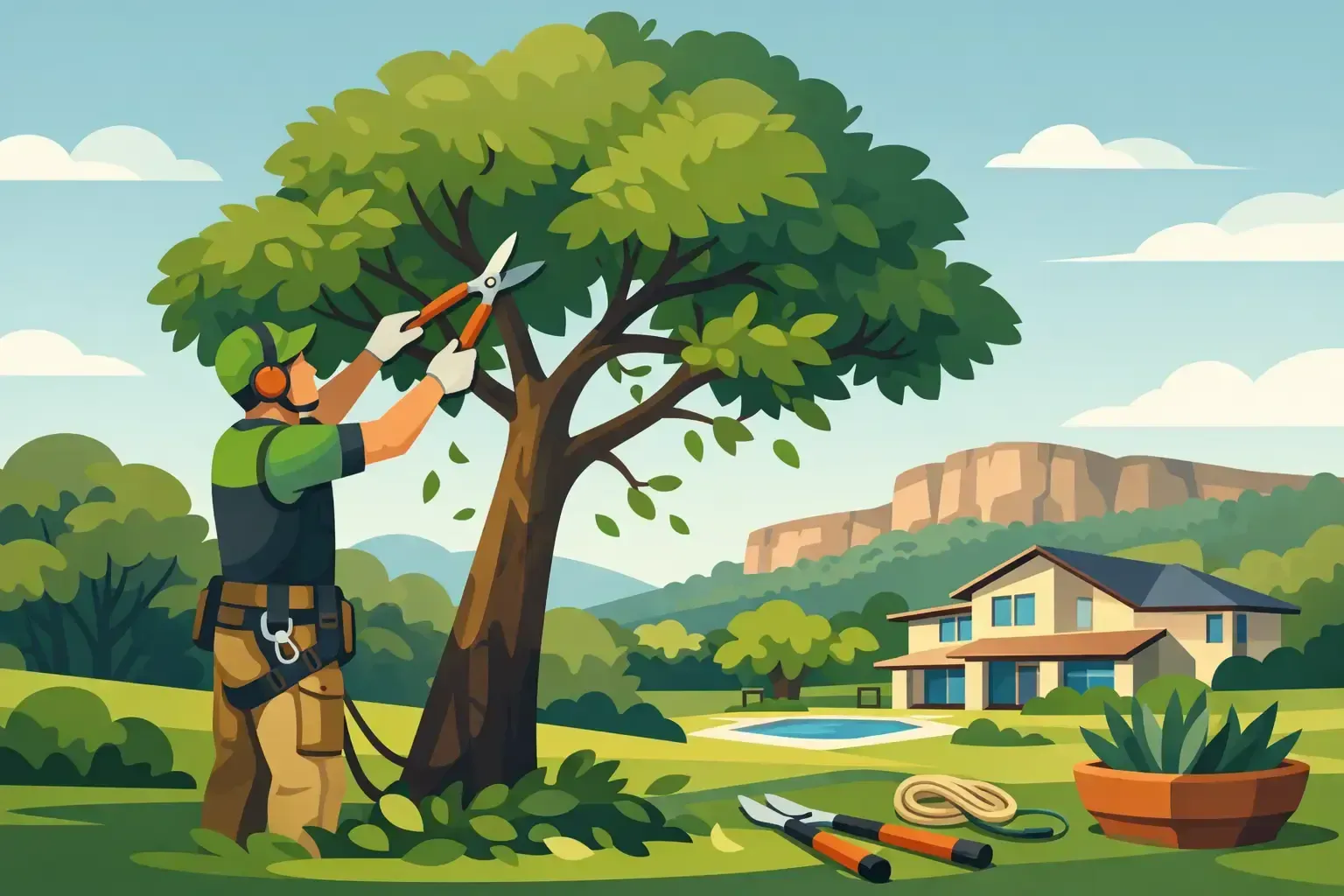
Worker pruning a tree in a sunny yard beside a house, with tools on the grass.
August 22, 2026
A mature live oak shading a Bee Cave driveway can look indestructible right up until a heavy limb hangs over the roof, a cedar elm starts crowding the servic...
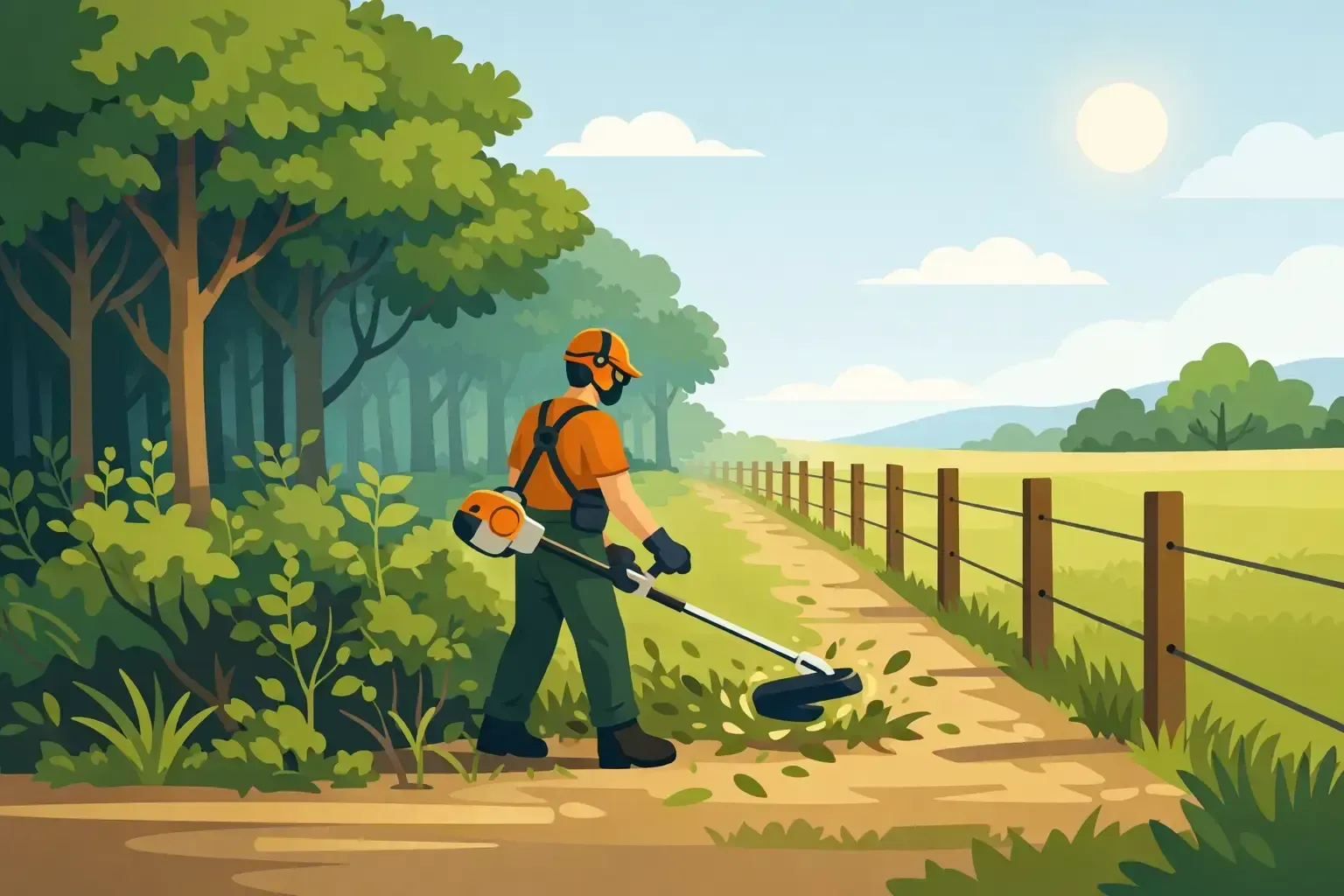
Person using a string trimmer beside a fenced field on a sunny day
August 20, 2026
A fence line can disappear fast in Central Texas. One wet spring, a few missed mowing cycles, and suddenly cedar, huisache, vines, fallen limbs, and thorny b...
Worker inspecting storm-damaged tree with fallen branches and a magnifying glass in a windy yard
August 18, 2026
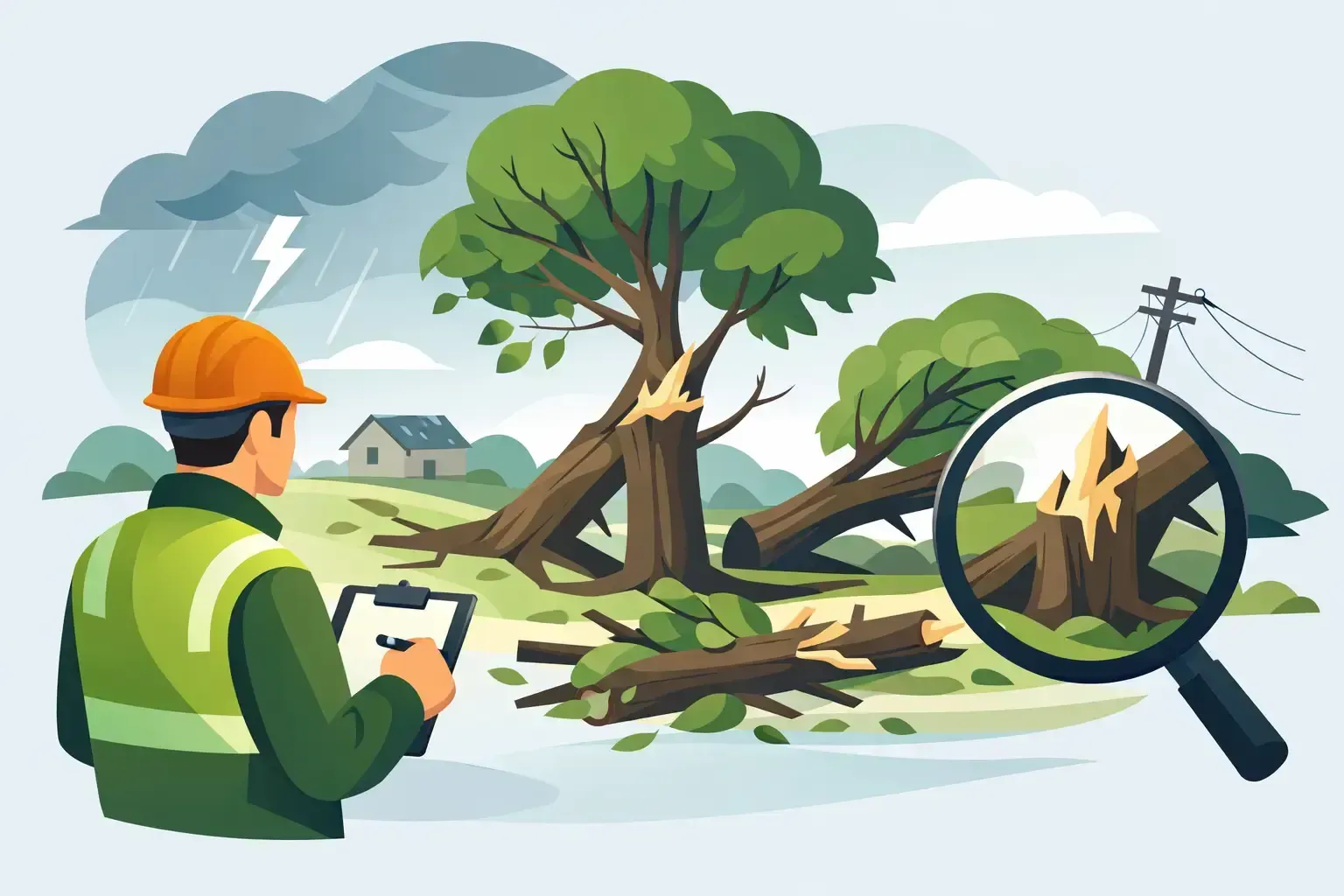
A hard Central Texas storm can turn a healthy-looking canopy into a real property hazard in a single night. This guide to storm damaged tree assessment helps...
Healthy and damaged trees showing root health and drought soil cracking on a farm landscape
August 16, 2026
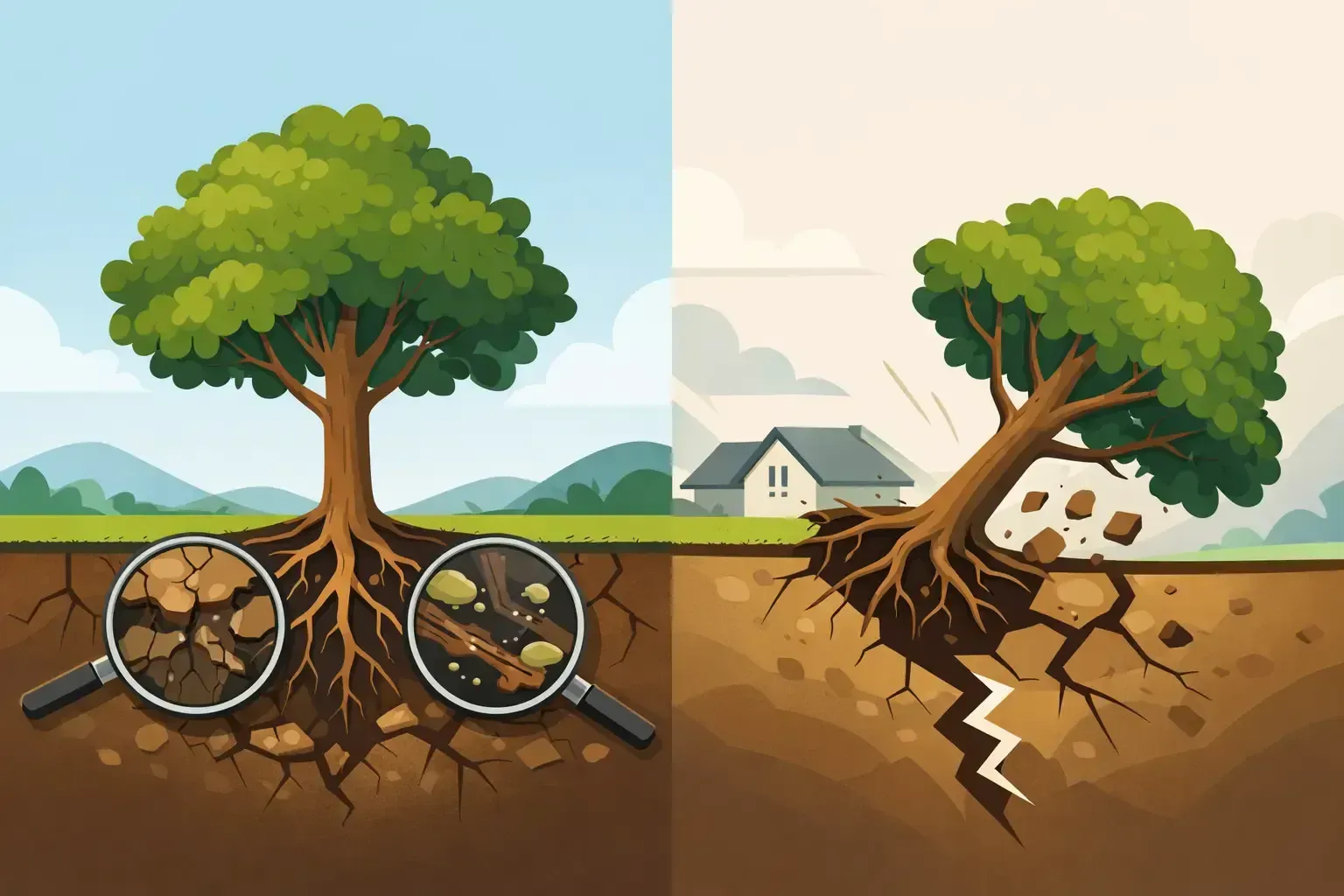
A live oak can look perfectly fine above ground while its support system is under serious stress below it. That is what makes root problems so frustrating fo...
Split view of deforestation and healthy green pasture with cows under a bright sky
August 14, 2026
A cedar-choked pasture can make a property feel smaller every year. Water disappears into dense juniper cover, native grasses lose sunlight, fence lines vani...
Farmer in field watching a blue tractor spray crops, with cows, barn, hills, and smoke in the background
September 1, 2026
A ranch can look green and still be headed in the wrong direction. Dense brush can hide stressed oaks, crowd out usable pasture, choke access roads, and crea...
Wildfire burning in a forest with firefighters, helicopter, and smoke over a split rural landscape
August 30, 2026
A hot, windy afternoon can turn a forgotten brush pile, a crowded cedar stand, or low limbs near a structure into more than a property-maintenance issue. Tex...
Environmental inspection scene with drone, tree, magnifying glass, recycle bin, and hard hat in a city park
August 28, 2026
A shaded entry drive can become a liability fast when a heavy limb hangs over customer parking, a dead cedar leans toward a fence, or brush builds up around ...
Wildfire response with firefighters, water tanker, helicopter, and smoke near homes in a rural neighborhood
August 26, 2026
A Central Texas wildfire mitigation guide has to start with a hard truth: a beautiful Hill Country property can carry fire faster than most owners expect. Ce...
Savanna wildfire with trees, deer, and smoky hills under a bright sky
August 24, 2026
A beautiful shade tree should not become a fuse leading to your home. For Central Texas property owners, choosing the best trees for wildfire resistance mean...
Worker pruning a tree in a sunny yard beside a house, with tools on the grass.
August 22, 2026
A mature live oak shading a Bee Cave driveway can look indestructible right up until a heavy limb hangs over the roof, a cedar elm starts crowding the servic...