


Stump Grinding Versus Stump Removal

July 3, 2026

That leftover stump always seems harmless until it starts dictating how you mow, where water pools, or what can and cannot happen in that corner of the property. When homeowners ask about stump grinding versus stump removal, they are usually not asking a technical question. They are asking a practical one: what solves the problem with the least hassle and the best long-term result?

The honest answer is that both methods work. The better choice depends on what is happening below grade, what you plan to do with the space, and how much disruption your property can handle right now. If you own a home on a tight lot, manage an HOA common area, or maintain acreage in Central Texas where wildfire readiness and access matter, the difference is worth understanding before a machine shows up.

Stump grinding versus stump removal: what changes?

Stump grinding cuts the stump down below the soil line using specialized equipment. The visible stump disappears, the area can usually be backfilled, and the property looks cleaner fast. In most cases, the major root system remains underground and gradually breaks down over time.

Stump removal is more aggressive. It extracts the stump and the root ball from the ground, which means digging, pulling, and creating a larger void that then needs to be filled and restored. You are not just removing what you see above grade. You are removing the anchor point and a significant chunk of what is below it.

That difference drives everything else: price, speed, surface finish, future planting options, and how much collateral disturbance the yard or surrounding area takes.

When stump grinding is the smarter move

For most residential situations, stump grinding is the efficient option. It is usually faster, less invasive, and easier on finished landscapes, fencing, irrigation, and nearby hardscape. If your main goal is to get rid of the eyesore and reclaim usable surface area, grinding often checks the box without turning the yard into a jobsite for days.

This matters on established properties where the grass is healthy, the beds are clean, and the owner does not want a major excavation project. A ground stump can usually be covered, leveled, and blended into the existing grade with much less disruption than a full extraction.

Grinding also makes sense when access is limited. Some backyards, courtyards, and side-yard corridors simply do not lend themselves to the kind of equipment and maneuvering stump removal may require. In those cases, precision matters. The right crew can assess machine access, utilities, slope, and surrounding features before work starts instead of figuring it out the hard way halfway through the job.

Another reason owners choose grinding is cost. In general, it is more affordable than full removal because it takes less labor, less excavation, and less restoration afterward. That does not make it the cheap option. It makes it the targeted option.

When full stump removal is worth it

Sometimes grinding is not enough. If you are preparing for construction, installing a driveway, building a retaining wall, trenching utilities, or replanting in the exact same spot, full stump removal can be the cleaner long-term decision.

This is especially true when roots are likely to interfere with the next phase of the project. Leaving a root mass underground may be fine for turf and light landscaping, but it is a different story if the area needs to support structural work or be excavated again soon. In that case, partial treatment now can create double work later.

Removal can also make sense where pest concerns, rot pockets, drainage problems, or repeated sprouting are part of the equation. Not every stump behaves the same after a tree is cut down. Some species settle quietly into decomposition. Others keep trying to come back, or create a mess underground that becomes obvious later when the ground sinks or mushrooms appear where no one wanted them.

If the site plan requires a truly clean slate, removal gives you that. You pay more up front and accept more disturbance, but you eliminate more unknowns.

The real trade-off: appearance versus excavation

If you only compare the words grinding and removal, removal sounds more complete, and therefore better. On paper, maybe. On a real property, not always.

Grinding gives you a strong visual result with less upheaval. The stump is gone from sight, the area is easier to maintain, and the lawn or bed can often be restored without a major scar. For homeowners focused on curb appeal, mowing, and safe foot traffic, that is often exactly the win they wanted.

Removal gives you a deeper reset, but it comes with a bigger footprint. You are creating a hole where a root system used to be. That means more soil movement, more repair work, and more potential impact on surrounding grade. On ranch properties or undeveloped areas, that may be perfectly acceptable. In a polished front yard, it may be more than the situation calls for.

There is no trophy for choosing the most aggressive solution. The right answer is the one that fits the next use of the land.

Cost, cleanup, and timing

Homeowners often ask which option is cheaper, but a better question is what each option includes. Grinding is usually less expensive because it is more contained. The machine grinds the stump, the debris is managed, and the area is restored with less digging.

Removal tends to cost more because the job is bigger. There is extraction, hauling, backfilling, grading, and often a more noticeable cleanup phase. If access is difficult or the stump is large and deeply rooted, that can add time and complexity quickly.

Timing matters too. A grinding job may be completed and visually cleaned up faster than a removal job, especially on properties where preserving the surrounding landscape is part of the objective. For commercial managers and HOAs, that can mean less disruption to residents or tenants. For homeowners, it means less time looking at equipment tracks and torn-up ground.

Still, faster is not always better if the area is headed for a major project anyway. If excavation is already planned, folding full stump removal into the broader scope may be the more efficient route.

What Central Texas property owners should think about

In this part of Texas, stump decisions are not just cosmetic. Large lots, cedar-heavy areas, native oaks, rocky soils, and wildfire exposure all change how land should be managed.

If a stump sits in a zone where you are improving defensible space, cleaning up fuel loads, or opening access for maintenance, the choice should support that broader goal. A property does not become safer because one visible stump disappears. Safety comes from looking at the whole site - tree spacing, brush density, dead material, access routes, and how the landscape behaves under drought and wind.

That is where a disciplined tree service stands apart from a cut-and-go crew. Dynamo Dusty Tree Service approaches stump work the same way it approaches pruning, clearing, and wildfire risk reduction: with a site-specific plan, clear communication, and a focus on what the property needs next, not just what machine can be unloaded first.

So if your stump sits near fencing, irrigation, patios, septic areas, drive lanes, or future build zones, the decision should be made with those constraints in mind. The stump itself is only part of the picture.

How to decide between stump grinding versus stump removal

Start with the intended use of the space. If you want a cleaner yard, easier mowing, and a low-disruption fix, grinding is probably the front-runner. If you want to build, trench, or plant right in that exact footprint, removal deserves a hard look.

Then think about your tolerance for disturbance. Some owners want the most complete solution available. Others want excellent results without turning the property upside down. Both priorities are reasonable.

Finally, consider what is below the surface and around the stump. Root spread, species behavior, access, soil conditions, and nearby infrastructure all matter. That is why a walkthrough estimate has real value. A professional can tell you not just what can be done, but what makes sense and what may create avoidable problems later.

A stump is small compared to the whole property, but it can affect safety, usability, drainage, appearance, and future work more than people expect. Pick the option that serves the land, not just the one that sounds tougher. A clean, well-planned result always beats unnecessary damage dressed up as progress.

Farmer in field watching a blue tractor spray crops, with cows, barn, hills, and smoke in the background
September 1, 2026
A ranch can look green and still be headed in the wrong direction. Dense brush can hide stressed oaks, crowd out usable pasture, choke access roads, and crea...

Wildfire burning in a forest with firefighters, helicopter, and smoke over a split rural landscape
August 30, 2026
A hot, windy afternoon can turn a forgotten brush pile, a crowded cedar stand, or low limbs near a structure into more than a property-maintenance issue. Tex...

Environmental inspection scene with drone, tree, magnifying glass, recycle bin, and hard hat in a city park
August 28, 2026
A shaded entry drive can become a liability fast when a heavy limb hangs over customer parking, a dead cedar leans toward a fence, or brush builds up around ...

Wildfire response with firefighters, water tanker, helicopter, and smoke near homes in a rural neighborhood
August 26, 2026
A Central Texas wildfire mitigation guide has to start with a hard truth: a beautiful Hill Country property can carry fire faster than most owners expect. Ce...
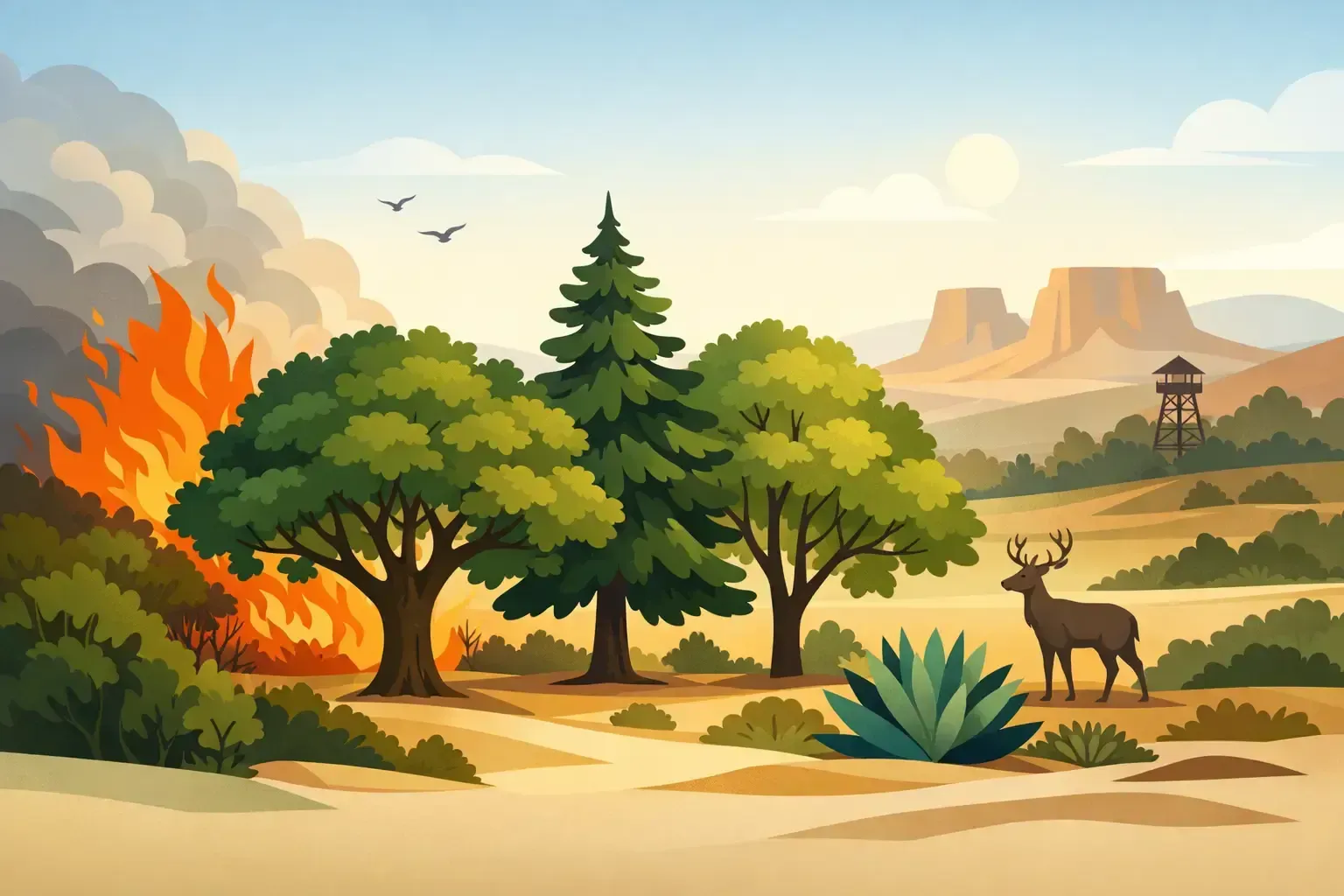
Savanna wildfire with trees, deer, and smoky hills under a bright sky
August 24, 2026
A beautiful shade tree should not become a fuse leading to your home. For Central Texas property owners, choosing the best trees for wildfire resistance mean...
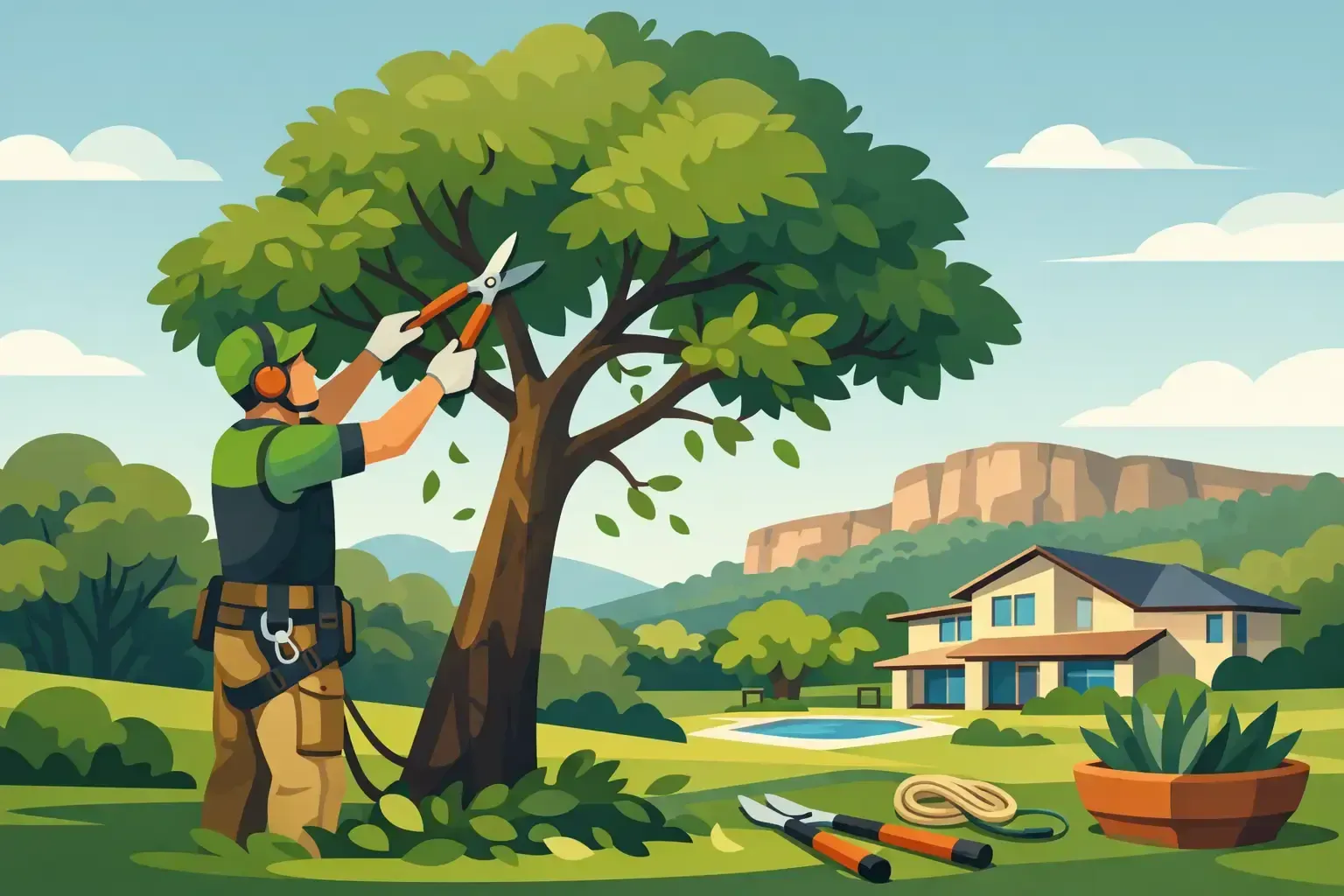
Worker pruning a tree in a sunny yard beside a house, with tools on the grass.
August 22, 2026
A mature live oak shading a Bee Cave driveway can look indestructible right up until a heavy limb hangs over the roof, a cedar elm starts crowding the servic...
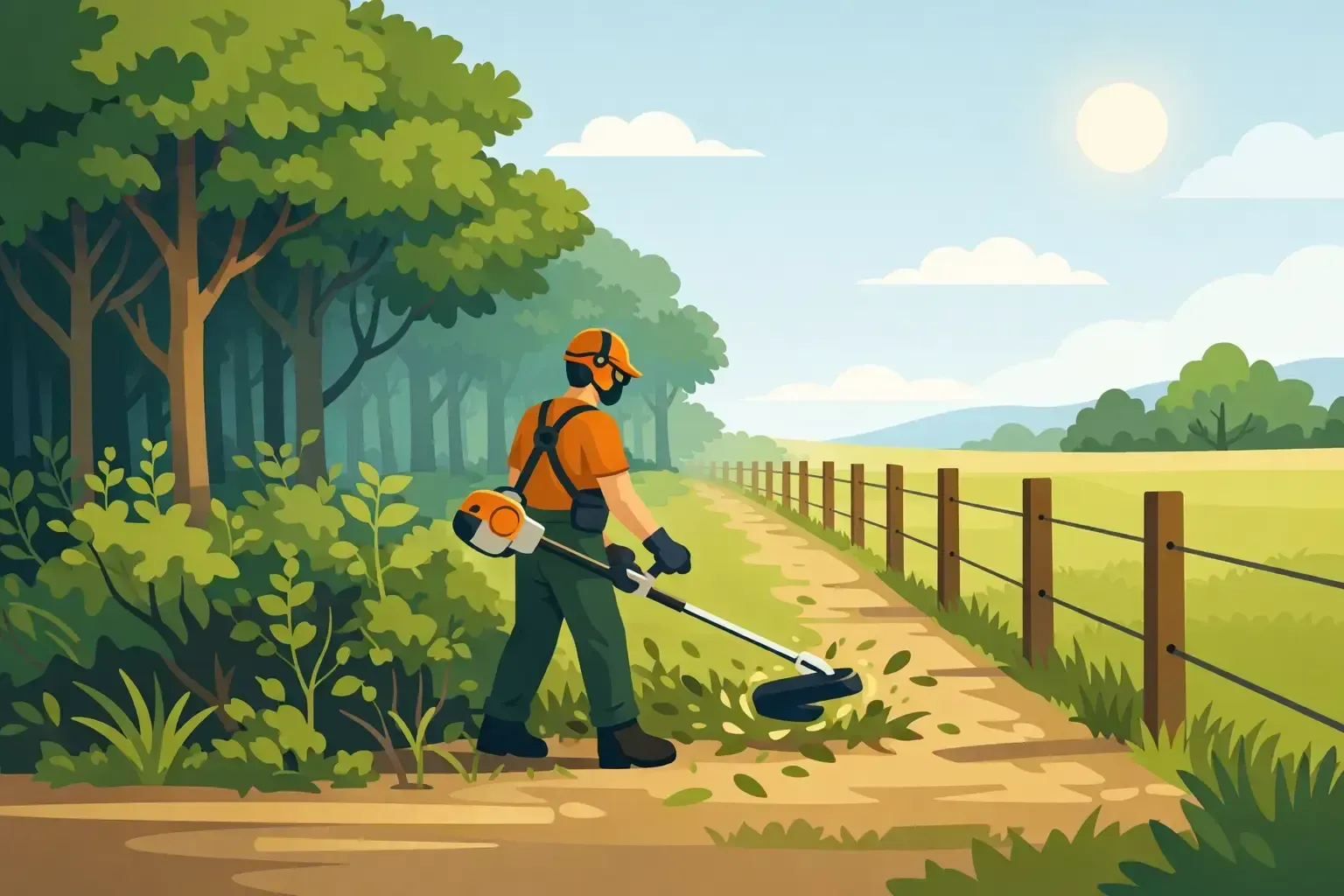
Person using a string trimmer beside a fenced field on a sunny day
August 20, 2026
A fence line can disappear fast in Central Texas. One wet spring, a few missed mowing cycles, and suddenly cedar, huisache, vines, fallen limbs, and thorny b...

Worker inspecting storm-damaged tree with fallen branches and a magnifying glass in a windy yard
August 18, 2026
A hard Central Texas storm can turn a healthy-looking canopy into a real property hazard in a single night. This guide to storm damaged tree assessment helps...
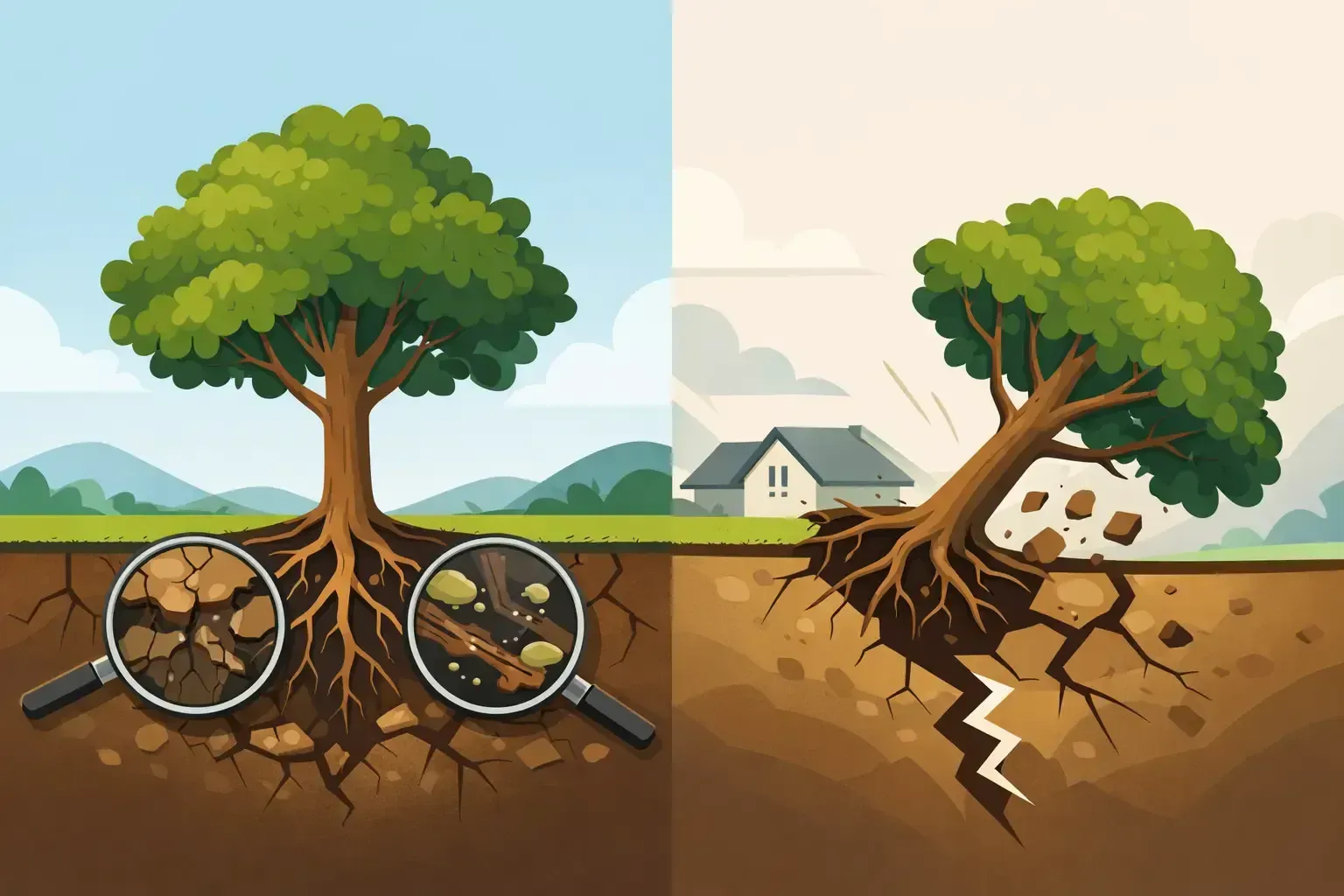
Healthy and damaged trees showing root health and drought soil cracking on a farm landscape
August 16, 2026
A live oak can look perfectly fine above ground while its support system is under serious stress below it. That is what makes root problems so frustrating fo...
Split view of deforestation and healthy green pasture with cows under a bright sky
August 14, 2026
A cedar-choked pasture can make a property feel smaller every year. Water disappears into dense juniper cover, native grasses lose sunlight, fence lines vani...
Farmer in field watching a blue tractor spray crops, with cows, barn, hills, and smoke in the background
September 1, 2026
A ranch can look green and still be headed in the wrong direction. Dense brush can hide stressed oaks, crowd out usable pasture, choke access roads, and crea...
Wildfire burning in a forest with firefighters, helicopter, and smoke over a split rural landscape
August 30, 2026
A hot, windy afternoon can turn a forgotten brush pile, a crowded cedar stand, or low limbs near a structure into more than a property-maintenance issue. Tex...
Environmental inspection scene with drone, tree, magnifying glass, recycle bin, and hard hat in a city park
August 28, 2026
A shaded entry drive can become a liability fast when a heavy limb hangs over customer parking, a dead cedar leans toward a fence, or brush builds up around ...
Wildfire response with firefighters, water tanker, helicopter, and smoke near homes in a rural neighborhood
August 26, 2026
A Central Texas wildfire mitigation guide has to start with a hard truth: a beautiful Hill Country property can carry fire faster than most owners expect. Ce...
Savanna wildfire with trees, deer, and smoky hills under a bright sky
August 24, 2026
A beautiful shade tree should not become a fuse leading to your home. For Central Texas property owners, choosing the best trees for wildfire resistance mean...
Worker pruning a tree in a sunny yard beside a house, with tools on the grass.
August 22, 2026
A mature live oak shading a Bee Cave driveway can look indestructible right up until a heavy limb hangs over the roof, a cedar elm starts crowding the servic...