

That big oak in the yard is not the place for guesswork. One bad cut can leave a decades-old tree stressed, exposed to decay, and a lot more likely to drop weight where you do not want it. If you are wondering how to prune mature oaks, the goal is not to make them look smaller or neater overnight. The goal is to improve structure, reduce risk, and protect the long-term health of one of the most valuable assets on your property.
In Central Texas, mature oaks carry real weight, both financially and emotionally. They frame homes, shade patios, support property value, and in some cases help with heat and wildfire exposure. That is why pruning an older oak should be deliberate. Fast is not the same as right.
How to prune mature oaks without hurting the tree
The first rule is simple. Prune with a purpose. Mature oaks do not respond well to random thinning or aggressive reduction. Every cut removes stored energy, opens a wound, and changes how the tree handles wind, sun, and weight.
The best pruning plan usually focuses on dead wood, broken limbs, rubbing branches, select low clearance issues, and specific structural problems. That sounds straightforward, but mature trees rarely offer simple choices. Removing one heavy limb may improve roof clearance, but it can also shift load to another weak union. Raising the canopy may help access and visibility, but if it is overdone, the tree can end up stressed and visually unbalanced.
That is why good pruning is part biology, part physics, and part restraint. A disciplined approach usually beats an aggressive one.
Start with the tree's actual condition
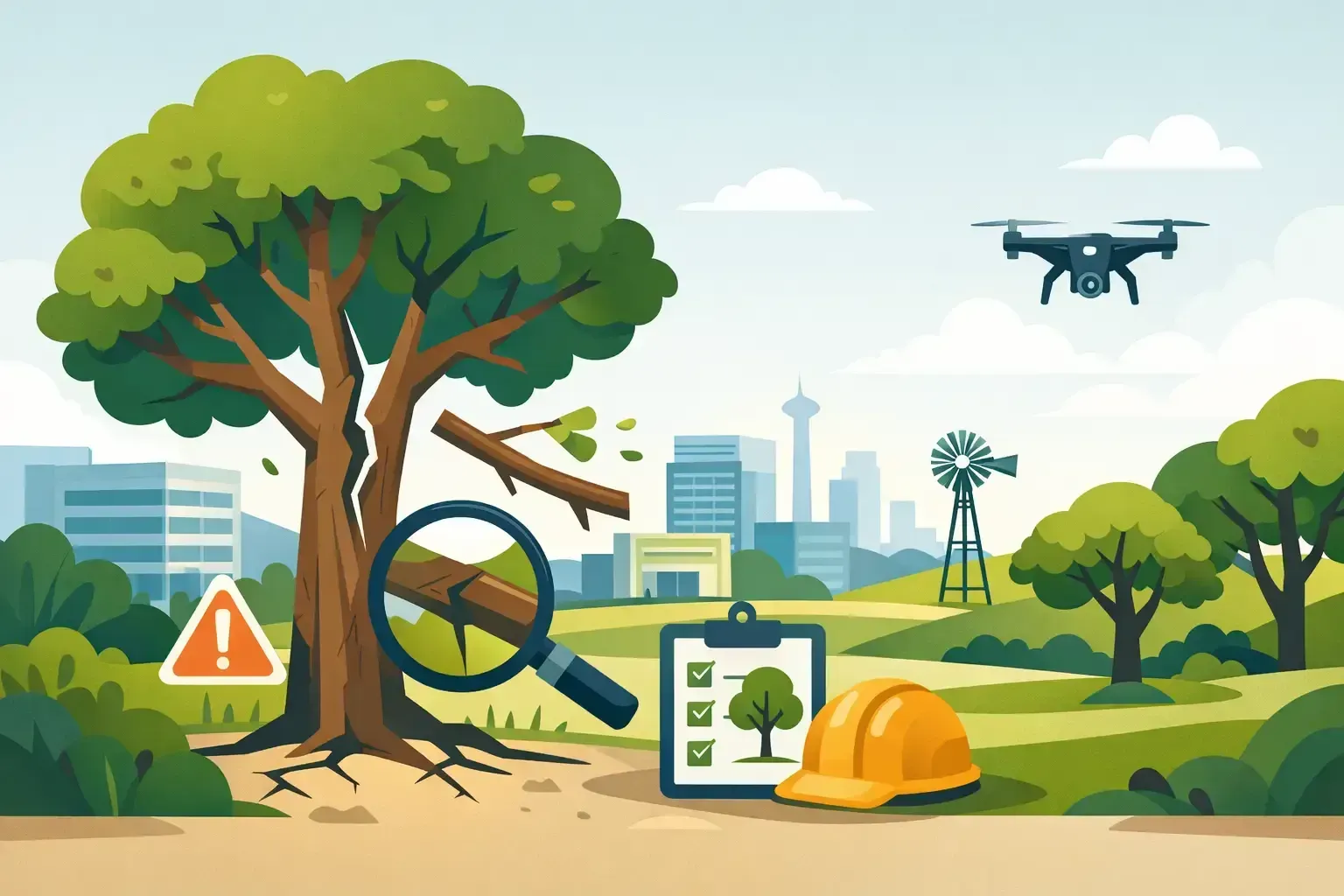
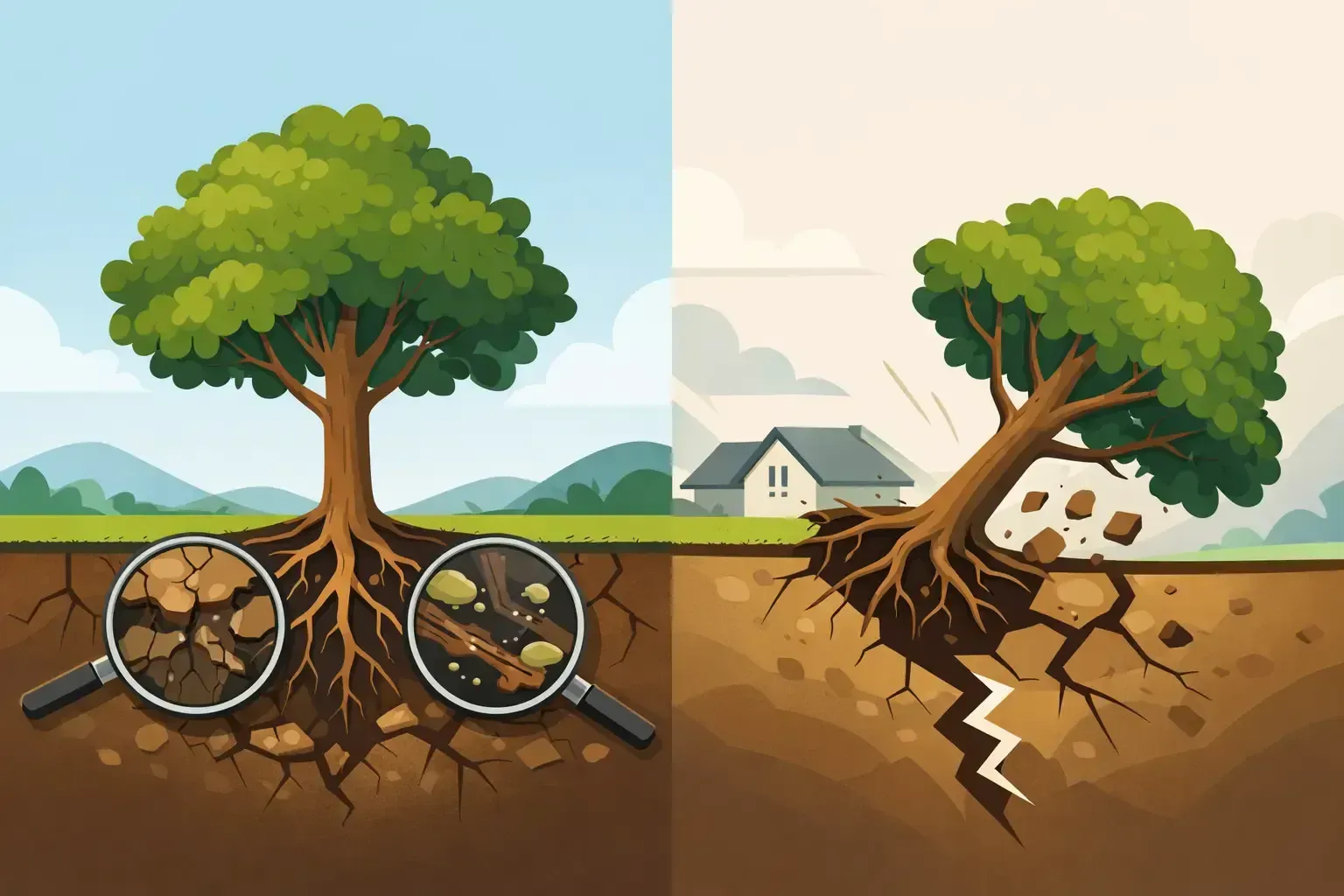
Before any cuts are made, look at the whole tree. Is the canopy full and vigorous, or thin and stressed? Are there dead branch tips, fungal issues, trunk wounds, included bark, storm damage, or signs of decline? A healthy mature oak can usually tolerate selective pruning. A stressed oak may need a lighter touch or a different plan altogether.
This is where homeowners often get bad advice. If someone walks up and says your oak needs to be "cleaned out" without explaining what that means, be cautious. Mature oak pruning should be based on specific objectives, not vague promises.
Make fewer cuts, but make better ones
For older oaks, less is often more. A common mistake is removing too much interior growth in an effort to "open it up." That can increase sunscald on limbs that were previously shaded and force the tree to react with stressed regrowth. It can also reduce the oak's natural ability to dampen wind loads.
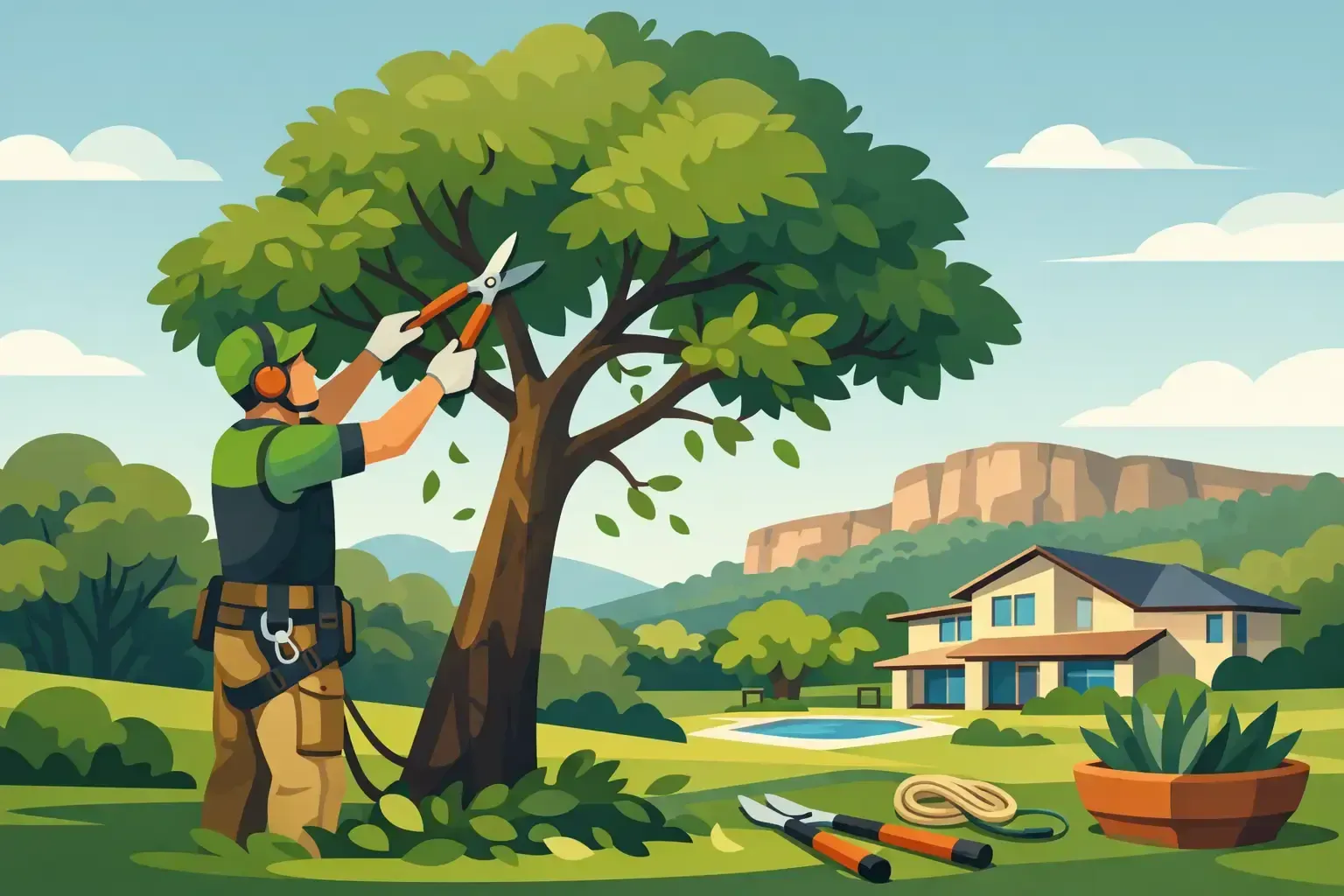
Good pruning usually means selecting the right branches to remove while preserving the tree's natural form. That includes cutting back to the branch collar, not leaving stubs, and not making flush cuts that damage the tree's natural defense zones. Those details matter because mature oaks do not heal the way people imagine. They compartmentalize damage. Clean, properly placed cuts give them a much better chance to do that well.
When to prune mature oaks
Timing matters just as much as technique. If you want to know how to prune mature oaks responsibly, do not skip the calendar.
In Texas, oak wilt is a serious concern, and fresh pruning wounds can create risk during high-pressure periods. For that reason, mature oaks are generally pruned during the safest recommended window for your area, typically in the cooler season when disease pressure is lower. Emergency situations are different, of course. If a branch is broken, hanging, or threatening a structure, safety comes first.
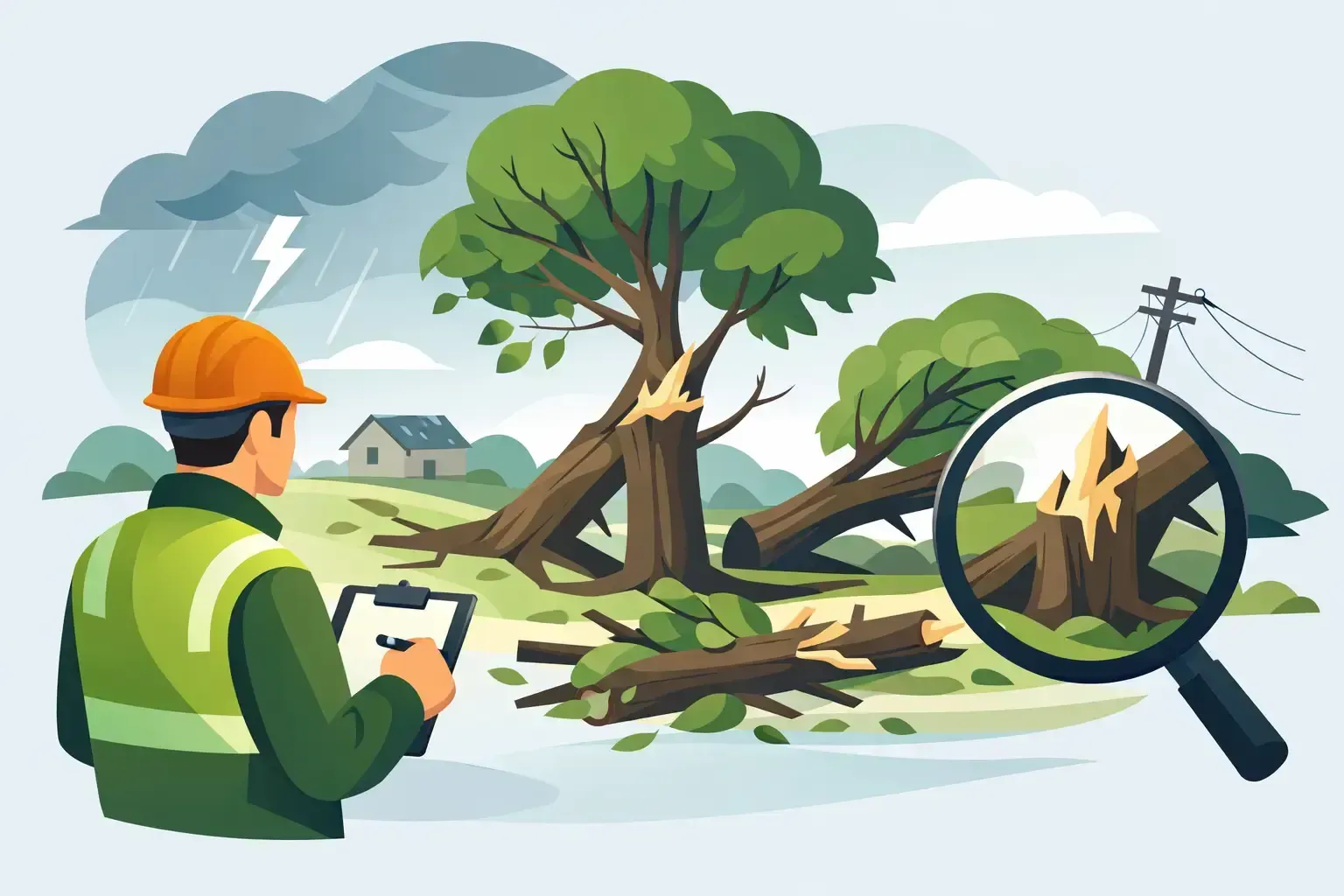
Even then, the response should be controlled, not hacked together. Storm-damaged oaks
often need hazard reduction first and corrective pruning later, once the tree can be properly evaluated.
Avoid the urge to over-prune after a storm
A tree that lost a limb in wind or ice does not need a haircut everywhere else. It needs a smart assessment. Sometimes the right move is removing broken material and waiting to see how the tree responds before doing more. Other times, one failure reveals a larger structural issue that needs immediate correction.
This is one of those it-depends situations. Age, species, health, defect type, target area, and recent weather all matter.
What should be removed from a mature oak
Most mature oak pruning falls into a few high-value categories. Deadwood is usually first, especially over homes, driveways, play areas, roads, or livestock zones. Broken or split branches should be addressed before they fail further. Rubbing branches can create wounds that invite decay. Low limbs may need selective elevation for access, but not so much that the tree loses balance or gets stripped up like a lollipop.
Then there are structural issues. Co-dominant stems, overextended lateral limbs, and branches with visible cracks may warrant reduction or removal depending on the defect and the target below.
What usually should not happen is topping. Cutting back major leaders to random stubs may make a tree look shorter for a minute, but it creates weak regrowth, larger wounds, and long-term problems. On mature oaks, topping is not pruning. It is damage.
Clearance pruning needs discipline
Homeowners often want branches off the roof, away from lights, or clear of traffic areas. Those are valid goals. The key is doing enough to create clearance without stripping the canopy. If too much weight is taken off one side or too many lower limbs are removed at once, the tree can become more vulnerable, not less.
For large properties and ranch entrances, visibility and equipment access matter too. But mature oaks still need a stable canopy architecture. Clean lines are good. Skeletonizing the tree is not.
How much pruning is too much?
As a general rule, mature oaks should not have a large percentage of live canopy removed in one session unless there is a compelling safety reason. The exact threshold depends on the tree's health, age, species, and stress load, but aggressive live crown removal can absolutely set an older oak back.
People are often surprised by how conservative a proper pruning plan looks. That is not under-delivery. That is professional judgment. A good arborist is thinking beyond this weekend's appearance and looking at how the tree will respond next summer, after the next drought cycle, and during the next major wind event.
That long view matters in places like Dripping Springs, Austin, and the surrounding Hill Country, where heat, drought stress, dense canopies, and storm swings can all pile onto mature trees fast.
Signs it is time to call a certified arborist
Some pruning decisions are too important to make from the ground with a pole saw and good intentions. If the tree is near a home, spans a driveway, shades a septic area, has heavy limbs over target zones, or shows signs of decay or structural weakness, it is smart to bring in a certified arborist.
The same goes for any mature oak with previous storm damage, unbalanced growth, codominant trunks, cracks, dieback, or suspected disease issues. Oaks are too valuable to learn on by trial and error.
At Dynamo Dusty's Tree Service, this is the kind of work we take seriously. Mature oak pruning is not about making dramatic cuts for dramatic photos. It is about precision, risk management, and protecting the tree and the property around it.
Common mistakes homeowners make with mature oaks
The most common mistake is pruning for appearance instead of function. A close second is hiring someone who talks big but cannot explain why each cut is being made. A mature oak should never be treated like a hedge or a fast-growing ornamental.
Another mistake is delaying necessary pruning because the tree still looks mostly fine. Deadwood and structural defects often stay hidden until the next storm puts them on display. On the other hand, rushing into heavy pruning because the tree feels too large can create a completely different set of problems.
There is a balance here. Good pruning reduces risk while respecting the tree's biology.
A healthy mature oak should still look like an oak
That sounds obvious, but it is a useful gut check. After proper pruning, the tree should retain a natural canopy shape, strong branch distribution, and enough leaf area to support itself. If it looks stripped, topped, or overly sculpted, that is usually a sign too much was taken.
Mature oaks have earned the right to be treated with patience. They grew over decades. They should not be "fixed" in an afternoon by removing half the canopy.
If you are deciding what to do with an older oak, think in terms of stewardship, not just maintenance. The right pruning work is quiet, precise, and built to hold up over time. Your tree does not need heroics. It needs good judgment, clean cuts, and a plan that respects what is at stake.