

Drought Impact on Mature Trees in Texas

June 25, 2026

A big live oak can look tough enough to handle anything Central Texas throws at it. Then a long dry stretch hits, the canopy starts thinning, a few major limbs die back, and suddenly a tree that seemed stable is under real stress. That is the hard truth about the drought impact on mature trees - size and age do not make a tree drought-proof.

For homeowners, ranch owners, and property managers, this matters because mature trees carry serious value. They shade homes, frame driveways, anchor landscapes, protect soil, and in many cases define the entire feel of a property. When drought weakens those trees, the problem is not just cosmetic. It can become a safety issue, a wildfire concern, and an expensive loss if warning signs are missed for too long.

Why drought impact on mature trees is often underestimated

A lot of people assume younger trees are the fragile ones and older trees can simply fend for themselves. There is some truth there. Newly planted trees usually need closer attention. But mature trees have their own vulnerabilities, especially after repeated years of heat, dry soil, and erratic rainfall.

Large trees support a lot of living tissue. A broad canopy needs water to keep leaves functioning, roots alive, and internal transport systems moving. During drought, the tree starts making hard choices. It may shed leaves early, slow growth, sacrifice outer branch tips, or stop defending itself as effectively against insects and disease. Those changes can happen gradually enough that property owners miss them until the decline is advanced.

In Central Texas, drought stress also tends to stack with other local pressures. High heat, compacted soils, thin rocky soils, construction damage, turf competition, and sudden heavy rain after long dry periods can all push a mature tree harder than people realize.

What drought actually does inside a mature tree

Drought is not just a matter of a tree looking thirsty. Water drives nearly every basic function a tree relies on to stay alive.

When soil moisture drops too low, roots cannot absorb enough water to support the canopy. The tree responds by closing tiny pores in the leaves to reduce water loss. That helps in the short term, but it also limits photosynthesis. In plain language, the tree slows its food production right when it needs energy to survive stress.

As drought continues, the tree may begin pulling resources away from less essential areas. Small twigs die back first. Leaf size may shrink. The canopy becomes thinner. Growth rings narrow. Root systems can also suffer, which creates a nasty cycle - weaker roots mean even less ability to collect water when it is available.

On severe cases, the tree's water transport system can begin to fail. Once that happens, recovery gets harder and slower. A mature tree may remain standing for years while steadily declining, which is one reason drought damage is often misunderstood. The rain finally returns, but the tree does not bounce back the way people expected.

The most common signs of drought stress in mature trees

Some symptoms are obvious. Others are easy to brush off as seasonal change. Context matters.

Leaves may wilt, curl, scorch at the edges, yellow too soon, or drop early. The canopy may look sparse or uneven, especially at the outer ends of branches. You might notice dead twigs in the upper crown, reduced leaf size, or sections that leaf out weakly compared to previous years.

Bark can also tell a story. Cracking, splitting, or sloughing bark may point to stress, though it depends on species and site conditions. In some cases, stressed trees begin producing heavy seed crops as a survival response. Property owners sometimes think, this tree is producing a lot, so it must be healthy. Sometimes the opposite is true.

Then there are the secondary problems. Borer activity, cankers, fungal issues, and opportunistic pests often show up after drought has already weakened a tree's defenses. The pest gets blamed, but the original problem was the water deficit.

Which mature trees are at higher risk

Not every species responds the same way. Some native and adapted trees handle dry periods better than others, but no species gets a free pass in prolonged or repeated drought.

Live oaks, red oaks, cedar elms, pecans, and ash can all suffer under severe water stress, though the symptoms and recovery patterns vary. Site history matters just as much as species. A tree growing in shallow soil over rock, surrounded by turf, compacted by traffic, or affected by recent trenching may struggle far sooner than a similar tree in healthier soil.

This is where blanket advice falls short. One mature oak on your property may need intervention while another twenty yards away is coping fine. Tree care is not guesswork when you look at soil conditions, root zone disturbance, canopy response, and overall site pressure together.

Why the damage often shows up later

One of the trickiest parts of the drought impact on mature trees is delayed decline. A tree may survive the dry spell, keep some foliage, and look decent enough from the driveway. Then six months or even a year later, larger limbs start failing, leaf density drops, and dieback spreads.

That delay happens because trees are using reserves to survive. They can hold on for a while. But depleted energy, weakened roots, and internal stress catch up eventually. This is also why a property owner may say, nothing happened during the drought, so we are good now. Maybe. Maybe not.

Post-drought periods can be risky too. Sudden flushes of growth after rain may mask structural weakness. Heavier foliage on compromised limbs can increase failure risk, especially during storms or high wind events.

What property owners should do during drought

The best response is measured, consistent, and based on the tree's actual condition.

Deep watering is usually more effective than frequent shallow watering. Mature trees need moisture where a meaningful portion of the root zone can access it, not just a wet surface near the trunk. The exact schedule depends on soil type, species, slope, and temperature. Too little water will not help much, and too much can create its own stress, especially in poorly drained areas.

Mulch is one of the simplest high-value moves you can make. A proper mulch layer helps moderate soil temperature, reduce evaporation, and improve root-zone conditions over time. Just keep it off the trunk. Mulch volcanoes are still a bad idea, no matter how common they are.

Pruning during drought should be thoughtful, not aggressive. Removing deadwood can improve safety, but heavy live canopy reduction on a stressed tree can backfire. The tree needs leaf area to produce energy. This is where precision matters. Good tree care is not about doing more. It is about doing the right amount, at the right time, for the right reason.

If the tree is near a structure, roadway, pasture gate, play area, or high-use part of the property, inspection becomes even more important. Drought-stressed trees can carry hidden risk in limbs that are no longer structurally reliable.

Soil health matters more than most people think

Watering alone does not solve every drought problem. If the soil is compacted, stripped of organic matter, or disrupted by years of traffic and construction, roots cannot function at full capacity even when moisture is added.

That is why long-term tree health often comes back to the ground itself. In some cases, improving soil conditions gives a mature tree a much better shot at recovery than simply adding more water. Healthy soil supports healthier roots, and healthier roots give the tree more resilience when the next hard summer arrives.

For larger properties, ranch entrances, HOA common areas, and commercial sites, this becomes a planning issue, not just a maintenance task. Trees, brush load, irrigation patterns, mowing practices, and wildfire exposure all affect one another.

When it is time to bring in an arborist

If a mature tree has major dead limbs, rapid canopy thinning, bark loss, obvious lean changes, root disturbance, or repeated stress symptoms over multiple seasons, it is time for a professional assessment. The goal is not always removal. Sometimes a tree can be stabilized, monitored, and supported with a practical care plan.

But there are cases where keeping a severely compromised tree is the riskier and more expensive decision. That is especially true when drought stress is combined with storm damage or wildfire vulnerability. An ISA-certified arborist can separate cosmetic decline from structural concern and help you prioritize what needs action now versus what can be monitored.

Around Central Texas, where heat, wind, and wildfire risk can all pile onto stressed landscapes, that kind of disciplined evaluation matters. Companies like Dynamo Dusty's Tree Service approach tree health with a field-tested, engineering-minded process because mature trees deserve more than a quick glance and a guess.

A mature tree can survive a lot, but it cannot negotiate with prolonged drought forever. The earlier you catch the stress, the more options you usually have - and the better your odds of keeping the trees that make your property feel like home.

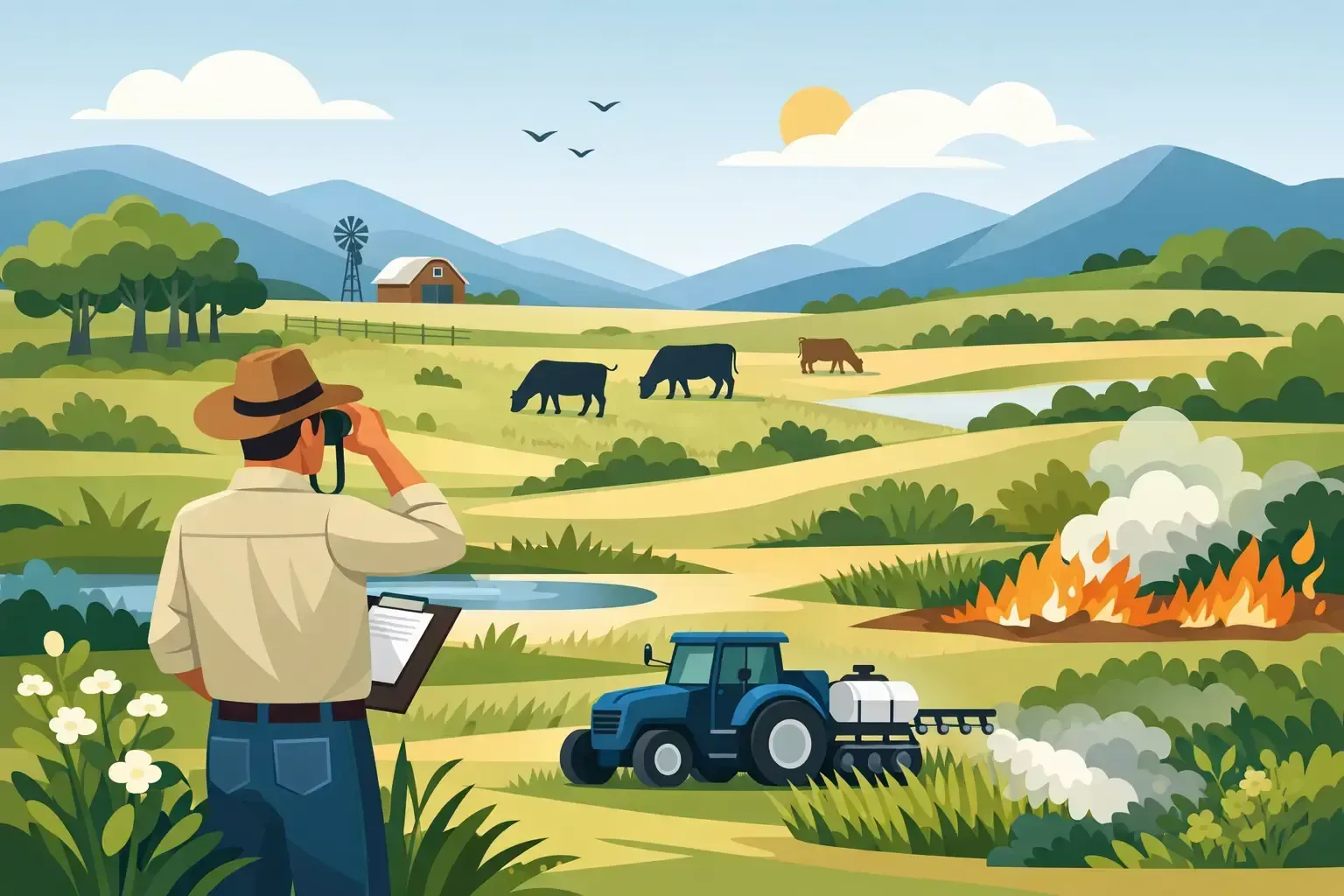
Farmer in field watching a blue tractor spray crops, with cows, barn, hills, and smoke in the background
September 1, 2026
A ranch can look green and still be headed in the wrong direction. Dense brush can hide stressed oaks, crowd out usable pasture, choke access roads, and crea...

Wildfire burning in a forest with firefighters, helicopter, and smoke over a split rural landscape
August 30, 2026
A hot, windy afternoon can turn a forgotten brush pile, a crowded cedar stand, or low limbs near a structure into more than a property-maintenance issue. Tex...
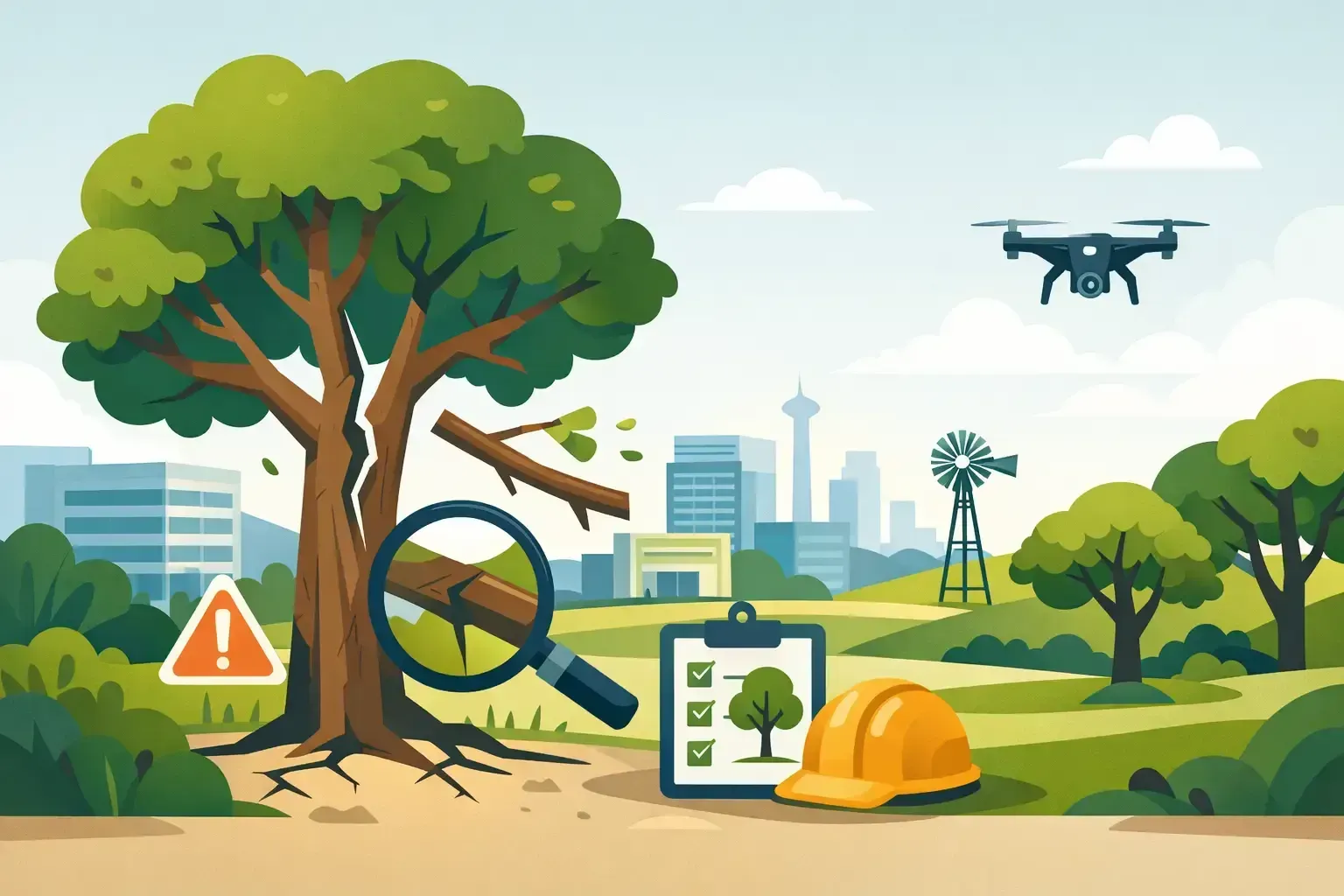
Environmental inspection scene with drone, tree, magnifying glass, recycle bin, and hard hat in a city park
August 28, 2026
A shaded entry drive can become a liability fast when a heavy limb hangs over customer parking, a dead cedar leans toward a fence, or brush builds up around ...
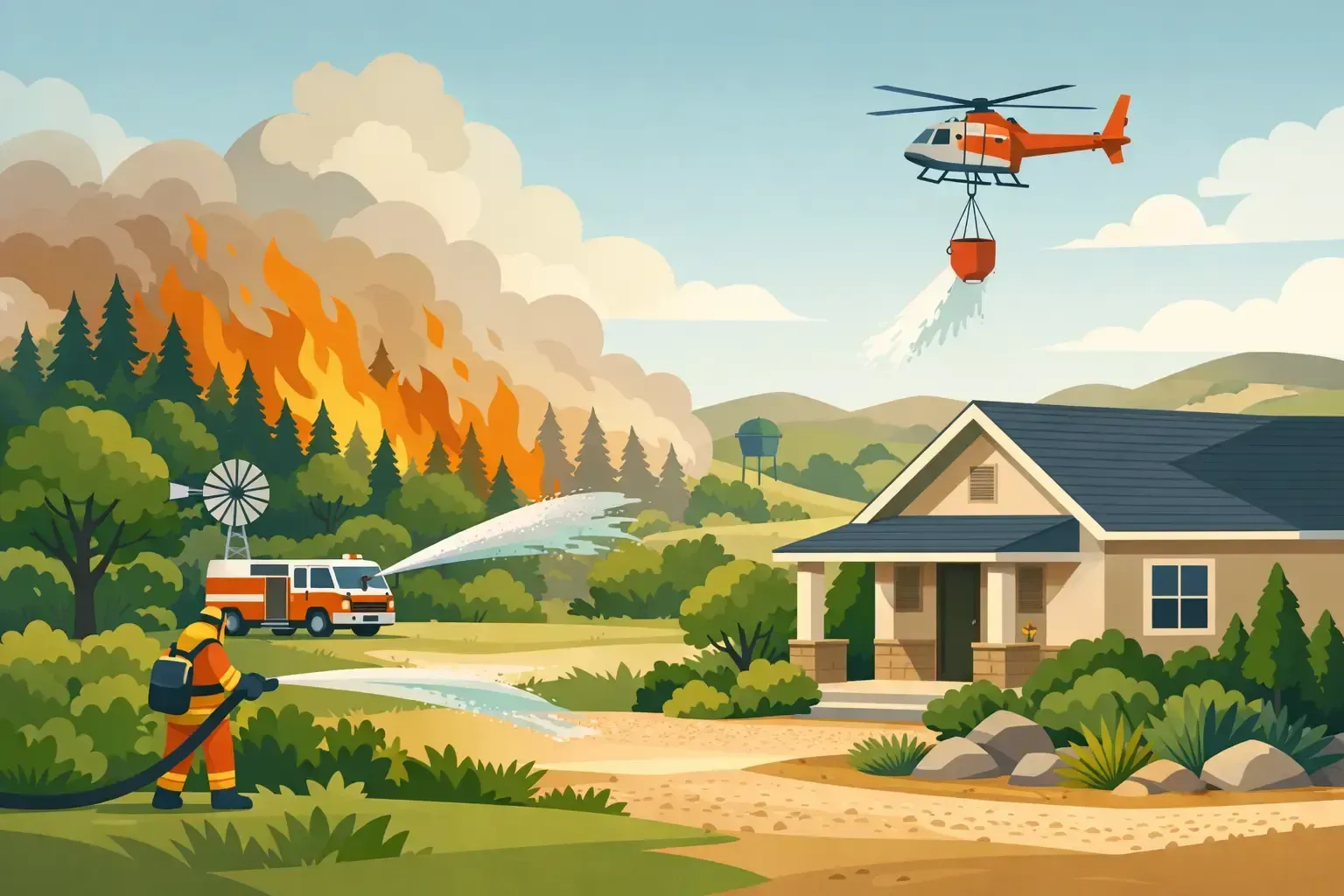
Wildfire response with firefighters, water tanker, helicopter, and smoke near homes in a rural neighborhood
August 26, 2026
A Central Texas wildfire mitigation guide has to start with a hard truth: a beautiful Hill Country property can carry fire faster than most owners expect. Ce...
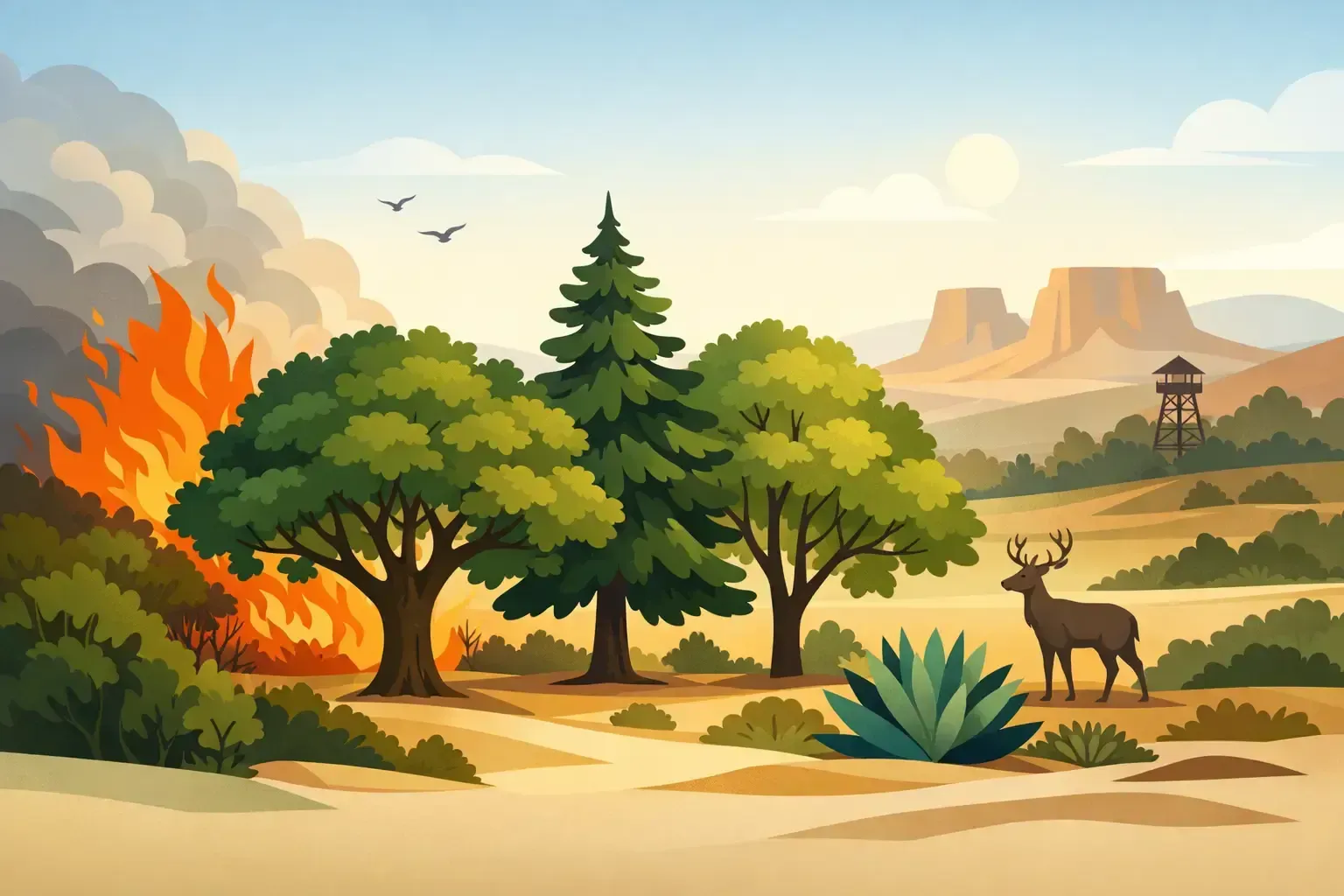
Savanna wildfire with trees, deer, and smoky hills under a bright sky
August 24, 2026
A beautiful shade tree should not become a fuse leading to your home. For Central Texas property owners, choosing the best trees for wildfire resistance mean...
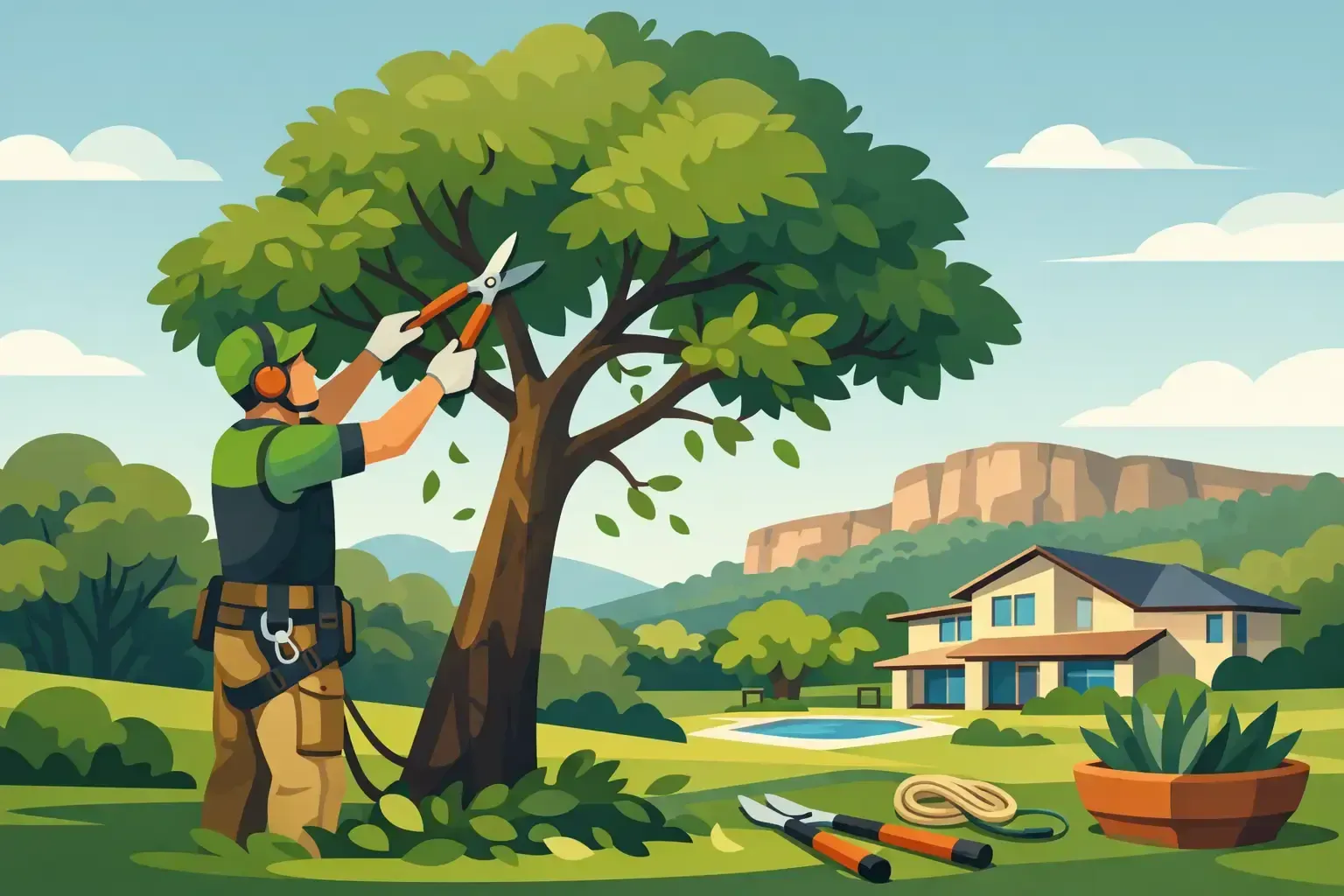
Worker pruning a tree in a sunny yard beside a house, with tools on the grass.
August 22, 2026
A mature live oak shading a Bee Cave driveway can look indestructible right up until a heavy limb hangs over the roof, a cedar elm starts crowding the servic...
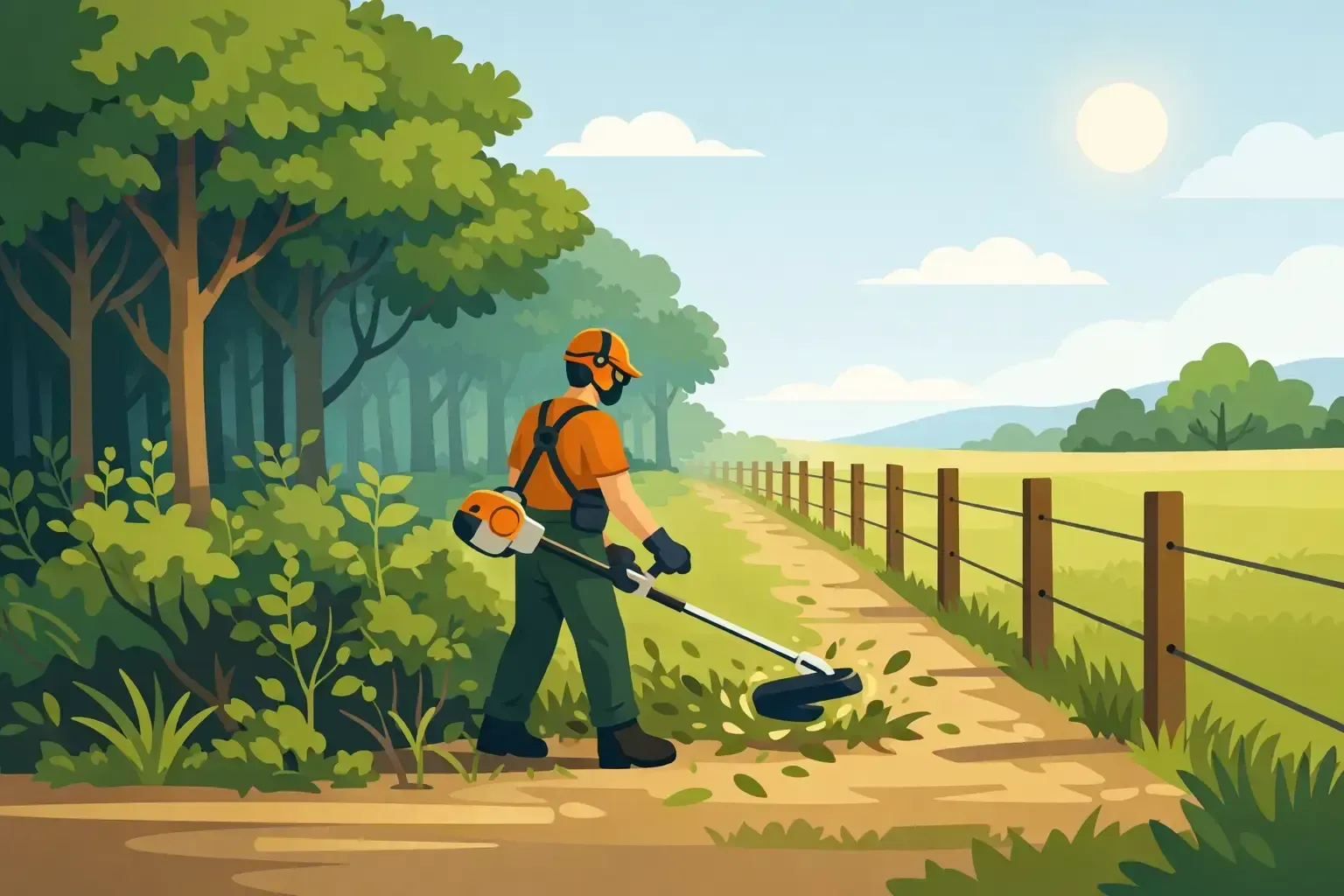
Person using a string trimmer beside a fenced field on a sunny day
August 20, 2026
A fence line can disappear fast in Central Texas. One wet spring, a few missed mowing cycles, and suddenly cedar, huisache, vines, fallen limbs, and thorny b...
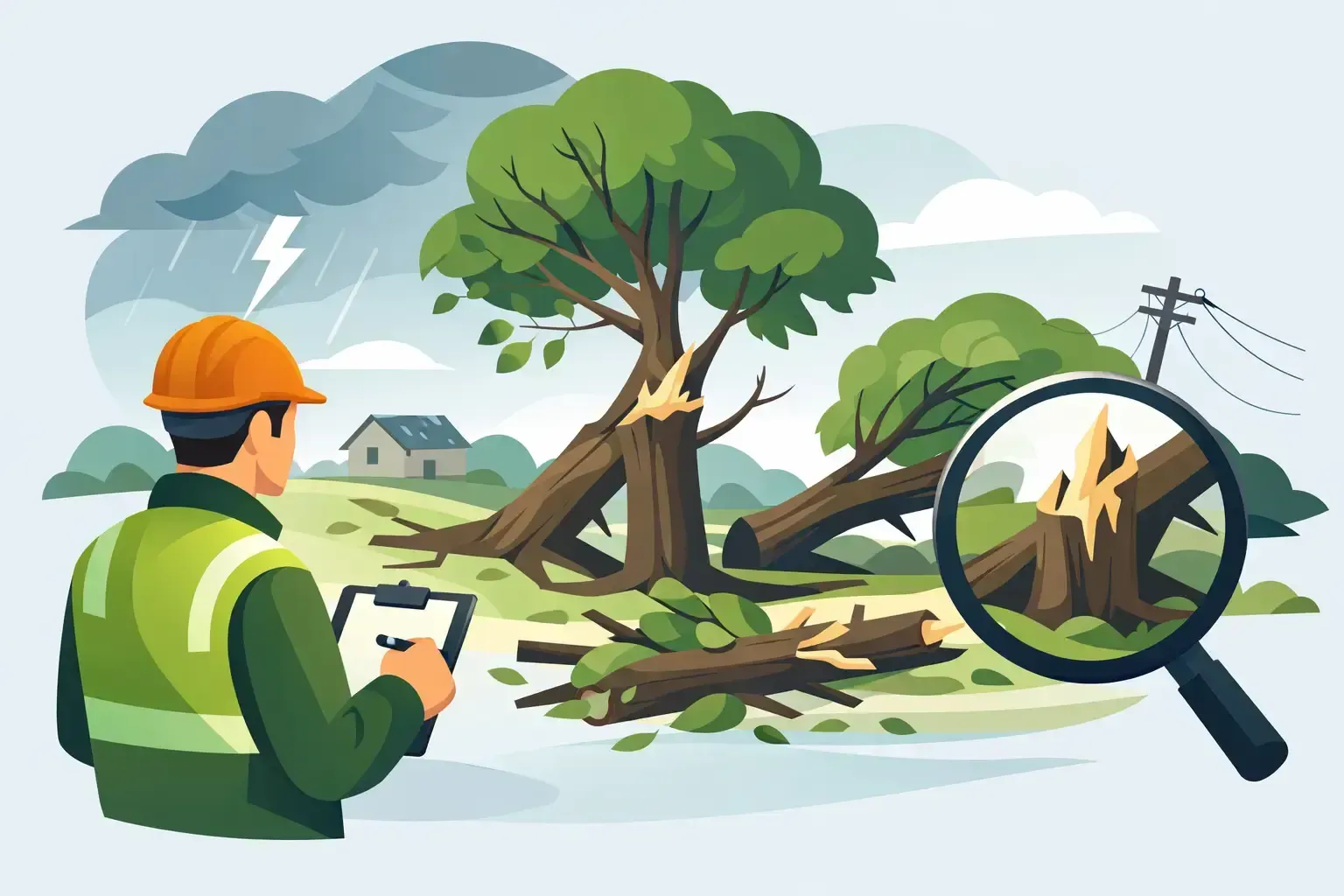
Worker inspecting storm-damaged tree with fallen branches and a magnifying glass in a windy yard
August 18, 2026
A hard Central Texas storm can turn a healthy-looking canopy into a real property hazard in a single night. This guide to storm damaged tree assessment helps...
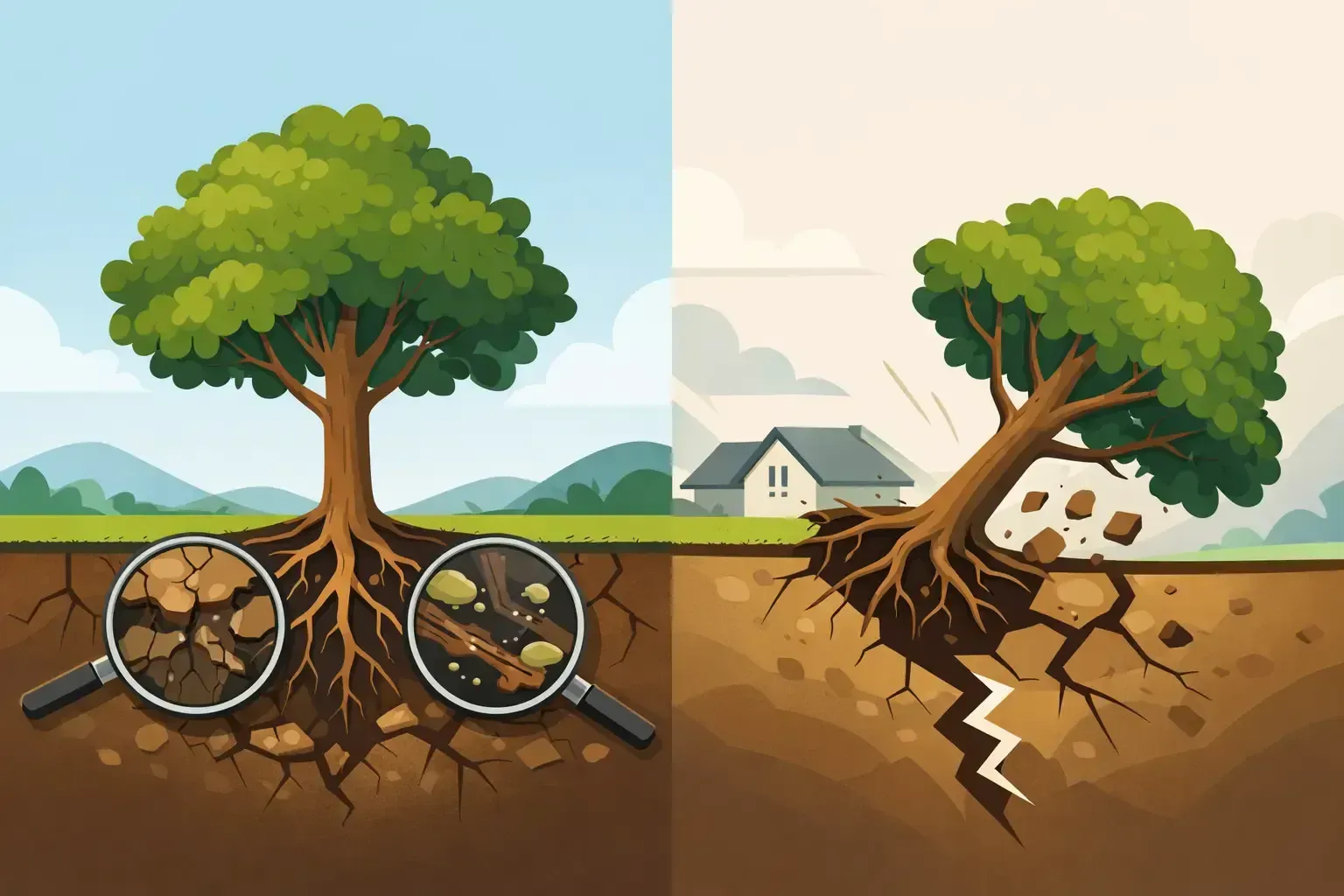
Healthy and damaged trees showing root health and drought soil cracking on a farm landscape
August 16, 2026
A live oak can look perfectly fine above ground while its support system is under serious stress below it. That is what makes root problems so frustrating fo...
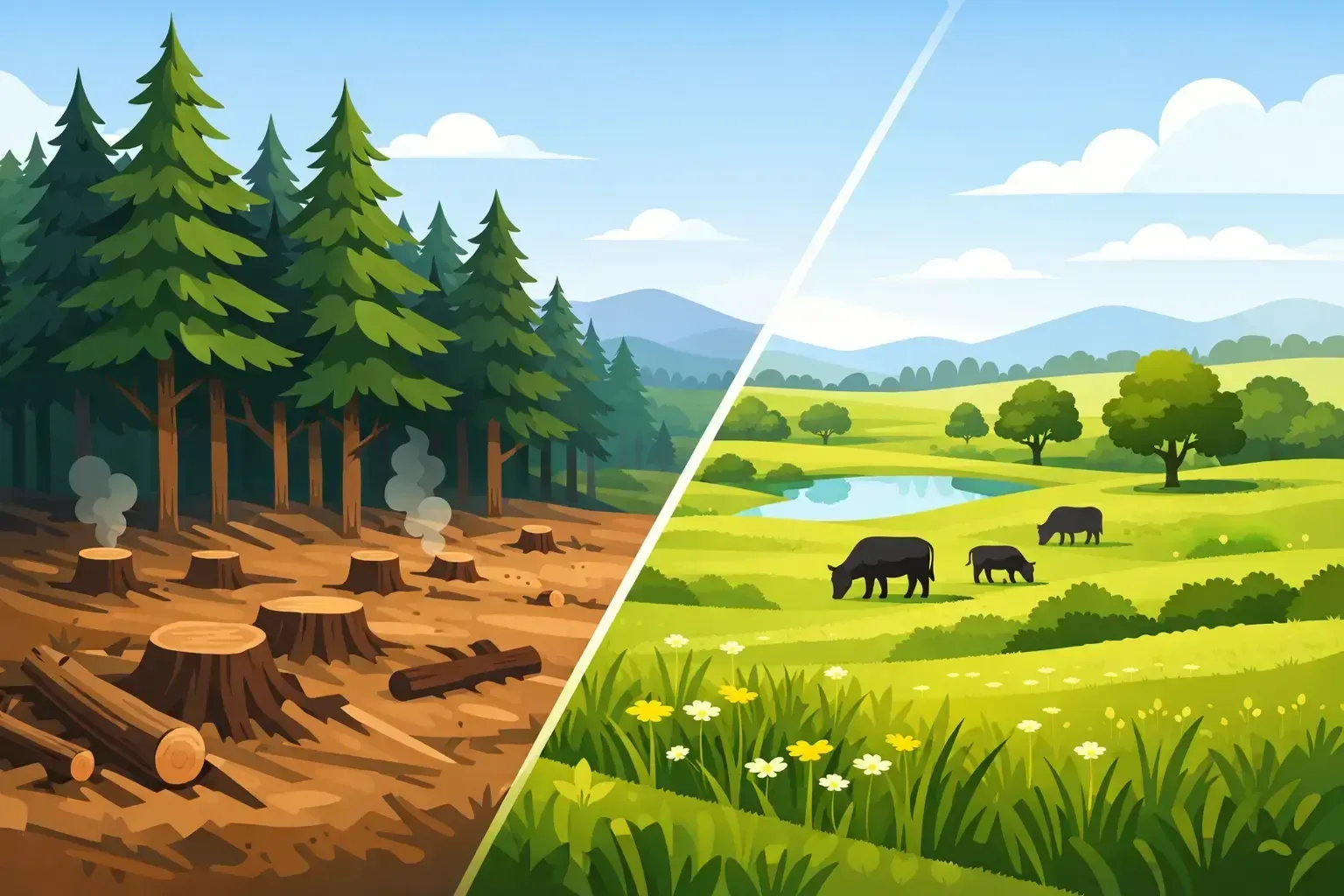
Split view of deforestation and healthy green pasture with cows under a bright sky
August 14, 2026
A cedar-choked pasture can make a property feel smaller every year. Water disappears into dense juniper cover, native grasses lose sunlight, fence lines vani...
Farmer in field watching a blue tractor spray crops, with cows, barn, hills, and smoke in the background
September 1, 2026
A ranch can look green and still be headed in the wrong direction. Dense brush can hide stressed oaks, crowd out usable pasture, choke access roads, and crea...
Wildfire burning in a forest with firefighters, helicopter, and smoke over a split rural landscape
August 30, 2026
A hot, windy afternoon can turn a forgotten brush pile, a crowded cedar stand, or low limbs near a structure into more than a property-maintenance issue. Tex...
Environmental inspection scene with drone, tree, magnifying glass, recycle bin, and hard hat in a city park
August 28, 2026
A shaded entry drive can become a liability fast when a heavy limb hangs over customer parking, a dead cedar leans toward a fence, or brush builds up around ...
Wildfire response with firefighters, water tanker, helicopter, and smoke near homes in a rural neighborhood
August 26, 2026
A Central Texas wildfire mitigation guide has to start with a hard truth: a beautiful Hill Country property can carry fire faster than most owners expect. Ce...
Savanna wildfire with trees, deer, and smoky hills under a bright sky
August 24, 2026
A beautiful shade tree should not become a fuse leading to your home. For Central Texas property owners, choosing the best trees for wildfire resistance mean...
Worker pruning a tree in a sunny yard beside a house, with tools on the grass.
August 22, 2026
A mature live oak shading a Bee Cave driveway can look indestructible right up until a heavy limb hangs over the roof, a cedar elm starts crowding the servic...