


Tree Pruning for Storm Prevention That Works

April 14, 2026

That big live oak shading your driveway can turn into a very expensive problem the minute a Central Texas storm starts throwing wind sideways. Most storm damage does not come from a healthy, well-managed tree suddenly failing for no reason. It usually comes from weak branch structure, deadwood, overextended limbs, or years of neglect catching up all at once. That is why tree pruning for storm prevention is less about making a tree look neat and more about reducing avoidable risk before the weather tests it.

If you own a home, ranch, commercial site, or managed property, pruning is one of the smartest forms of preventive maintenance you can invest in. The key is doing the right cuts for the right reasons. Bad pruning can make a tree more dangerous, not less.

What tree pruning for storm prevention actually does

Storm-focused pruning is about managing load, structure, and failure points. In plain English, you are reducing the parts of the canopy most likely to snap, split, or drag a whole section of tree down when wind and rain hit hard.

A good pruning plan usually targets dead, dying, cracked, rubbing, hanging, or poorly attached limbs. It can also reduce end weight on long overextended branches and improve spacing in dense canopies so wind can move through the tree instead of pushing against a heavy wall of foliage.

That does not mean stripping the tree out or making it skinny. Trees need leaf area to stay healthy. If you remove too much, you stress the tree, trigger weak regrowth, and create a bigger problem down the road. Storm prevention pruning works best when it is disciplined, selective, and based on how the tree is built.

The biggest storm risks hiding in plain sight

Some hazards are obvious. A dead limb over the roof is not subtle. Others are easy to miss unless you know what you are looking for.

Codominant stems are a common one. That is when a tree has two main trunks competing from the same point, often with bark trapped between them. From the ground, the tree may look full and impressive. Under storm load, that union can split hard and fast.

Long horizontal limbs are another issue, especially when they stretch over driveways, patios, play areas, fences, barns, or power-adjacent zones. The farther the branch extends, the more leverage the wind gets. Add extra foliage weight and rain, and that limb is carrying a lot.

Dense interior growth can also become a problem. Not every thick canopy is dangerous, but overcrowded branching can create poor limb spacing and extra sail effect in strong wind. On some species, interior thinning helps. On others, too much thinning can backfire. This is where experience matters.

Then there is deadwood. Dead branches do not flex like living wood. They crack, drop, and turn a thunderstorm into an insurance call.

Pruning goals change by tree, species, and property use

This is where cookie-cutter advice falls apart. A mature oak near a home calls for a different strategy than a cedar elm along a ranch road or a young shade tree in an HOA common area.

For mature trees, the goal is usually risk reduction without over-pruning. That may mean removing deadwood, shortening overextended limbs, and correcting specific structural issues while preserving canopy balance.

For younger trees, storm prevention is often about training. Smart structural pruning early in life can prevent weak attachments, bad branch spacing, and competing leaders. That kind of work is not flashy, but it pays off for years.

For large properties and rural acreage, the equation can include access routes, fence lines, structures, grazing areas, and wildfire concerns. A limb that hangs over a roof is one kind of hazard. A neglected tree line blocking emergency access after a storm is another. In Central Texas, storm readiness and land management often overlap.

Common pruning mistakes that make storm damage worse

A lot of tree failures start with bad cuts made years earlier. That is one reason property owners are right to be cautious about who they hire.

Topping is one of the worst offenders. Cutting the top out of a tree may seem like a fast way to reduce height and wind exposure, but it usually leads to weak, fast-growing sprouts attached just under the cut. Those shoots can become future break points. Topping also stresses the tree and wrecks its natural structure.

Lion-tailing is another problem. That is when crews strip too much growth from the interior of a branch and leave foliage mostly at the tip. It creates a long lever arm with weight concentrated at the end, which is exactly what you do not want in high wind.

Over-thinning can also cause trouble. Trees need enough canopy to feed themselves and protect bark and limbs from sun stress. Remove too much at once, and the tree may respond with weak regrowth or decline.

The goal is not to make a tree look aggressively pruned. The goal is to make it safer, healthier, and more stable.

When to schedule pruning before storm season

The best time to prune depends on species, health, recent weather, and the kind of pruning needed. But one rule holds up pretty well: do not wait until a storm watch is already on your phone.

Preventive pruning works best when it is done ahead of peak storm periods, with enough time for proper planning and careful execution. If a tree already has major deadwood, cracked unions, or limbs over a structure, the right time is usually sooner rather than later.

For many property owners, annual or every-other-year inspection makes sense, especially if the property has mature trees near homes, driveways, barns, parking areas, or pedestrian zones. After drought, ice, or previous storm damage, reassessment is smart because trees may carry hidden defects that do not show up immediately.

What a professional looks at during a storm-prevention pruning plan

A serious pruning plan is not somebody pulling up, eyeballing the tree for thirty seconds, and firing up a chainsaw. It starts with inspection.

An experienced crew looks at species, age class, canopy density, branch attachment, weight distribution, signs of decay, previous pruning cuts, site targets, and how the tree interacts with nearby structures. They also think about what not to cut. That matters just as much.

On some properties, the right answer is straightforward pruning. On others, cabling, removal, clearance work, or broader land management may be part of the discussion. If a tree has advanced decay or severe structural weakness, pruning alone may not solve the risk. Good advice is honest advice, even when it is not the answer a property owner hoped for.

That disciplined approach is a big reason property owners call certified professionals instead of gambling on the lowest bid. Precision work costs less than preventable damage.

Tree pruning for storm prevention in Central Texas

Central Texas trees deal with a rough mix of stress. High wind, sudden downpours, drought, heat, shallow soil in some areas, and occasional ice can all play a role in how trees fail. A branch weakened by drought stress may hold fine in calm weather, then snap during the first strong thunderstorm of the season.

Live oaks, cedar elms, pecans, hackberries, and other common area trees all behave differently. Some tolerate pruning well when done properly. Some are more prone to breakage in certain branch forms. Some hide decay better than you would think.

That local context matters. Storm-prevention pruning is not just about general tree theory. It is about how those trees grow here, how they respond to weather here, and what they are hanging over on your property.

For larger lots and rural land, it can also tie into wildfire risk mitigation. Clearing deadwood, improving defensible space around structures, and managing overgrowth can help with both storm resilience and fire exposure. Different risks, same principle: remove what does not belong before it becomes a problem.

How to know it is time to call for an estimate

If you can see dead limbs, heavy branches over a roof, obvious cracks, broken tops, or branches rubbing against each other, it is time. If the tree has not been inspected in years and it is close to something expensive or important, it is also time.

You do not need to wait for a limb to drop in the driveway to justify an estimate. In fact, the best pruning jobs happen before a property owner has an emergency. That is where clear communication, transparent pricing, and a crew that treats tree work like precision work instead of random cutting really show their value.

At Dynamo Dusty's Tree Service, that is the standard we believe in because storm preparation should feel calm and well planned, not rushed and uncertain.

A well-pruned tree still faces weather, because no one wins an argument with Texas wind every time. But it stands a much better chance when weak points are addressed early, the canopy is managed with skill, and the work is done with discipline instead of guesswork. That is how you protect shade, beauty, access, and the things sitting underneath them.

Farmer in field watching a blue tractor spray crops, with cows, barn, hills, and smoke in the background
September 1, 2026
A ranch can look green and still be headed in the wrong direction. Dense brush can hide stressed oaks, crowd out usable pasture, choke access roads, and crea...

Wildfire burning in a forest with firefighters, helicopter, and smoke over a split rural landscape
August 30, 2026
A hot, windy afternoon can turn a forgotten brush pile, a crowded cedar stand, or low limbs near a structure into more than a property-maintenance issue. Tex...
Environmental inspection scene with drone, tree, magnifying glass, recycle bin, and hard hat in a city park
August 28, 2026
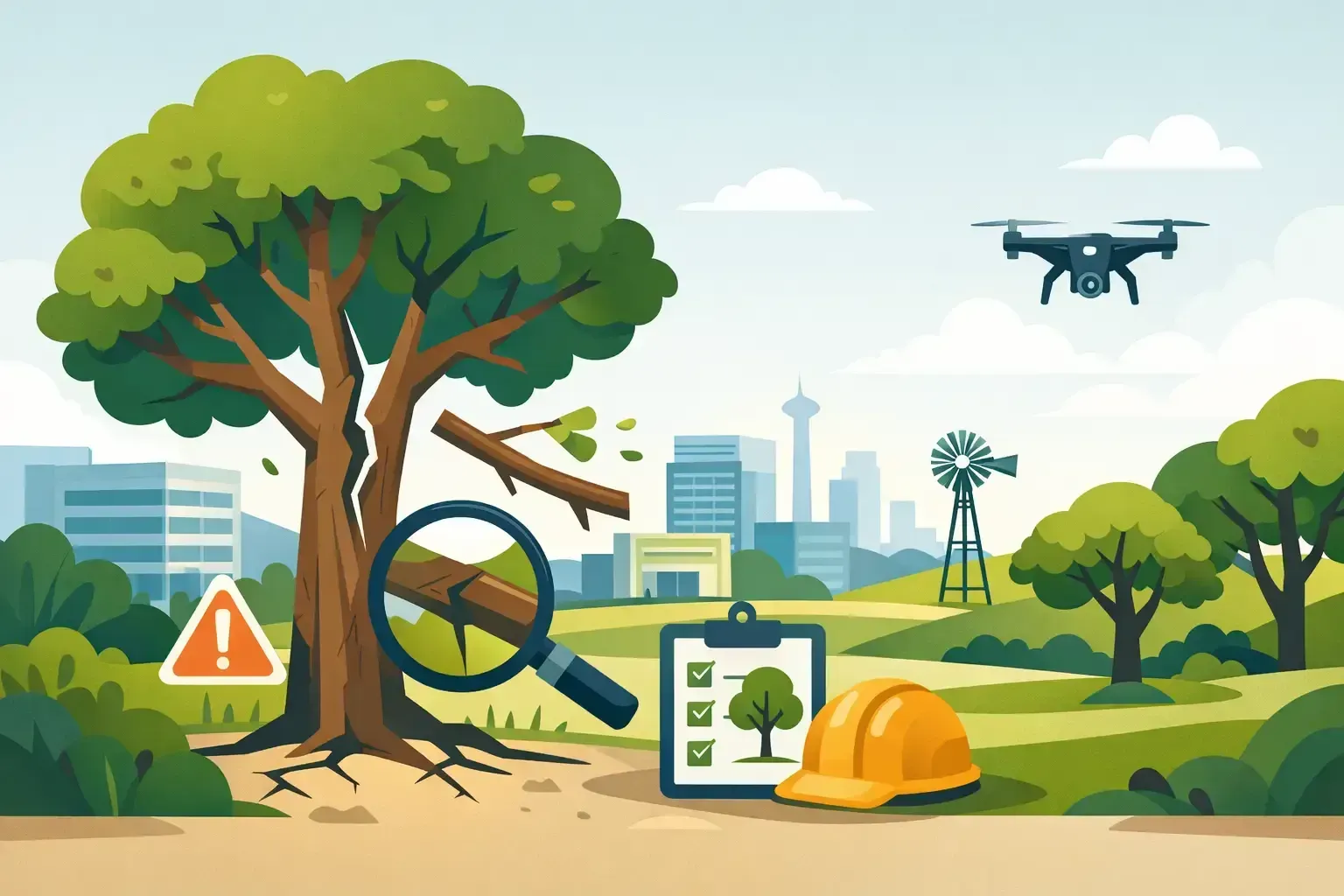
A shaded entry drive can become a liability fast when a heavy limb hangs over customer parking, a dead cedar leans toward a fence, or brush builds up around ...
Wildfire response with firefighters, water tanker, helicopter, and smoke near homes in a rural neighborhood
August 26, 2026
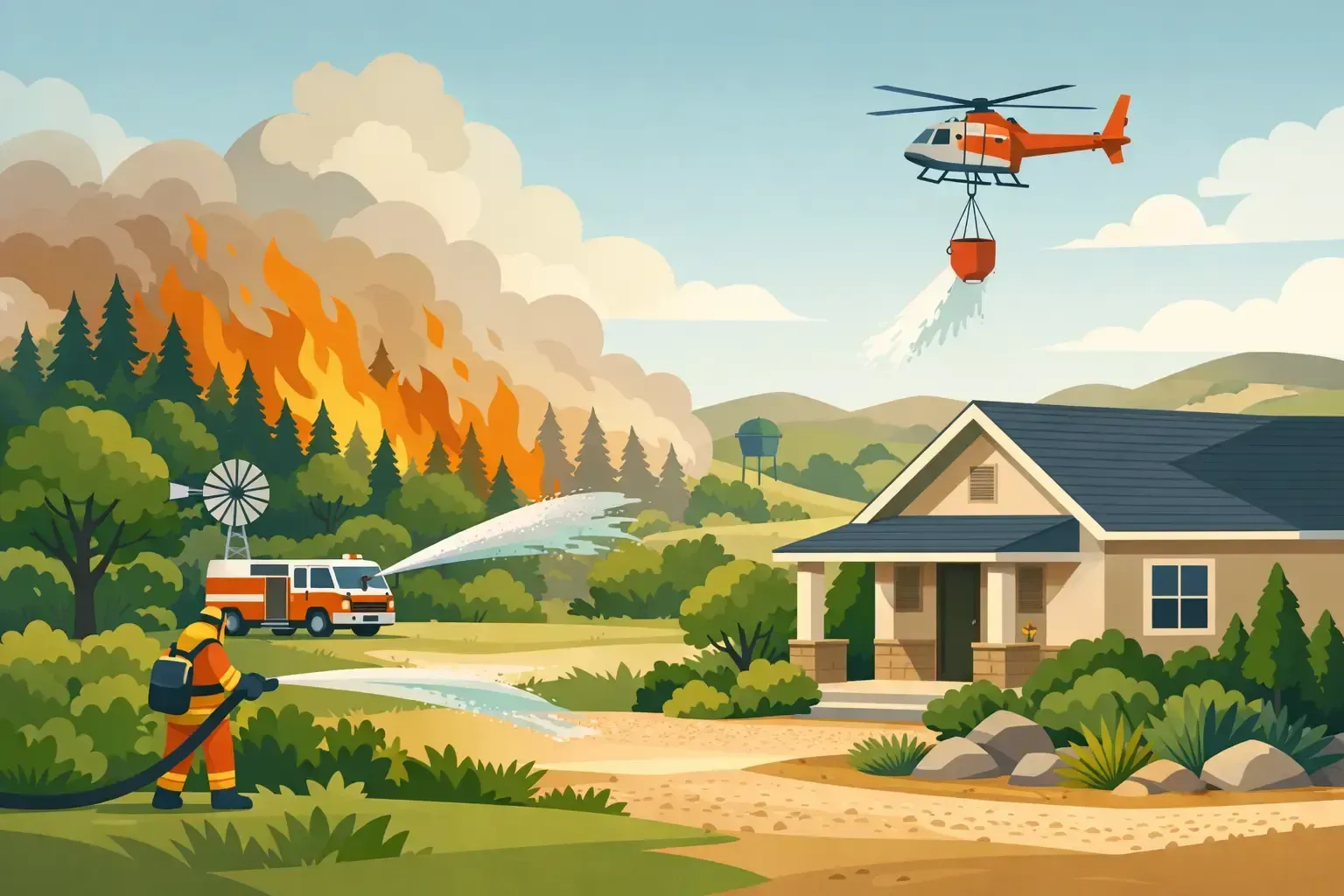
A Central Texas wildfire mitigation guide has to start with a hard truth: a beautiful Hill Country property can carry fire faster than most owners expect. Ce...

Savanna wildfire with trees, deer, and smoky hills under a bright sky
August 24, 2026
A beautiful shade tree should not become a fuse leading to your home. For Central Texas property owners, choosing the best trees for wildfire resistance mean...
Worker pruning a tree in a sunny yard beside a house, with tools on the grass.
August 22, 2026
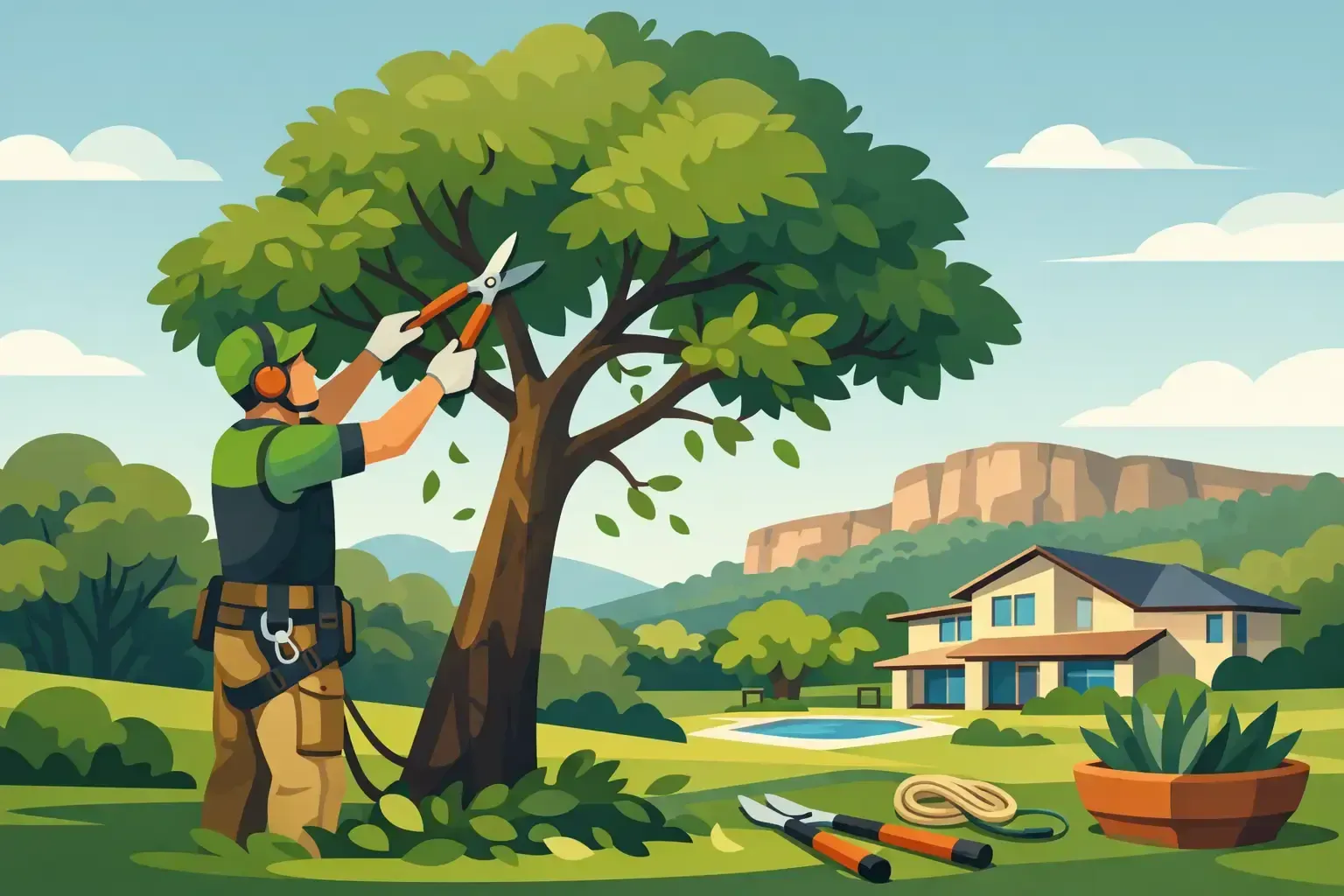
A mature live oak shading a Bee Cave driveway can look indestructible right up until a heavy limb hangs over the roof, a cedar elm starts crowding the servic...
Person using a string trimmer beside a fenced field on a sunny day
August 20, 2026
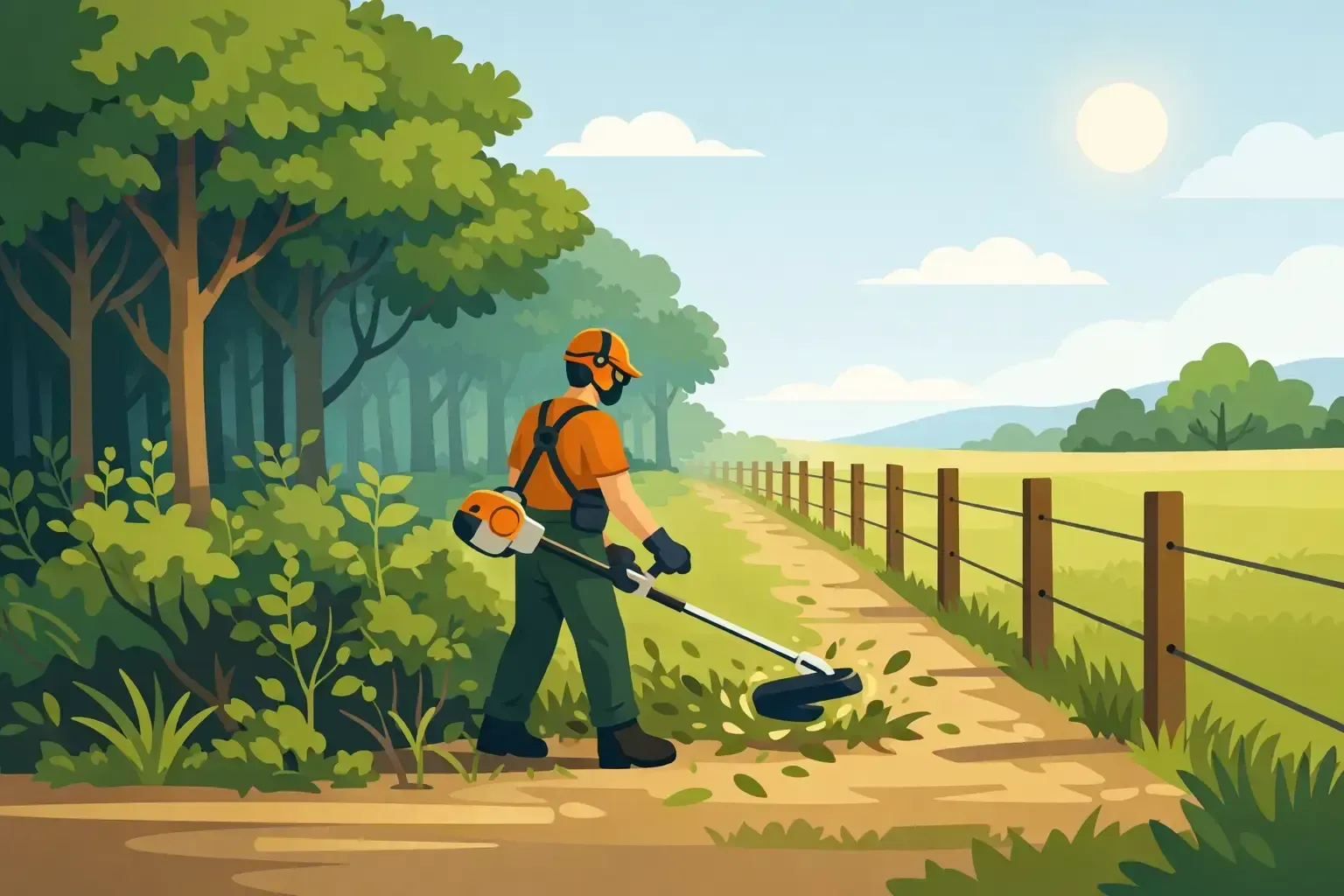
A fence line can disappear fast in Central Texas. One wet spring, a few missed mowing cycles, and suddenly cedar, huisache, vines, fallen limbs, and thorny b...
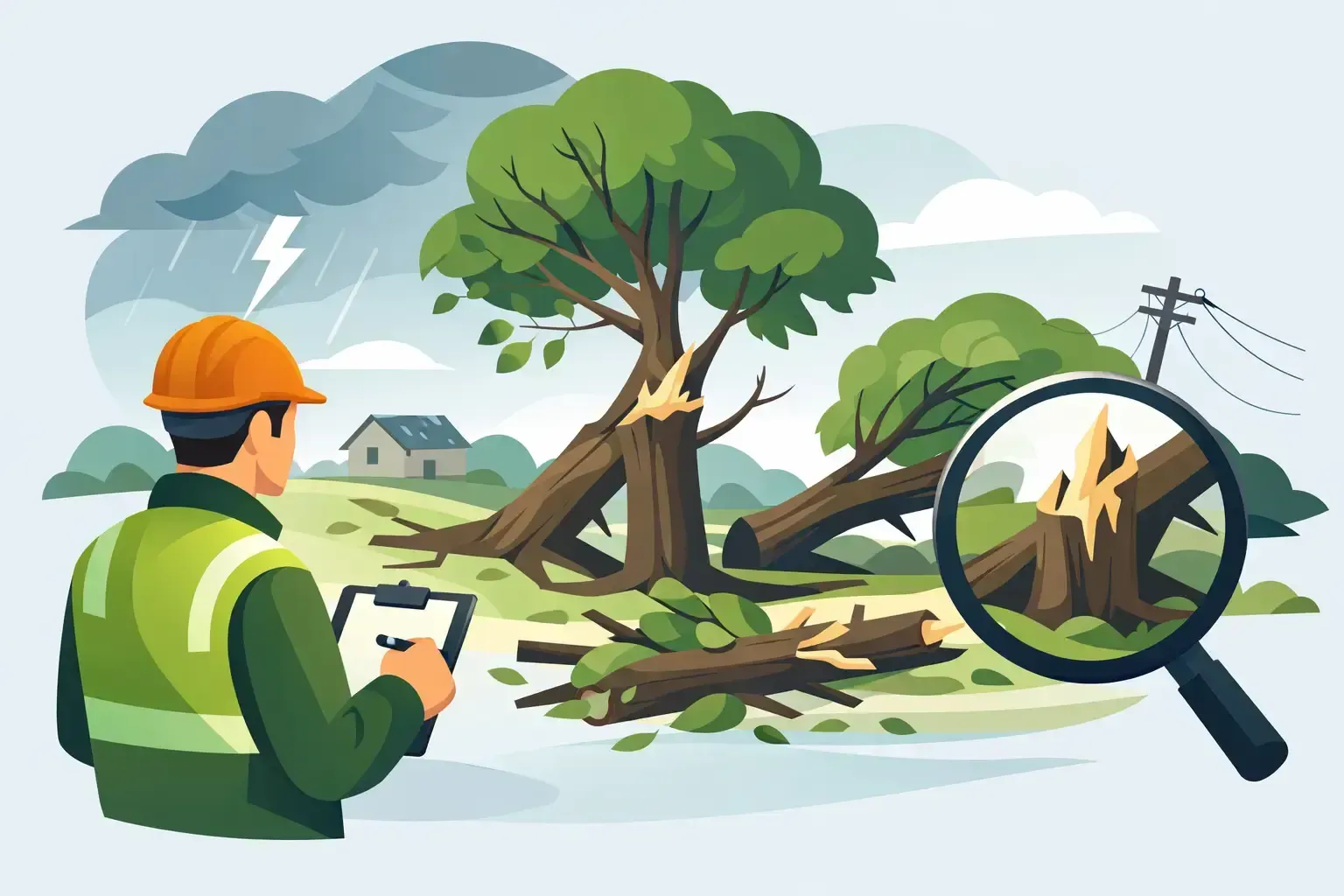
Worker inspecting storm-damaged tree with fallen branches and a magnifying glass in a windy yard
August 18, 2026
A hard Central Texas storm can turn a healthy-looking canopy into a real property hazard in a single night. This guide to storm damaged tree assessment helps...
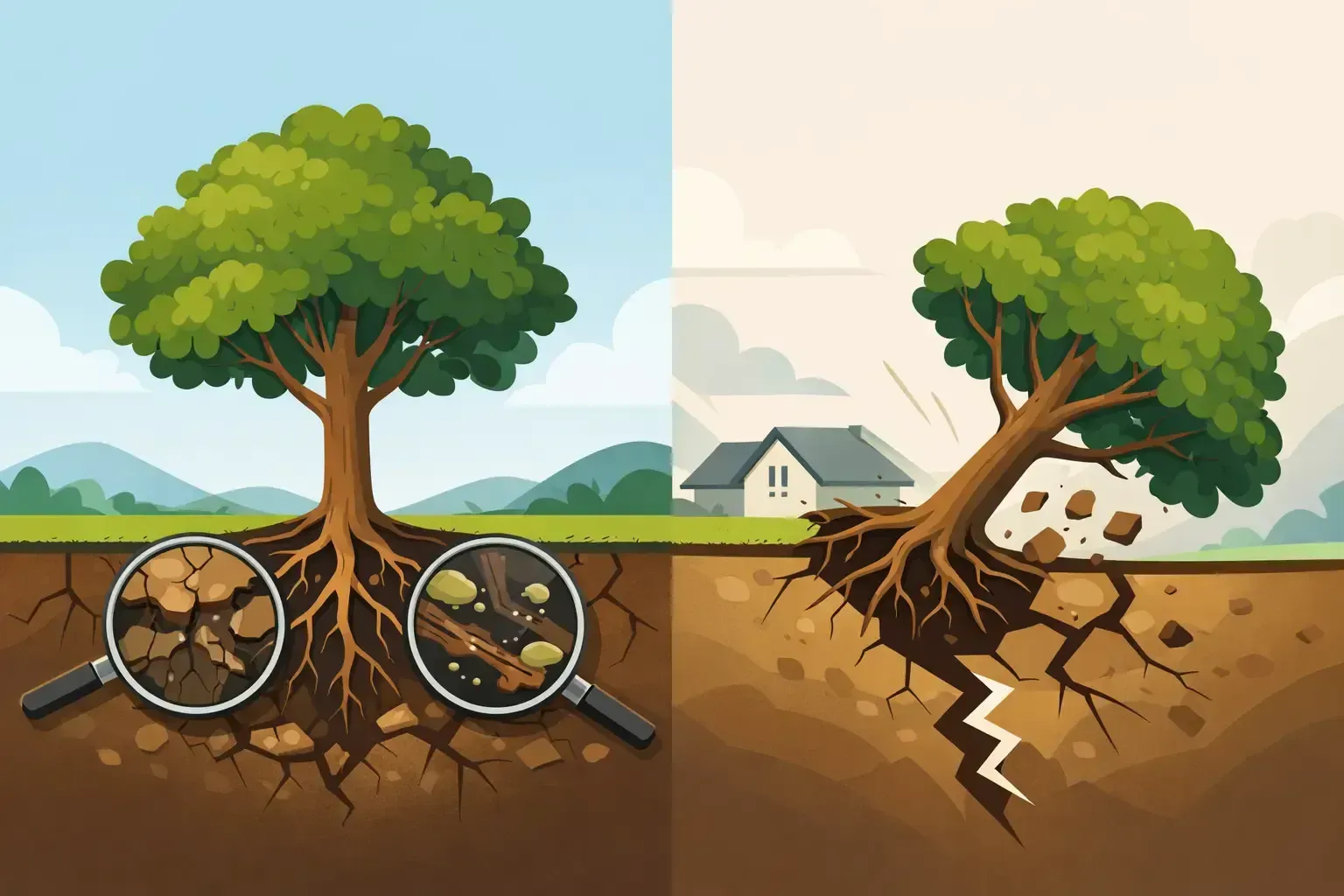
Healthy and damaged trees showing root health and drought soil cracking on a farm landscape
August 16, 2026
A live oak can look perfectly fine above ground while its support system is under serious stress below it. That is what makes root problems so frustrating fo...

Split view of deforestation and healthy green pasture with cows under a bright sky
August 14, 2026
A cedar-choked pasture can make a property feel smaller every year. Water disappears into dense juniper cover, native grasses lose sunlight, fence lines vani...
Farmer in field watching a blue tractor spray crops, with cows, barn, hills, and smoke in the background
September 1, 2026
A ranch can look green and still be headed in the wrong direction. Dense brush can hide stressed oaks, crowd out usable pasture, choke access roads, and crea...
Wildfire burning in a forest with firefighters, helicopter, and smoke over a split rural landscape
August 30, 2026
A hot, windy afternoon can turn a forgotten brush pile, a crowded cedar stand, or low limbs near a structure into more than a property-maintenance issue. Tex...
Environmental inspection scene with drone, tree, magnifying glass, recycle bin, and hard hat in a city park
August 28, 2026
A shaded entry drive can become a liability fast when a heavy limb hangs over customer parking, a dead cedar leans toward a fence, or brush builds up around ...
Wildfire response with firefighters, water tanker, helicopter, and smoke near homes in a rural neighborhood
August 26, 2026
A Central Texas wildfire mitigation guide has to start with a hard truth: a beautiful Hill Country property can carry fire faster than most owners expect. Ce...
Savanna wildfire with trees, deer, and smoky hills under a bright sky
August 24, 2026
A beautiful shade tree should not become a fuse leading to your home. For Central Texas property owners, choosing the best trees for wildfire resistance mean...
Worker pruning a tree in a sunny yard beside a house, with tools on the grass.
August 22, 2026
A mature live oak shading a Bee Cave driveway can look indestructible right up until a heavy limb hangs over the roof, a cedar elm starts crowding the servic...