


Tree Pruning for Driveway Access Done Right

August 4, 2026

A low oak limb scraping a truck roof is not just annoying. It can block delivery vehicles, hide a child or pet backing out of the drive, pull loose after a storm, and turn a simple arrival into a costly repair. Tree pruning for driveway access should solve those problems without stripping the shade, structure, and character that made you love the property in the first place.

For Central Texas homeowners, ranch owners, and property managers, the goal is not to make every drive look like a highway. It is to create safe, dependable clearance for the vehicles that actually use it, while keeping trees healthy and the property looking intentional.

What Good Driveway Clearance Actually Looks Like

Driveway access is about more than the branch you can see through the windshield. A well-planned pruning job considers height, width, sightlines, turning radius, and what happens when a vehicle has a load, trailer, ladder rack, or emergency equipment on it.

A compact sedan may pass beneath a limb that catches a work truck. A pickup may clear a straight section of drive but strike branches when turning through a gate. On rural properties, the question may be whether a feed truck, trailer, utility crew, or fire apparatus can get where it needs to go without damaging trees or equipment.

The correct clearance depends on the use. A residential driveway used by passenger vehicles needs a different plan than an HOA entrance, commercial drive, ranch road, or emergency access lane. That is why a professional walkthrough should begin with real-world conditions, not a one-size-fits-all height measurement.

Clearance is also a visibility issue

Low branches and dense growth can create blind corners at a road entrance, mailbox, gate, or driveway curve. Pruning can open the view of approaching traffic and make backing out less stressful, especially where Hill Country roads move faster than they look.

The best result is selective. It removes or shortens the growth that interferes with a clear view while preserving enough foliage to protect the tree from excessive sun exposure and maintain its natural form.

Why Random Cutting Creates Bigger Problems

It is tempting to grab a saw, cut every low limb at the same height, and call it done. That approach often produces a tree that looks hacked up, responds with weak, fast-growing shoots, and loses valuable canopy all at once.

Over-pruning can stress a tree during Central Texas heat and drought. Removing too much live foliage reduces the tree's ability to produce energy, while large unnecessary cuts can leave openings that are harder for the tree to compartmentalize. On mature live oaks, elm, cedar elm, and other common local species, the wrong cut in the wrong place can trade a driveway problem for a long-term health problem.

There is also a structural concern. Limbs do not all carry equal value or risk. Some need removal because they are dead, damaged, rubbing, poorly attached, or directly in the path of vehicles. Others can be reduced back to an appropriate lateral branch, keeping the tree balanced while moving the canopy away from the drive.

A precision pruning plan asks three questions before each cut: Does this branch obstruct access? Does it create a safety concern? Can it be addressed without compromising the tree's structure or appearance? If the answer is no, the saw stays quiet.

A Better Approach to Tree Pruning for Driveway Access

Start by identifying every vehicle that needs regular access. Include your own vehicle, guests, delivery vans, lawn crews, trash service, utility vehicles, trailers, and any equipment used on the property. The occasional oversized vehicle matters too if it is the one you will need after a storm or during an emergency.

Next, look at the full path. Check the road approach, gate opening, turns, slopes, overhanging limbs, and the area where vehicles park or unload. A branch that sits well above a parked car can become a problem where the driveway rises or where a truck turns underneath it.

Then assess the trees themselves. Deadwood, cracked limbs, hanging branches, decay, and branches growing toward structures should be handled as safety priorities. Healthy low limbs may be candidates for selective removal or reduction, but the amount and location of work should be shaped by species, size, condition, and the tree's role in the landscape.

Finally, plan the cleanup. Pruning debris left in a driveway, drainage swale, fence line, or brushy edge creates its own hazard. Professional crews should leave the access route clear, manage debris responsibly, and avoid needless damage to turf, stonework, irrigation, gates, and nearby plantings.

Timing Matters in Central Texas

There is no single perfect pruning date for every tree and every property. Weather, tree species, active pests, storm damage, and the urgency of the access problem all matter.

For example, oak pruning in much of Central Texas requires special attention to oak wilt prevention practices. Fresh pruning wounds can attract insect vectors during higher-risk periods, so timing and immediate wound treatment are part of responsible oak care. A qualified arborist can help determine the right approach based on your location, tree type, and current conditions.

Storm-damaged limbs are different. If a broken branch is hanging over the drive, blocking access, or threatening people or vehicles, waiting for an ideal calendar window may not be reasonable. The priority becomes making the area safe, restoring access, and then evaluating any follow-up care the tree needs.

Dry conditions also change the conversation. Trees under water stress may be less forgiving of aggressive canopy reduction. In those cases, a phased approach can be smarter: address the immediate clearance and hazard issues first, then schedule additional work when the tree is better positioned to respond.

Don't Forget Wildfire and Emergency Access

A clear driveway can play a practical role in wildfire readiness. It gives residents a cleaner exit route, improves access for emergency responders, and reduces the chance that low, dry vegetation or overhanging limbs restrict movement during a fast-moving situation.

That does not mean removing every tree near the drive. Mature trees provide shade, beauty, and property value. It means managing vegetation with purpose: lifting low limbs where appropriate, removing dead material, separating combustible brush from travel routes, and maintaining enough space for safe vehicle passage.

This is especially relevant on wooded acreage around Dripping Springs, Wimberley, Driftwood, and Blanco, where narrow drives, gates, dense juniper, and rolling terrain can make access more complicated than it first appears. A driveway should work on an ordinary Tuesday and when conditions are anything but ordinary.

Signs It Is Time to Schedule a Pruning Assessment

You do not need to wait until a branch hits the windshield. A review is worthwhile when you notice repeated scraping, reduced visibility at the road, limbs hanging lower after rain, branches rubbing a roof or gate, or delivery and service vehicles struggling to enter.

It is also wise to assess access before a major project. New fencing, a driveway resurfacing job, construction work, a trailer purchase, or a planned land improvement can all change how vehicles move through the property. Handling pruning first can prevent delays and avoid damage after the work begins.

For commercial sites and communities, regular inspection is often more cost-effective than waiting for complaints. Clear, well-maintained entrances communicate care, reduce avoidable vehicle damage, and help vendors and residents move through the property with confidence.

Choose Precision Over a Quick Fix

The lowest bid is not always the lowest-cost decision. A rushed crew may remove too much canopy, make indiscriminate cuts, overlook a failing limb, or leave a mess that becomes your problem. Good tree work requires a plan, trained judgment, proper equipment, and a crew that respects the property as much as the trees.

Dynamo Dusty's Tree Service approaches access pruning with ISA-certified arboricultural knowledge, disciplined site planning, and straight answers about what should be cut, what should stay, and why. The visible result should be simple: a driveway that feels open, safe, and easy to use, with trees that still look like they belong there.

Before the next low limb turns a normal drive into a dented roof, blocked gate, or bad surprise after dark, take a slow walk down the full route. The right pruning work does more than make room for a vehicle. It makes the whole property work better.

Farmer in field watching a blue tractor spray crops, with cows, barn, hills, and smoke in the background
September 1, 2026
A ranch can look green and still be headed in the wrong direction. Dense brush can hide stressed oaks, crowd out usable pasture, choke access roads, and crea...

Wildfire burning in a forest with firefighters, helicopter, and smoke over a split rural landscape
August 30, 2026
A hot, windy afternoon can turn a forgotten brush pile, a crowded cedar stand, or low limbs near a structure into more than a property-maintenance issue. Tex...

Environmental inspection scene with drone, tree, magnifying glass, recycle bin, and hard hat in a city park
August 28, 2026
A shaded entry drive can become a liability fast when a heavy limb hangs over customer parking, a dead cedar leans toward a fence, or brush builds up around ...

Wildfire response with firefighters, water tanker, helicopter, and smoke near homes in a rural neighborhood
August 26, 2026
A Central Texas wildfire mitigation guide has to start with a hard truth: a beautiful Hill Country property can carry fire faster than most owners expect. Ce...

Savanna wildfire with trees, deer, and smoky hills under a bright sky
August 24, 2026
A beautiful shade tree should not become a fuse leading to your home. For Central Texas property owners, choosing the best trees for wildfire resistance mean...

Worker pruning a tree in a sunny yard beside a house, with tools on the grass.
August 22, 2026
A mature live oak shading a Bee Cave driveway can look indestructible right up until a heavy limb hangs over the roof, a cedar elm starts crowding the servic...
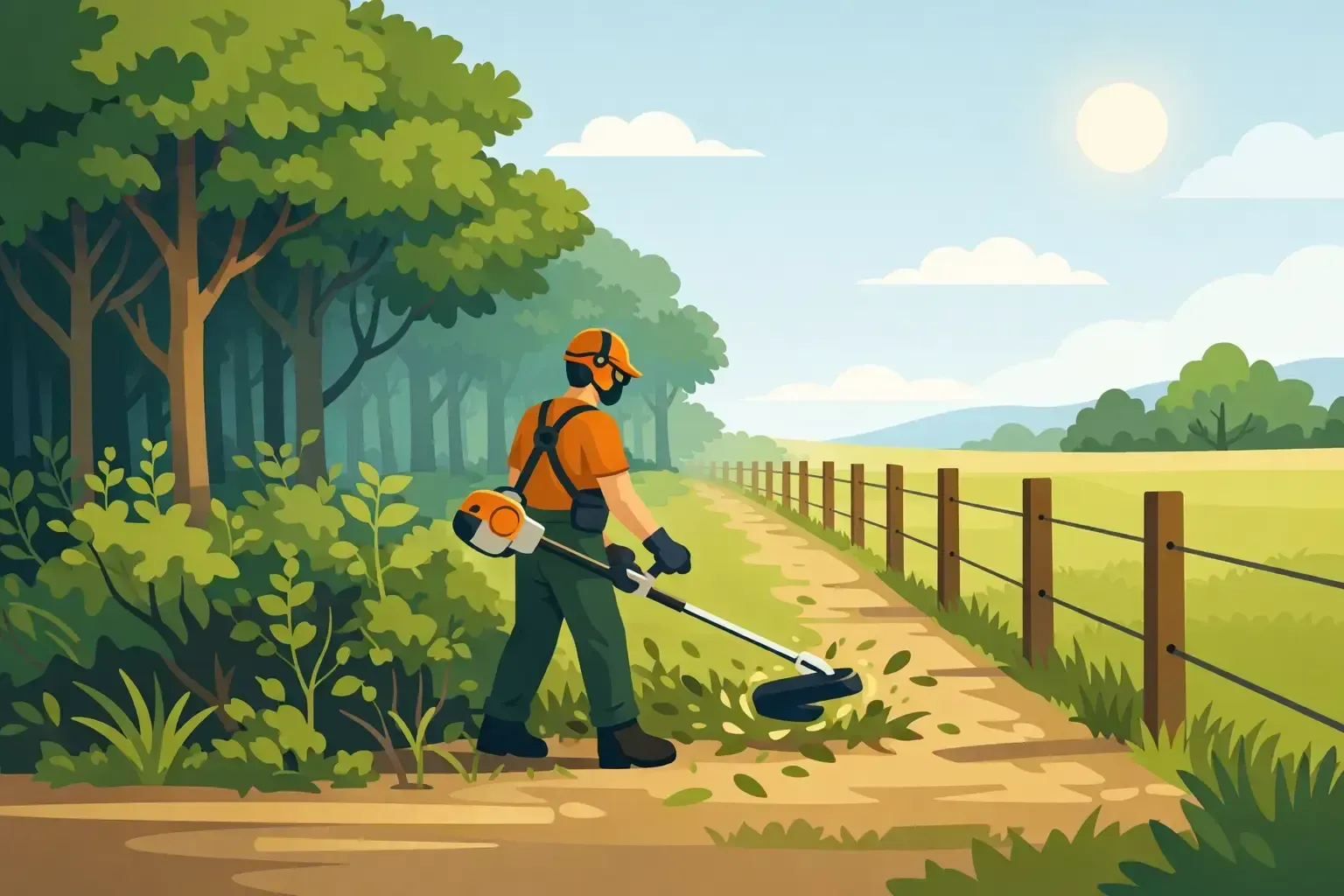
Person using a string trimmer beside a fenced field on a sunny day
August 20, 2026
A fence line can disappear fast in Central Texas. One wet spring, a few missed mowing cycles, and suddenly cedar, huisache, vines, fallen limbs, and thorny b...
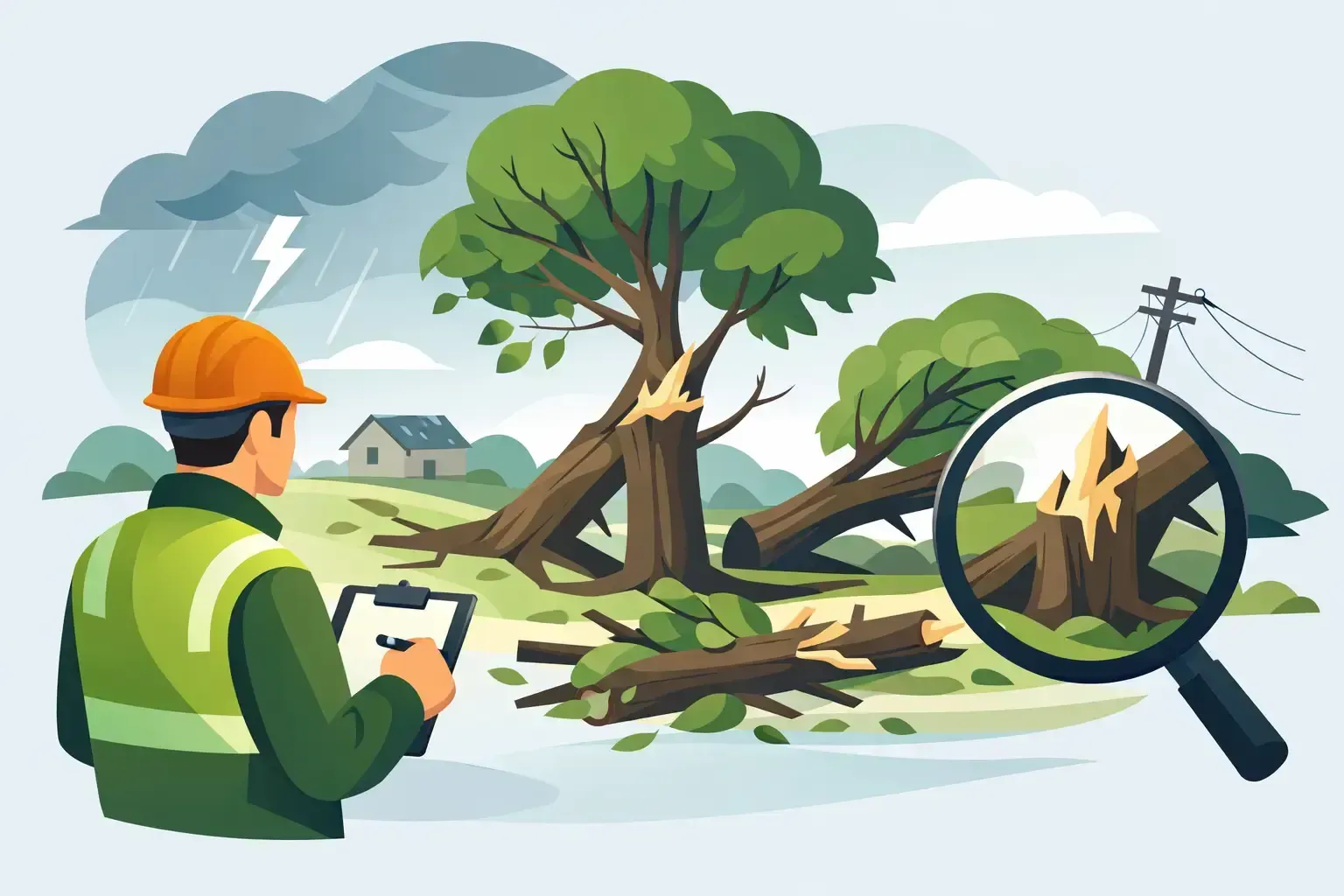
Worker inspecting storm-damaged tree with fallen branches and a magnifying glass in a windy yard
August 18, 2026
A hard Central Texas storm can turn a healthy-looking canopy into a real property hazard in a single night. This guide to storm damaged tree assessment helps...
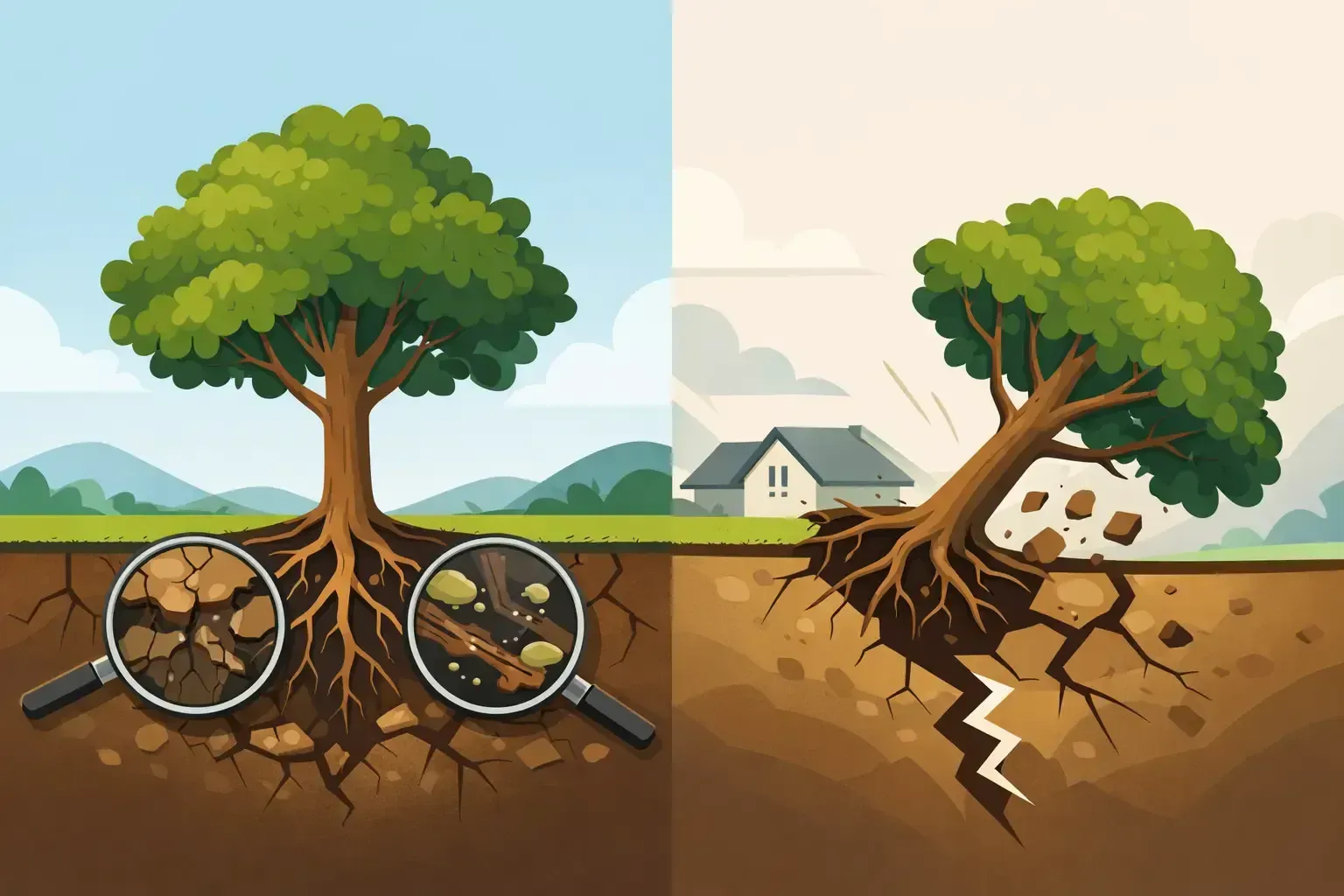
Healthy and damaged trees showing root health and drought soil cracking on a farm landscape
August 16, 2026
A live oak can look perfectly fine above ground while its support system is under serious stress below it. That is what makes root problems so frustrating fo...

Split view of deforestation and healthy green pasture with cows under a bright sky
August 14, 2026
A cedar-choked pasture can make a property feel smaller every year. Water disappears into dense juniper cover, native grasses lose sunlight, fence lines vani...
Farmer in field watching a blue tractor spray crops, with cows, barn, hills, and smoke in the background
September 1, 2026
A ranch can look green and still be headed in the wrong direction. Dense brush can hide stressed oaks, crowd out usable pasture, choke access roads, and crea...
Wildfire burning in a forest with firefighters, helicopter, and smoke over a split rural landscape
August 30, 2026
A hot, windy afternoon can turn a forgotten brush pile, a crowded cedar stand, or low limbs near a structure into more than a property-maintenance issue. Tex...
Environmental inspection scene with drone, tree, magnifying glass, recycle bin, and hard hat in a city park
August 28, 2026
A shaded entry drive can become a liability fast when a heavy limb hangs over customer parking, a dead cedar leans toward a fence, or brush builds up around ...
Wildfire response with firefighters, water tanker, helicopter, and smoke near homes in a rural neighborhood
August 26, 2026
A Central Texas wildfire mitigation guide has to start with a hard truth: a beautiful Hill Country property can carry fire faster than most owners expect. Ce...
Savanna wildfire with trees, deer, and smoky hills under a bright sky
August 24, 2026
A beautiful shade tree should not become a fuse leading to your home. For Central Texas property owners, choosing the best trees for wildfire resistance mean...
Worker pruning a tree in a sunny yard beside a house, with tools on the grass.
August 22, 2026
A mature live oak shading a Bee Cave driveway can look indestructible right up until a heavy limb hangs over the roof, a cedar elm starts crowding the servic...