

Storm Cleanup for Commercial Properties Starts Here
July 21, 2026
A downed live oak across an entrance, a hanging limb over employee parking, or debris wrapped around a sign can turn a normal workday into a liability problem fast. Storm cleanup for commercial properties
is not just a matter of making the site look presentable again. It is about restoring safe access, protecting people and assets, documenting what happened, and preventing a second failure after the crew leaves.
For Central Texas property managers, HOA boards, MUDs, retail centers, ranch operations, and business owners, the best response is disciplined rather than rushed. Move quickly, absolutely. But do not let urgency turn a manageable storm event into an injury, a damaged vehicle, a closed entrance, or an insurance headache.
Start With Site Control, Not Saw Work
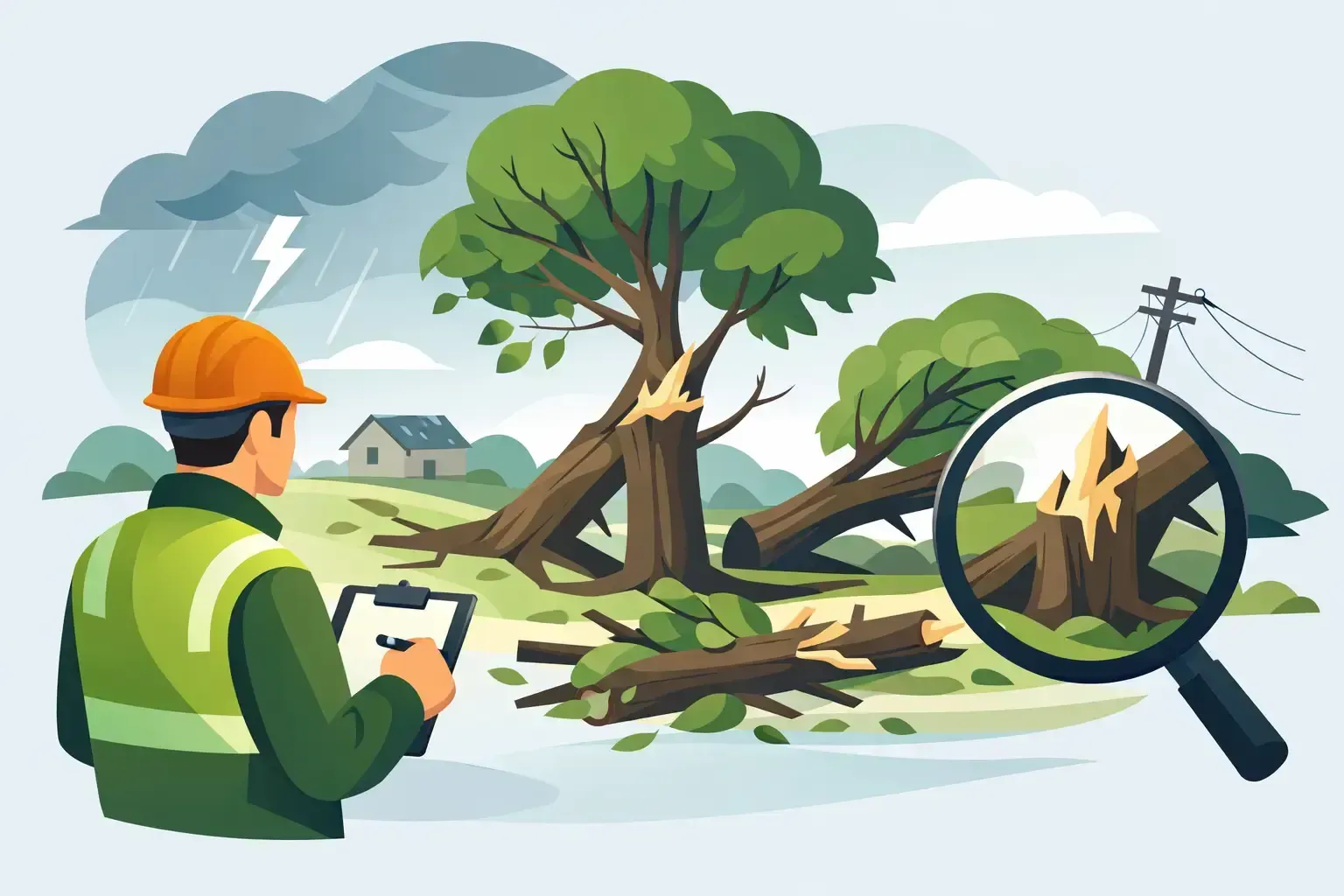
The first hour after a storm is for assessment and control. Before anyone starts moving branches, establish a safe perimeter around damaged trees, utility lines, roofs, vehicles, pedestrian paths, and drainage areas. A limb that appears settled can still be under serious tension. A tree that is leaning but standing may have fractured roots or a compromised trunk.
Keep staff, tenants, customers, and vendors out of affected areas. Use cones, caution tape, temporary barriers, or whatever is appropriate for the property. If a line is down or a tree is contacting electrical equipment, treat it as energized and contact the utility provider or emergency services. Nobody should attempt to cut, pull, or move material near a suspected electrical hazard.
Take clear, time-stamped photos before cleanup begins. Capture wide shots that show the location and close shots that show broken limbs, trunk damage, roof impacts, pavement damage, fencing, signs, and blocked access points. This documentation helps with insurance reporting, vendor coordination, and conversations with ownership.
The immediate priorities generally fall into four categories:
- Life safety, including electrical hazards, unstable trees, blocked fire lanes, and damaged walkways
- Access, including entrances, loading areas, parking lots, emergency routes, and service drives
- Property protection, such as trees on roofs, limbs over vehicles, blocked drains, and compromised fences
- Business continuity, including customer access, tenant communication, deliveries, and scheduled operations
A parking lot full of small branches can be annoying, but a partially failed tree over the main entrance takes the lead every time. Good storm response is about making those calls in the right order.
What Commercial Storm Cleanup Actually Requires
Commercial sites carry more moving parts than a typical residential yard. There may be multiple tenants, public traffic, delivery vehicles, irrigation systems, utility infrastructure, shared parking, underground services, and a property owner who is not on-site. That makes communication and planning part of the cleanup itself.
A qualified tree crew should evaluate the entire affected area, not only the obvious pile of debris. Broken branches can leave torn wounds high in the canopy. Trees that lost one large leader can become unbalanced. Soil saturation and high winds can loosen root systems, particularly around mature oaks, ornamental pears, cedar elms, and trees growing in compacted landscape islands.
The right corrective work depends on the tree and the damage. Sometimes the best option is precise pruning
to remove broken material and reduce stress on remaining limbs. Other times, a tree has lost structural integrity and needs to be removed
before it fails over a sidewalk, building, or high-traffic area. There is no honest one-size-fits-all answer.
That is where certified arboricultural judgment matters. Cutting everything back hard may look decisive, but indiscriminate topping can create weak regrowth, increase long-term maintenance needs, and leave a commercial landscape looking rough for years. A proper plan balances immediate safety with the tree's future health and the appearance of the property.
Keep Operations Moving During Cleanup
A capable storm crew does more than process wood. They work around the realities of your business. That may mean protecting a tenant's morning opening, maintaining a delivery route, keeping a fire lane clear, coordinating around school pickup traffic, or scheduling noisy work outside a medical office's busiest hours.
Before work starts, ask for a clear scope that addresses access, work zones, debris handling, final cleanup, and any follow-up inspection. You should know which areas will be temporarily closed and whether vehicles, dumpsters, outdoor furniture, signage, or equipment need to be relocated.
For larger properties, phased work is often the smarter choice. The crew can first secure the urgent hazards and reopen key access routes, then return for detailed pruning, debris removal, stump work, or landscape restoration. This approach is especially helpful after widespread storms, when immediate stabilization may be more valuable than waiting for every cosmetic detail to be completed at once.
Communication matters here. Property managers should provide tenants with a short, specific notice: where work is occurring, when access may change, whom to contact with concerns, and when normal use is expected to resume. Vague notices create frustration. Clear ones keep the property looking professionally managed even when the weather has made a mess of it.
Do Not Ignore the Trees That Are Still Standing
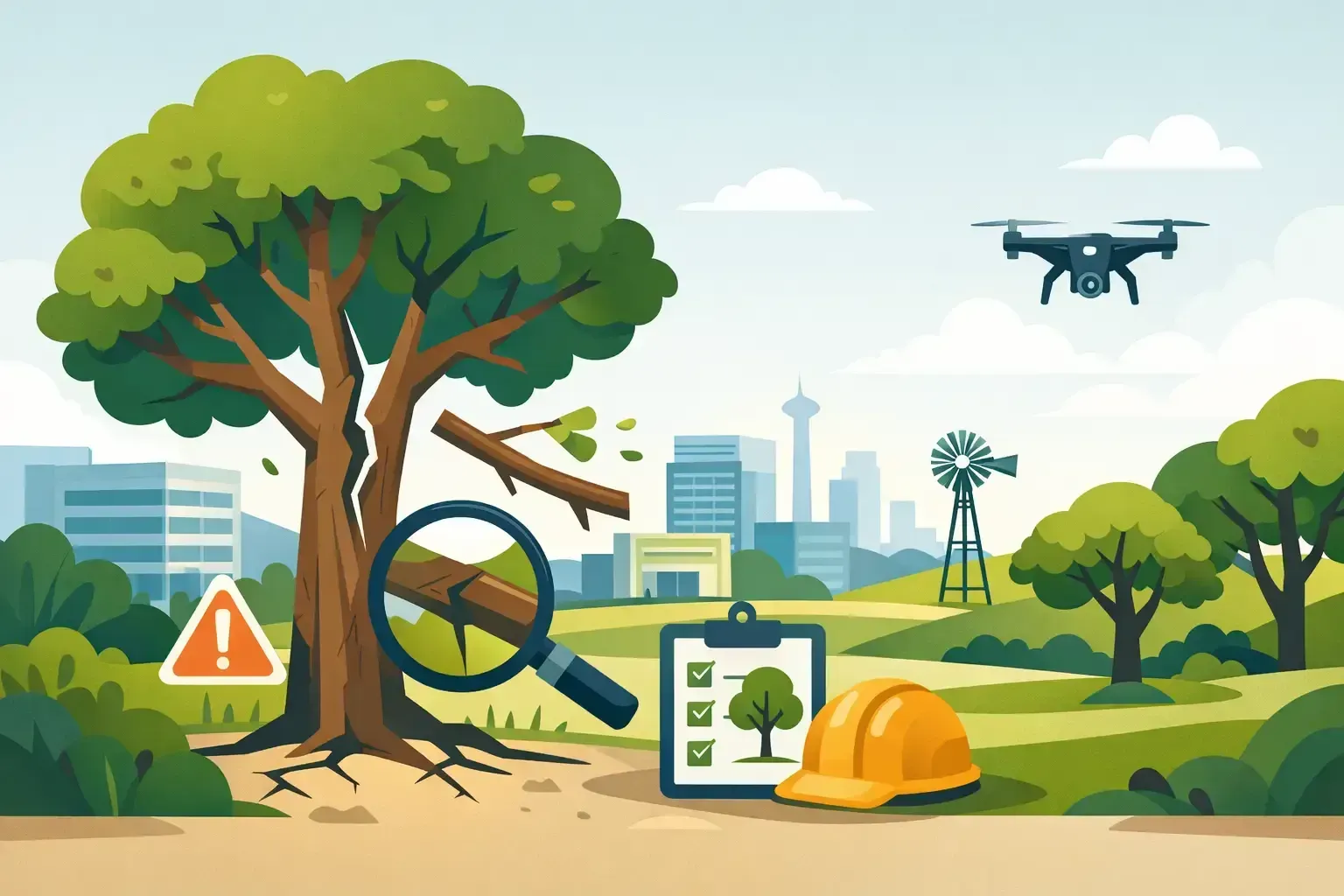
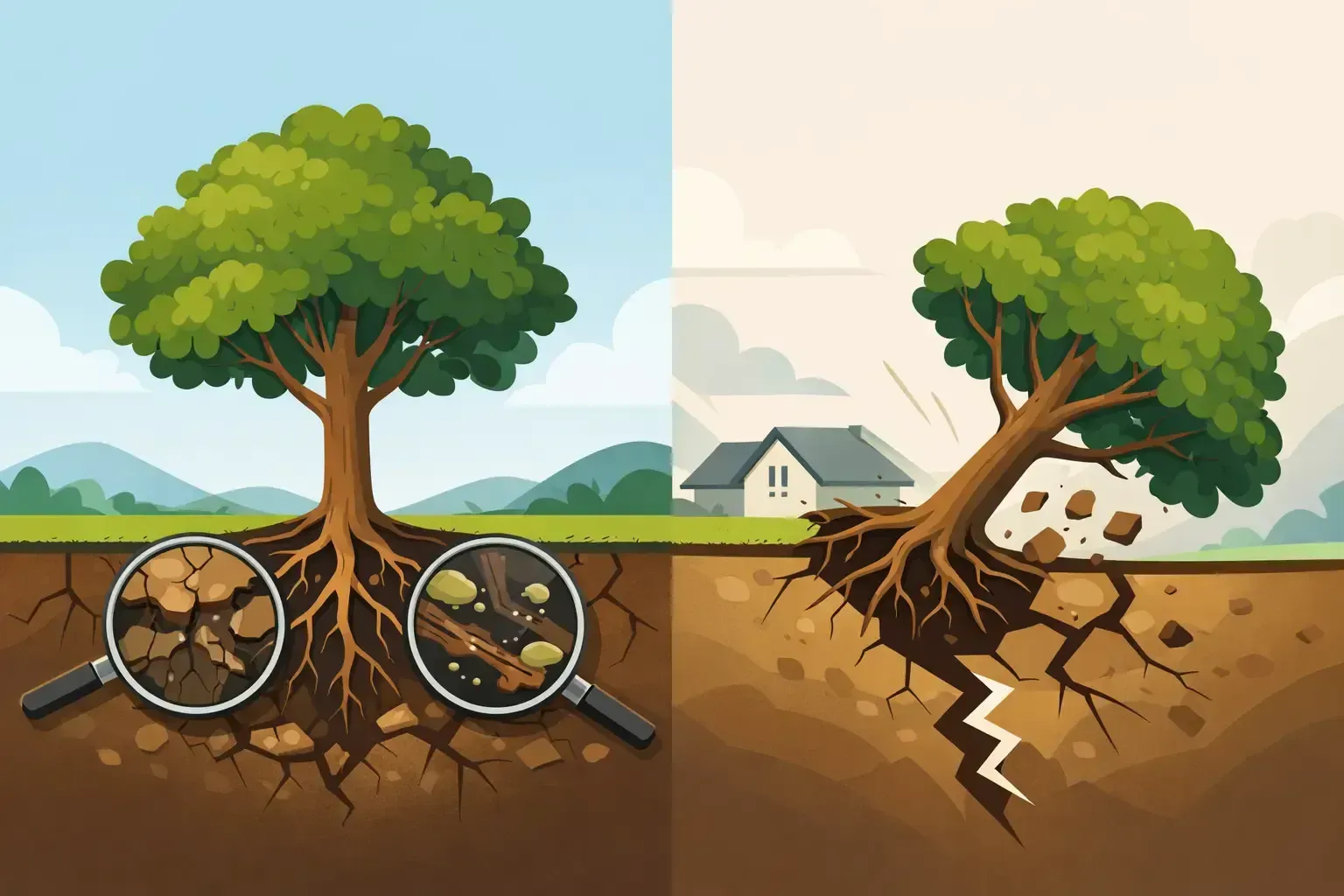
The most dangerous tree after a storm is not always the one on the ground. Trees with cracked unions, torn bark, exposed roots, fresh trunk splits, or a new lean can fail days or weeks later. A quick debris pass will not reveal every issue.
Ask for a post-storm inspection of trees near buildings, parking areas, playgrounds, utility equipment, sidewalks, pools, and gathering spaces. On commercial grounds, the risk calculation is simple: a tree near a target deserves more scrutiny than one in an open, unused area.
Pay attention to drainage too. Central Texas storms can wash soil away from roots, clog culverts with limbs and leaf litter, and redirect runoff across paved surfaces. Standing water around trees is not always an emergency, but it can signal drainage trouble that weakens roots over time. Clearing debris from swales, inlets, and ditches helps the whole property recover, not just the trees.
Use the Storm as a Maintenance Audit
Storm damage often exposes conditions that were already present: deadwood over parking spaces, limbs extended too far over roofs, crowded canopies, brush accumulation along fence lines, or trees that were never given a proper structural pruning plan. The storm did not necessarily create the weakness. It revealed it.
This is a good moment to build a practical maintenance schedule. High-use commercial properties may benefit from annual inspections, while larger campuses, ranch facilities, and lower-traffic acreage may need a schedule based on tree species, site conditions, occupancy, and wildfire exposure. It depends on the property, but waiting until the next major wind event is rarely the affordable option.
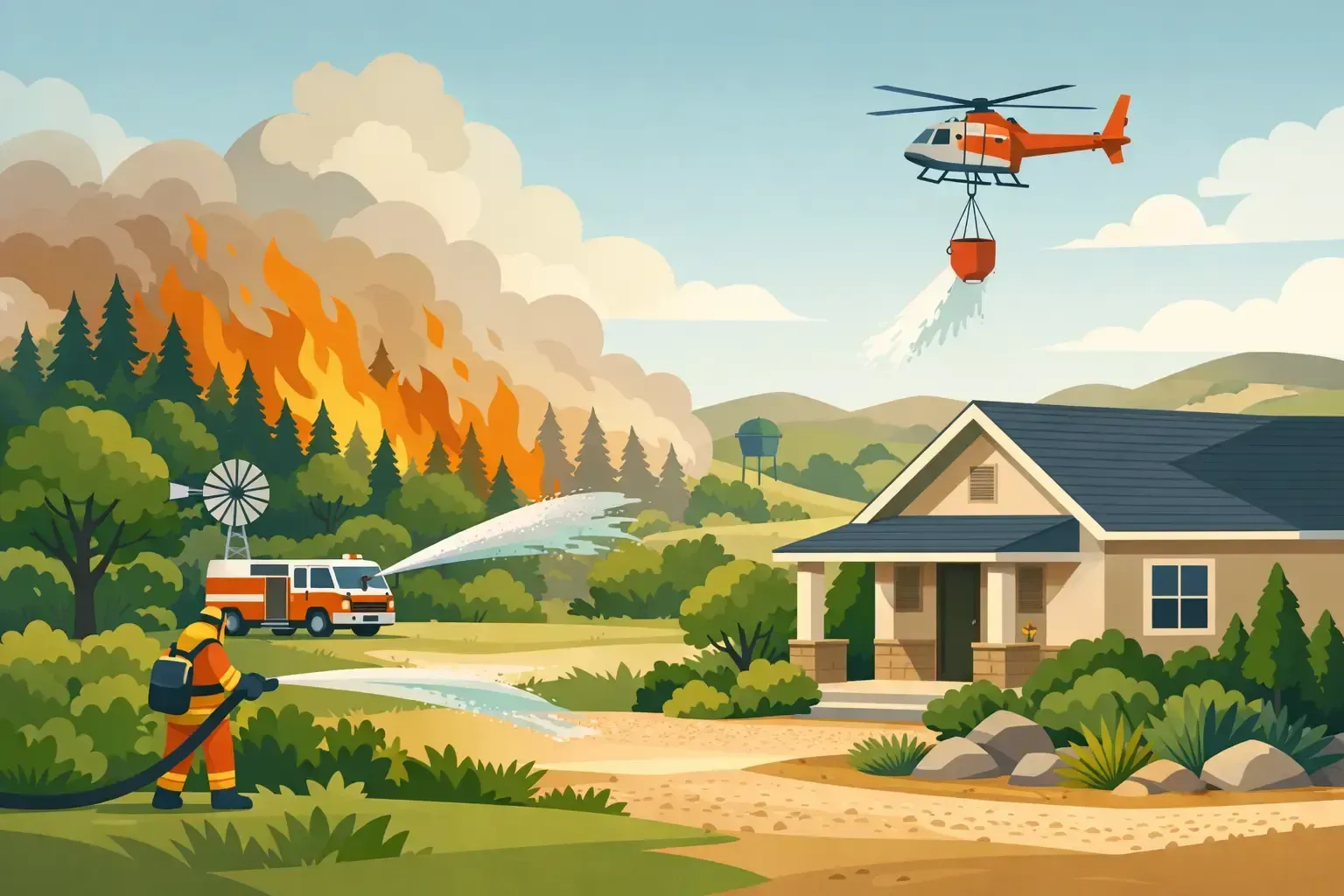
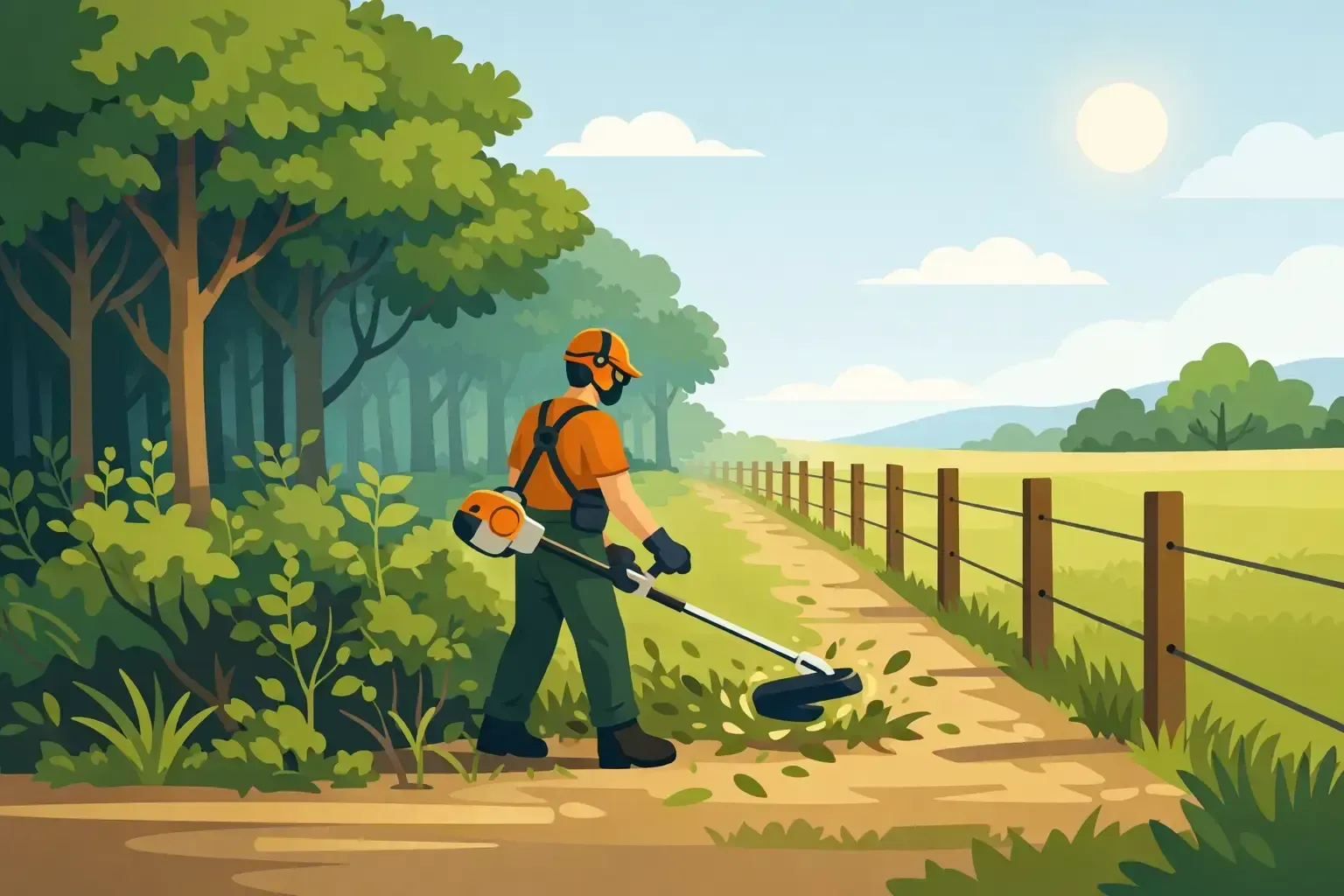
Wildfire risk deserves a place in the conversation as well. Storms can leave dry, broken material on the ground and create ladder fuels where low branches connect surface vegetation to the canopy. In the Hill Country, removing that debris and managing brush around structures
can improve both appearance and defensible space.
Dynamo Dusty's Tree Service brings ISA-certified arboricultural care and wildfire risk reduction knowledge to this work, with a disciplined plan built around the real hazards on your site. That means clear communication, transparent scope, and cleanup that does not leave your property looking like a rough work zone after the danger is gone.
What to Expect From a Professional Storm Response
The right contractor should be direct about what is urgent, what can wait, and what cannot be safely handled until utilities, weather, or access conditions change. Be cautious of anyone who promises an instant answer without assessing the site, pressures you to approve unnecessary work, or cannot explain how they will protect buildings, pavement, landscaping, and public access.
Professional storm cleanup also includes the finish. Debris should be removed or processed as agreed, work areas should be cleared, and the property should be left ready for normal operations. If a damaged tree requires monitoring or follow-up pruning, that should be communicated plainly rather than becoming a surprise later.
After the last branch is hauled away, take one more walk through the site with fresh eyes. Check the entrances, drainage paths, parking areas, rooflines, fences, and the trees nearest people and buildings. That final pass is how a storm response becomes a safer, stronger property plan instead of just a fast cleanup.