

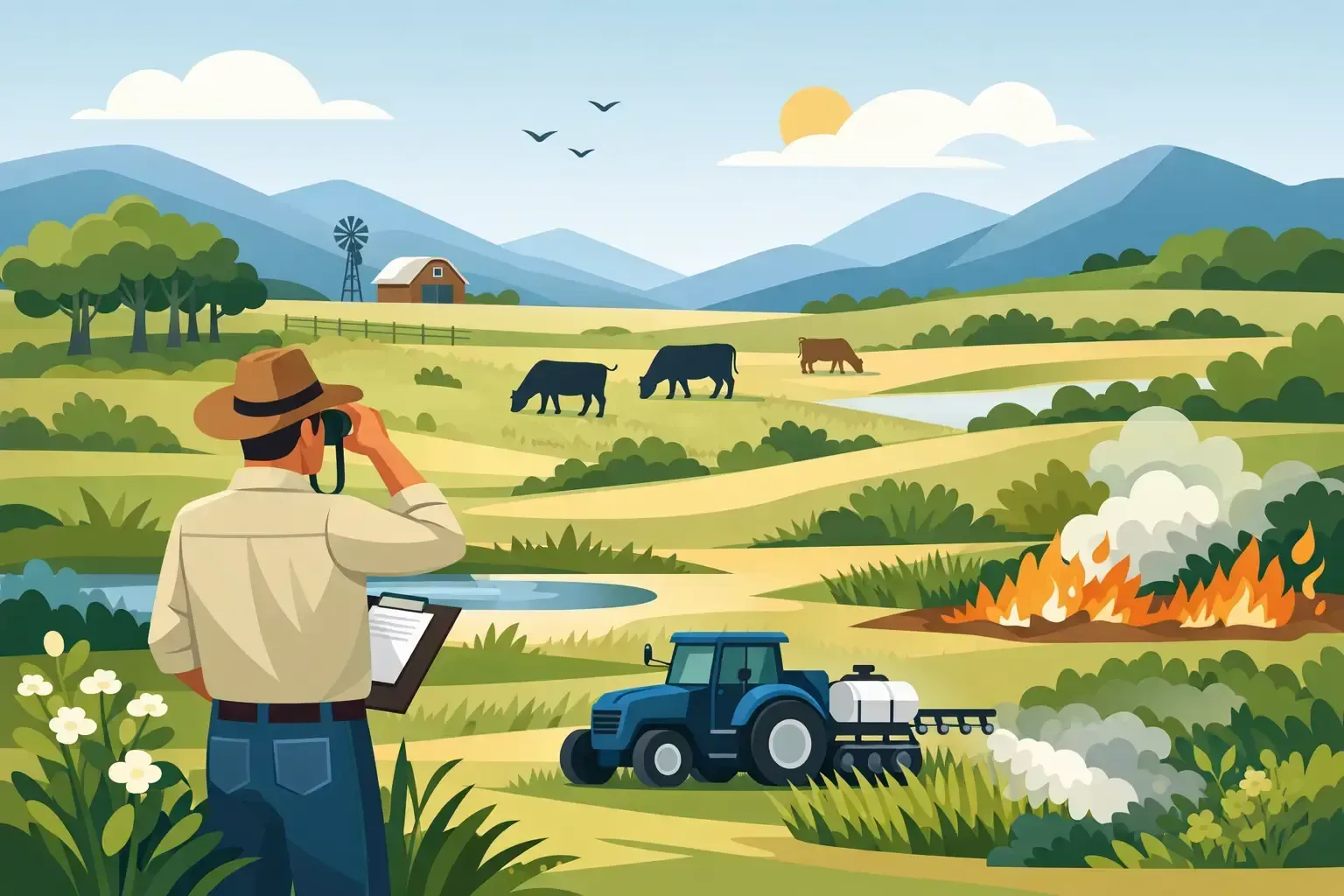
Certified Arborist Tree Inspection Explained

May 6, 2026

A live oak can look solid from the driveway and still be carrying hidden trouble over your roof, driveway, fence line, or pasture gate. That is why a certified arborist tree inspection matters. It is not a quick glance and a shrug. It is a trained assessment of structure, health, risk, site conditions, and what needs attention now versus what can wait.

For Central Texas property owners, that distinction matters more than people think. Our trees deal with drought, heat stress, compacted soil, storm damage, oak wilt concerns, construction impacts, and crowded canopies that were never pruned with a long-term plan. A tree can be beautiful and still be a liability. It can also look rough after a hard season and still be very worth saving. The point of an inspection is to replace guesswork with a professional read on what is actually happening.

What a certified arborist tree inspection really includes

A proper inspection starts with the whole picture, not just the branch you are worried about. An ISA Certified Arborist looks at species, age class, growing conditions, root zone issues, trunk condition, branch attachments, canopy balance, past pruning cuts, signs of decay, pest activity, disease symptoms, and targets below the tree. Targets are the things that could be hit if part of the tree fails - houses, vehicles, barns, play areas, roads, walkways, utility corridors, or livestock zones.

That bigger-picture approach is what separates professional arboriculture from basic tree cutting. A certified arborist is trained to evaluate how a tree is growing, how it is handling stress, and whether the risk level is acceptable for the site. Sometimes the answer is simple pruning. Sometimes it is monitoring. Sometimes it is soil work and recovery support. And yes, sometimes removal is the responsible call. The key is that each recommendation should have a reason behind it.

On a large lot or ranch property, inspection also includes spacing and competition. Trees that grew up too tight often develop poor form, weak branch unions, or elongated growth that catches wind badly. In wildfire-prone areas, the inspection may also factor in ladder fuels, canopy separation, understory density, and how the vegetation arrangement affects ember exposure and defensible space. In this case, having a Texas Wildfire Risk Reduction Qualified ISA Certified Arborist is a big plus. There are currently less than 100 such certified arborists in Texas, and Dynamo Dusty's is one of them.

Why homeowners and landowners request inspections

Most people do not wake up excited to schedule a tree inspection. They call when something feels off. Maybe a limb dropped without warning. Maybe a once-thick canopy is thinning out. Maybe there is a crack in the trunk, exposed roots near a driveway, or a lean that seems more dramatic than last year. Maybe a storm rolled through and now the tree looks questionable, but not obviously destroyed.

Those are all valid reasons to bring in a certified eye. Another common trigger is property work. If you are planning a new driveway, patio, fence, pool, grading project, or utility trench, an inspection can help you understand which trees are likely to tolerate disturbance and which ones are at risk if their root area gets damaged. It is a lot cheaper to plan around a valuable tree than to lose it a year later because the root zone got hammered during construction.

Inspections are also smart before listing a property, after buying acreage, or when taking over management of an HOA or commercial site. Mature trees add major value when they are healthy and well managed. They also create major expense when deferred problems stack up.

What the arborist is looking for

A good inspection is equal parts biology, structure, and context. Tree health alone does not tell the whole story. A tree can be alive and still be unsafe. On the other hand, a tree with some deadwood or stress symptoms may still be stable enough to preserve with the right care.

The arborist is studying clues. Bark separation can point to internal problems. Fungal growth near roots or the base of the trunk may suggest decay. Included bark at branch unions can indicate weak attachment points. Long end-weighted limbs over a target can increase failure potential, especially after wind or heavy rain. Soil compaction, grade changes, and root damage can explain why a tree is declining even when the canopy symptoms seem unrelated. A good arborist will ask you questions about the tree's and site's history.

This is where experience matters. Two trees can show similar symptoms and need very different solutions. A cookie-cutter approach misses that. Professional inspection is about reading the tree, the site, and the likely progression if nothing changes.

Certified arborist tree inspection for risk, not fear

Tree risk should be handled calmly. Not every defect means emergency removal, and not every healthy-looking tree is low risk. What matters is the likelihood of failure, the size of the part that could fail, and what it could hit.

That is one reason people appreciate a measured, disciplined process. Good arborists do not sell panic. They prioritize. If a limb over the driveway has a visible crack and active separation, that may be urgent. If a tree has mild canopy thinning from drought stress but no major structural defects, the right answer may be improved care and seasonal follow-up rather than aggressive work. A good arborist is thinking about how the trees will grow and develop over a multi-year period.

This balanced approach matters for budget too. Property owners want honest recommendations. They want to know what is safety-critical, what improves tree health, and what is more cosmetic or optional. A trustworthy inspection gives you that order of operations.

When timing matters most

After storms is the obvious time, but it is not the only one. Late summer stress in Texas often reveals problems that were building quietly for months. Dry periods can expose root competition and soil issues. Spring can reveal canopy dieback, pest pressure, and poor bud break. If wildfire exposure is part of your concern, inspection before peak fire season is a smart move because mitigation works best when it is planned, not rushed.

There is also a strong case for periodic inspections on higher-value properties and heavily treed sites. If you have mature oaks near structures, roadways, guest areas, or livestock access points, waiting until something breaks is not much of a strategy. Preventive assessment usually costs far less than emergency response and collateral damage.

What you should expect after the inspection

You should come away with clarity. Not jargon. Not vague warnings. Clarity.

That means understanding which trees are healthy, which ones need attention, what type of work is recommended, and why. In many cases, the next steps may include targeted pruning, deadwood removal, weight reduction on overextended limbs, soil remediation, brush thinning, monitoring intervals, or removal where the risk is no longer acceptable. The arborist advises; you decide.

For wildfire-conscious properties, recommendations may also include vegetation spacing, lower limb clearance in select areas, reduction of flashy fuels, and improving the way trees and brush are arranged around structures. That is especially useful on rural and edge-of-town properties where tree care and land management overlap.

If you have had bad experiences with tree companies before, this is where professionalism shows. The process should feel transparent. Questions should get straight answers. Pricing should match the scope. The work plan should make sense on paper before equipment ever shows up.

Choosing the right company for a certified arborist tree inspection

Credentials matter, but so does how the company thinks. You want someone who can explain trade-offs, not just sell the biggest job. You want a team that understands tree biology, structural defects, site use, and local conditions. If wildfire risk is part of the picture, specialized training there matters too.

You also want communication. A premium tree service experience is not just about technical skill. It is about showing up, doing what was promised, protecting the property, and leaving the place better than they found it. Around Dripping Springs, Driftwood, Wimberly, Johnson City and the greater Central Texas area, that matters because many properties are complex - long driveways, uneven terrain, dense cover, valuable trees, and plenty of room for mistakes if the planning is sloppy.

Dynamo Dusty's Tree Service approaches inspections the same way we approach field work - with precision, straight talk, and a real respect for the property owner's goals. Sometimes that means fast action. Sometimes it means a phased plan. Either way, the job is to give you a clear path forward and to answer all your questions.

A tree inspection is not about finding reasons to cut. It is about protecting the trees worth keeping, addressing the risks worth fixing, and helping you make smart decisions before a small issue turns into an expensive one. If a tree on your property has been nagging at the back of your mind, that is usually reason enough to get a trained set of eyes on it.

Farmer in field watching a blue tractor spray crops, with cows, barn, hills, and smoke in the background
September 1, 2026
A ranch can look green and still be headed in the wrong direction. Dense brush can hide stressed oaks, crowd out usable pasture, choke access roads, and crea...

Wildfire burning in a forest with firefighters, helicopter, and smoke over a split rural landscape
August 30, 2026
A hot, windy afternoon can turn a forgotten brush pile, a crowded cedar stand, or low limbs near a structure into more than a property-maintenance issue. Tex...
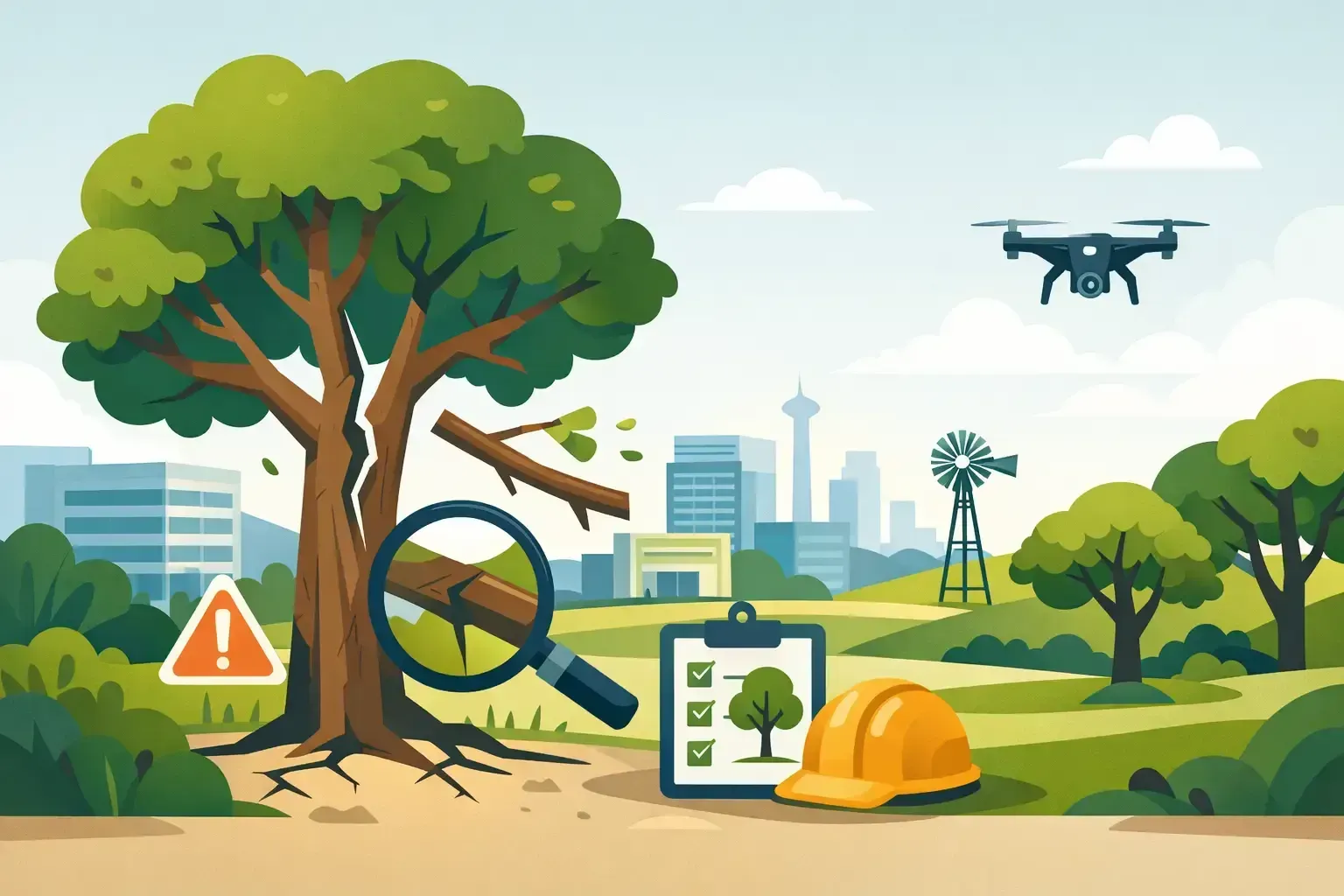
Environmental inspection scene with drone, tree, magnifying glass, recycle bin, and hard hat in a city park
August 28, 2026
A shaded entry drive can become a liability fast when a heavy limb hangs over customer parking, a dead cedar leans toward a fence, or brush builds up around ...
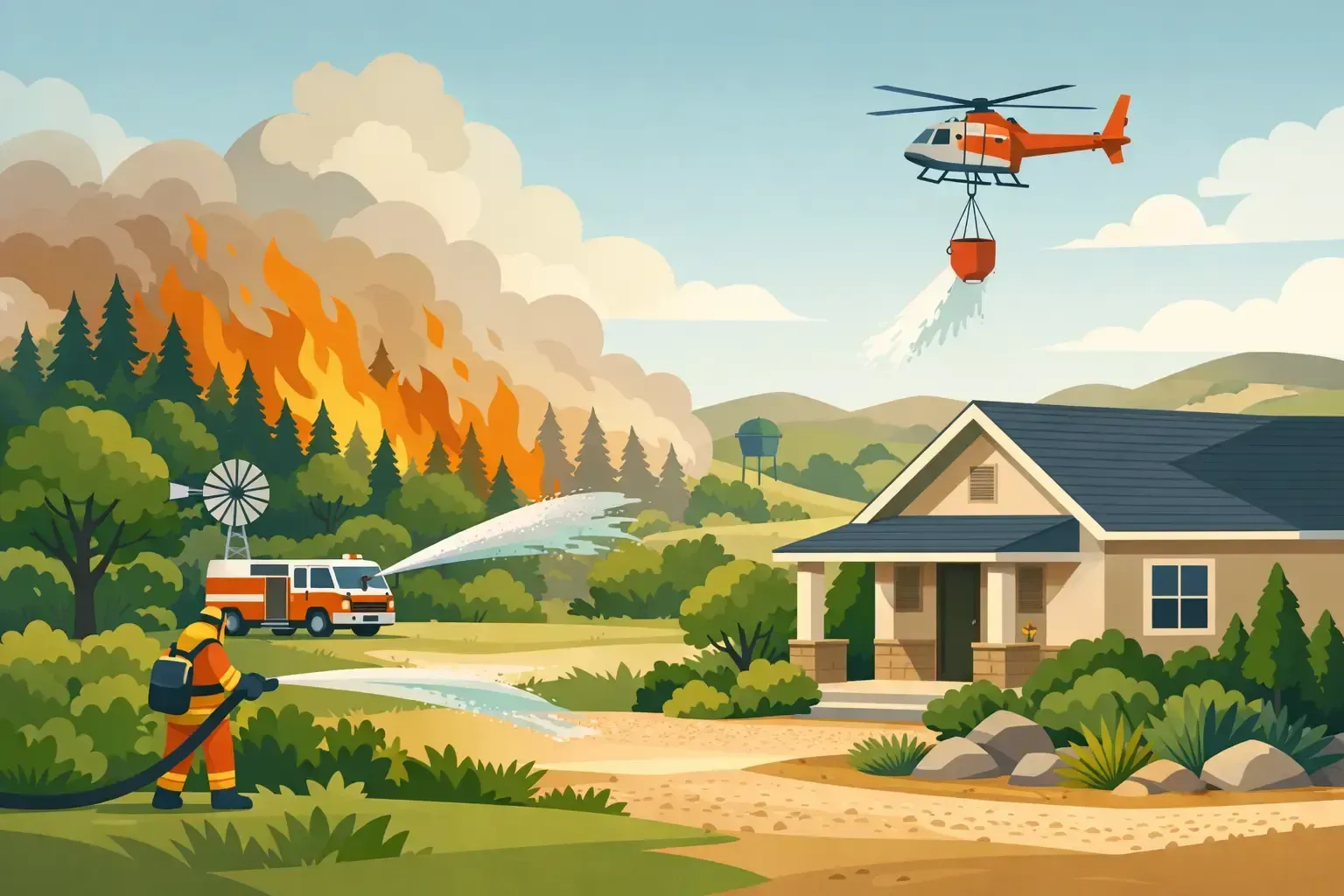
Wildfire response with firefighters, water tanker, helicopter, and smoke near homes in a rural neighborhood
August 26, 2026
A Central Texas wildfire mitigation guide has to start with a hard truth: a beautiful Hill Country property can carry fire faster than most owners expect. Ce...
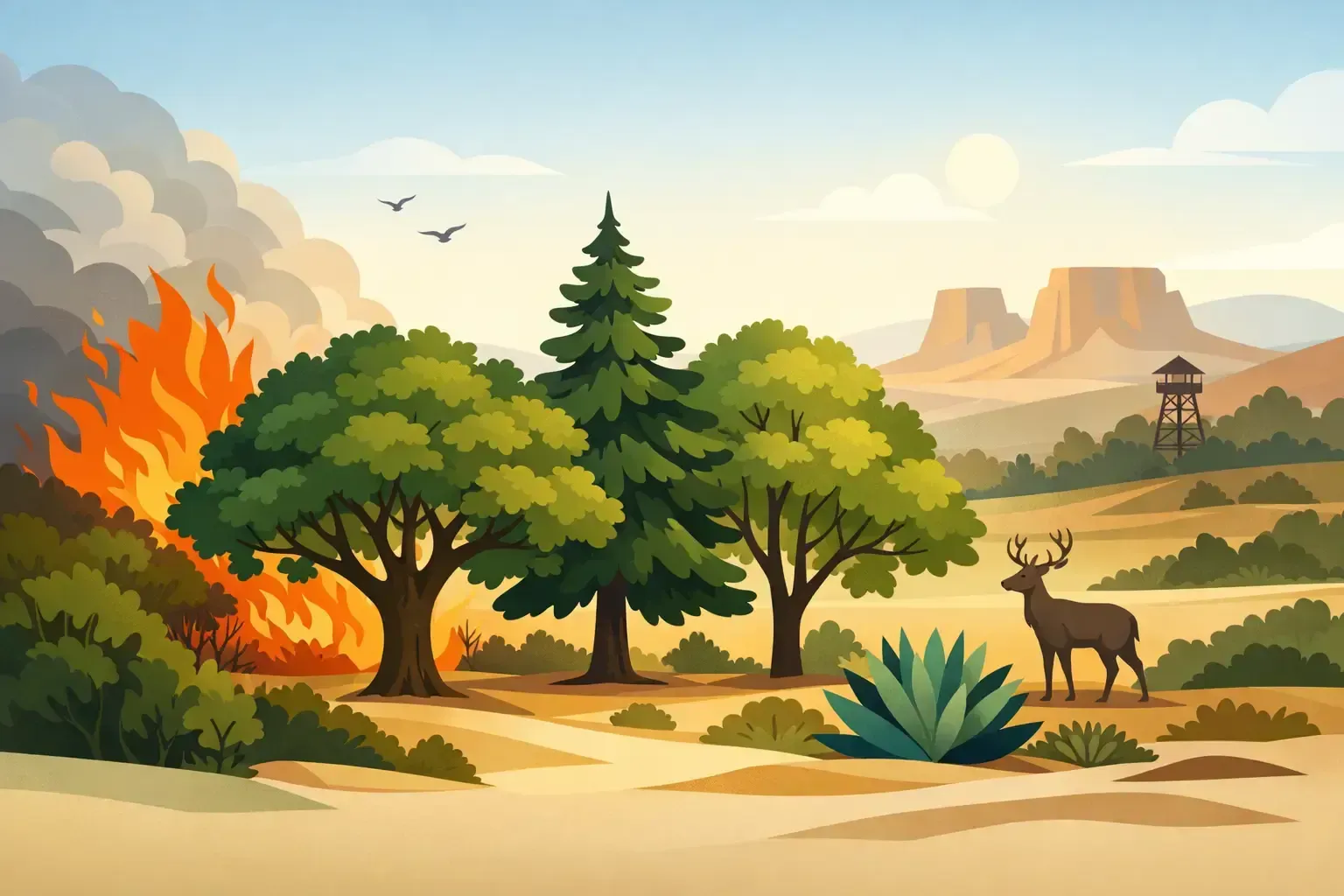
Savanna wildfire with trees, deer, and smoky hills under a bright sky
August 24, 2026
A beautiful shade tree should not become a fuse leading to your home. For Central Texas property owners, choosing the best trees for wildfire resistance mean...
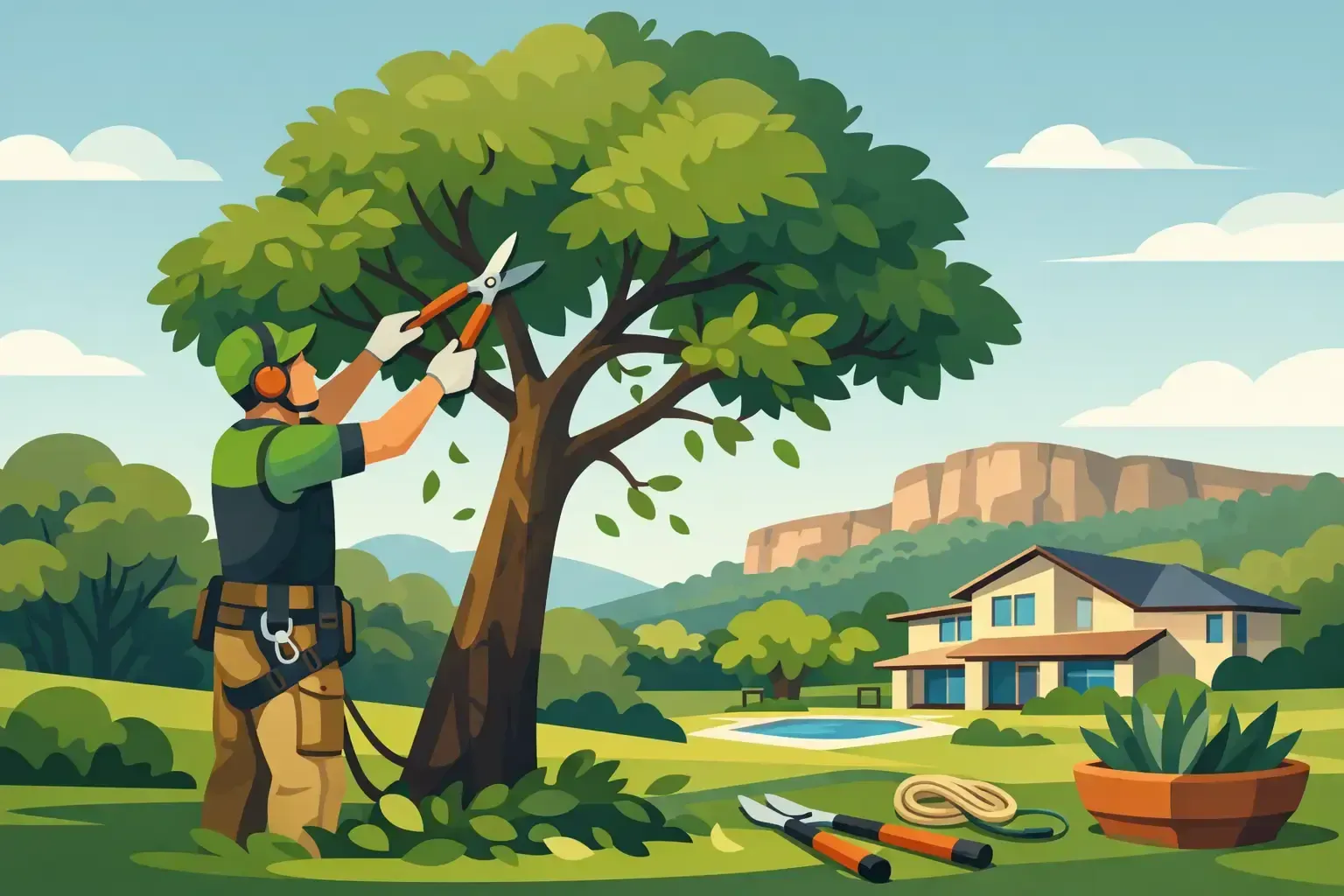
Worker pruning a tree in a sunny yard beside a house, with tools on the grass.
August 22, 2026
A mature live oak shading a Bee Cave driveway can look indestructible right up until a heavy limb hangs over the roof, a cedar elm starts crowding the servic...
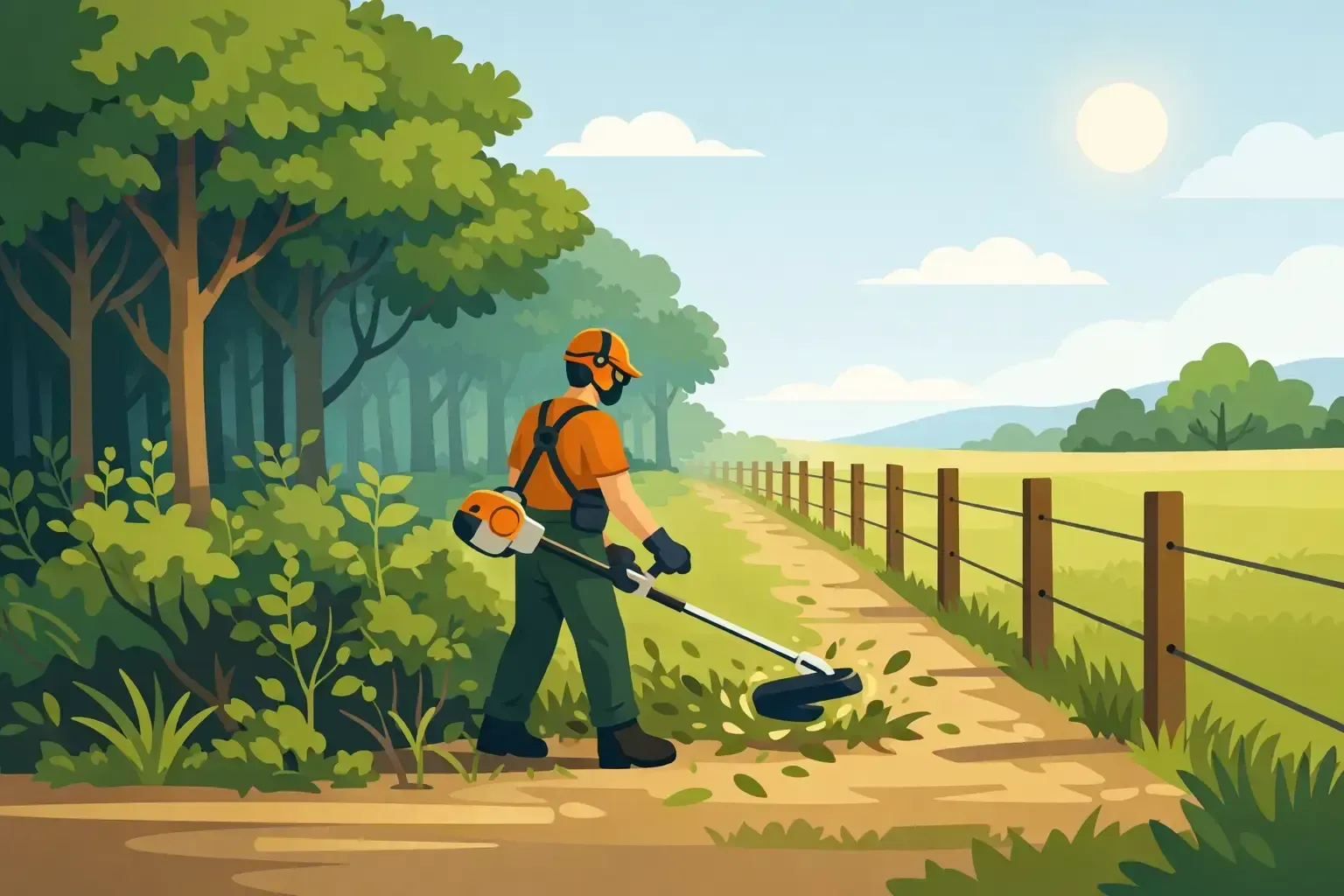
Person using a string trimmer beside a fenced field on a sunny day
August 20, 2026
A fence line can disappear fast in Central Texas. One wet spring, a few missed mowing cycles, and suddenly cedar, huisache, vines, fallen limbs, and thorny b...
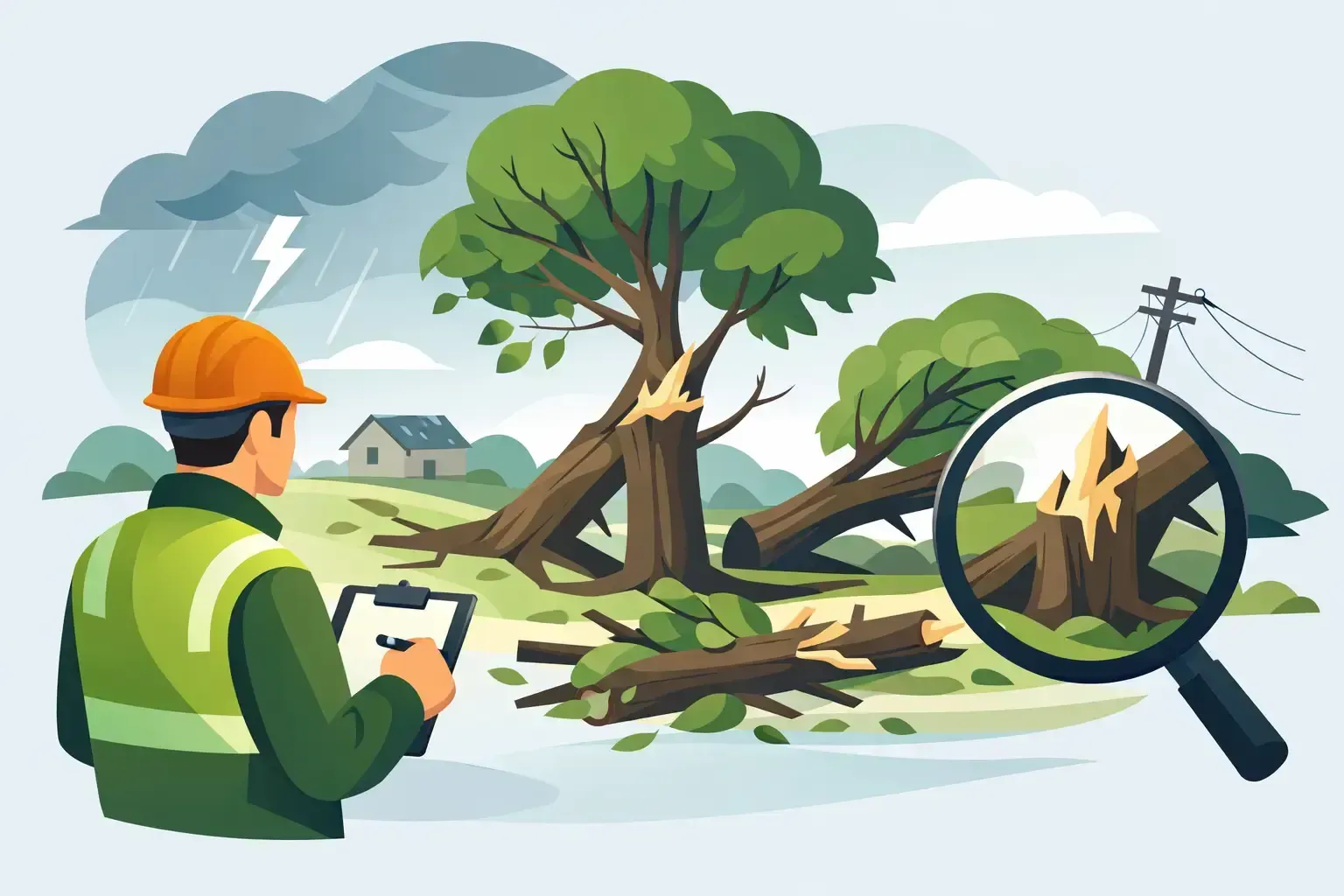
Worker inspecting storm-damaged tree with fallen branches and a magnifying glass in a windy yard
August 18, 2026
A hard Central Texas storm can turn a healthy-looking canopy into a real property hazard in a single night. This guide to storm damaged tree assessment helps...
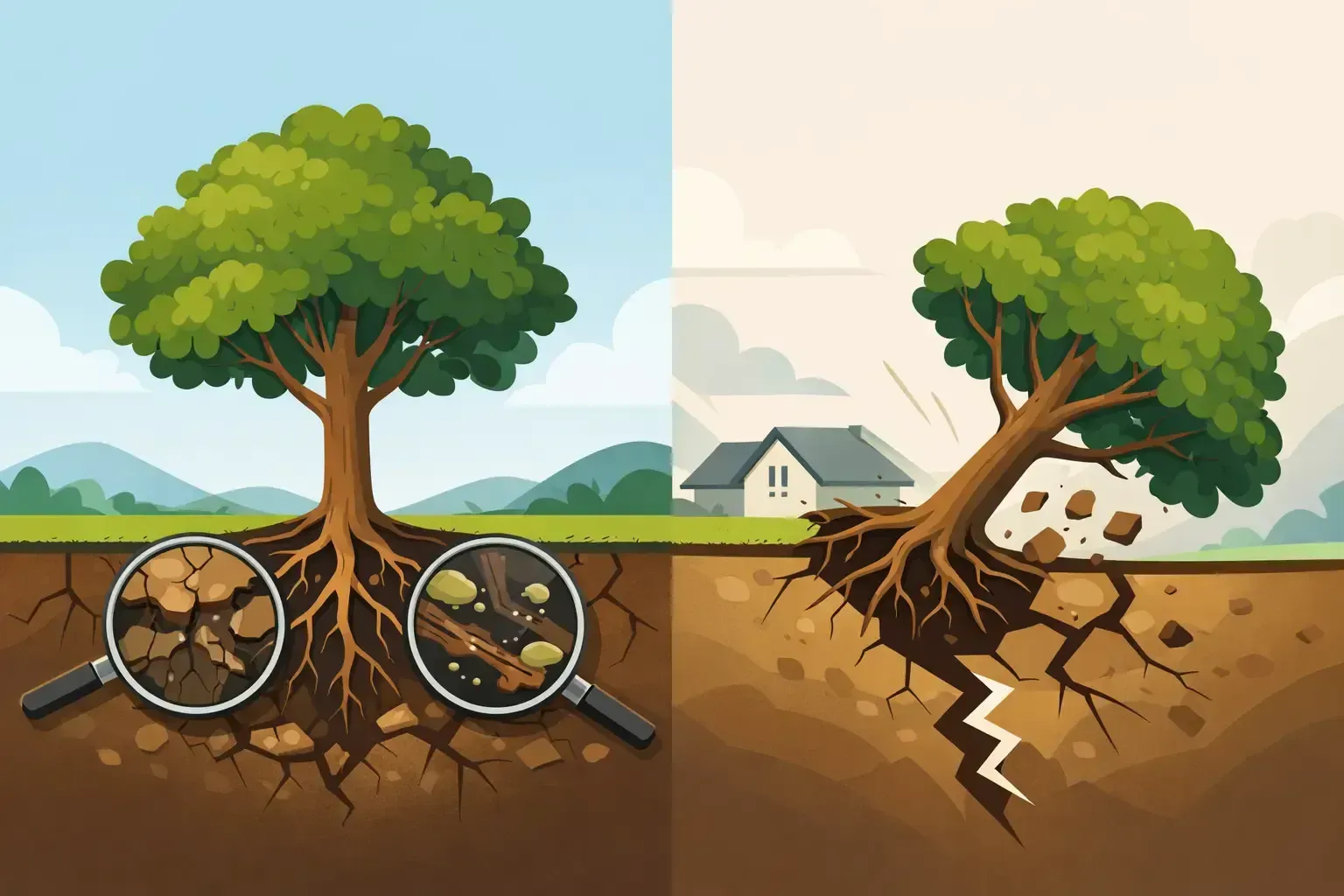
Healthy and damaged trees showing root health and drought soil cracking on a farm landscape
August 16, 2026
A live oak can look perfectly fine above ground while its support system is under serious stress below it. That is what makes root problems so frustrating fo...
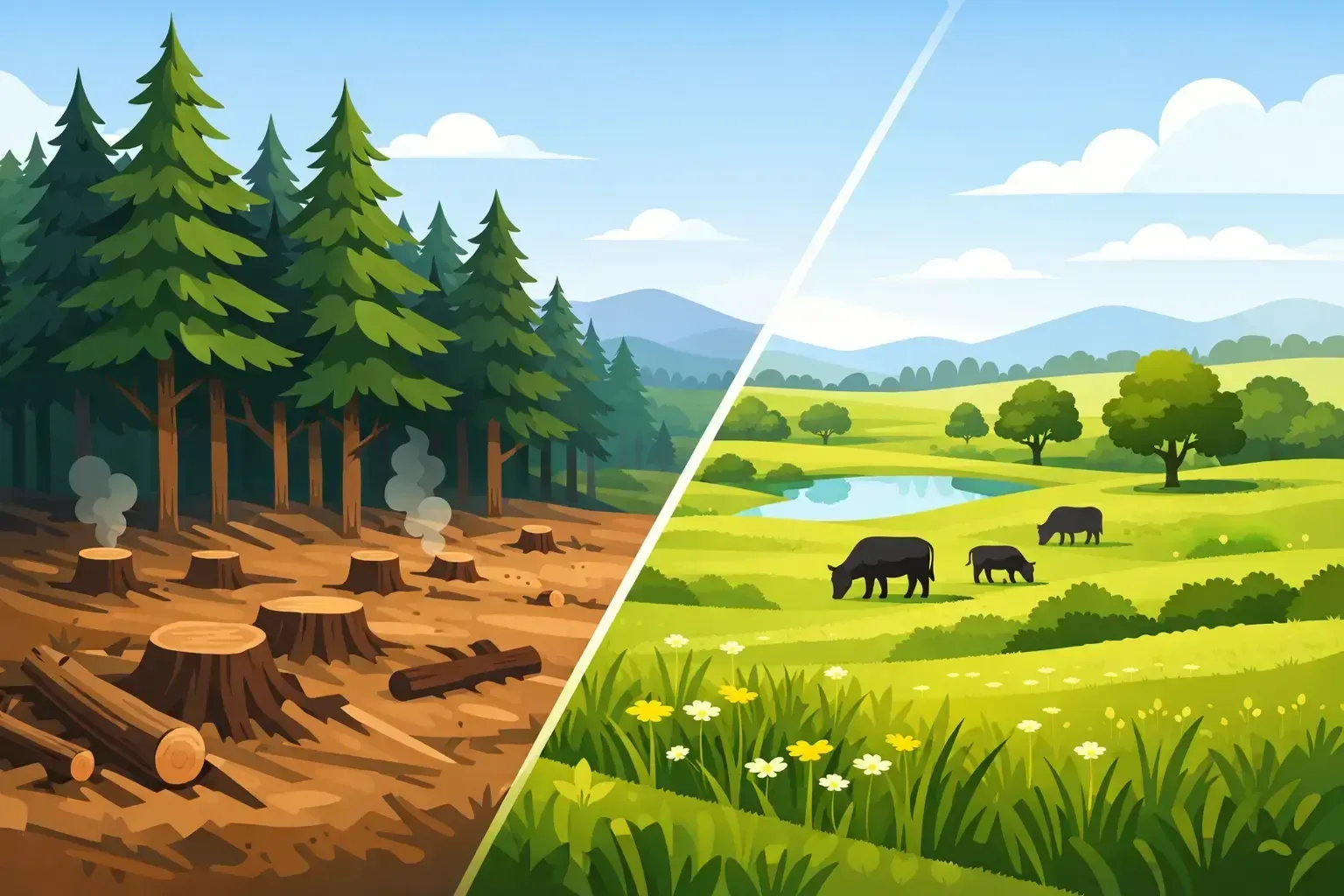
Split view of deforestation and healthy green pasture with cows under a bright sky
August 14, 2026
A cedar-choked pasture can make a property feel smaller every year. Water disappears into dense juniper cover, native grasses lose sunlight, fence lines vani...
Farmer in field watching a blue tractor spray crops, with cows, barn, hills, and smoke in the background
September 1, 2026
A ranch can look green and still be headed in the wrong direction. Dense brush can hide stressed oaks, crowd out usable pasture, choke access roads, and crea...
Wildfire burning in a forest with firefighters, helicopter, and smoke over a split rural landscape
August 30, 2026
A hot, windy afternoon can turn a forgotten brush pile, a crowded cedar stand, or low limbs near a structure into more than a property-maintenance issue. Tex...
Environmental inspection scene with drone, tree, magnifying glass, recycle bin, and hard hat in a city park
August 28, 2026
A shaded entry drive can become a liability fast when a heavy limb hangs over customer parking, a dead cedar leans toward a fence, or brush builds up around ...
Wildfire response with firefighters, water tanker, helicopter, and smoke near homes in a rural neighborhood
August 26, 2026
A Central Texas wildfire mitigation guide has to start with a hard truth: a beautiful Hill Country property can carry fire faster than most owners expect. Ce...
Savanna wildfire with trees, deer, and smoky hills under a bright sky
August 24, 2026
A beautiful shade tree should not become a fuse leading to your home. For Central Texas property owners, choosing the best trees for wildfire resistance mean...
Worker pruning a tree in a sunny yard beside a house, with tools on the grass.
August 22, 2026
A mature live oak shading a Bee Cave driveway can look indestructible right up until a heavy limb hangs over the roof, a cedar elm starts crowding the servic...