


Arborist Report for Insurance Claims Explained

August 8, 2026

A fallen live oak across a driveway, a split cedar threatening a roofline, or a storm-damaged pecan over a parking area creates two urgent problems at once: making the site safe and documenting what happened. An arborist report for insurance claims can help separate legitimate tree-related damage from assumptions, giving your carrier a clear professional record of the tree's condition, the likely cause of failure, and the recommended corrective work.

For property owners, the report is not a magic approval stamp. Insurance policies, deductibles, exclusions, and claim decisions still control the outcome. What a well-prepared report does provide is credible evidence when the facts matter - especially after wind, drought stress, lightning, vehicle impact, or a sudden limb or whole-tree failure.

What an Arborist Report Should Establish

Insurance adjusters are often evaluating damage across many properties after the same storm. They need documentation that is specific, organized, and tied to the loss at hand. A useful arborist report is not just an invoice saying a tree was removed. It explains what was observed and why the recommended work was necessary.

The report should identify the tree or trees involved, including species, approximate size, location on the property, and condition at the time of inspection. It should document visible defects such as trunk cracks, root plate movement, decay indicators, broken scaffold limbs, storm wounds, or utility conflicts. Clear, dated photographs should show the overall setting as well as close-up evidence.

Just as important, the arborist should distinguish between recent damage and pre-existing conditions when the evidence allows. A fresh fracture from a wind event may look very different from a long-standing cavity, a poorly attached limb union, or gradual decline. That distinction can affect the carrier's evaluation and can help a property owner understand whether the event was sudden, preventable, or part of a broader tree-health issue.

A strong report also states the recommended action in plain language. That may mean removing a failed tree from a structure, reducing damaged limbs, restricting access beneath a hazardous canopy, or retaining and monitoring a tree that remains stable enough to preserve. The right answer depends on the actual risk, not on selling the biggest possible scope of work.

When an Arborist Report for Insurance Claims Helps Most

Not every fallen branch requires a formal assessment. If a small limb lands harmlessly in an open yard, photos, a cleanup invoice, and a conversation with your carrier may be enough. A report becomes much more valuable when damage is significant, the cause is unclear, or a disputed tree condition is central to the claim.

It is especially useful when a tree damages a home, fence, vehicle, outbuilding, irrigation system, gate, driveway, or commercial asset. It can also matter when a partially failed tree remains on-site and poses an active safety risk. In those situations, your insurer may need more than a few phone photos before evaluating emergency removal, repairs, or related expenses.

Central Texas properties add another layer of complexity. Live oaks, cedars, elms, pecans, and mature landscape trees can endure years of heat, compacted soil, construction disturbance, and drought before a major weather event exposes the weak point. A storm may be the immediate trigger, but the tree's condition can tell a longer story. That does not automatically decide coverage. It does give the claim a factual foundation instead of a guess.

For ranches, HOAs, MUDs, and commercial sites, reporting can also support decisions beyond the initial claim. A documented assessment may identify nearby trees with similar defects, recurring drainage issues, brush accumulation, or soil conditions that deserve attention before the next high-wind event.

What to Do Before Emergency Tree Work Starts

Safety comes first. If a tree has contacted a power line, keep everyone clear and contact the utility provider or emergency services as appropriate. Do not approach energized lines, unstable root systems, suspended limbs, or a tree leaning on a structure. A tree can shift without warning after its support system has been compromised.

If conditions are safe, photograph and video the scene before debris is moved. Capture wide views that establish the tree's location and what it damaged, then take closer images of breaks, uprooting, trunk splits, and damaged property. Include a few shots from a distance to show scale. Save weather alerts, timestamps, and any relevant security-camera footage.

Then notify your carrier and ask what they need before permanent repairs begin. Emergency mitigation is often necessary to prevent additional damage, but keep receipts, work authorizations, photos, and itemized invoices. If portions of the tree must be removed quickly, document them first. When practical, retain representative sections or detailed photos of the failure area until the carrier has advised you otherwise.

Avoid asking a tree company to write a report that reaches a conclusion the evidence cannot support. A credible professional assessment is useful precisely because it is objective. Insurers, attorneys, and property managers can spot vague or exaggerated language fast. Precision protects everyone involved.

What a Professional Assessment Can and Cannot Do

An ISA Certified Arborist brings tree biology, structural assessment, and risk-management training to the inspection. That expertise can clarify whether the visible evidence is consistent with storm failure, decay, root disturbance, pest pressure, poor prior pruning, drought-related decline, or multiple contributing factors.

Still, an arborist does not determine insurance coverage. The arborist's role is to assess the tree and describe observed conditions, probable contributors, risk, and recommended actions. The insurer's role is to interpret the policy and determine what expenses qualify. Keeping those roles separate makes the report more credible.

There are trade-offs in timing, too. An immediate inspection captures fresh evidence but may happen while access is limited and the site is still hazardous. A later inspection may allow for a more measured evaluation, yet some evidence may be lost during emergency cleanup. When there is substantial property damage, the best approach is often to document promptly, stabilize the immediate hazard, and coordinate with the carrier as early as possible.

The Details That Make a Report Stronger

A report should read like a professional field assessment, not a generic template. The strongest documentation ties each observation to a location, a photograph, and a practical recommendation. If a tree is leaning, the report should describe where it is leaning, what it could strike, and why the condition is concerning. If decay is visible, it should identify the affected area and any limits to what could be confirmed without invasive testing.

For claims involving a large tree or multiple damaged trees, a simple site sketch or numbered photo log can prevent confusion. This is particularly helpful on acreage, shared HOA common areas, or commercial properties where several trees look similar. Accurate species identification matters as well, since decay patterns, failure tendencies, and normal growth habits vary widely by tree type.

The report should also separate recommended tree work from unrelated landscape upgrades. If emergency removal is needed, say so. If the property owner also wants cosmetic pruning across the rest of the lot, that can be quoted separately. Clean scope boundaries support transparent pricing and reduce headaches later.

Protect the Property After the Claim, Too

Once the immediate damage is handled, use the event as a property-readiness checkpoint. Ask whether nearby trees share the same exposure, whether root zones have been compacted by vehicles or construction, and whether deadwood or dense brush is increasing risk around structures. In wildfire-prone parts of Central Texas, defensible-space work and thoughtful thinning can also reduce fuel continuity while improving access for future storm response.

Dynamo Dusty's Tree Service approaches these jobs with the same discipline used for complex land-management and hazard-mitigation projects: document the facts, communicate clearly, and perform only the work the site actually needs. That is how property owners get a cleaner claim record and a safer landscape without the usual chainsaw-company guesswork.

A storm can turn a healthy-looking tree into a real hazard in minutes. Good photos, prompt communication, and an honest professional assessment give you a better footing to make the next decision calmly - whether that means filing a claim, securing the site, or protecting the trees that are still standing.

Farmer in field watching a blue tractor spray crops, with cows, barn, hills, and smoke in the background
September 1, 2026
A ranch can look green and still be headed in the wrong direction. Dense brush can hide stressed oaks, crowd out usable pasture, choke access roads, and crea...

Wildfire burning in a forest with firefighters, helicopter, and smoke over a split rural landscape
August 30, 2026
A hot, windy afternoon can turn a forgotten brush pile, a crowded cedar stand, or low limbs near a structure into more than a property-maintenance issue. Tex...

Environmental inspection scene with drone, tree, magnifying glass, recycle bin, and hard hat in a city park
August 28, 2026
A shaded entry drive can become a liability fast when a heavy limb hangs over customer parking, a dead cedar leans toward a fence, or brush builds up around ...

Wildfire response with firefighters, water tanker, helicopter, and smoke near homes in a rural neighborhood
August 26, 2026
A Central Texas wildfire mitigation guide has to start with a hard truth: a beautiful Hill Country property can carry fire faster than most owners expect. Ce...
Savanna wildfire with trees, deer, and smoky hills under a bright sky
August 24, 2026
A beautiful shade tree should not become a fuse leading to your home. For Central Texas property owners, choosing the best trees for wildfire resistance mean...
Worker pruning a tree in a sunny yard beside a house, with tools on the grass.
August 22, 2026
A mature live oak shading a Bee Cave driveway can look indestructible right up until a heavy limb hangs over the roof, a cedar elm starts crowding the servic...
Person using a string trimmer beside a fenced field on a sunny day
August 20, 2026
A fence line can disappear fast in Central Texas. One wet spring, a few missed mowing cycles, and suddenly cedar, huisache, vines, fallen limbs, and thorny b...
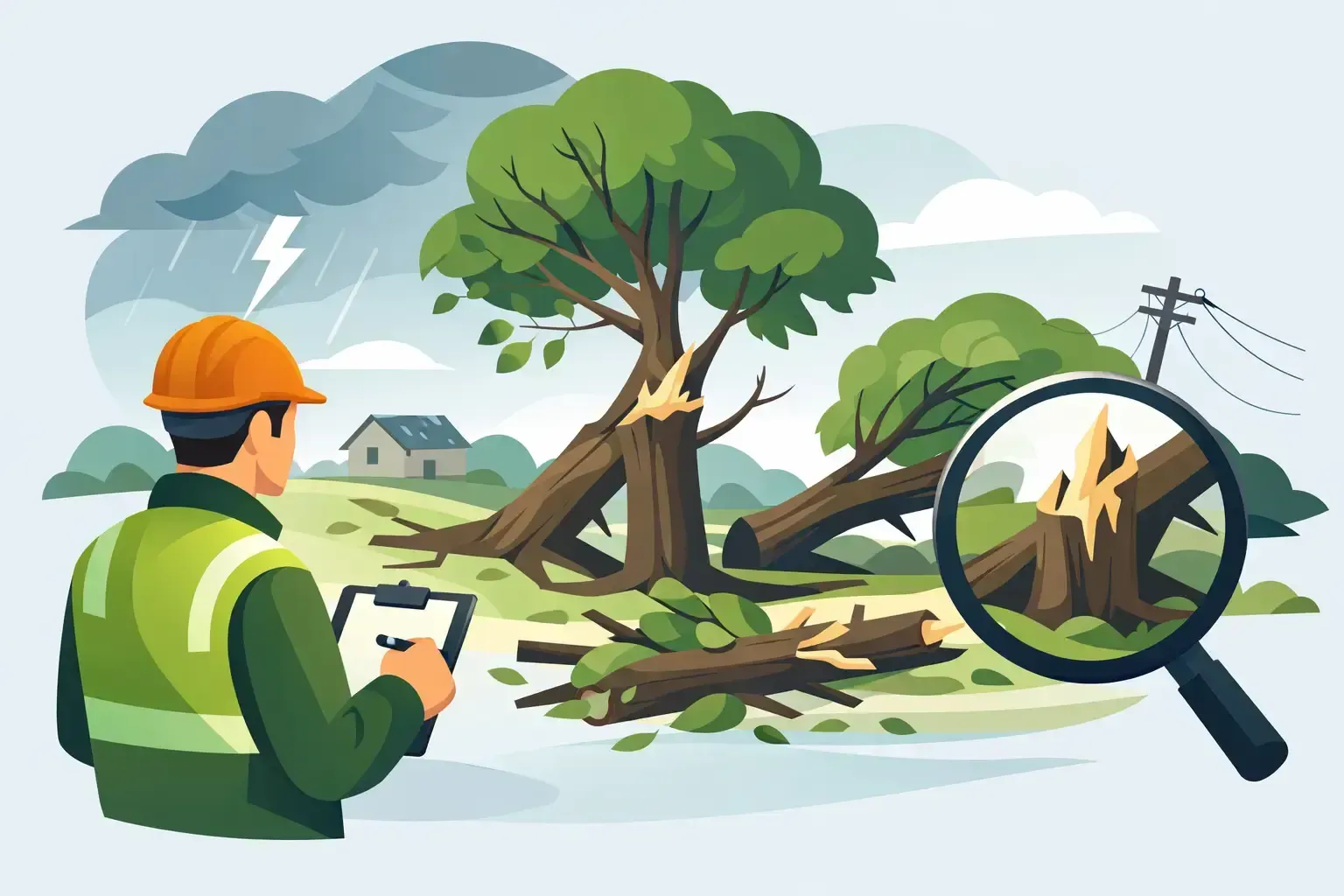
Worker inspecting storm-damaged tree with fallen branches and a magnifying glass in a windy yard
August 18, 2026
A hard Central Texas storm can turn a healthy-looking canopy into a real property hazard in a single night. This guide to storm damaged tree assessment helps...
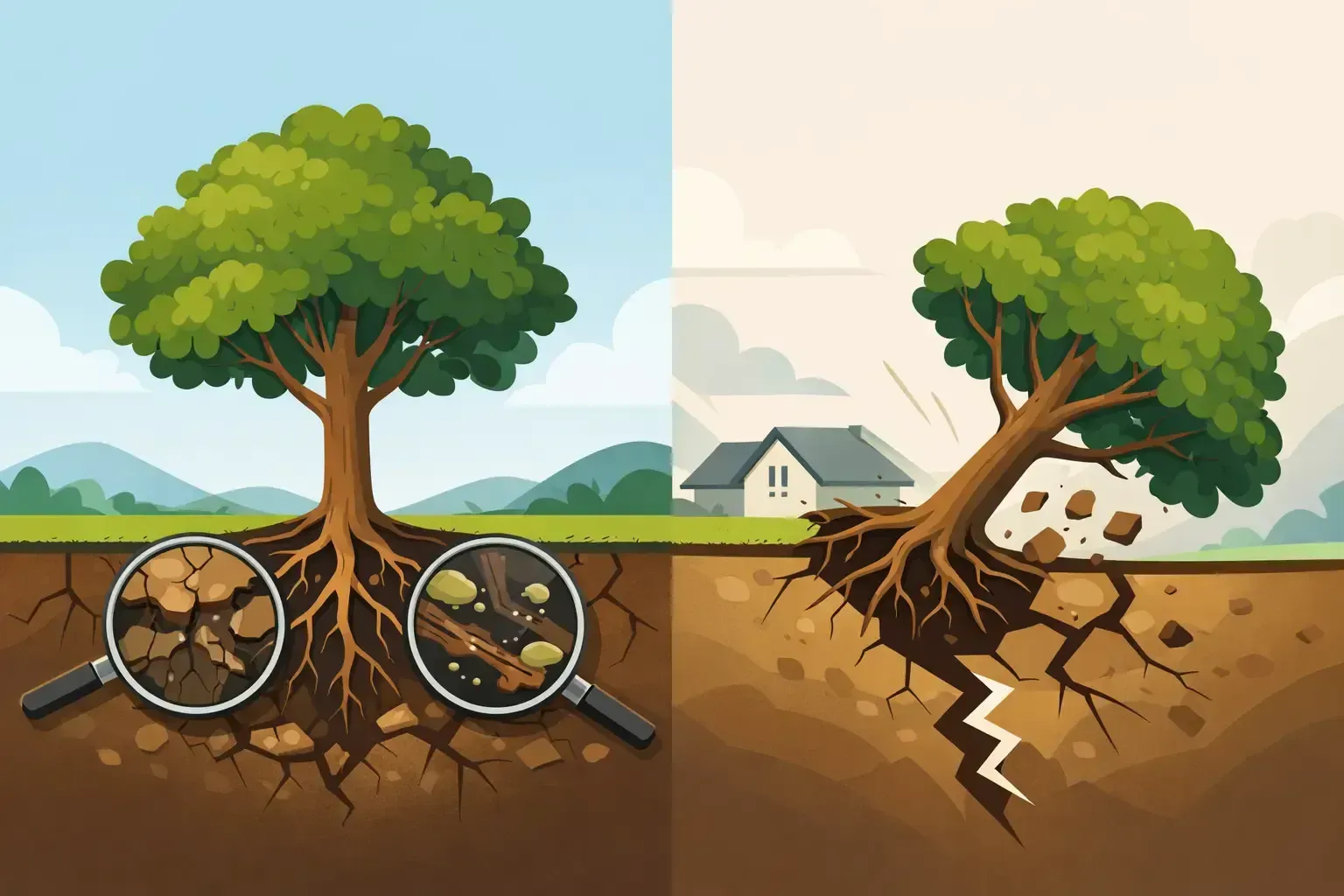
Healthy and damaged trees showing root health and drought soil cracking on a farm landscape
August 16, 2026
A live oak can look perfectly fine above ground while its support system is under serious stress below it. That is what makes root problems so frustrating fo...
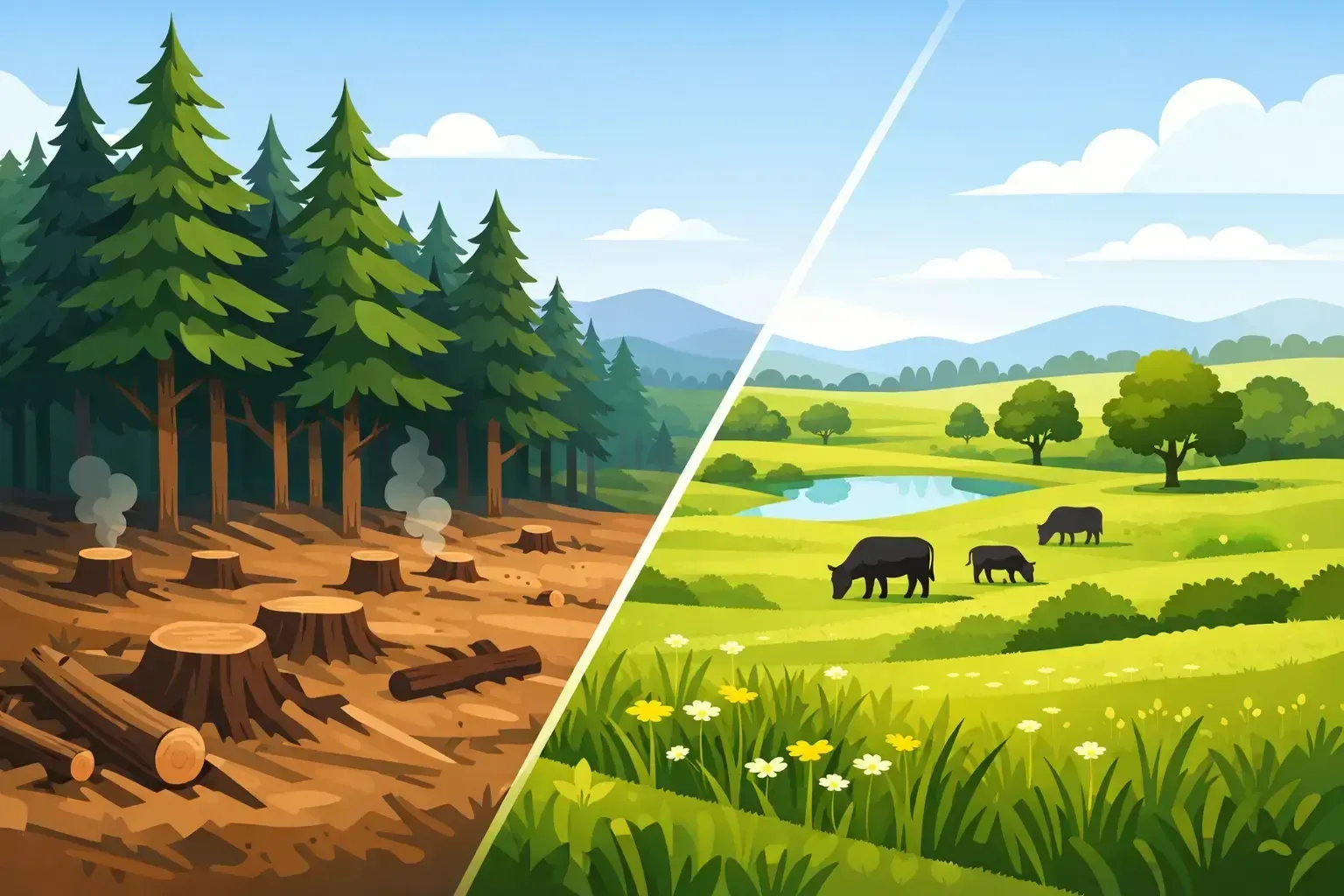
Split view of deforestation and healthy green pasture with cows under a bright sky
August 14, 2026
A cedar-choked pasture can make a property feel smaller every year. Water disappears into dense juniper cover, native grasses lose sunlight, fence lines vani...
Farmer in field watching a blue tractor spray crops, with cows, barn, hills, and smoke in the background
September 1, 2026
A ranch can look green and still be headed in the wrong direction. Dense brush can hide stressed oaks, crowd out usable pasture, choke access roads, and crea...
Wildfire burning in a forest with firefighters, helicopter, and smoke over a split rural landscape
August 30, 2026
A hot, windy afternoon can turn a forgotten brush pile, a crowded cedar stand, or low limbs near a structure into more than a property-maintenance issue. Tex...
Environmental inspection scene with drone, tree, magnifying glass, recycle bin, and hard hat in a city park
August 28, 2026
A shaded entry drive can become a liability fast when a heavy limb hangs over customer parking, a dead cedar leans toward a fence, or brush builds up around ...
Wildfire response with firefighters, water tanker, helicopter, and smoke near homes in a rural neighborhood
August 26, 2026
A Central Texas wildfire mitigation guide has to start with a hard truth: a beautiful Hill Country property can carry fire faster than most owners expect. Ce...
Savanna wildfire with trees, deer, and smoky hills under a bright sky
August 24, 2026
A beautiful shade tree should not become a fuse leading to your home. For Central Texas property owners, choosing the best trees for wildfire resistance mean...
Worker pruning a tree in a sunny yard beside a house, with tools on the grass.
August 22, 2026
A mature live oak shading a Bee Cave driveway can look indestructible right up until a heavy limb hangs over the roof, a cedar elm starts crowding the servic...